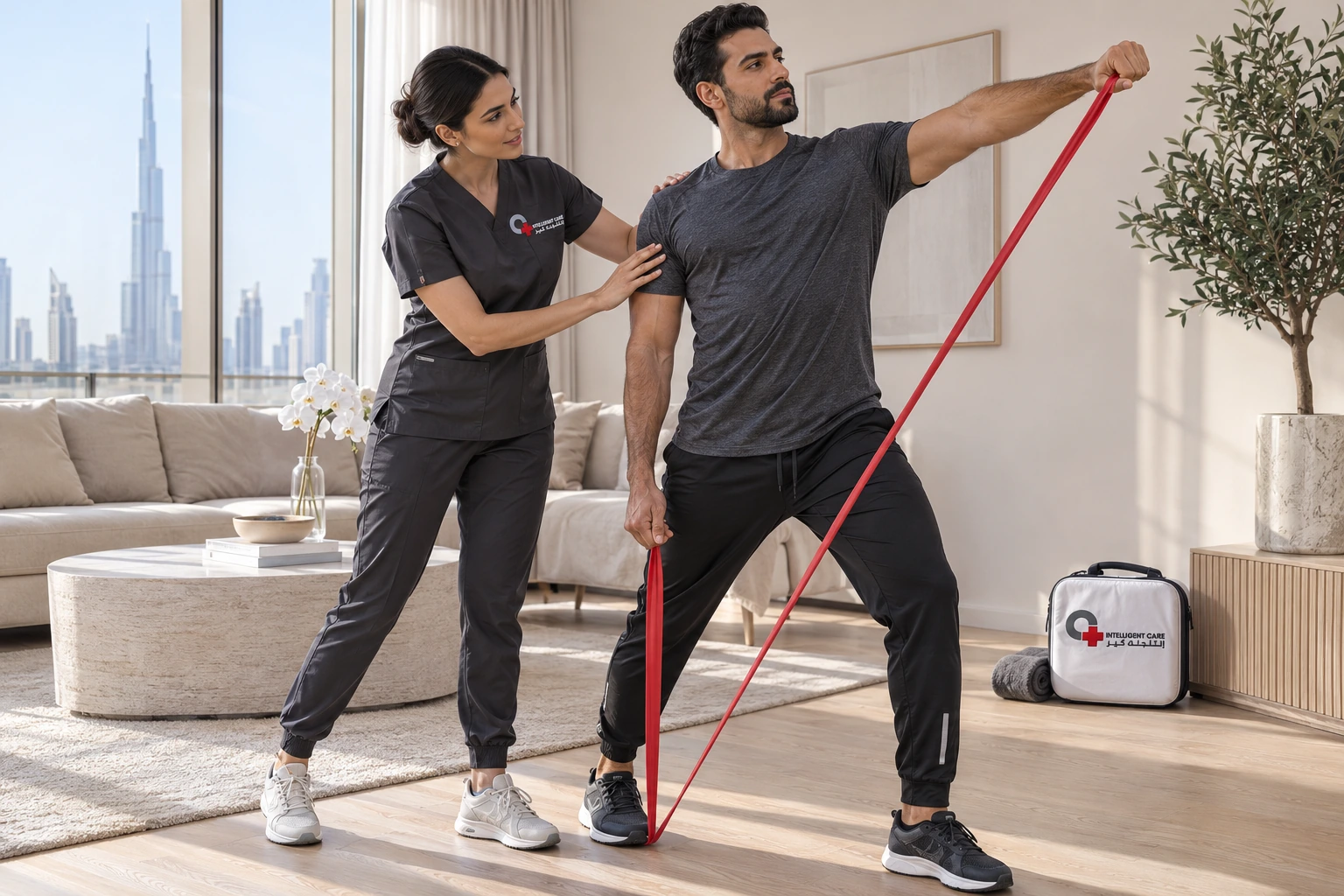
01Explore
Floor play
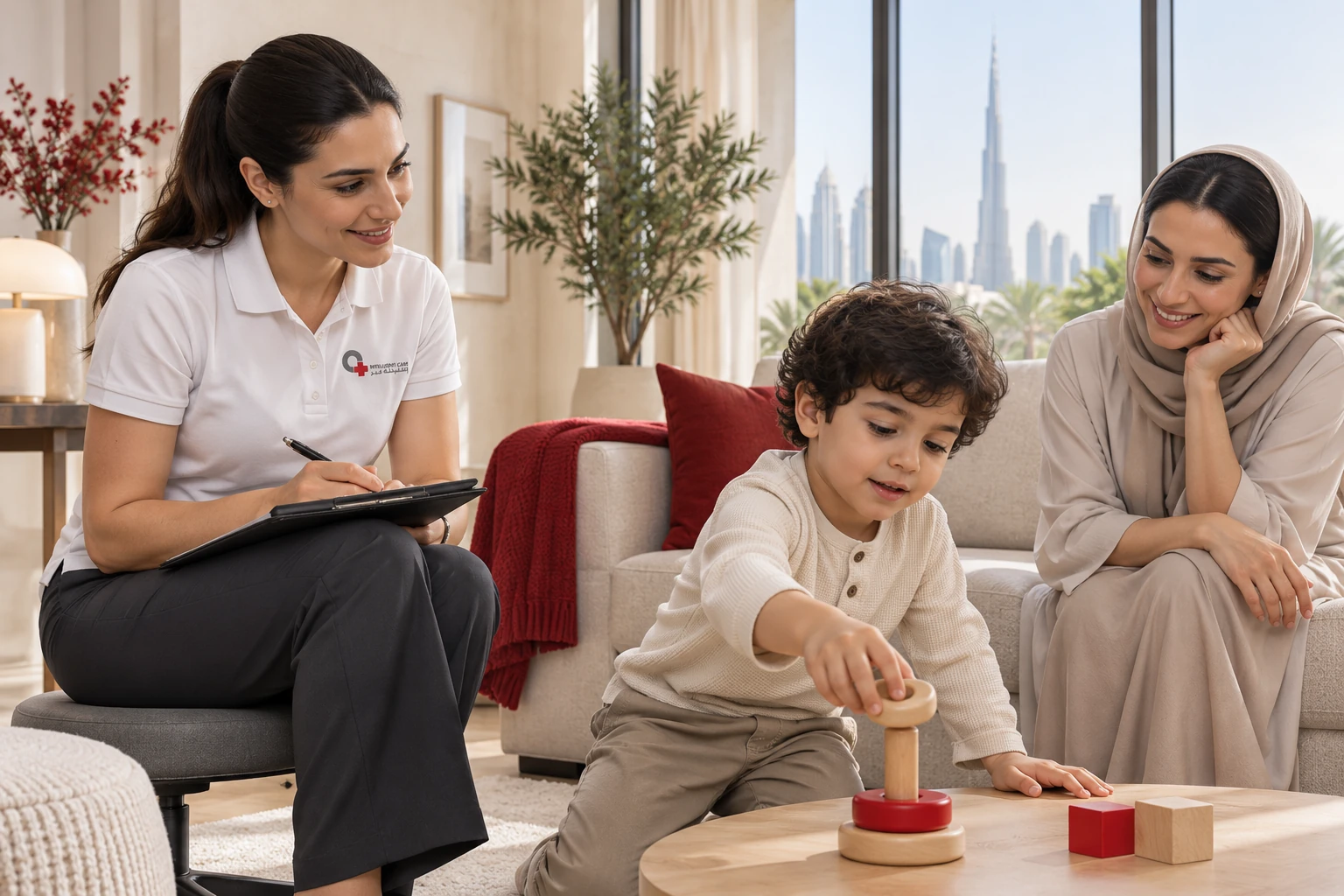
Tell us about reaching, rolling, sitting or moving around during play. A favourite toy can help show natural movement without asking a child to perform on demand.

Children’s movement & development · Dubai
A favourite toy, the family sofa, the route to the playroom. Children’s movement happens in familiar places. Intelligent Care brings paediatric physiotherapy assessment to your home in Dubai, connecting your concerns with your child’s development, comfort and everyday participation.
 Clinical author assignmentDr Toqa IbrahimTwo clinical perspectivesProfiles & DHA directory links Guidance with sourcesExplore the references
Child-led movement · family-centred goals
Choose an initial physiotherapy assessment and tell us your child’s age, the movement you are concerned about and any existing diagnosis or specialist advice. The team checks the appropriate clinical match before arranging the visit.
Your discussion priorities
Choose the situations you want to discuss. These choices help prepare the conversation; they do not label a condition.
Tell us about reaching, rolling, sitting or moving around during play. A favourite toy can help show natural movement without asking a child to perform on demand.
Describe how your child gets upright, moves between rooms and manages changes of surface. Mention falls, pain or a recent change separately from longstanding concerns.
Explain the activities that feel difficult, such as a playground game or moving around obstacles. The clinician relates the task to the child’s age and abilities.
Share a persistent difference in the use of an arm or leg. New or sudden weakness needs medical assessment rather than waiting for a therapy appointment.
Bring the treating clinician’s diagnosis, restrictions and follow-up plan. Activities need to respect healing and any instructions about loading or movement.
Share existing therapy goals, equipment and specialist recommendations. The home visit should fit the wider plan instead of creating a separate, conflicting programme.
Your discussion list
Choose the points you would like to discuss.
Understand the care
Paediatric physiotherapy looks at how a child moves and takes part in daily life. It may be relevant when a family notices difficulty with gross motor skills, movement asymmetry, coordination or mobility following injury or illness. A concern is a reason to seek an assessment, not a diagnosis from a milestone checklist.
Children differ in their developmental pace and in the activities that interest them. The clinician considers age, medical history, current abilities and the movement concern together. Where developmental or neurological assessment is needed, physiotherapy works alongside the child’s doctor and other services rather than replacing them.
At home, useful goals can be very specific: joining floor play, moving between familiar surfaces or managing the distance between a bedroom and living room. The starting point is what your child can do today. Progress is discussed in functional terms that matter to the child and family, with room to change the plan as needs change.
Read the clinical sourcesThe first assessment
An assessment should feel understandable to the adults and manageable to the child. Breaks, familiar objects and clear explanations help the visit fit real family life.

THE CLINICAL CONVERSATION01—04
Describe the first concern, what has changed and what your child enjoys. Tell us about communication preferences, fatigue, sensory sensitivities and how your child shows discomfort.
Pregnancy and birth history, development, injuries, investigations, medicines and existing care may be relevant. Share records that explain the current question rather than a pile of unrelated documents.
The therapist may assess movement, range, strength, coordination or functional tasks appropriate to the child. Assessment is adapted to consent, comfort and cooperation; painful or distressing tasks are not a performance target.
The family and clinician choose useful priorities and decide whether home physiotherapy, another assessment or a combined approach is appropriate. Ask how each proposed activity relates to the goal.
The care pathway
The phases are review points rather than a developmental timetable.
Gather the family’s concerns and observe age-appropriate movement in context.
Prioritise a small number of meaningful functional goals.
Use clinician-guided activities and the agreed home routine.
Compare current participation with the starting point and adjust, refer or pause when appropriate.
Explore a stage to bring it into focus. Every stage stays visible.
What the care involves
The useful method is the one that fits the assessed need. Activities below describe possible elements of a plan, not an exercise prescription for every child.
| Element | How it may help | What shapes the choice |
|---|---|---|
| 01Play-based movement | Use an engaging task to practise an agreed movement or position. | Child’s age, interests, comfort and current ability. |
| 02Functional practice | Work on a transition or daily activity that the child wants to manage. | The task, environment, support required and medical restrictions. |
| 03Family guidance | Show a caregiver how to support an agreed activity between visits. | Safe handling, realistic time and what the caregiver can confidently repeat. |
| 04Equipment discussion | Consider whether existing supports fit the activity and wider plan. | Specialist assessment or referral may be needed; equipment is not automatically supplied. |
Before care arrives
A useful assessment does not require a specially equipped therapy room.
A personal reminder list.
Nothing is sent or saved.
Care around the person
Therapy should fit the household without making every interaction a treatment session.
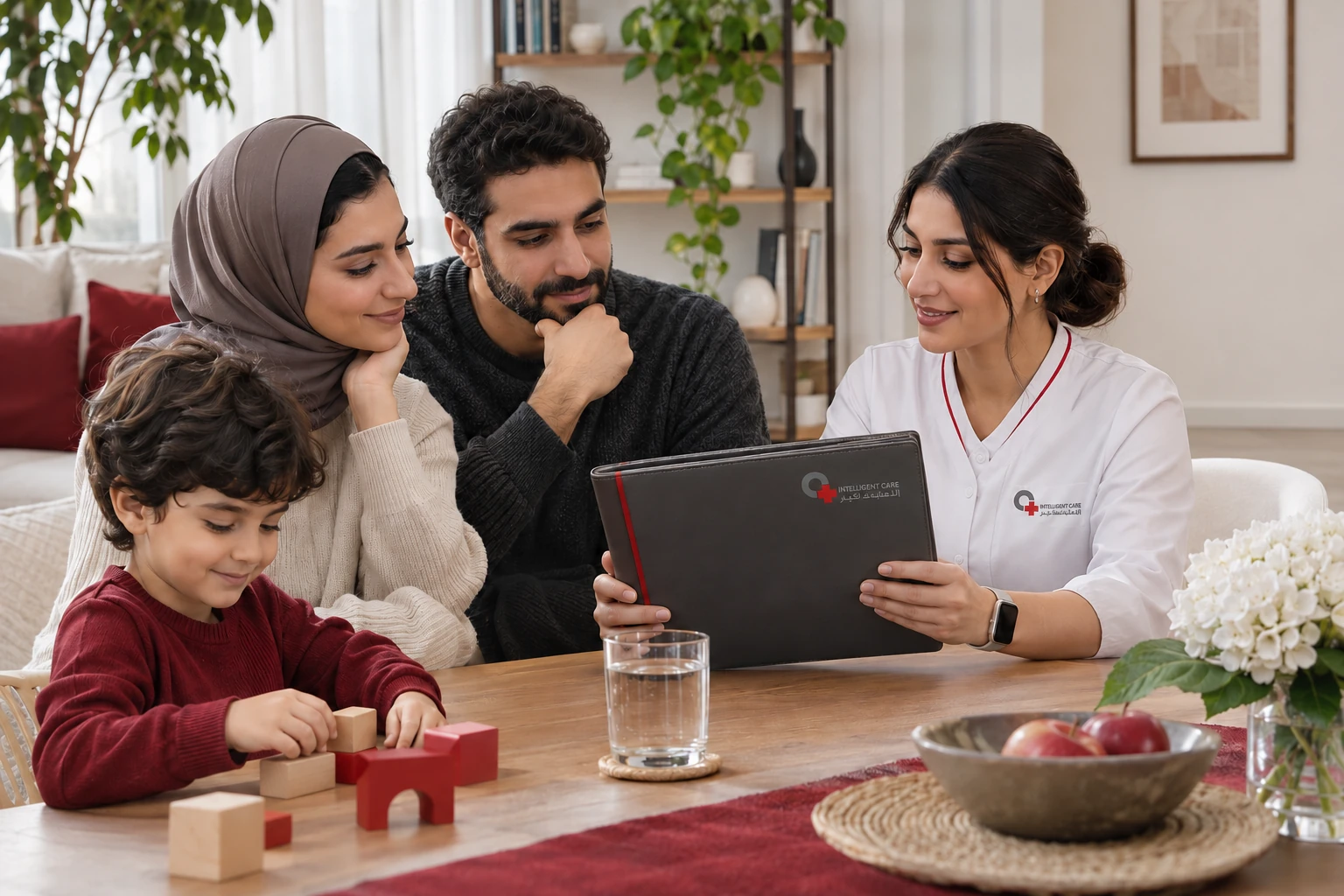
Tell the therapist when your child is tired, hungry, distressed or ready to stop. Enjoyment and cooperation matter more than completing a predetermined list.
Ask how a short, agreed activity can fit play, dressing or another familiar routine. Choose a manageable opportunity instead of an ambitious schedule that adds pressure.
With your permission, share the agreed approach with the people who help your child. Check conflicting advice with the treating team rather than combining programmes independently.
Record what became easier or what still gets in the way. A child’s willingness to join play can be as useful to discuss as the movement itself.
Continuity of care
A useful follow-up connects the next visit with daily life between appointments.
Note the activity, assistance needed and your child’s response. Short factual observations are more useful than comparing with other children.
Tell the therapist which activities fitted the family routine and which were difficult. A programme can be adjusted rather than abandoned.
New concerns, regression or a change in medical advice may require the child’s doctor before the next therapy session.
People and responsibilities
Different professionals answer different questions. Coordination makes those roles clearer.
Assesses movement and function, sets appropriate rehabilitation goals and explains the home activity plan. Paediatric needs must be matched to relevant competence.
Investigates concerning symptoms, establishes diagnoses and sets medical or surgical restrictions. Keep existing paediatric follow-up appointments.
Occupational therapy, speech and language therapy or other specialist services may be relevant to needs outside movement rehabilitation. Referral depends on assessment.
Read the real team profiles and their professional-directory references. Your assigned professional and the scope of care are confirmed through the care arrangement.
Meet our clinical teamWhen to seek medical help
Do not wait for a routine therapy visit when a child is suddenly unwell or their abilities change unexpectedly.
Immediate medical attention
Prompt clinical assessment
Practical arrangements
The booking choice starts the discussion; clinical suitability determines the work.
The free assessment lets the family discuss goals and the appropriate next step. Confirm the child’s needs and relevant clinician availability with the team.
A single session or ten-session plan can support an agreed programme. For a bundle, select the first appointment; arrange the remaining sessions with the care team.
A parent or appropriate guardian participates in arrangements. Explain who may receive updates and how the child’s own preferences will be heard.
Your questions
No. Development varies, and one observation does not establish a diagnosis. A professional assessment considers the pattern, medical history and daily function. Loss of a skill or a sudden change deserves prompt medical attention.
Play can be a useful way to observe movement and engagement. The clinician selects activities according to age and the question being assessed, and explains any more structured tests.
You can contact the team with a concern. They will clarify whether a home physiotherapy assessment is suitable or whether the child should see a doctor or another specialist first.
No. Observation, active movement, play, family education and functional practice may be more relevant. Any hands-on assessment or treatment needs an explanation, consent and appropriate clinical reasoning.
Family involvement is important. Agree who will be present, what helps the child feel secure and how a caregiver can support the session without speaking over a child who can express their preferences.
Usually it is better to wait for assessment. Existing toys and everyday spaces may be sufficient for initial goals. Any recommendation for equipment should explain its purpose and safe use.
That depends on the findings, goals and response. The ten-session option is a booking arrangement, not a prediction of milestones or a requirement for every child.
Tell us about existing support. With appropriate consent, the plan can be discussed alongside those goals. Different teams should not leave the family with contradictory instructions.
Expertise with a name
Explore the named clinical profiles, their professional roles and their Dubai Health Authority directory records.
Author assignment
General Practitioner
Dr Toqa Ibrahim is a DHA-licensed General Practitioner with Alpha Intelligent Care Home Healthcare Center. Her clinical profile brings the general-practice perspective into our approach to care at home.

Review assignment
Specialist Clinical Pathology
Dr Nirupama Sabhapathy is a DHA-licensed Specialist in Clinical Pathology at Intel Lab. Her published Intel Lab profile describes more than 25 years in medicine and her role as Laboratory Director.
Professional registration describes each clinician’s role. The clinical assessment and the person responsible for your care are confirmed separately.
More care guides


The wider picture
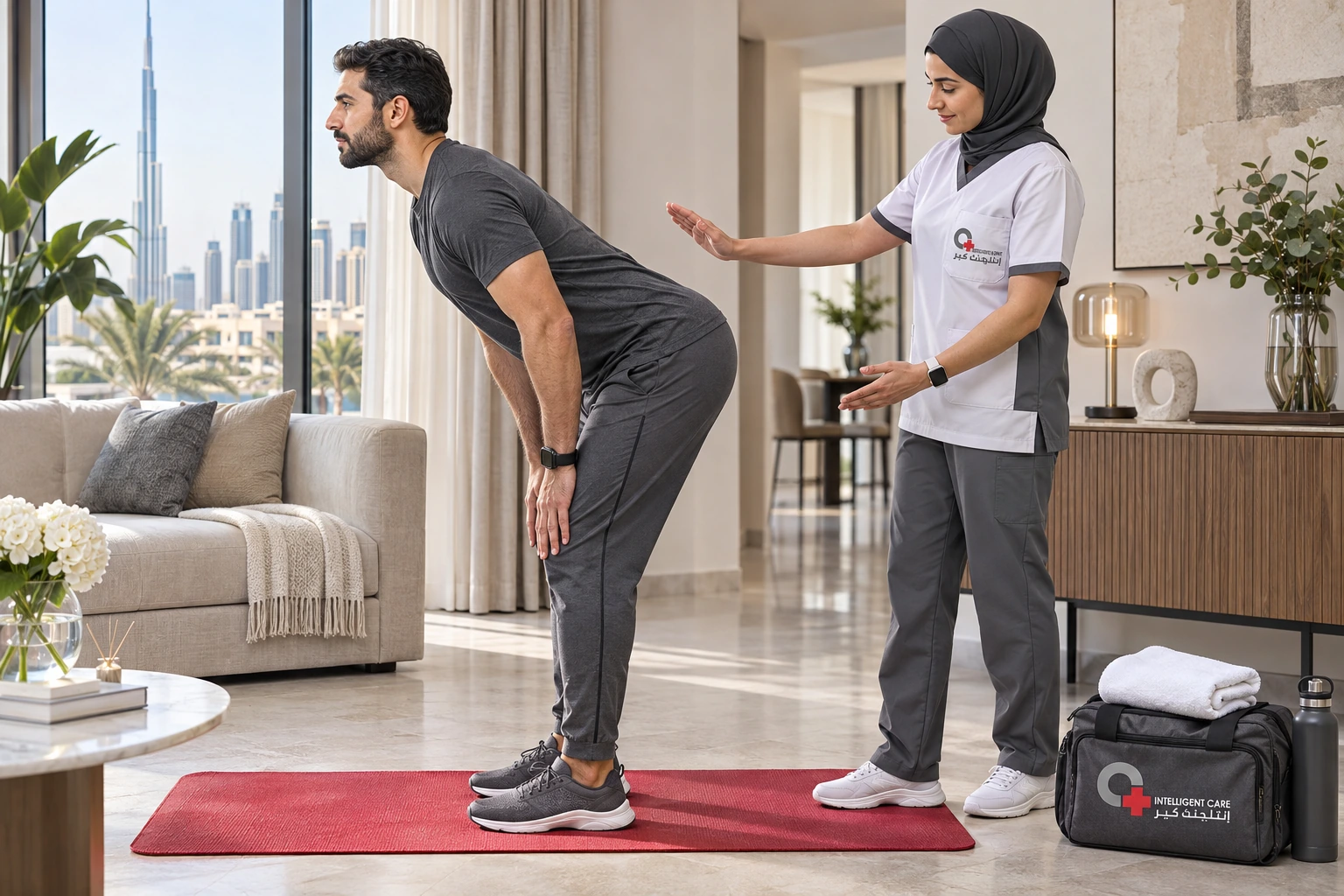
Explore related support, or speak to us about combining services into one plan.
About this guide
General information supports the care conversation; your own assessment determines the plan. Company service information and independent clinical guidance are listed separately below.
Care that comes to you
Across Dubai.
Abu Dhabi — coming soon.