01Daily life
Everyday lifting and carrying
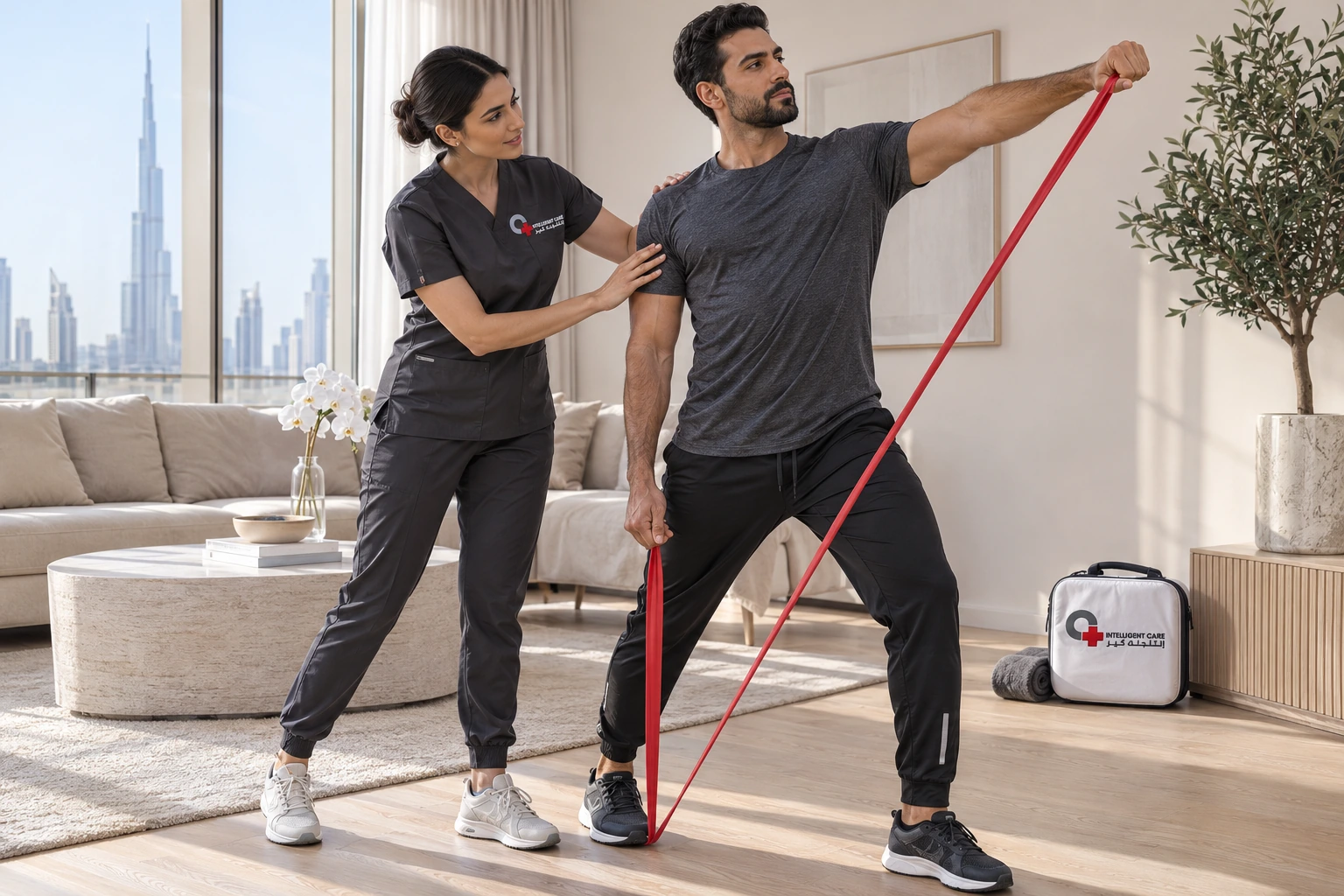
Explain the baby-care tasks that cause discomfort, including reaching into a cot or carrying equipment. Assessment can consider the actual setup and available help.

Postnatal recovery · Dubai
After childbirth, your own movement and comfort deserve attention too. Postnatal physiotherapy brings an assessment to your home, connecting recovery, everyday baby-care tasks and your personal activity goals with the advice from your maternity team.

 Clinical author assignmentDr Toqa IbrahimTwo clinical perspectivesProfiles & DHA directory links Guidance with sourcesExplore the references
Postnatal recovery · function · confidence
Share when and how you gave birth, any complications or restrictions, and what you want help with. An initial assessment can clarify suitable rehabilitation and whether another clinical review is needed first.
Your discussion priorities
Select the concerns you want to discuss. These are conversation starters, not a self-diagnosis or an exercise prescription.
Explain the baby-care tasks that cause discomfort, including reaching into a cot or carrying equipment. Assessment can consider the actual setup and available help.
Describe the location, timing and effect on rest and movement. New severe pain or symptoms of illness may need medical assessment first.
Discuss leakage, heaviness, pain or difficulty with control. The right approach may include specialist assessment rather than simply doing more strengthening exercises.
Raise concerns about abdominal separation, function or a feeling of reduced support. Assessment considers symptoms and tasks rather than judging recovery by gap size alone.
Share wound healing, current medical advice and activities that feel restricted. Wound concerns belong with a clinical reviewer before scar work or exercise progression.
Tell us which activity matters to you, from a longer walk to sport or work. Progression depends on recovery and response, not a calendar date alone.
Your discussion list
Choose the points you would like to discuss.
Understand the care

Postnatal recovery is influenced by pregnancy, the birth, healing, sleep, previous activity and the demands of caring for a baby. Vaginal birth and caesarean birth can create different considerations, but neither tells the whole story of what a person needs.
Physiotherapy may assess movement discomfort, abdominal function, pelvic-floor concerns and difficulty with everyday tasks. Leakage, a feeling of heaviness or persistent pain can be discussed without embarrassment. Symptoms may need a clinician with relevant pelvic-health competence or referral to another service.
Rehabilitation is not about returning to a particular body shape or meeting a universal six-week target. A useful goal might be carrying out a feeding routine more comfortably, walking a familiar route or preparing to return to a chosen activity. The plan should explain how it relates to that goal and how progress will be reviewed.
Read the clinical sourcesThe first assessment
You should be able to discuss sensitive concerns privately and understand why each part of an assessment is proposed.

THE CLINICAL CONVERSATION01—04
Review relevant maternity advice, complications, healing and any symptoms since birth. Mention changes in bladder, bowel or pelvic symptoms and any upcoming medical review.
Discuss feeding positions, lifting, walking, sleep and the support available. A plan needs to fit the person’s day, including fatigue and interruptions.
The physiotherapist selects movement and functional tests for the concern. Any intimate assessment needs specific explanation, consent, relevant expertise and a suitable setting; it is never assumed.
Choose a manageable starting goal, explain the purpose of activities and decide how to review response. Clarify what should prompt maternity or other medical advice.
The care pathway
The sequence is individual. It does not assign a universal week for running, lifting or full recovery.
Review birth, healing, symptoms and the activities that matter.
Use manageable, assessed tasks and explain how to monitor response.
Progress appropriate activity when recovery and symptoms support it.
Reassess before more demanding work, exercise or sport when needed.
Explore a stage to bring it into focus. Every stage stays visible.
What the care involves
The assessment determines which elements are useful. Not every symptom responds to the same exercise, and more intensity is not automatically better.
| Element | Possible focus | Clinical boundary |
|---|---|---|
| 01Movement and task adaptation | Explore feeding, changing, lifting and transitions in the real home environment. | Adapt to symptoms, healing and medical restrictions. |
| 02Graded exercise | Work towards assessed strength, endurance or functional goals. | Progress by response and clinical review rather than a fixed postpartum deadline. |
| 03Pelvic-health discussion | Clarify symptoms and whether appropriate specialist input is needed. | No automatic internal examination or universal pelvic-floor routine. |
| 04Scar and tissue concerns | Discuss healed scar discomfort or movement restriction when relevant. | Unhealed, infected or opening wounds require medical care before rehabilitation work. |
Before care arrives
The assessment can be useful even when life with a baby is unpredictable.

A personal reminder list.
Nothing is sent or saved.
Care around the person
Practical support can make an agreed rehabilitation plan more achievable.

Choose the tasks someone else can help with during a visit or home practice. The mother’s care should not depend on keeping every household responsibility unchanged.
A partner or relative can join when wanted. Sensitive symptoms can be discussed without others present, and the mother chooses what information is shared.
Recovery is not a competition with another parent or a photograph. Support a manageable routine and acknowledge fatigue or setbacks without pressure.
Physiotherapy, practical caregiving and medical follow-up have different roles. Share relevant changes so the household is not following conflicting advice.
Continuity of care
Useful changes should relate to your chosen tasks and symptoms.
Describe whether a feeding setup, transfer or walk became more manageable. The amount of assistance needed can be a meaningful measure.
Report new or persistent symptoms rather than pushing through them to complete a target. The plan may need adjustment or another assessment.
As recovery and family routines change, update priorities. Returning to a demanding activity may need reassessment even if simpler tasks feel easier.
People and responsibilities
Rehabilitation works alongside the people already supporting your recovery.
Assesses movement and function and explains a suitable plan within relevant competence. Pelvic-health concerns may need a clinician with additional expertise.
Reviews healing, infection, bleeding and other clinical concerns. The routine postnatal check remains important and can lead to further referral.
Mother & Baby Care can support agreed family routines. A caregiver does not provide clinical rehabilitation, prescribe exercise or manage a wound as a nurse.
Read the real team profiles and their professional-directory references. Your assigned professional and the scope of care are confirmed through the care arrangement.
Meet our clinical teamWhen to seek medical help
Postnatal concerns should not be attributed automatically to tiredness or normal healing. Contact your maternity or medical team when worried.
Immediate medical attention
Prompt clinical assessment
Practical arrangements
Choose an assessment or a session plan; treatment remains individual to your recovery.
Explain the birth and current concerns when booking. Clinical suitability and relevant expertise should be clarified before the visit.
The single-session and ten-session options follow the agreed plan. A package does not set a recovery deadline or mean all sessions should happen at a fixed frequency.
Use Mother & Baby Care for practical home support and clinical services for clinical needs. A combined care plan can coordinate them without treating the roles as interchangeable.
Your questions
The appropriate timing depends on the birth, healing, symptoms and maternity advice. Contact the team to discuss your circumstances. A calendar milestone alone is not clearance for every form of exercise or assessment.
Some people benefit from assessment of movement, comfort and functional concerns after surgery. Share the surgical advice and wound status. Physiotherapy does not replace wound review or other postnatal medical care.
Abdominal separation is common after pregnancy. Assessment considers symptoms, function and recovery rather than gap size alone. Persistent concerns can be discussed with your doctor or an appropriately qualified physiotherapist.
Not without understanding the symptoms and technique. Different concerns may require different approaches. Ask for appropriate assessment, especially if there is pain, heaviness or difficulty relaxing as well as leakage.
The postnatal check is important, but readiness for a specific demanding activity depends on individual recovery, symptoms and capacity. Discuss the intended activity and any concerns before increasing demands.
The focus is your health, comfort, function and chosen goals. There is no required body shape or appearance target, and recovery should not be measured against another person’s timeline.
Yes, practical support may make the visit easier. Let the team know the arrangements and likely interruptions. The mother remains the person receiving the rehabilitation assessment.
Agree a meaningful task and review how it feels, the support needed and any symptoms. The therapist can adjust the plan if it is not helping or refer for further assessment when appropriate.
Yes, ongoing functional concerns can still be assessed. Explain the current symptoms, previous treatment and goals rather than assuming that a missed early appointment means support is no longer worthwhile. The appropriate route depends on the findings.
Tell the therapist what gets in the way, including pain, fatigue, time or uncertainty about the technique. The plan can be simplified or changed. Difficulty completing it should prompt discussion, not pressure to ignore symptoms.
Expertise with a name
Explore the named clinical profiles, their professional roles and their Dubai Health Authority directory records.
Author assignment
General Practitioner
Dr Toqa Ibrahim is a DHA-licensed General Practitioner with Alpha Intelligent Care Home Healthcare Center. Her clinical profile brings the general-practice perspective into our approach to care at home.

Review assignment
Specialist Clinical Pathology
Dr Joyce Jose is a DHA-licensed Specialist in Clinical Pathology at Intel Lab. Her public professional record includes pathology practice in the UAE and earlier experience as a professor at Gulf Medical University.
Professional registration describes each clinician’s role. The clinical assessment and the person responsible for your care are confirmed separately.
More care guides


The wider picture
Explore related support, or speak to us about combining services into one plan.
About this guide
General information supports the care conversation; your own assessment determines the plan. Company service information and independent clinical guidance are listed separately below.
Care that comes to you
Across Dubai.
Abu Dhabi — coming soon.