 01
Doctor at home
A clinical assessment at your home: discuss symptoms, an existing condition or the next step after treatment.
Explore care & options
For you & your family
A doctor’s assessment. A nurse’s care. A clearer diagnostic picture. Support for recovery and everyday life—brought together around you and the people you love.

Eight ways care comes to you
Every service has its own assessment, options and practical arrangements. Explore the route that fits your need, or let our patient care team help you choose.
01A clinical assessment at your home: discuss symptoms, an existing condition or the next step after treatment.
Explore care & options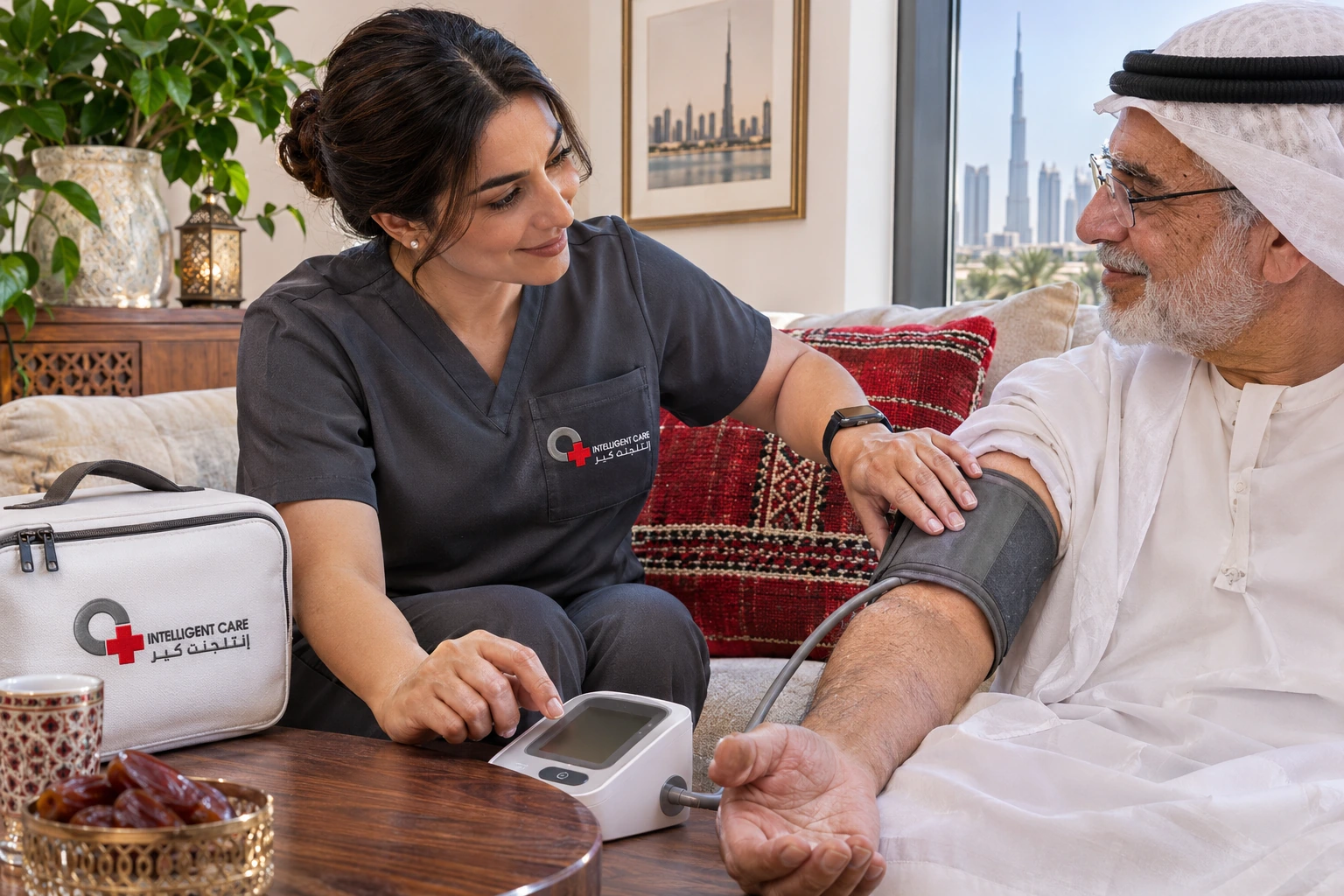 02
Qualified nursing for defined procedures, recovery and continuing clinical support, shaped around the care required.
Explore care & options 03
Assessment and rehabilitation for movement, function and everyday goals, from a session to a coordinated programme.
Explore care & options 04
Individual tests, focused profiles and health packages with Intel Lab. Choose home collection or visit the laboratory in Deira.
Explore care & options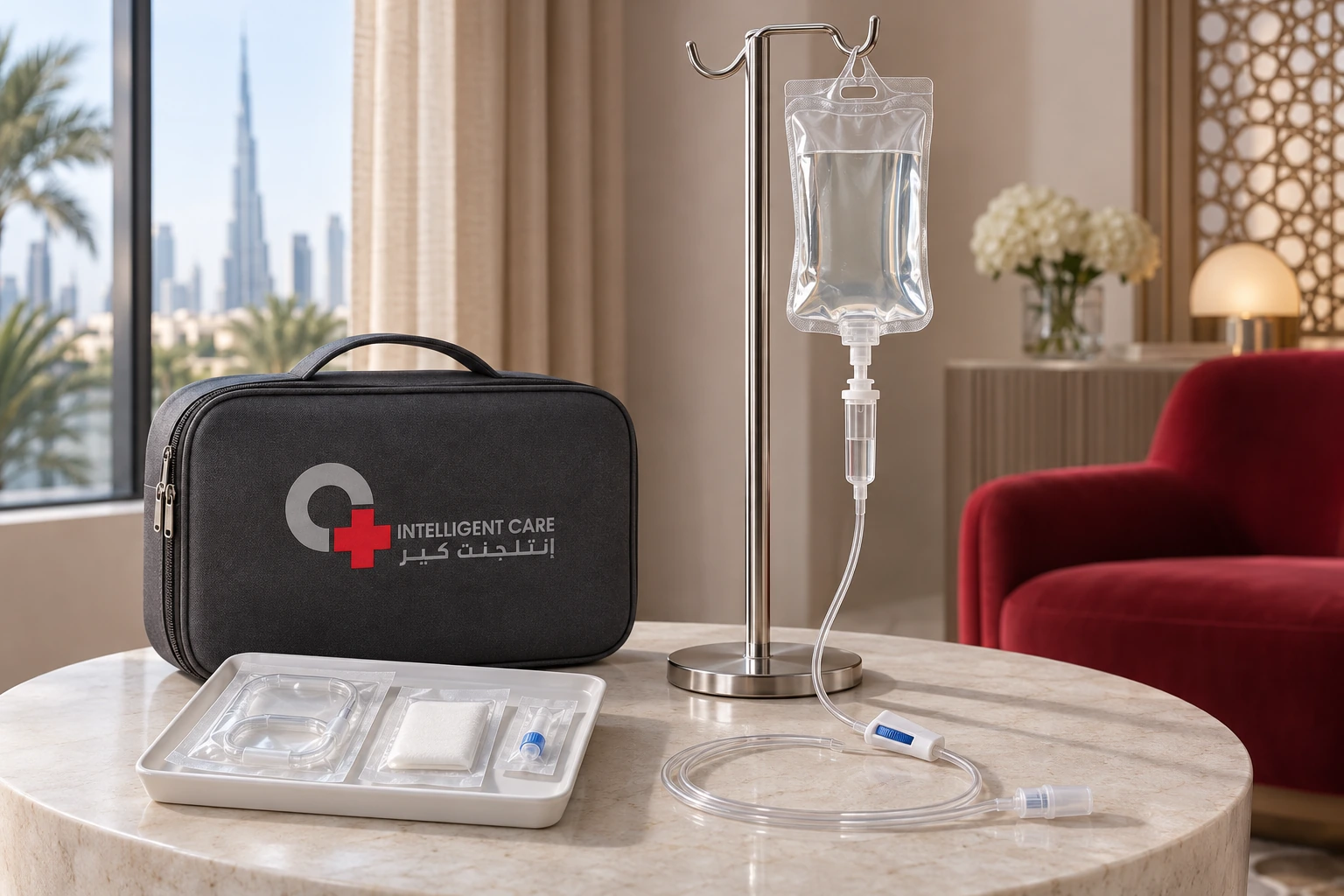 05
Clinician-assessed infusion options. Understand the formulation, appropriate route and visit before choosing treatment.
Explore care & options 06
Practical and clinical support for a mother and newborn as your family settles into a new routine.
Explore care & options 07
Support for an older person’s daily life, dignity and independence, with clinical care coordinated when needed.
Explore care & options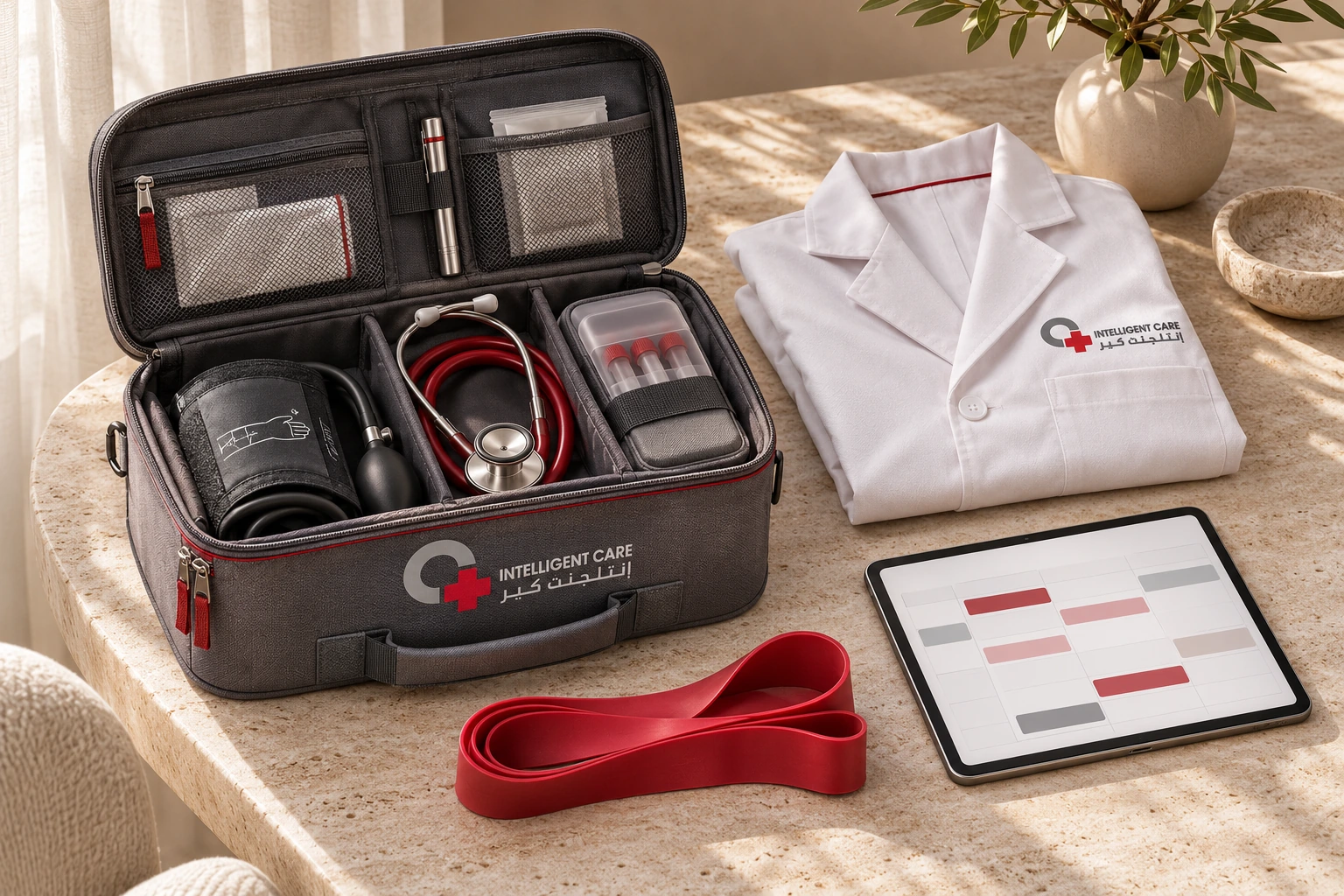 08
Bring several disciplines together around one person, from a hospital transition to ongoing care at home.
Explore care & optionsReady when you are
Choose a doctor visit, a physiotherapy session or a health package. Arrange care for yourself or someone you love, then select the location and appointment.
 One home visit
Care at home
One doctor home consultation and assessment. Additional tests and treatment are discussed separately.
 One session
Care at home
One physiotherapy session at home, shaped around your assessment and rehabilitation needs.

Intel Lab
A broad whole-body screen covering blood, urine and stool with kidney, liver, lipid, iron, diabetes and vitamin markers.
AED 299Explore packageStart with the person
A useful starting point is the situation you want help with. These routes help you explore; the clinical team assesses the right care for you.

Feeling unwell or noticing a change can call for clinical assessment before a particular treatment is chosen. A home doctor visit gives you space to discuss symptoms, relevant history and next steps.
Returning home after treatment can involve several practical and clinical needs. Nursing, physiotherapy and a coordinated plan support different parts of that transition.
A new baby, an older parent or a family carer needing support can change the rhythm of home life. Start with the person’s needs and the help that would make a difference.
Doctor at home
A consultation brings the clinical conversation to your home. The doctor can consider symptoms, examine where appropriate and review relevant history, medicines and previous findings.
The next step might be advice, a prescription, laboratory investigation or referral. It depends on the assessment. A doctor visit and any additional tests or treatment are distinct parts of the plan.
Explain what has changed, when it started and what you have already tried. The clinician determines whether the concern can be assessed at home or needs another setting.
Bring relevant reports and a current medicine list. A follow-up discussion works best when the doctor can see how the current concern fits your ongoing care.
Before the consultation ends, clarify the plan, any investigation or referral and what to do if the situation changes.
Nursing & continuing support
Some people need a defined nursing procedure. Others need a continuing schedule that supports recovery or a long-term clinical requirement. The right arrangement starts with the actual care activities, not simply the number of hours.
Our team helps qualify the need, appropriate professional and proposed schedule. Existing prescriptions, discharge instructions and relevant reports help establish what should be included.
Discuss the procedure, any existing clinical instructions and what needs to be available before the nurse attends.
Time, frequency, level of support and clinical complexity affect the arrangement. Ongoing care is scoped with you rather than bought as an undefined block of time.
Clarify who is providing everyday support, who is responsible for clinical tasks and how changes should be communicated.
Physiotherapy & rehabilitation
A rehabilitation goal can be as practical as getting up from a chair, walking more confidently or returning to an activity. The physiotherapist assesses function and relevant history before shaping an appropriate programme.
Home-based care lets the conversation include the setting where you move every day. Treatment, a home programme and review can work together, with progress assessed rather than promised.
Discuss pain, movement limitations, previous treatment and the activities you want to work towards.
The appropriate exercises or techniques depend on the assessment. Your therapist explains what to practise and how to carry it out safely.
The plan can change as your function, symptoms and confidence change. A course of care should have a purpose and an opportunity to review it.
Care through life’s changes
Different stages of life need different forms of support. We start with the person, the family and the practical details of life at home.
Support for a mother and newborn can include settling at home, daily care, feeding support and recovery needs. The right level of clinical or practical help is discussed around the family’s routine.
Explore mother & baby careCare for an older person should recognize preferences, independence and dignity. Daily assistance, mobility support, respite and nursing requirements can be brought into an appropriate plan.
Explore elderly careIV therapy
Explore named IV options, their listed ingredients and practical arrangements. A catalogue name does not establish that the treatment is appropriate for you or promise a particular result.
Clinical assessment comes first. Your symptoms, medicines, allergies and existing conditions affect the decision; oral treatment or a different route may be more appropriate.
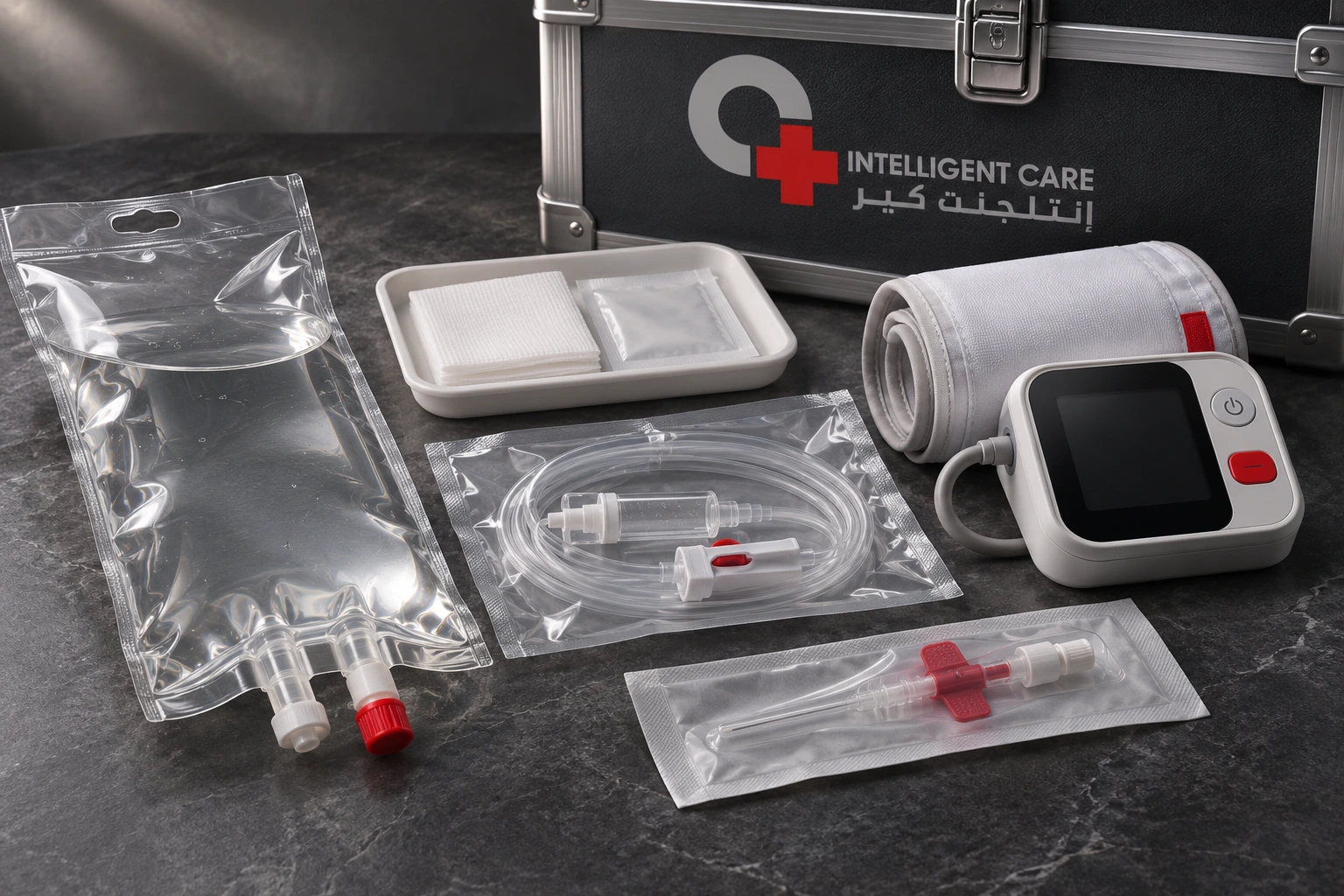
The IV catalogue distinguishes bookable listed options from treatments that require a formulation or route discussion.
Share relevant health information with the clinical team. The prescribed formulation and administration are not selected solely by a shopping preference.
The listed IV service price includes the visit. Appointment and aftercare arrangements are discussed in the appropriate clinical pathway.
Intel Lab · Diagnostic science
Intelligent Care and Intel Lab bring complementary capabilities together under common ownership. Clinical assessment, laboratory testing and follow-up can be connected around your need.
Choose a focused test, compare a health package or discuss an existing test request. The laboratory’s disciplines extend from routine biochemistry and haematology to molecular and specialised testing.

A laboratory request should answer a useful clinical question. Browse individual tests or ask the team about the tests your clinician has requested.
Choose home collection across Dubai or a visit to Intel Lab in Deira. Any package waives its visit’s fee; individual tests also qualify when their pre-discount total reaches AED 300.
Different tests have different turnaround times. The report should be read with the relevant history and clinician’s assessment rather than as a diagnosis on its own.
A complete care plan
Care after a hospital stay or support for a long-term condition can involve several professionals. A complete plan connects the clinical tasks, practical schedule, family involvement and review.
Tell us what is already in place and where help is needed. The team can qualify the requirement and mobilize the appropriate resources, with the person receiving care kept at the centre.

Relevant diagnoses, discharge instructions, medicines, mobility and daily support needs help define the requirement.
Agree the disciplines, schedule and responsibilities. A plan might connect doctor review, nursing, physiotherapy and laboratory tests where appropriate.
Ongoing support should be revisited as the person’s needs change. Share progress, difficulties and new concerns with the care team.
From the first conversation
A clear sequence, with the practical and clinical details worked through at each stage.
Speak to our patient care team about the person who needs care and what has changed.
Share the concern, relevant history, preferred location and whether you need one visit or a continuing arrangement. If someone is seriously unwell, the team helps identify when a different setting is needed.
We qualify the requirement and identify the appropriate clinical resources.
The type of clinician, care activities, timing and any preparation are discussed before the arrangement is agreed. A tailored care plan may involve several disciplines and a review point.
The agreed professional or team attends at your location.
The clinician assesses the situation, explains the care and records what is relevant. Any additional tests, treatment or changes to the plan should be discussed with you.
Questions, findings and progress inform the next step.
Follow-up may involve a clinical discussion, further assessment or a change in support. A continuing plan should remain connected to the person’s needs and the family’s practical circumstances.
Technology-enabled care
Keep the selected service, person, location and agreed appointment in view. A visit and an ongoing care plan have different arrangements; the care team helps coordinate the details.
Doctors, nurses, physiotherapists and laboratory services can contribute different parts of your care. The important connection is what each person is doing, why, and when the plan should be reviewed.
Laboratory findings, changing symptoms and progress at home can all affect the next step. Keep your questions and relevant records together for the conversation with your clinical team.
YOUR CARE, CONNECTED
People behind the care
Explore the clinician’s background and professional registration, and speak to our team about the right clinical route for your needs.

General Practitioner
Dr Toqa Ibrahim is a DHA-licensed General Practitioner with Alpha Intelligent Care Home Healthcare Center. Her clinical profile brings the general-practice perspective into our approach to care at home.
Practical arrangements
Coverage depends on the service, clinical need and your policy. Our team can help review the requirement, identify documentation and coordinate the next step with the insurer or administrator. An insurer’s name is not a promise that every service is covered.



Care is available across Dubai, including your home and suitable residential settings. Share the building, area and access details when arranging the visit. Laboratory collection also offers a visit-us option at Intel Lab in Deira.
Abu Dhabi is coming soon.
Location & contactStart with what you need help with, rather than a particular procedure. A new symptom may need a doctor’s assessment; a defined nursing task, rehabilitation goal or laboratory request follows a different route. Our patient care team can help you identify the appropriate starting point.
Listed fixed-price doctor visits, physiotherapy sessions, eligible IV options and laboratory items use the care bag. Ongoing nursing, complex care and plans that depend on hours or clinical requirements begin with an enquiry so the scope can be agreed.
Yes. In Your care at checkout, assign each service to yourself or another person. You can include more than one patient and provide guardian details when a child is receiving care. The selected service remains attached to the right person through the booking.
Nursing involves clinical care that requires the appropriate professional and care plan. Assistance with everyday routines, companionship or personal support can involve a different level of care. Tell us the actual activities required so the team can identify suitable support.
Yes. A complete care plan can bring together a doctor, nursing, physiotherapy and diagnostic services around one person’s requirements. The combination, schedule, responsibilities and review points are discussed with you.
Each visit is assessed separately. Home collection is AED 100 and a visit to Intel Lab is AED 50. Any health package waives its visit’s fee, as do individual tests totaling AED 300 or more before promotional discounts. Separate appointments have separate calculations.
Choose the earliest-available request in checkout. No date or time is required for that request, and no payment is taken. The care team needs to agree the appointment with you; it is not a confirmed urgent arrival time.
Yes. You can assign laboratory items to different people and organize a shared visit. People in one shared visit have one visit-fee calculation. If they need separate appointments, each appointment is assessed separately.
Contact our team with the service required and your policy details. Clinical assessment, eligibility, pre-approval and the terms of your plan can affect what is covered. The insurance page explains the workflow.
No. Homecare appointments do not replace emergency treatment. For life-threatening symptoms or a medical emergency in the UAE, call 998. If you are unsure whether an ordinary home visit is appropriate, seek clinical advice promptly.
Explore care in context
See how specific concerns and care situations connect to an appropriate next step.

Intelligent Care
Tell us what you need. We’ll help you find the right next step.