01Transfers
Bed and chair transfers
Explain your bed height, usual chair and the assistance currently needed. A safe approach should fit both the surgical restrictions and the actual home setup.

Post-operative rehabilitation · Dubai
Coming home after an operation brings new practical questions: how to move, what help is needed and which instructions apply today. Postoperative physiotherapy connects your surgical plan with everyday movement, without replacing your surgeon’s follow-up or changing restrictions without agreement.
 Clinical author assignmentDr Toqa IbrahimTwo clinical perspectivesProfiles & DHA directory links Guidance with sourcesExplore the references
Rehabilitation after surgery
Start with the initial assessment, choose one session or explore a ten-session plan. The right treatment and number of sessions depend on your assessed needs; selecting a bundle is not a clinical prescription.
Your discussion priorities
Choose a practical priority to discuss with the team. The operation and clinical instructions determine what can be assessed or practised.
Explain your bed height, usual chair and the assistance currently needed. A safe approach should fit both the surgical restrictions and the actual home setup.
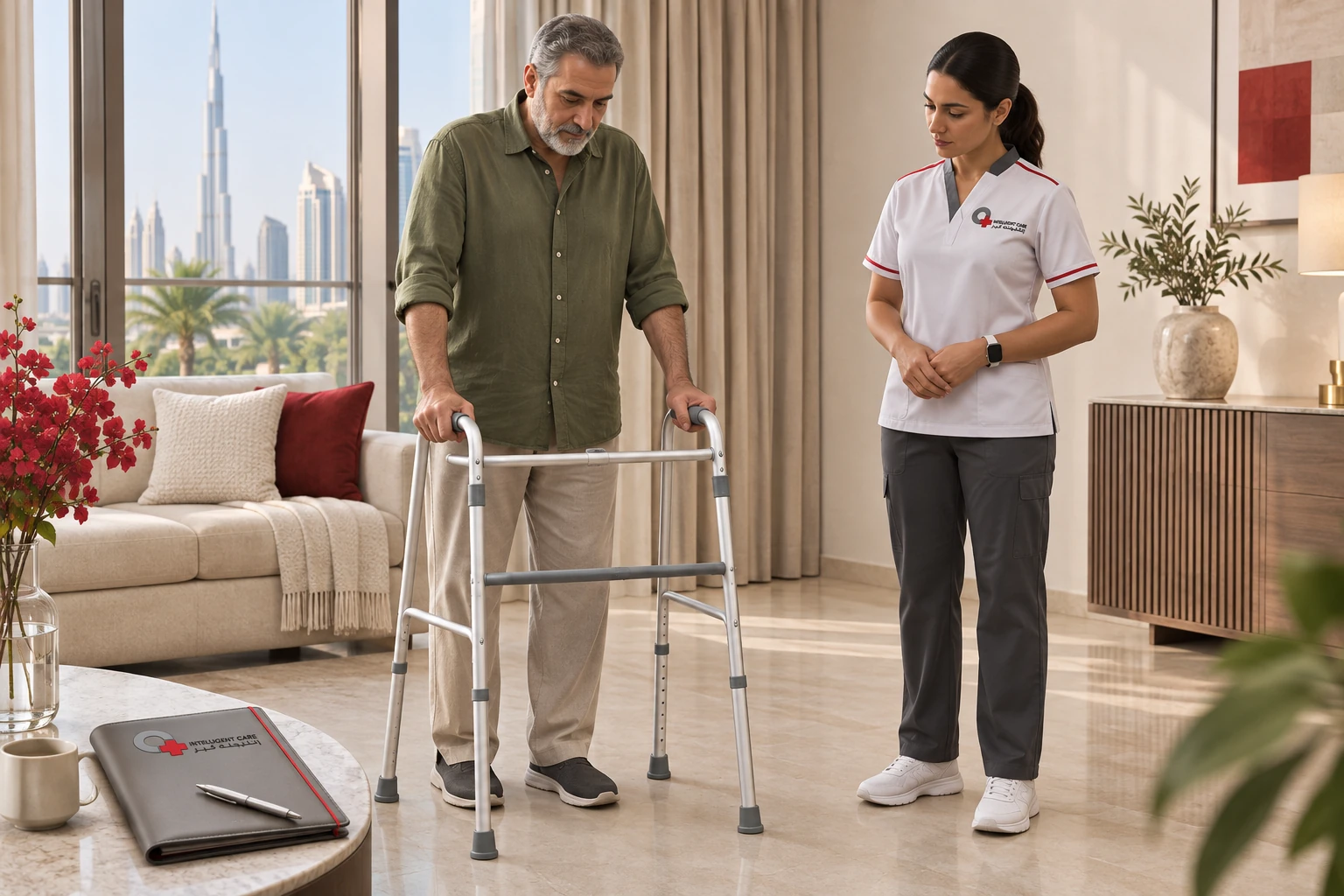
Share the prescribed walking aid and any weight-bearing instructions. Do not change how much weight you place through the operated area based on an online example.
Tell the team about steps, handrails and lift access before the visit. Some access arrangements need planning before rehabilitation can proceed at home.
Bring the programme supplied by the hospital and explain anything unclear. The physiotherapist can discuss how it fits your current assessment and surgical guidance.
Dressing, preparing food or getting to the bathroom may be immediate goals. Discuss the relevant restrictions and help available rather than aiming for every task at once.
Clarify who to contact for new symptoms, wound changes or questions about progression. A clear contact route is part of practical recovery planning.
Your discussion list
Choose the points you would like to discuss.
Understand the care
There is no single programme for every operation. A joint replacement, ligament repair, spinal procedure and abdominal operation can involve different restrictions and follow-up needs. Tell the team the procedure, date, treating hospital and what the surgical team has specifically allowed or limited.
The home visit can explore the practical activities within those instructions: moving between bed and chair, using the prescribed walking aid or navigating the route to the bathroom. A familiar setting helps make the discussion concrete. The physiotherapist first checks whether the information and support needed for a suitable visit are available.
Rehabilitation sits alongside medical recovery. Wound care, medication changes, suspected complications and surgical clearance may require other professionals. Ask which aspects the physiotherapist will address, which stay with the surgical team and how a changed concern should be escalated.
Read the clinical sourcesThe first assessment
The first appointment needs enough surgical information to make the rehabilitation discussion meaningful. Missing restrictions may need clarification before treatment.

THE CLINICAL CONVERSATION01—04
Review the operation, date, discharge information, follow-up appointments and restrictions. Explain any changes since leaving hospital or the last clinical review.
Discuss symptoms, mobility, assistance, home access and any concerns suggesting a medical complication. Rehabilitation may be deferred while a medical concern is assessed.
Observe relevant tasks only within the agreed restrictions and current capacity. The choice of movement depends on the operation, not a standard postoperative circuit.
Set a practical next goal and explain the current programme, review points and contact routes. Identify questions that must return to the surgeon or another clinician.
The care pathway
These stages describe planning, not a fixed postoperative timetable. The surgical team’s instructions and your assessment take priority.
Confirm the operation, restrictions and practical support required at home.
Identify the first appropriate tasks and the assistance needed to manage them.
Discuss response and align progression with clinical reassessment or surgical follow-up.
Consider further daily, work or activity goals within the updated guidance.
Explore a stage to bring it into focus. Every stage stays visible.
What the care involves
Every part of rehabilitation should be compatible with your operation and current medical advice. Ask before changing an established restriction.
| Element | Purpose | What must be clear |
|---|---|---|
| 01Task-specific practice | Relate appropriate movement to getting around the home or completing a necessary daily task. | Which tasks are currently allowed and what assistance is needed? |
| 02Prescribed exercise review | Clarify the current exercise programme and adapt only where clinically appropriate and consistent with restrictions. | Which version, frequency and progression have been agreed for me? |
| 03Aid and environment discussion | Consider the practical use of existing aids and the layout involved in daily routines. | Does my current equipment and support suit the task? |
| 04Progress coordination | Bring relevant changes and questions back to the treating team. | Who can change restrictions and when is the next surgical review? |
Before care arrives
You do not need to demonstrate difficult movements or rearrange the home by yourself before the visit. Tell the team what needs planning.
A personal reminder list.
Nothing is sent or saved.
Care around the person
A relative or carer may be involved in recovery, but should not have to guess how to assist. Discuss their role with the patient’s agreement.

Ask for instruction in the specific task you will support. Do not lift or transfer the person using an approach copied from another operation or an online video.
Make discharge instructions, appointment details and current guidance accessible to the person receiving care. Agree who will contact the team if clarification is needed.
Encourage the agreed plan without pressure to meet another person’s recovery timeline. New symptoms or unclear instructions should be discussed, not worked around.
Continuity of care
Your progress record should help the next clinical decision and remain consistent with surgical follow-up.
Describe how the agreed task is going and whether the level of assistance has changed. Improvement does not automatically remove a restriction.
Report unexpected or persistent changes rather than adding more repetitions without guidance. Ask what should prompt contact before another session.
Share new advice from the surgeon or hospital promptly so the home plan does not continue from an outdated instruction.
Confirm what happens next, who is responsible and whether the current service remains appropriate. Additional visits should have a clinical purpose.
People and responsibilities
Care works best when you know who assesses, who arranges and who follows up. Named editorial profiles do not select the clinician attending your appointment.
Assesses movement and function, agrees practical goals and adapts the rehabilitation plan within the relevant clinical restrictions.
Provides diagnosis, surgical restrictions or other specialist instructions when these are needed to guide rehabilitation.
Helps match the request to the appropriate service, coordinates the first appointment and clarifies any additional requirements.
Choose meaningful goals, explain what happens between sessions and agree what information may be shared.
Read the real team profiles and their professional-directory references. Your assigned professional and the scope of care are confirmed through the care arrangement.
Meet our clinical teamWhen to seek medical help
Postoperative symptoms should be assessed in the appropriate setting. This list is not a substitute for the discharge instructions or emergency advice.
Immediate medical attention
Prompt clinical assessment
Practical arrangements
Choose a free initial assessment, one home session or a ten-session plan. Discuss whether the selected option suits your needs; buying more sessions does not guarantee a particular recovery.
Share the building or hotel, access instructions and any stairs or transfer difficulties. Tell the team about space, equipment and communication needs before the visit.
The ten-session plan books the first appointment now; arrange later sessions with the team. Insurance eligibility and any required documents are checked for the individual policy, not presumed from the service name.
Your questions
The operation, discharge plan, current condition and restrictions determine the appropriate start. Share those details so the team can consider the request; this page does not set a universal day for starting.
Do not assume that a home appointment overrides the surgeon’s instructions. Any change needs to follow the appropriate clinical authority and updated plan.
Physiotherapy addresses rehabilitation. Wound assessment or dressing care may need nursing or medical arrangements; clarify the required service rather than assuming it is included.
Tell the team what information you have. Relevant restrictions or clinical instructions may need clarification with your treating team before a suitable programme can be agreed.
Discuss the specific tasks and who will assist. The clinician can consider appropriate instruction, but the required skill, equipment and level of support depend on the individual situation.
A booking plan cannot determine your clinical need. The assessment, operation and progress guide the number and purpose of appointments; no fixed recovery is promised by a bundle.
Share it before the next session and ask the physiotherapist to align the home programme. Keeping both teams informed helps avoid conflicting instructions.
A new postoperative concern may need medical or surgical assessment first. Follow the urgent contact advice supplied at discharge and use emergency care for serious warning signs.
Expertise with a name
Explore the named clinical profiles, their professional roles and their Dubai Health Authority directory records.
Author assignment
General Practitioner
Dr Toqa Ibrahim is a DHA-licensed General Practitioner with Alpha Intelligent Care Home Healthcare Center. Her clinical profile brings the general-practice perspective into our approach to care at home.

Review assignment
Specialist Clinical Pathology
Dr Joyce Jose is a DHA-licensed Specialist in Clinical Pathology at Intel Lab. Her public professional record includes pathology practice in the UAE and earlier experience as a professor at Gulf Medical University.
Professional registration describes each clinician’s role. The clinical assessment and the person responsible for your care are confirmed separately.
More care guides



The wider picture
Explore related support, or speak to us about combining services into one plan.
About this guide
General information supports the care conversation; your own assessment determines the plan. Company service information and independent clinical guidance are listed separately below.
Care that comes to you
Across Dubai.
Abu Dhabi — coming soon.