01Desk
Screen-based work
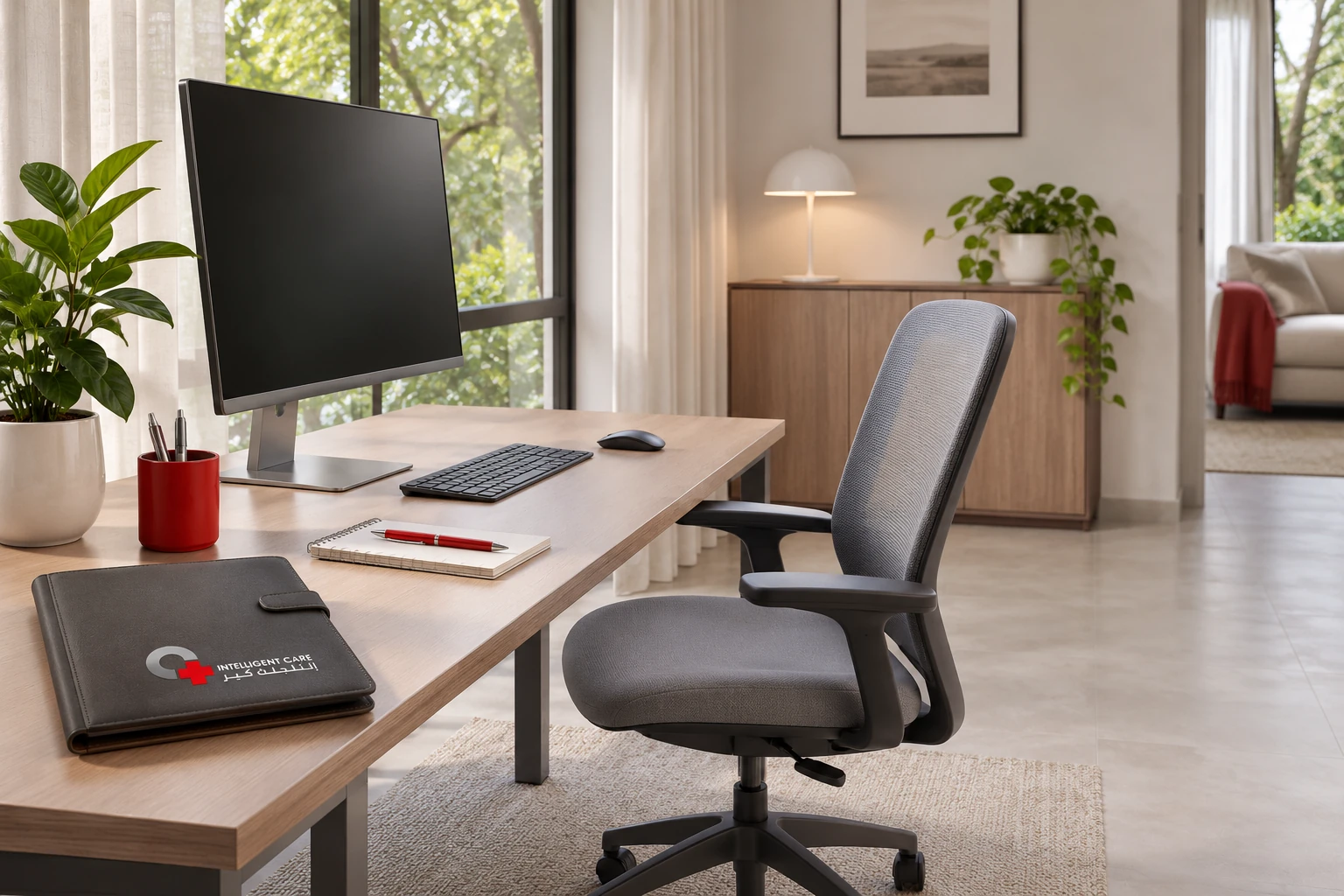
Explain the main tasks, time at the screen and opportunities to change activity. Your usual chair, monitor and input devices provide context.

Work-related strain · Dubai
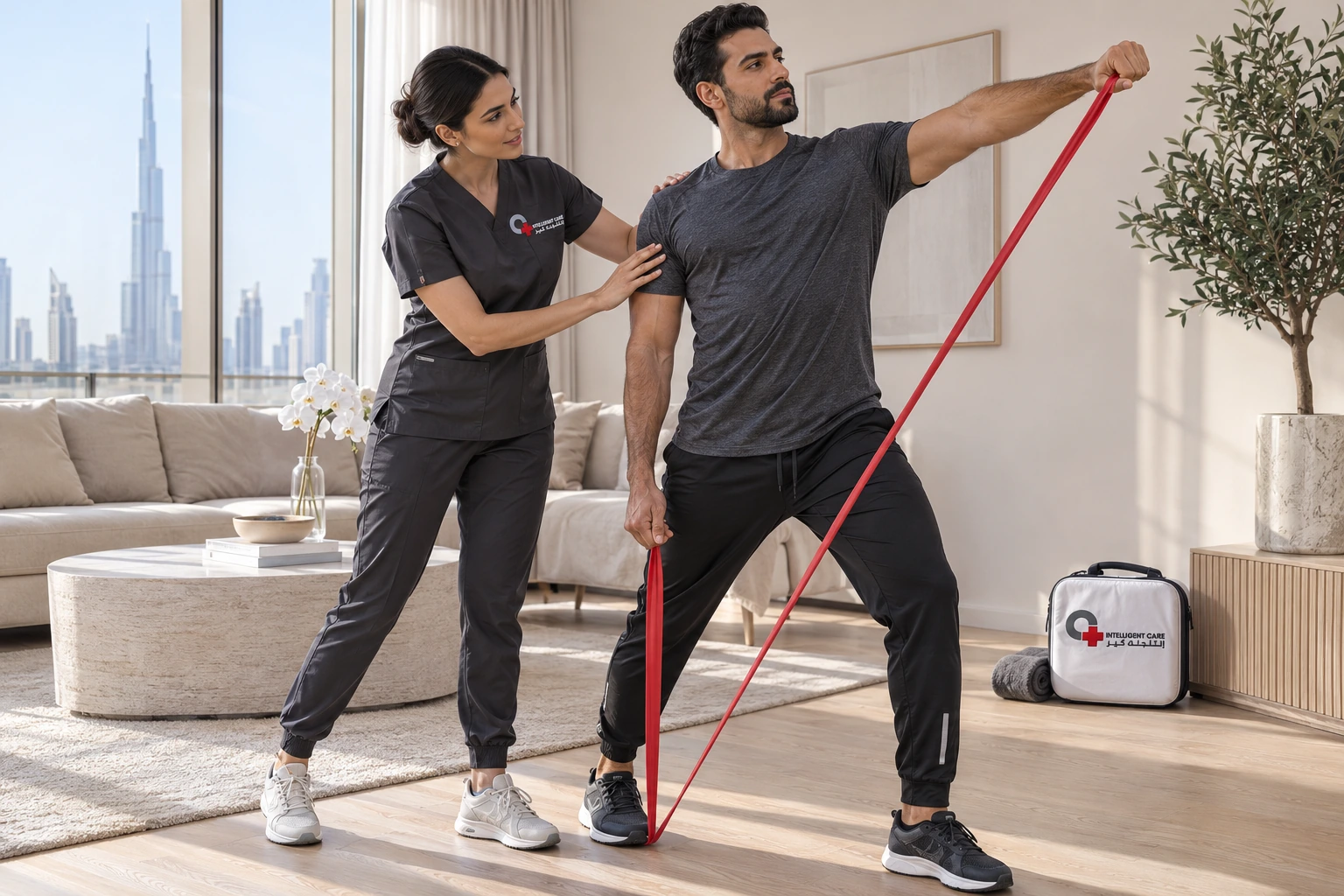
A long screen session, repeated hand movements or a demanding physical task can become difficult when symptoms build. Intelligent Care brings assessment to your home, linking rehabilitation with your work demands, everyday activity and the movement you want to regain.

 Clinical author assignmentDr Toqa IbrahimTwo clinical perspectivesProfiles & DHA directory links Guidance with sourcesExplore the references
Work demands · movement · sustainable routines
Choose an initial physiotherapy assessment and explain the activity that is difficult, how symptoms behave and whether work has recently changed. A clear task description is more useful than deciding that your posture is “wrong”.
Your discussion priorities
Choose the activities you want to discuss. The selection helps prepare the assessment; it does not identify a diagnosis or determine liability for an injury.
Explain the main tasks, time at the screen and opportunities to change activity. Your usual chair, monitor and input devices provide context.
Describe typing, mouse use, tools or another repeated task and any numbness, weakness or swelling. Symptoms may need medical assessment as well as rehabilitation.
Tell us about the load, frequency, space and available assistance. A home visit should not reproduce a hazardous workplace task for demonstration.
Discuss the surfaces, footwear, breaks and movements involved. The plan considers your symptoms and capacity rather than one standing rule for everyone.
Share medical advice, current restrictions and the tasks you need to resume. A graded activity goal is distinct from employer clearance or a formal fitness-for-work opinion.
Mention commuting, caring responsibilities, sport and sleep. The total pattern of demands can matter to a rehabilitation plan.
Your discussion list
Choose the points you would like to discuss.
Understand the care
Work-related strain is a description of symptoms in a work context, not a single diagnosis. Pain, stiffness, tingling or reduced function may occur with repeated tasks, prolonged positions, heavy demands or an existing condition. Assessment considers the symptom pattern and other possible causes rather than attributing everything to a desk setup.
Rehabilitation may combine appropriate exercise, movement advice and practical changes to the way tasks are organised. A workstation adjustment can be useful, but there is no single posture that everyone must hold all day. Variation, manageable workload and a plan that fits the person are important topics for discussion.
A home visit can make a home-working setup visible and connect symptoms with ordinary activities outside work. If your main workplace is elsewhere, describe the task or share appropriate non-confidential information. The therapist can identify useful questions and adaptations without claiming to have formally assessed an unseen workplace.
Read the clinical sourcesThe first assessment
The assessment connects symptoms with function while checking whether another medical route is needed. It should leave you with an explanation and a practical starting point.

THE CLINICAL CONVERSATION01—04
Discuss onset, location, daily pattern and the effect on specific tasks. Tell the clinician about numbness, weakness, injury or symptoms that are changing.
Consider health history, previous episodes, work changes and activity outside work. A work association does not rule out another cause.
The therapist may examine relevant movement, strength and functional tasks. Testing is chosen for the presentation and should not require unsafe lifting or forcing a painful movement.
Select manageable rehabilitation goals and discuss practical task adaptations. Clarify what you can change yourself and what may need an employer or occupational-health discussion.
The care pathway
These phases describe review and progression, not a guarantee of return to work within a fixed number of visits.
Understand symptoms, task demands and current limitations.
Choose practical changes and appropriate rehabilitation activities.
Review response and increase suitable activity demands when appropriate.
Agree how to continue, recognise setbacks and seek review.
Explore a stage to bring it into focus. Every stage stays visible.
What the care involves
A plan should explain the purpose of each element. Passive treatment alone is not automatically the answer to a repeated daily demand.
| Element | Practical purpose | What shapes the choice |
|---|---|---|
| 01Individual exercise | Build capacity for an assessed movement or task. | Clinical findings, current tolerance and meaningful goals. |
| 02Task and setup advice | Consider how reach, support, equipment or task organisation affects the day. | The actual environment and changes that are practical. |
| 03Activity variation | Discuss opportunities to alternate demands and avoid long uninterrupted repetitions. | The job, symptom response and available control over the routine. |
| 04Hands-on care when appropriate | Support an individual symptom-management plan. | Assessment, consent and its role alongside active rehabilitation. |
Before care arrives
You can make the assessment more useful without turning your home into a test laboratory.
A personal reminder list.
Nothing is sent or saved.
Care around the person
Work symptoms do not stop at the end of a shift. Home responsibilities belong in the conversation too.

Discuss which tasks are difficult and whether temporary help is available. Adaptations should support participation rather than remove every activity indefinitely.
Choose a manageable place for agreed exercises or task practice in the day. A routine that fits is more useful than an ambitious list that is never used.
When discussing work, avoid sharing confidential documents or client data. A general description or a cleared view of a workstation is often enough for the initial conversation.
Pain can be frustrating. Focus on agreed goals and useful changes rather than blaming posture, fitness or effort without an assessment.
Continuity of care
A useful review checks whether the plan is making daily demands more manageable.
Describe what you can do, how long it is manageable and whether assistance or breaks have changed. Compare like-for-like activities where possible.
Discuss symptoms during and after work and how they settle. Report new numbness, weakness or deterioration rather than treating every response as expected exercise soreness.
Tell the therapist which changes were feasible at work and which were not. The next plan should account for the real environment.
People and responsibilities
The clinical plan and workplace arrangements may need different people.
Assesses symptoms and function and guides suitable rehabilitation and task advice within the home visit’s scope.
Reviews concerning symptoms, diagnosis or medical restrictions when needed. New weakness or persistent neurological symptoms may require further assessment.
Considers workplace adjustments, formal risk assessment and employment arrangements. A home therapy session does not replace those processes.
Read the real team profiles and their professional-directory references. Your assigned professional and the scope of care are confirmed through the care arrangement.
Meet our clinical teamWhen to seek medical help
Work-related symptoms can still have a serious cause. Seek the appropriate medical assessment when the pattern changes.
Immediate medical attention
Prompt clinical assessment
Practical arrangements
Start with an assessment or choose a session plan suited to your goals.
Describe the main work-related concern when booking. The team can clarify whether a home visit is suitable or another medical route is needed.
Choose one session or a ten-session programme. The programme’s first appointment is booked now; later sessions are agreed with the care team.
If the request concerns an organisation, formal occupational-health work or a broader programme, use the relevant enquiry route. It is separate from an individual rehabilitation appointment.
Your questions
No. Symptoms can have several contributing factors, and one posture does not explain every problem. Assessment considers the task, duration, movement, health and symptom pattern together.
Equipment may be one part of a practical plan, but a purchase is not a diagnosis or a guaranteed solution. Discuss the actual setup and task before making changes.
The term is often used for symptoms associated with repeated movement. A clinician assesses the presentation to understand the likely problem and whether further medical review is needed.
That depends on symptoms, medical advice and the demands of the job. Discuss suitable activity and possible adjustments. Employer or occupational-health decisions are separate from the physiotherapy appointment.
Do not assume prolonged complete rest is the right approach. Ask the treating clinician for an individual activity plan, especially after injury or with weakness, numbness or worsening symptoms.
A description can help discuss the task, but it does not equal a formal inspection of an unseen workplace. For home working, the therapist can consider the actual setup during the visit.
The plan follows assessment and may include exercise, task advice and appropriate hands-on care. It should explain how each element supports the functional goal.
Response varies with the cause, duration, demands and the practical changes possible. Agree review points and meaningful goals rather than expecting a guaranteed result in a fixed number of sessions.
Expertise with a name
Explore the named clinical profiles, their professional roles and their Dubai Health Authority directory records.
Author assignment
General Practitioner
Dr Toqa Ibrahim is a DHA-licensed General Practitioner with Alpha Intelligent Care Home Healthcare Center. Her clinical profile brings the general-practice perspective into our approach to care at home.

Review assignment
Specialist Clinical Pathology
Dr Joyce Jose is a DHA-licensed Specialist in Clinical Pathology at Intel Lab. Her public professional record includes pathology practice in the UAE and earlier experience as a professor at Gulf Medical University.
Professional registration describes each clinician’s role. The clinical assessment and the person responsible for your care are confirmed separately.
More care guides


The wider picture
Explore related support, or speak to us about combining services into one plan.
About this guide
General information supports the care conversation; your own assessment determines the plan. Company service information and independent clinical guidance are listed separately below.
Care that comes to you
Across Dubai.
Abu Dhabi — coming soon.