01
Offices and institutions
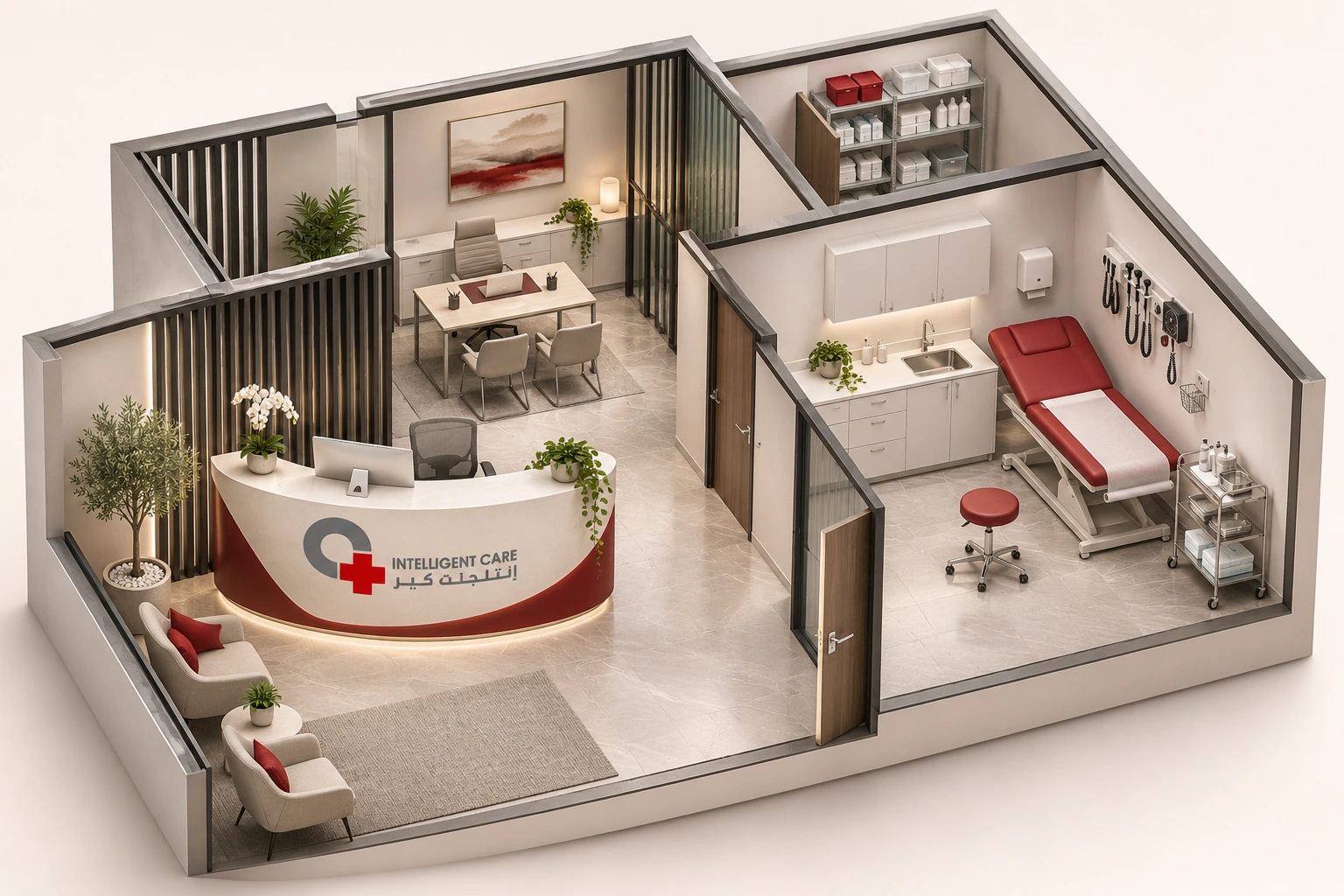
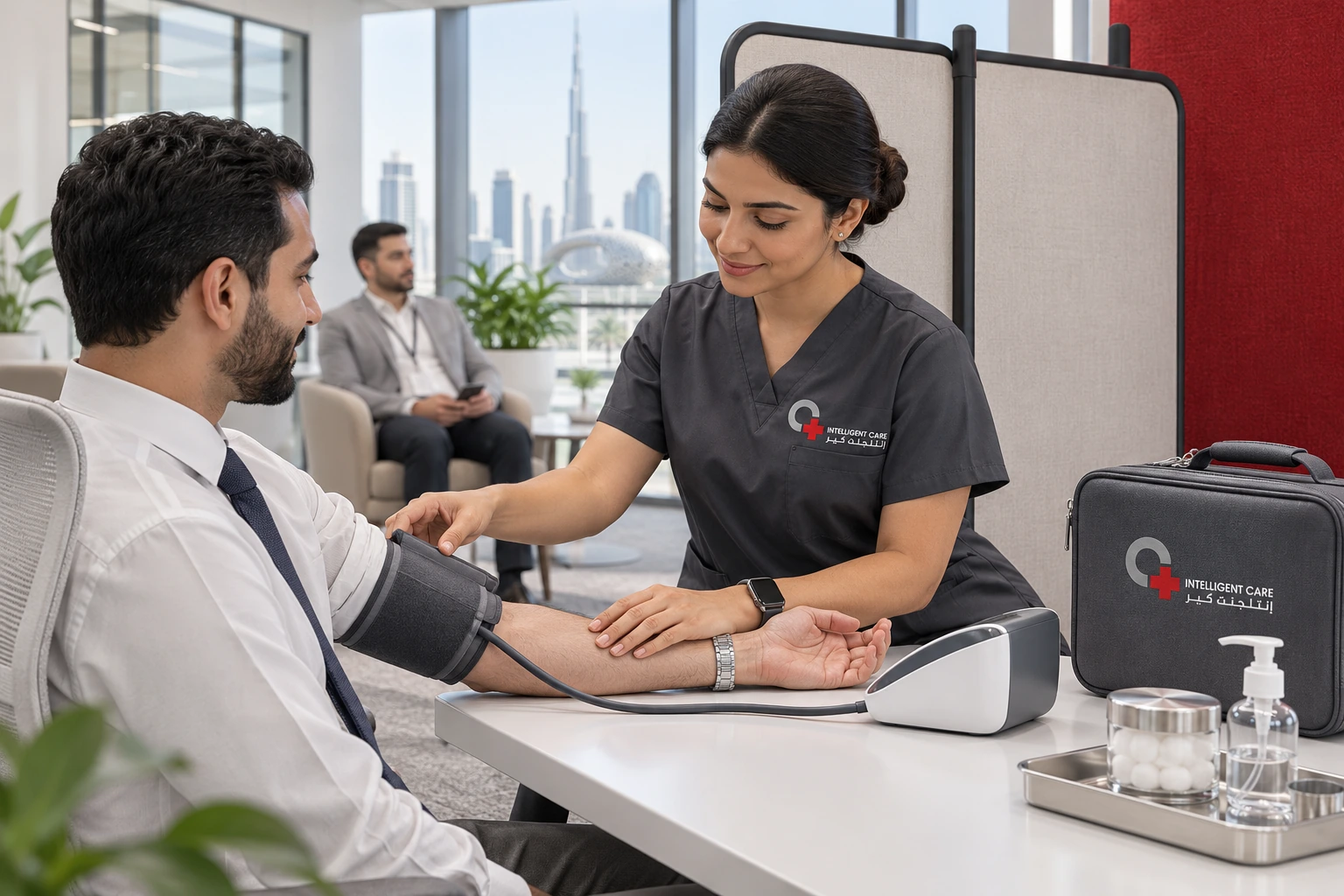
Consider consultation access, staff schedules, privacy and how screening or wellbeing initiatives fit the working day.

Workforce health · Your organization
Plan occupational health, employee screening and on-site clinical support around your roles, locations and working day. Connect assessment, diagnostics and follow-up with clear responsibilities for HR, HSE and the clinical team.
Your next step
Choose the environment and the services you want to discuss. Your brief keeps workforce size, sites and operational needs together.
The setting changes the plan
Occupational health is shaped by the work and the people doing it. We support civil environments and industrial settings, with coordination alongside HR and HSE. Begin with the environment before choosing a list of tests or a clinical team.
Consider consultation access, staff schedules, privacy and how screening or wellbeing initiatives fit the working day.
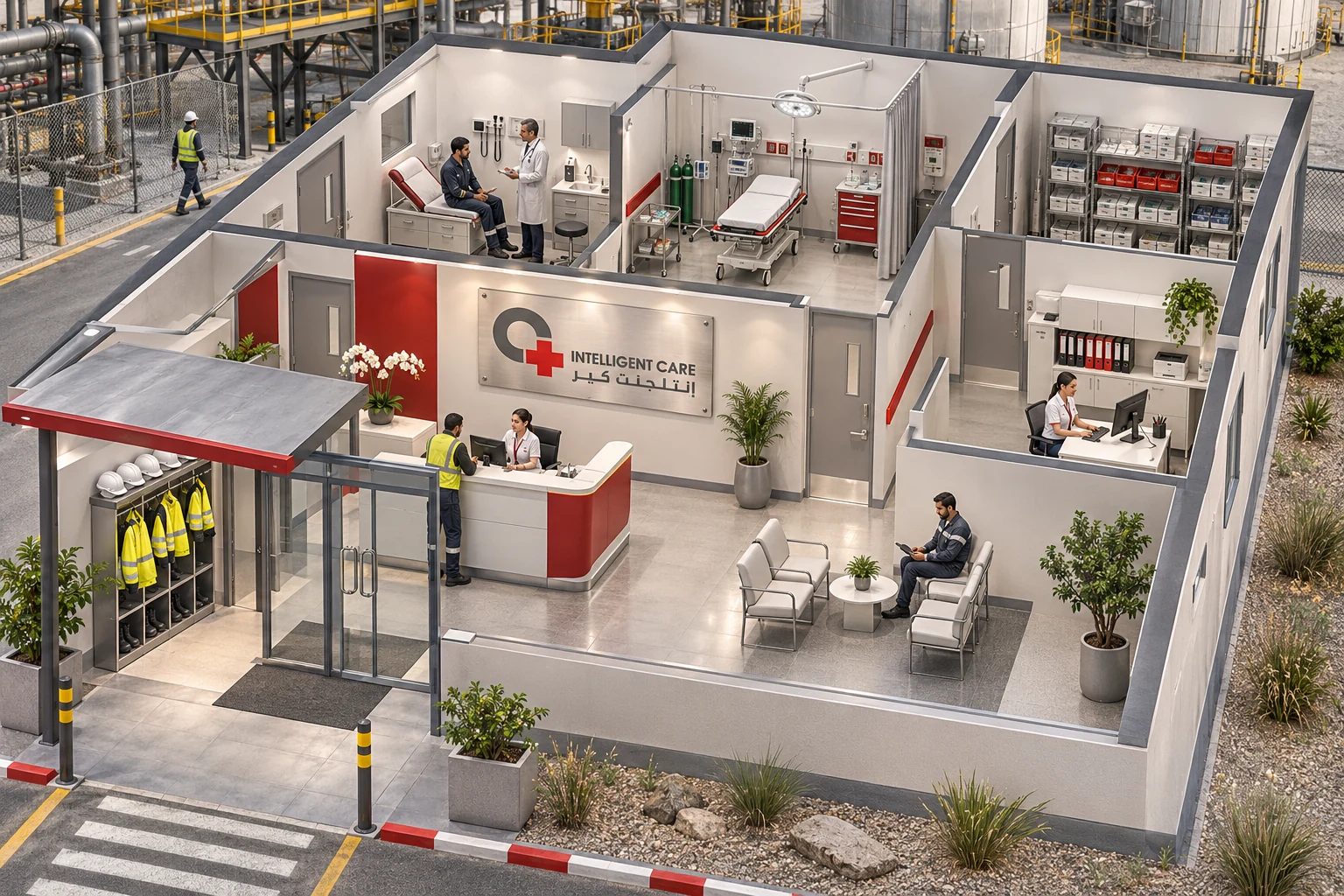
Connect clinical provision to site access, work activities, HSE priorities and escalation arrangements.
Plan access, participant flow, communication, private clinical space and links to the workplace.
Clarify the population, activities and interface with the facility’s own operating and safety responsibilities.
A connected service scope
Choose the services that fit the program’s objective. A screening initiative, fitness assessment and ongoing clinic serve different needs; the clinical scope and delivery arrangement are agreed before the program begins.
Discuss the role, job demands and assessment purpose for an incoming cohort.
Plan an appropriate clinical review or screening cycle around the population and agreed objective.
Assess the person in relation to the actual work requirement and relevant clinical information.
Scope eligibility, clinical requirements, consent, logistics and documentation for the proposed campaign.
Discuss assessment and rehabilitation support relevant to the person and work environment.
Connect clinical assessment, treatment or rehabilitation with appropriate onward care and review.
Explore a scheduled service or clinic model with defined staffing, scope and escalation.
Discuss education, assistance or counselling-related support as part of a clearly defined program.
Discuss how on-site clinical support connects with emergency escalation and appropriate transport or external care. Resources and response responsibilities require an explicit site plan.
Start with the actual work
A generic health check does not answer every occupational question. Role-related assessments need to consider the duties, environment and reason for assessment. The organization and clinical team each contribute different information.
Job tasks, working conditions, schedules, site requirements and the purpose of the assessment.
Relevant health history and findings in relation to the agreed clinical and occupational scope.
Appropriate conclusions, further assessment or follow-up are communicated through the agreed process.
Two different starting points
Pre-employment and return-to-work assessments have different context. One begins with a proposed role; the other considers a person returning after illness, injury or absence. Neither should be reduced to a generic laboratory panel.
Clarify the role, employer requirement and relevant assessment before arranging a cohort program.
Bring the work demands and relevant clinical information together to discuss readiness and any further assessment.
Statutory visa or government medical-fitness procedures follow their own authorized routes. An employer screening program is not a substitute.
Bring the service to the setting
A time-limited initiative and an ongoing clinic need different operating plans. Both require appropriate clinical space, access and privacy. Choose the model around the need rather than fitting the workforce into a standard event format.
Bring the service to the setting
Agree the invited population, appointments, clinical activities, preparation and follow-up.
Define service frequency, professional roles, the scope of consultations and the site interface.
Connect facility requirements, staffing, supplies, clinical governance and day-to-day operation.
Diagnostic support from Intel Lab
Laboratory testing may form part of a broader workforce program. Intel Lab’s corporate service includes organization-specific screening, referrals, occupational testing and on-site collection. Panel composition, reporting and commercial arrangements are scoped to the program.

Diagnostic support from Intel Lab
Discuss general-health, metabolic or other relevant laboratory requirements with the clinical team.
Explore a tailored diagnostic brief and appropriate clinical discussion for a defined participant group.
Specify the actual role, assessment purpose and relevant laboratory requirements.
Connect a clinician’s request with collection, analysis and the appropriate return of results.
Scope collection logistics, a named account contact, organization billing and the reporting format together. Any partner portal or systems integration is agreed and verified separately for the specific arrangement.
From participant to result
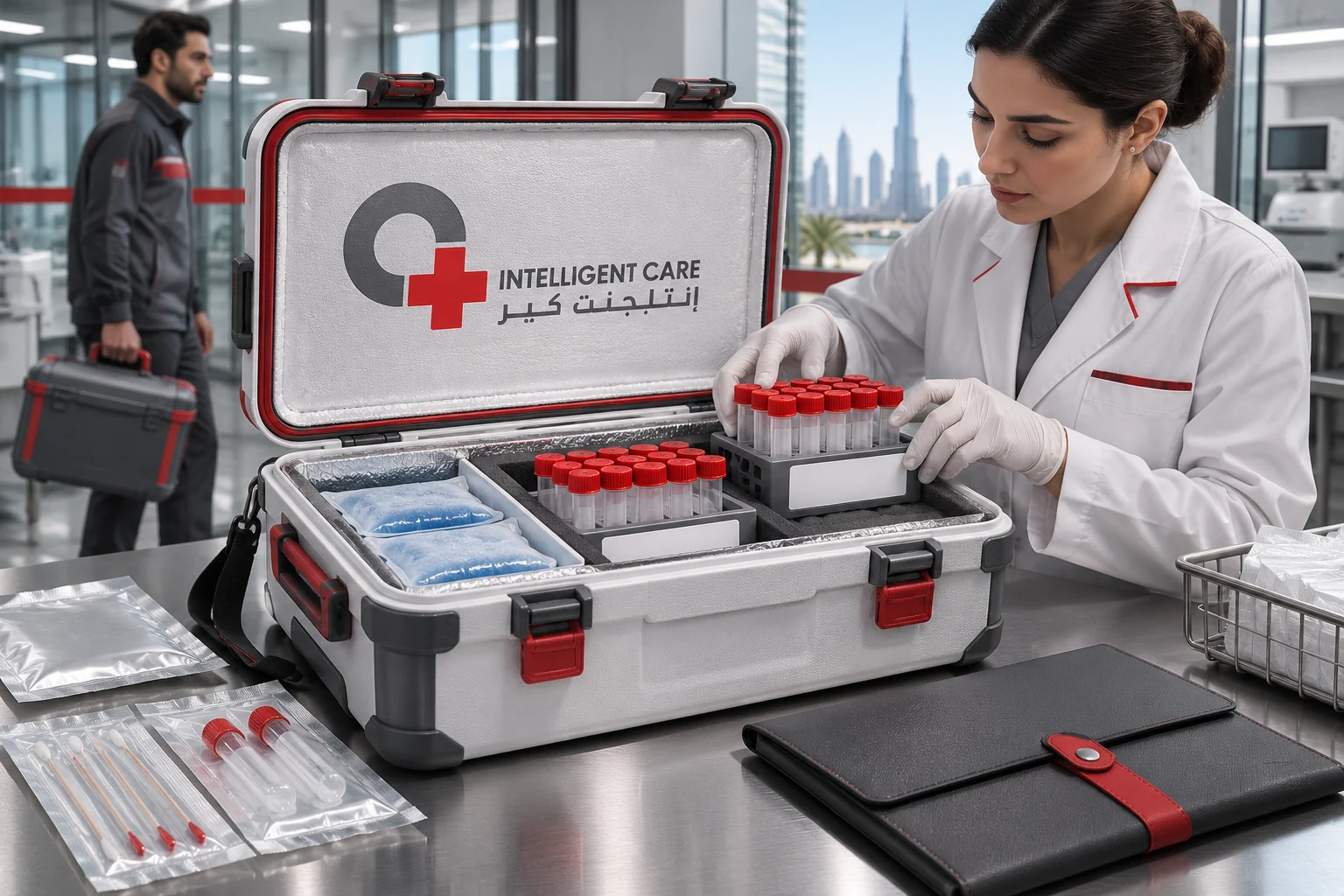
A well-planned collection program includes more than the draw. Identity, preparation, sample handling, reporting and clinical follow-up all need to be considered in advance. Test-specific requirements and expected reporting times are confirmed for the agreed panel.
Confirm the requested tests, participant instructions and consent arrangements.
Match the participant and request, then collect and label the appropriate specimens.
Coordinate sample handling and the laboratory’s requirements for the tests involved.
Return individual findings through the agreed clinical pathway and define any onward review.
Care within the working day
Workplace health can include physiotherapy, health education and discussion of assistance needs. The purpose is to make appropriate support accessible and relevant to the working environment, without promising a particular reduction in absence or health costs.

Care within the working day
Discuss musculoskeletal concerns, rehabilitation needs and the appropriate assessment route.
Consider posture, workstation setup and work demands as part of a scoped wellbeing conversation.
Plan useful sessions or support pathways with clear boundaries between general information and individual clinical care.
Vaccination and screening campaigns
A campaign needs a defined population, appropriate clinical scope and a practical delivery plan. Availability, eligibility, consent and follow-up are confirmed for the specific initiative. The proposed service and timing are confirmed through the clinical and operational plan.
points to bring into the conversation
Select the points you want to discuss.
Coordinate the responsibilities
The organization understands the work. The clinical team assesses health needs. The program should define where those responsibilities meet, how concerns are escalated and who acts on operational recommendations.
Participant invitation, workforce information, scheduling and agreed employment-process interfaces.
Site requirements, work activities, access arrangements and relevant safety context.
Assessment scope, consent, confidentiality, individual findings and appropriate clinical follow-up.
The schedule, contacts, service boundaries, reporting and actions agreed with the organization.
Information with a purpose
Workforce reporting should help the organization manage its program while respecting the individual clinical relationship. The purpose, access and scope of any information sharing are agreed before the program starts.
CLINICAL PERSPECTIVE
Personal clinical findings and results are returned through the agreed confidential care pathway.
PROGRAM PERSPECTIVE
Appropriate program measures, aggregate information and agreed fitness conclusions are distinct from full personal medical records.
Define who contacts the person, how further care is arranged and what operational information can appropriately be shared.
Evaluate what matters
A useful review asks whether the program reached the intended people and completed the agreed clinical and operational pathway. Choose measures that fit the service, then interpret them with the right context.
DEFINE YOUR REPORTINGInvitations, attendance and completion in relation to the agreed workforce population.
Operational issues, access, participant feedback and actions needed for future sessions.
The process for returning results, advising participants and arranging appropriate follow-up.
Use agreed aggregate insights and program learning to refine the next scope.
Agree the review measures and their interpretation before the program begins.
Your questions
The wider picture
Explore related support, or speak to us about combining services into one plan.
Built around your organization
Across Dubai.
Abu Dhabi — coming soon.