 Popular63biomarkers
 Collection included
Basic Health Checkup
Blood count, liver, kidney, cholesterol, blood sugar and urine tests: the essentials in one visit.
- Results
- 24 hours
- Sample
- Blood · Urine
AED 199
What’s included 
LAB TESTS AT HOME · DUBAI
The tests you need. The place you choose.
Expert laboratory science, connected to your care.
Popular63biomarkersCollection includedBlood count, liver, kidney, cholesterol, blood sugar and urine tests: the essentials in one visit.
Expertise, choice and convenience. All connected.Discover the laboratory
BROWSE BY HEALTH FOCUS
Choose a focus to filter the packages and tests below. Packages may cover several health areas.
EXPLORE YOUR LAB AT HOME
Compare what is included.
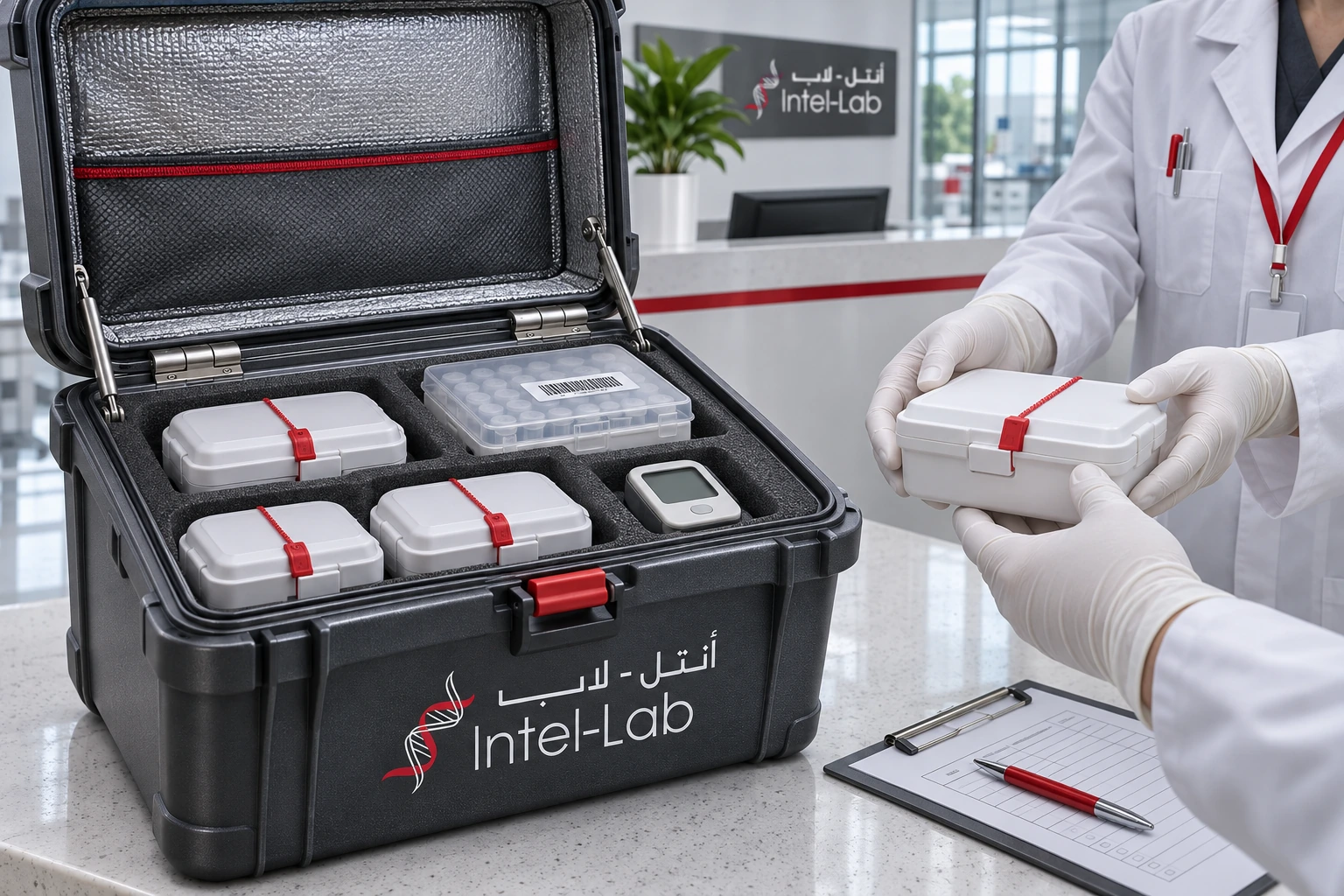
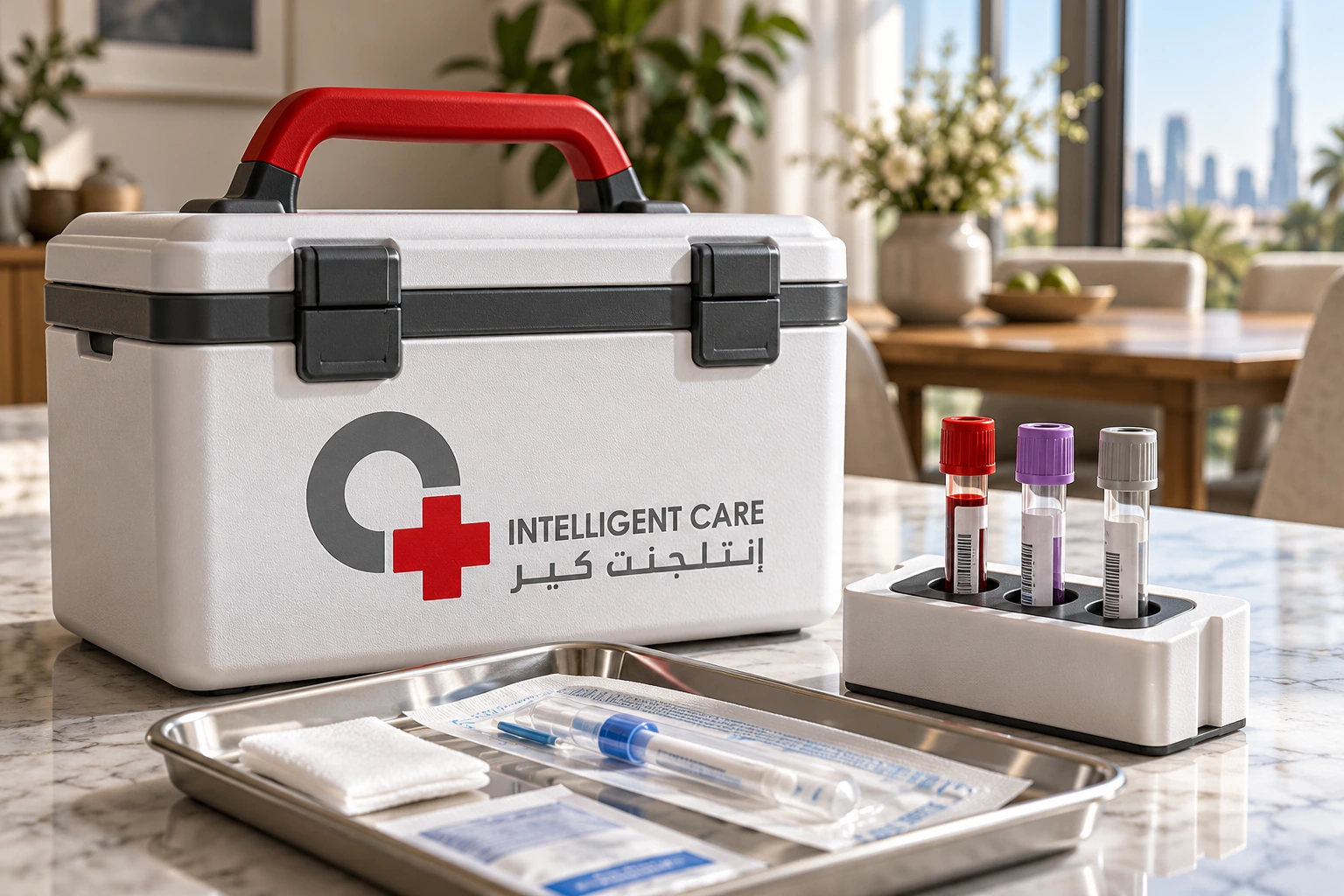
Keep everything in one care bag.
Loading the laboratory catalogue…
Choose two or three packages to compare.
Need help choosing the right test?
FOR WORKPLACES & CARE PROVIDERS
On-site collection. A named point of contact.
Reporting designed around your clinical workflow.

One coordinated pathway.
Partner portal · LIS / HL7 integration · Consolidated billingYour care bag. Ready when you are.
The laboratory behind your care
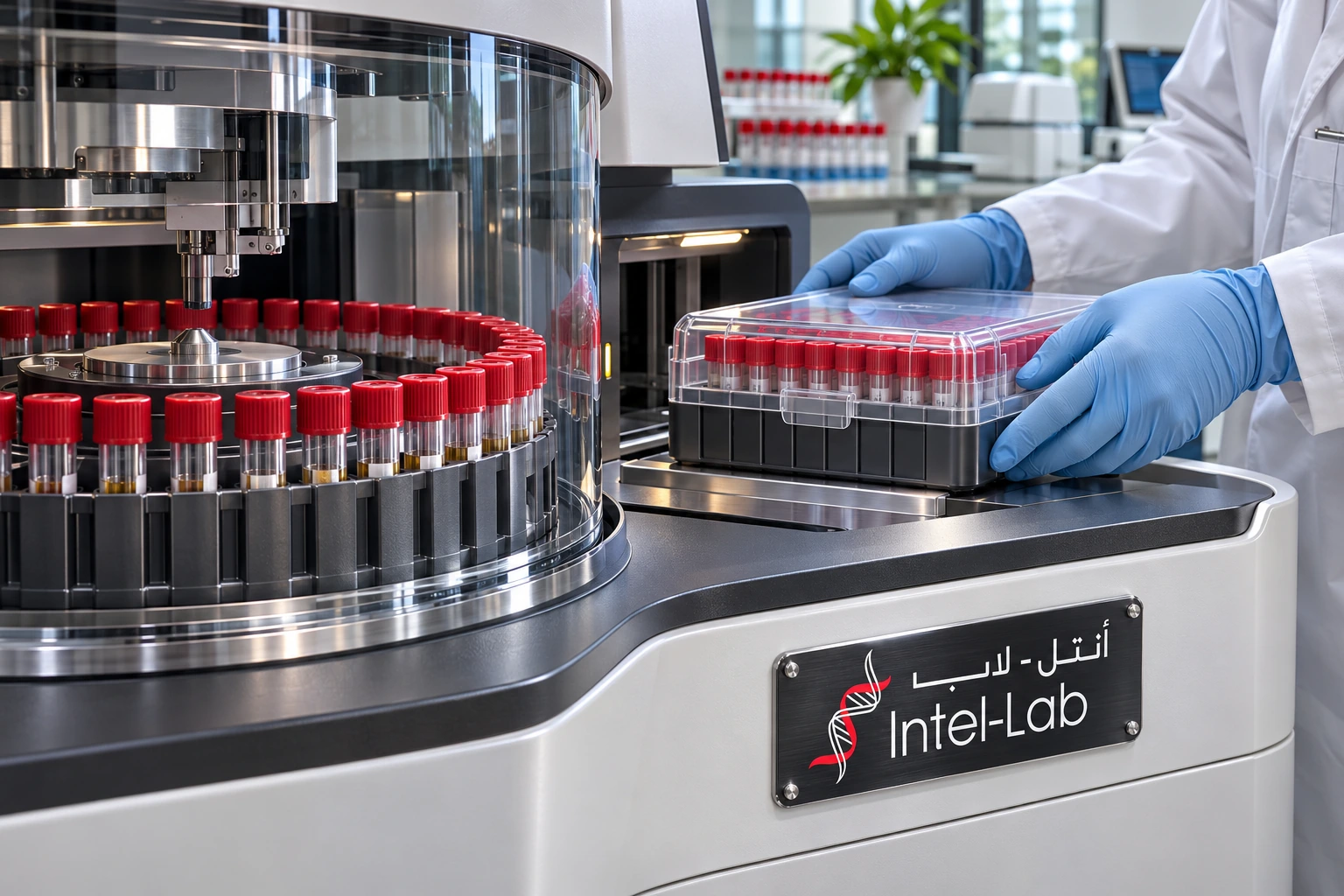
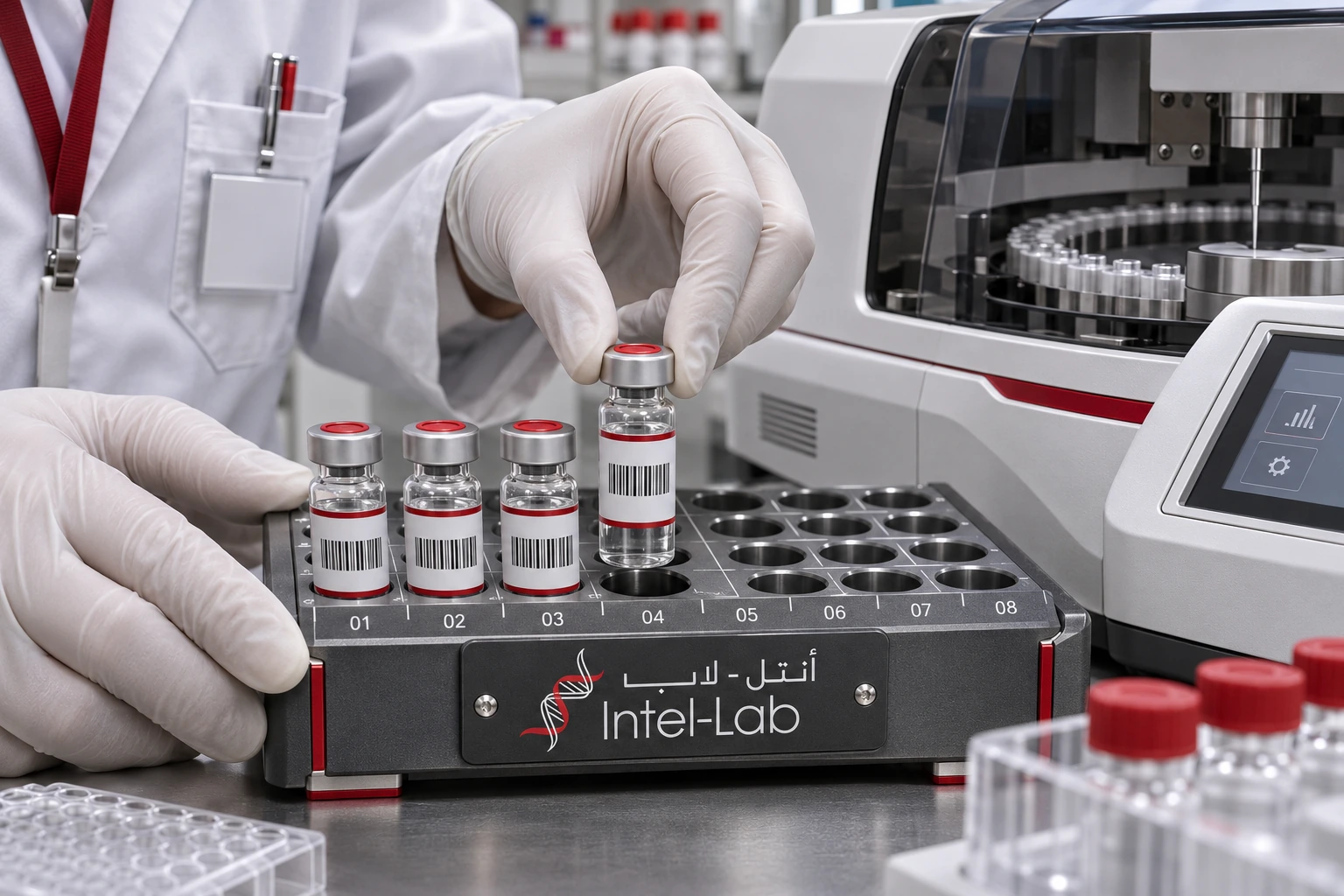
Intelligent Care brings the collection to you. Intel Lab brings the diagnostic science behind it. Two companies directly owned by the same owner, connecting clinical care with laboratory expertise—from your first question to the result you understand.
Meet your laboratoryYour sample stays connected to the person and the requested investigation, from collection through laboratory processing. The exact test, suitable specimen and analytical requirements guide the work; specialised requests may need clarification before collection.
Laboratory technologists, phlebotomy professionals and clinical pathologists contribute at different stages. Intel Lab brings analysis, quality controls and professional review into the same diagnostic pathway, from the identified specimen to the released report.
Pathologist-reviewed findings return in an understandable Smart Report, ready for a conversation with your clinician. Symptoms, history and other findings remain relevant when deciding the next step; the laboratory result supports that wider clinical discussion.
Inside the laboratory
From a routine measurement to a specialist request. Explore the science, the sample and the question each discipline helps answer.

Blood sugar, cholesterol, kidney and liver measurements answer different clinical questions. A focused profile and a broader checkup contain different combinations. Start with the question, then compare the actual tests.

Blood cell counts and clotting investigations have distinct purposes. A complete blood count reports several measurements; a coagulation test is a separate investigation chosen for the clinical need.
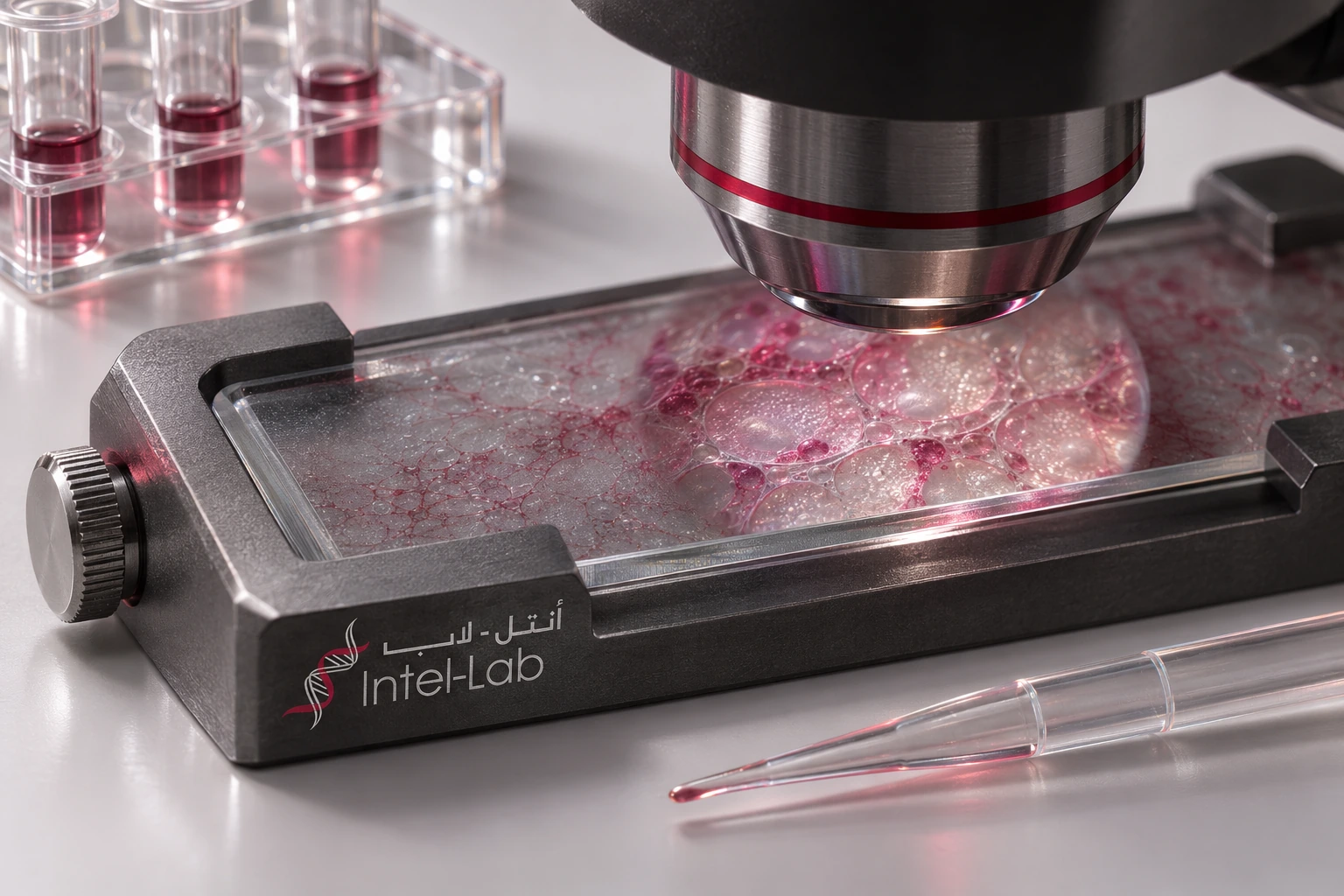
Microbiology investigates organisms in appropriate samples. Where the sample comes from, how it is collected and recent antimicrobial treatment can affect interpretation. Follow the instructions for the requested investigation.
Specialised measurements can address questions a routine panel does not. Our team clarifies the requested method, sample requirements and expected timing before arranging collection.
Serological tests examine antibodies or other markers associated with infection or immune response. Timing, exposure history and the exact assay matter. Results are understood alongside the clinical history.

Immune-related investigations include selected autoantibodies and other immune markers. These tests support clinical assessment; a result on its own does not establish a diagnosis.
Blood grouping and related laboratory work follow the specific clinical request. The team confirms the required investigation and identification details. Laboratory testing is distinct from providing a blood transfusion at home.
Molecular methods such as PCR look for specified genetic targets. Respiratory, sexual-health and other panels have different target lists and sample requirements. Review the exact panel rather than its headline count.
Testing may be requested for a defined clinical or occupational purpose. Confirm the substances, sample, identification and any chain-of-custody requirements with the team before booking.
Some measurements can be made near the person receiving care. Availability, the device and the appropriate clinical use need confirmation. Not every laboratory test is a point-of-care test.
Specialised genetic requests require careful clarification of the indication, test scope, sample and any counselling needs. Discuss the exact request with the laboratory so the appropriate testing route can be confirmed.
Specialised investigations are confirmed individually for availability, sample requirements and turnaround.
Browse the available testsQuality is in the details
Good laboratory practice is more than a final number. Explore the checks behind the result, then see Intel Lab’s credentials directly at their source.
Correct identification, the requested tests and suitable sample handling matter before analysis begins. Collection instructions depend on the investigation and the person receiving care.
Laboratory methods and quality controls support the measurement. Intel Lab’s EIAC accreditation covers the tests and methods listed in its official ISO 15189:2022 scope.
Intel Lab describes pathologist review before a report is released. The result, units and reference interval stay together, with clinical context guiding what happens next.
Accreditation applies to the tests and methods in the official scope, subject to continuing compliance.
SMART HEALTH. WITH YOU.
Your laboratory results become a clearer picture of your health. Explore Intel Lab’s Smart Report, on the screen that works for you.
Measurements, units, reference intervals and plain-language explanations stay together. Select a marker on either device to explore its context.
Compare repeated measurements without losing the testing conditions or clinical context. Choose a point in the timeline to see that result.
Pathologist reviewed. Included with tests & packages.

 Smart Report
One report. A clearer understanding.
HbA1c is used to understand average blood glucose over the preceding months. Read the measurement, its units and the laboratory interval together.
Latest5.4 %
Compare with clinical context.
Thyroid-stimulating hormone is part of assessing thyroid function. Its meaning depends on the laboratory interval and the wider clinical picture.
Latest2.1 mIU/L
Compare with clinical context.
This example result is below the interval shown in the report. The visual flag makes it easier to spot the result and bring it into your clinical conversation.
Latest19 ng/mL
Compare with clinical context.
Keep the complete report with your care team.
Open your released report through secure access.
 Smart Report
One report. A clearer understanding.
HbA1c is used to understand average blood glucose over the preceding months. Read the measurement, its units and the laboratory interval together.
Latest5.4 %
Compare with clinical context.
Thyroid-stimulating hormone is part of assessing thyroid function. Its meaning depends on the laboratory interval and the wider clinical picture.
Latest2.1 mIU/L
Compare with clinical context.
This example result is below the interval shown in the report. The visual flag makes it easier to spot the result and bring it into your clinical conversation.
Latest19 ng/mL
Compare with clinical context.
Keep the complete report with your care team.
Open your released report through secure access.
ONE CONNECTED REPORTTry a result on either screen.
HbA1c is used to understand average blood glucose over the preceding months. Read the measurement, its units and the laboratory interval together. Your history and the reason for testing matter. A reference interval alone does not establish a diagnosis.
Your own laboratory report and clinician provide the relevant interpretation.Thyroid-stimulating hormone is part of assessing thyroid function. Its meaning depends on the laboratory interval and the wider clinical picture. Symptoms, medicines and any other thyroid results can affect the next conversation with your clinician.
Your own laboratory report and clinician provide the relevant interpretation.This example result is below the interval shown in the report. The visual flag makes it easier to spot the result and bring it into your clinical conversation. Discuss interpretation and any next steps with a clinician. An isolated result does not determine treatment.
Your own laboratory report and clinician provide the relevant interpretation.THE PEOPLE BEHIND THE SCIENCE
Laboratory technologists, phlebotomy expertise and clinical pathologists contribute at different stages. Pathology brings the quality of the sample, the analytical process and the clinical meaning together.
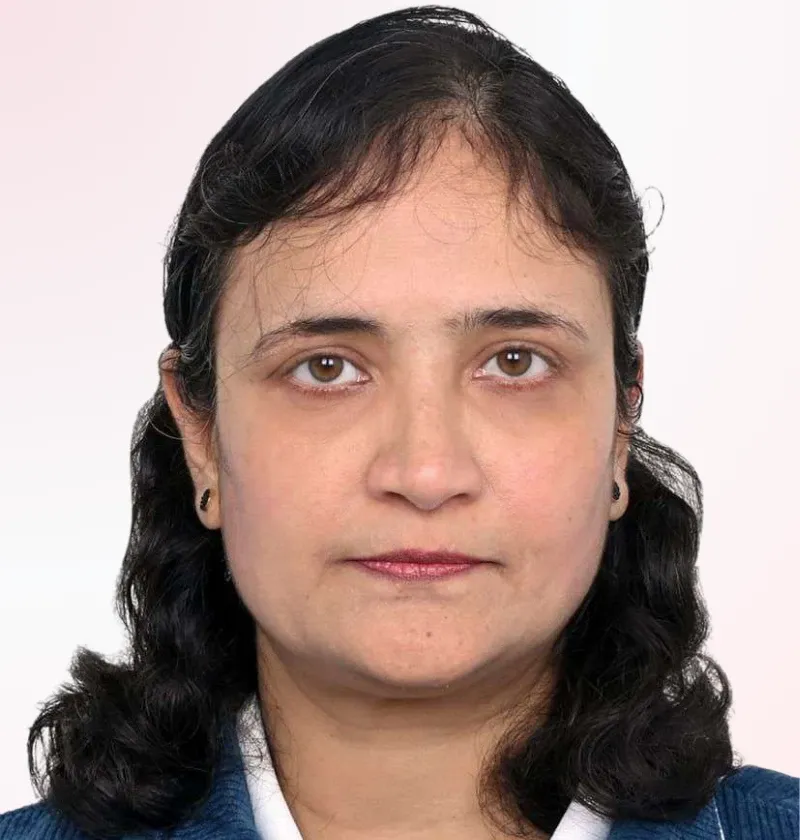 INTEL LABClinical pathology
Dr Nirupama Sabhapathy is a DHA-licensed Specialist in Clinical Pathology at Intel Lab. Her published Intel Lab profile describes more than 25 years in medicine and her role as Laboratory Director.
Clinical pathology connects the laboratory with the decisions made in patient care. It brings together the quality of a sample, the analytical process and the clinical context in which results are understood.
Intel Lab’s published biography identifies Dr Nirupama as Laboratory Director and describes more than 25 years of medical experience. Her current DHA professional record confirms an active Specialist Clinical Pathology licence at Intel Lab.
 INTEL LABClinical pathology
Dr Joyce Jose is a DHA-licensed Specialist in Clinical Pathology at Intel Lab. Her public professional record includes pathology practice in the UAE and earlier experience as a professor at Gulf Medical University.
Laboratory medicine is part of a connected care pathway: the question that prompts a test, the sample that reaches the laboratory and the result that returns to a clinician. Clinical pathology brings expertise to that connection.
Dr Joyce’s DHA record lists her current role at Intel Lab, previous pathology positions and a professorship at Gulf Medical University from 1999 to 2015. The record provides the basis for the experience shown here.
FROM FINDINGS TO CARE
A result outside a reference interval does not automatically establish a diagnosis, and a result inside the interval does not rule out every problem. Symptoms, history, timing and the reason for testing remain part of interpretation.
Which findings are relevant to the original concern? Which require attention, and which may simply need context? Keep the report with relevant previous findings and discuss what it means with your clinician.
Your history, symptoms, medicines, testing conditions and other relevant investigations help place a laboratory result in the full picture.
Trends are useful when the test, method and circumstances are comparable. A single change does not always mean a change in health. Keep units, laboratory reference intervals and relevant previous findings together.
Repeat testing and its timing should follow the clinical question, rather than a coloured flag alone.
The next step may be reassurance, monitoring, further investigation or a change in the care plan, according to the clinical assessment. Clarify whether further assessment or repeat testing is needed and who will coordinate it.
Avoid changing treatment based only on a coloured flag. Connect findings with your clinician and the wider care plan.
Connect with doctor at homeYour collection, your choice
At your address or at the laboratory. The same connected journey, with every person’s tests and details kept distinct.
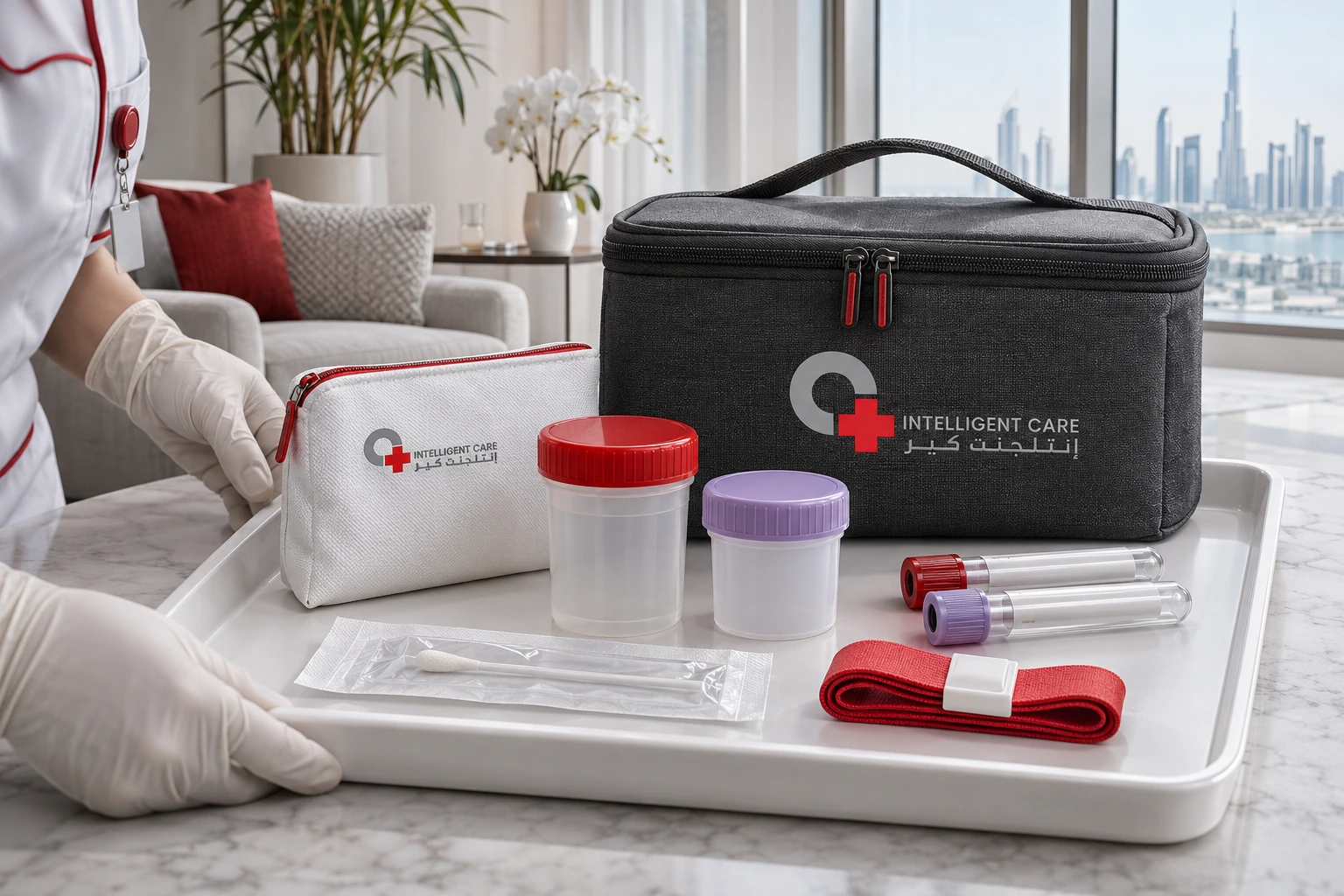 CARE COMES TO YOU
DUBAI-WIDE HOME COLLECTION
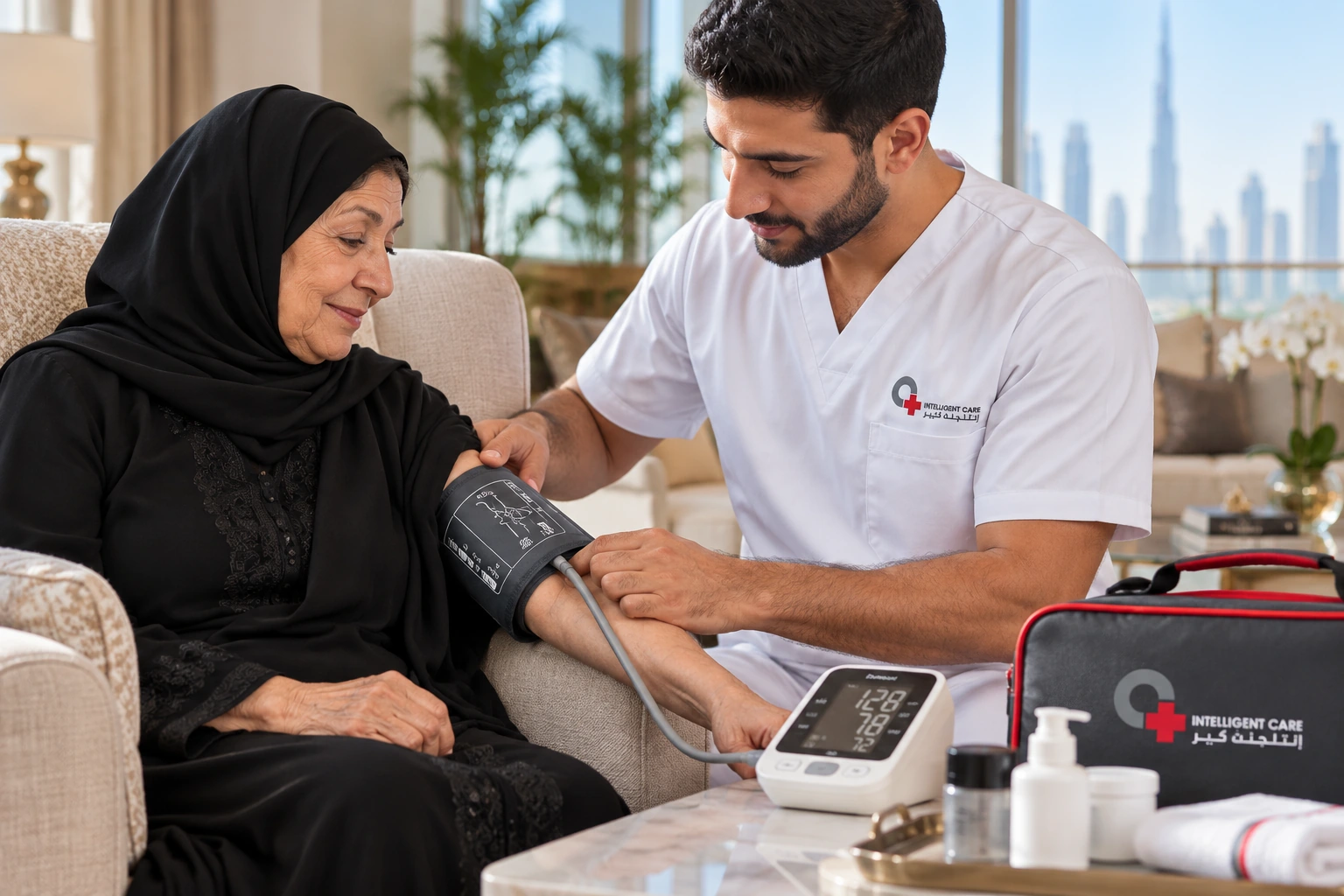
Choose your appointment and share your Dubai area, building and apartment details. We bring the collection kit.
Collection fees waived for any Care Package or individual tests totaling AED 300+ per visit.
Assign each item to yourself or another person in checkout. Keep children’s and guardian details together. Choose one shared visit or separate appointments; each visit has its own fee calculation.
BEFORE YOUR COLLECTION
Instructions depend on your exact tests and personal circumstances. Keep these five points ready for your conversation with the collection team.
Use this list to prepare. Share clinical information directly with your care team.
We check your identity against the requested investigation, use the appropriate containers and label each specimen. Some packages require blood, urine and stool collected at different times.
The relevant analysis, quality checks and professional review lead to report release. Turnaround follows the selected investigation and can depend on receipt of every sample.
FOR YOU AND YOUR FAMILY
One care bag can hold everyone’s selections.
Each person keeps their own care journey.
Select the appropriate tests or packages for each person. Each catalogue item retains its own included investigations, specimens, price and listed turnaround.
Match every item to the person receiving it. Use For me or add another person in checkout. Child and guardian details are requested where needed, while each person’s laboratory record stays distinct.
A household can share one laboratory visit when appropriate, or choose separate appointments. One shared visit has one fee calculation. A package in one visit does not waive another visit’s fee.
Check people, services, sample requirements, appointment details and the calculated quote together. Review comes before payment or an earliest-available callback request.
No convenient appointment?
Request the earliest available time in checkout.
START WITH A QUESTION
A human conversation.
A considered next step.

A named marker, a focused profile or a broader health package can answer different questions. Keep your clinician’s request and previous results together. Similar names can describe different investigations.

Your symptoms, history and reason for testing guide the selection. A laboratory finding is one part of the picture; a concern may need a clinical assessment before a test is chosen.
Insurance testing follows the clinical requirement and your policy. A self-selected basket is not automatically an approved insurance claim.
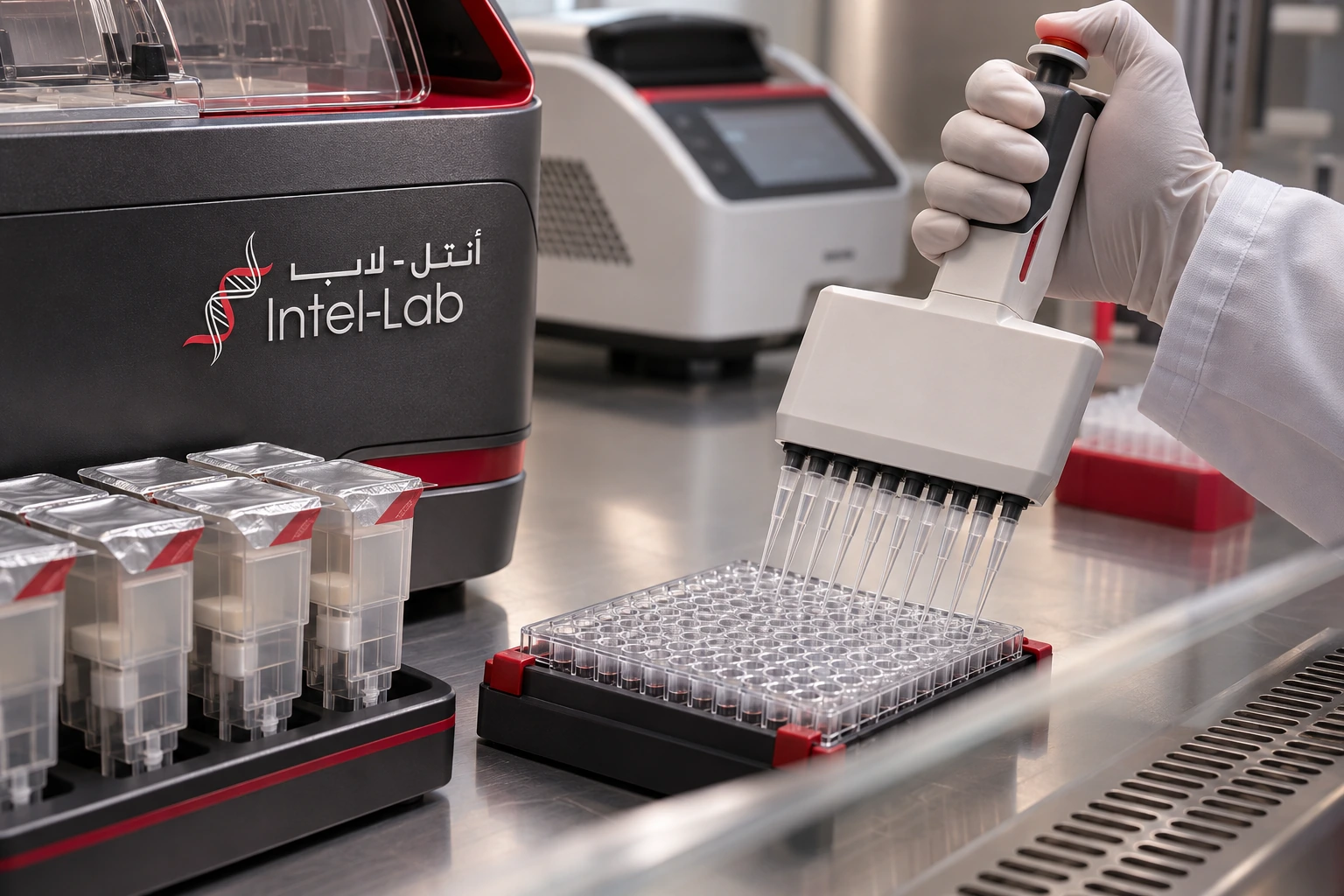
Molecular investigations, specialist referrals and workforce programmes need a clear purpose, target list, sample, timing and reporting plan.
THREE WAYS TO CHOOSE
The right selection starts with the question, your history and any clinical advice. More tests do not automatically mean more useful information.
 01
Single test
One specifically requested measurement. Check the exact test, sample and method.
 02
Focused profile
Related measurements for one area of investigation. Review every included test.
 03
Health package
Several testing areas together. Compare membership and preparation with your needs.
Compare named investigations, specimens, listed turnaround and price. A higher biomarker count does not mean every lower package’s test is included. Executive and Advanced, for example, have different membership.
Use the catalogue’s full comparison to see the shared and unique tests in your chosen packages.
Confirm the intended recipient, contact details and agreed delivery arrangements with the team. Ask how report access and any authorized sharing will be handled, especially when booking for someone else. Discuss sensitive or unexpected findings directly with the clinician responsible for your care.
Yes. Use Individual tests to search the test catalogue, check the specimen and listed turnaround, and add the tests you need. A package combines a defined set of tests; it is not required when a clinician has asked for one particular marker.
A named test may report one measurement, while a panel can report several. Package biomarker counts therefore differ from the number of named test entries. Read the included tests and targets, not just the headline total.
Yes. Discuss the exact request with our team, including any special method, timing or preparation. Tests with similar names may not answer the same question. Confirm the requested investigation rather than selecting a substitute yourself.
Some tests require fasting and others do not. Confirm instructions for your particular selection and circumstances. Tell the team about medicines, supplements, pregnancy, diabetes or other factors that affect preparation. Do not stop prescribed medicine without advice.
No. Some packages also need urine, stool or another specimen. Each package lists the required samples. The collection team explains the containers, timing and how any sample provided separately should reach the laboratory.
The fee is calculated separately for each visit. Home collection is AED 100 and visiting Intel Lab in Deira is AED 50. Any package waives its visit fee; individual tests totaling AED 300 or more before discounts also waive it.
Yes. Assign items to the correct people in checkout and arrange a shared laboratory visit if appropriate. One shared visit has one fee calculation. Separate appointments are assessed independently.
Use the turnaround listed for the selected item. Some investigations take longer than routine testing, and timing can depend on receipt of all samples and any additional laboratory checks. Ask the team to confirm timing for a specific clinical need.
A report provides laboratory findings, reference intervals and supporting information. Treatment decisions require clinical interpretation alongside symptoms, history, examination and other relevant results. An abnormal flag is not a diagnosis by itself.
Coverage depends on the policy, clinical indication, network and any pre-approval. Speak with the team before assuming a self-selected basket is covered. A doctor’s request and supporting documentation may be needed for the insurance pathway.
Contact the laboratory team with the exact test name or request. The online catalogue is a selection of bookable records, while specialised, referral and programme requirements may need a tailored enquiry.
Yes. Choose the earliest-available request in checkout. If any visit uses that option, the order becomes a callback request with no payment collected. The team must agree the appointment with you.
KEEP EXPLORING






Explore all eight services · 1–4 of 8