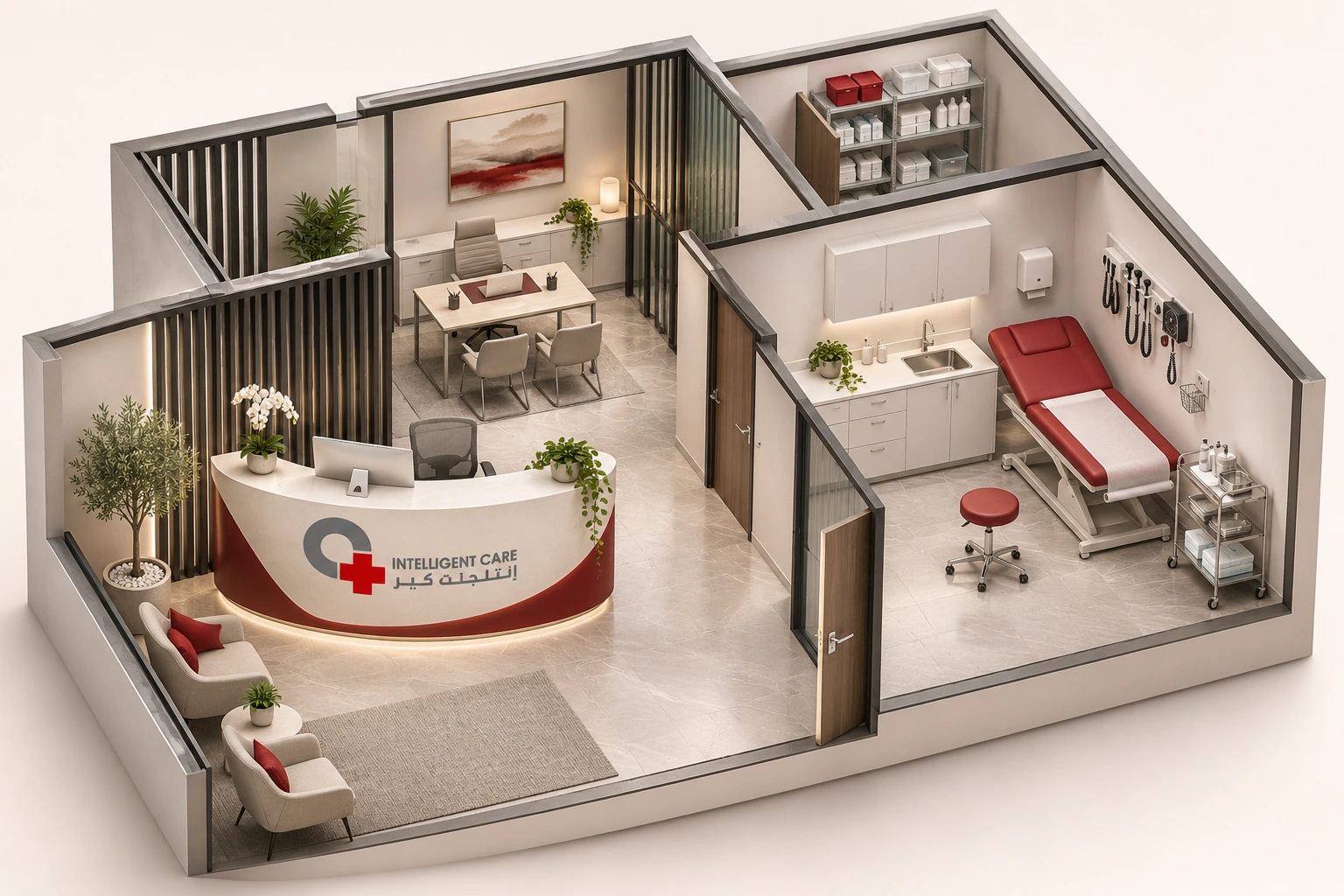
Campus clinic
A planned clinical facility with the appropriate licensed team, equipment, operating procedures and referral arrangements.

Academic healthcare · Your organization
Plan the clinic, people and programs around your students, faculty and staff. Academic healthcare brings clinical operation, first aid, screening and health education into the life of your institution.
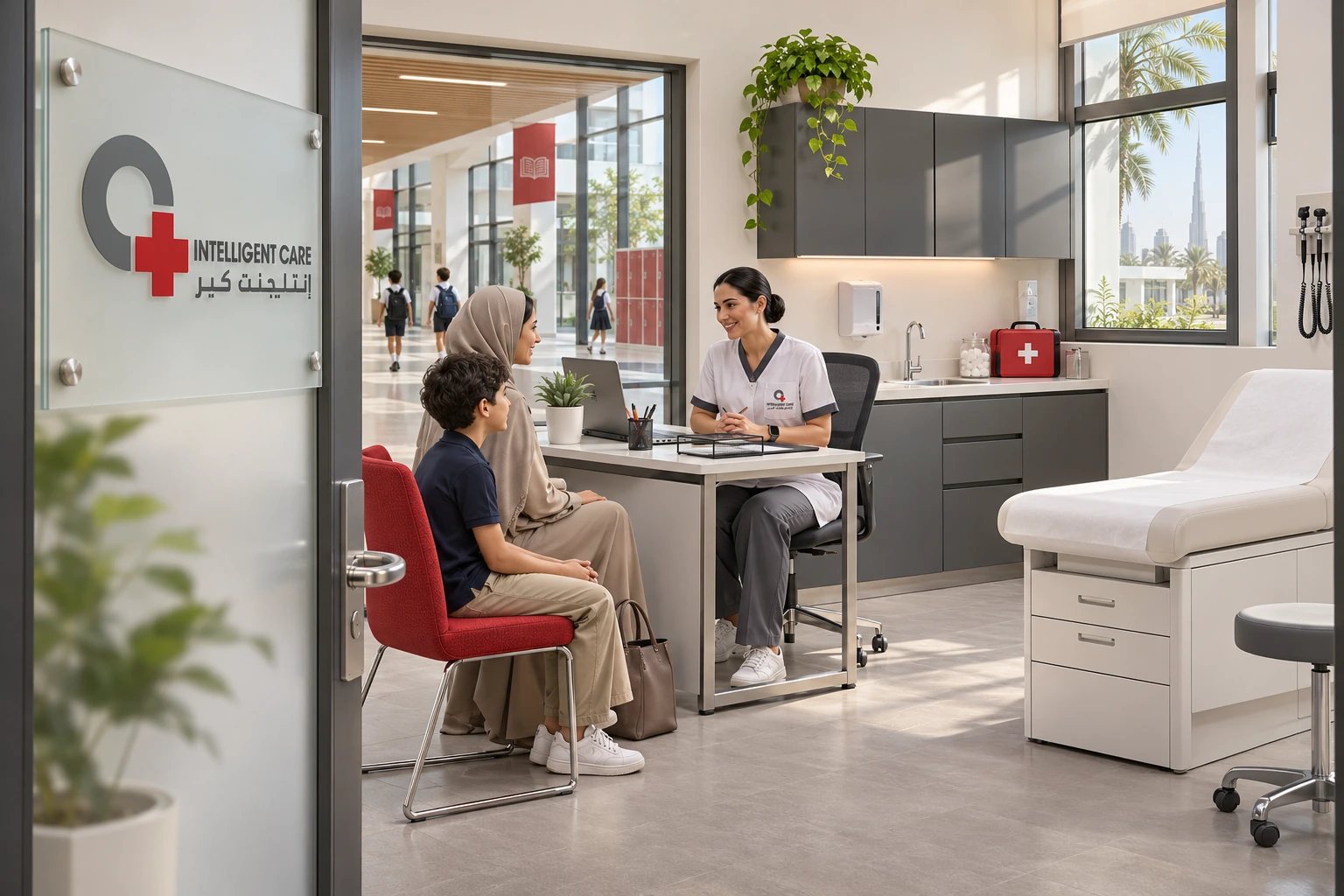
Your next step
Tell us the setting, population and priorities. Build a campus-health brief around the provision you already have and the support you want to add.
Care across the campus
The clinic is a clinical base, but a campus program reaches beyond its walls. Explore how first aid, screening, student support and education connect to a coordinated service. The mix is designed around the institution’s age groups, population, facilities and operating day.
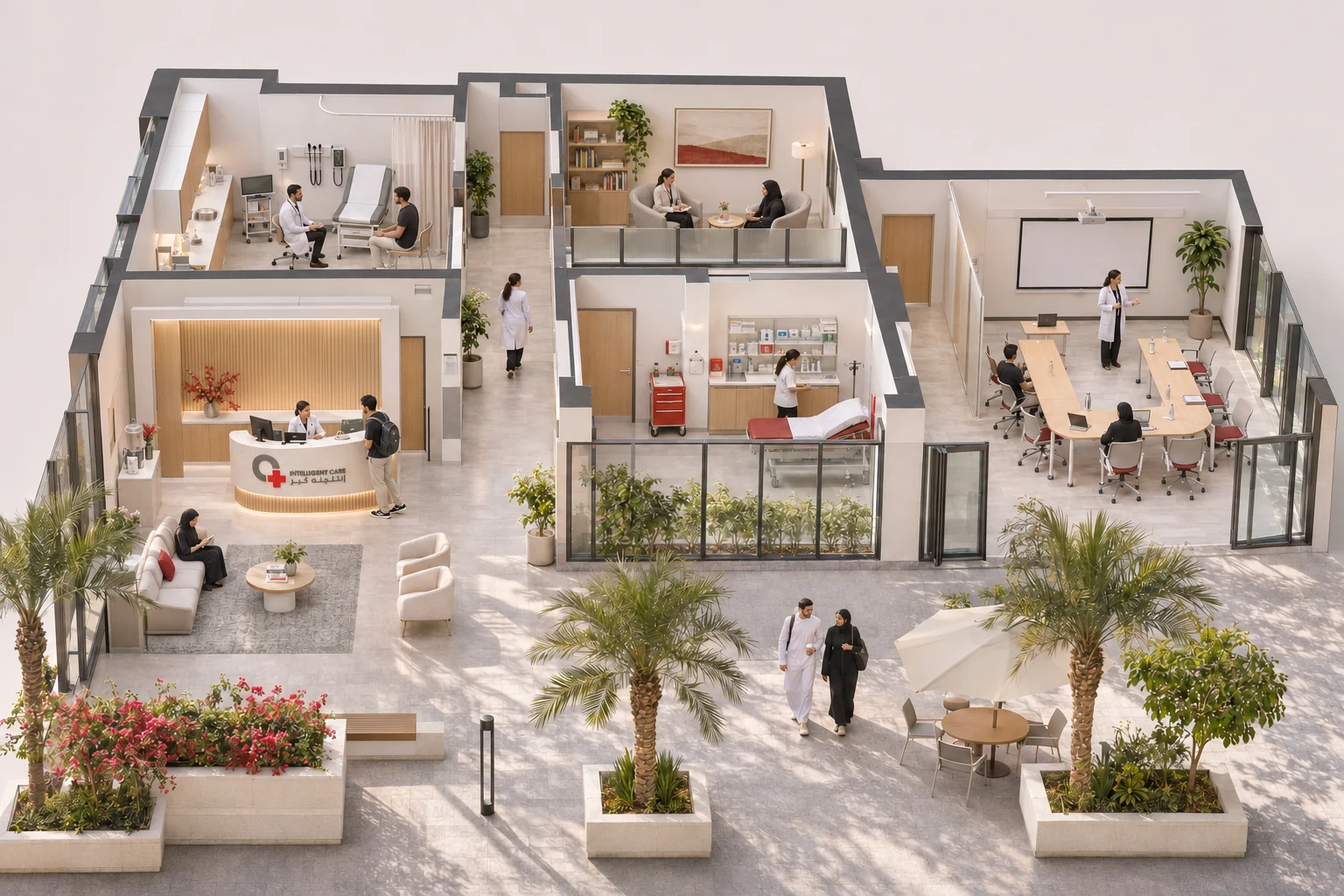
A planned clinical facility with the appropriate licensed team, equipment, operating procedures and referral arrangements.
Rooms and posts positioned around the campus layout, with defined access, equipment and escalation arrangements.
Confidential support pathways coordinated with the institution’s counselling, safeguarding and student-services teams.
Scheduled clinical initiatives and age-appropriate education that fit the academic calendar.
Different institutions. Different needs.
An early-years setting, a school and a university have different daily routines and care interfaces. The clinical provision should reflect the population, the institution’s responsibilities and the facilities already available.
Plan around age groups, the school day, parental or guardian communication and clear coordination with educators.
Consider a larger and more independent student population, faculty needs, campus access and links to student support.
Define common program expectations while preserving the needs, facilities and contacts of each campus.
Clarify the age range, activities and clinical requirements before deciding the appropriate service model.
The clinical base
Bring clinic design, licensing support, staffing, management and operation into one program. Planning starts with the clinical purpose and site; it then connects the space, professional team and daily operating model.
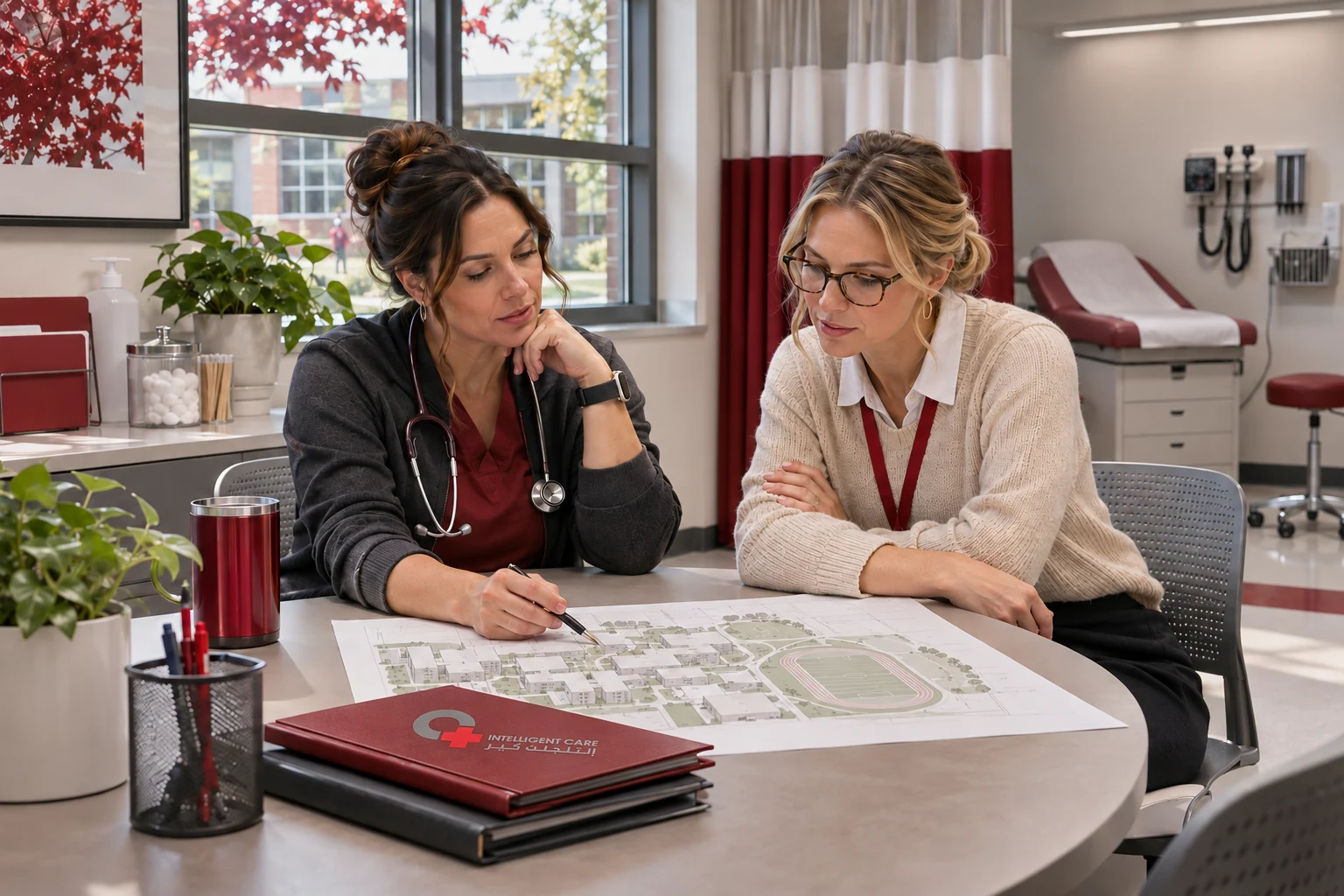
The clinical base
Consider access, privacy, clinical activity, storage and the route from the wider campus into care.
Coordinate the facility requirements, clinical roles, equipment and operating procedures.
Define service hours, consultation pathways, escalation, documentation and administration interfaces.
The people behind the program
Medical manpower deployment is a distinct part of the academic service. Staffing decisions should reflect the clinical scope, campus population, operating hours and the responsibilities already held by your institution.
Define the nursing, medical and other professional requirements appropriate to the campus service.
Name the administration, safeguarding, student-services and facilities contacts who coordinate with care.
Agree operating periods, planned absence arrangements, escalation contacts and any event-specific provision.
Education and clinical requirements
Campus healthcare crosses institutional and clinical responsibilities. In Dubai, this includes support relating to KHDA and DHA requirements and internal readiness review. The exact requirements depend on the institution and the clinical facility.
Identify relevant education and health-and-safety expectations, policy owners and required institutional evidence.
Review facility and professional requirements, clinical governance, documentation and the intended scope of care.
Map where consent, communication, incident handling and referral responsibilities meet.
Record outstanding actions, responsible contacts and evidence needed for the next review.
Readiness support does not replace a regulator’s inspection or decision, or guarantee that every requirement has been met.
The academic year
A campus program has a continuing care layer and planned initiatives. Use the calendar conversation to fit screenings, learning sessions and reviews around your institution’s actual term dates, exams, events and access arrangements.
Review the population, clinic provision, contacts, consent process and priorities for the coming period.
Run the agreed daily service and schedule screening, education or counselling-related initiatives where they fit.
Assess the program, open actions and feedback with the institution, then refine the next period.
Maintain the agreed clinical provision, first-aid arrangements and student-support interfaces.
Planned clinical initiatives
Staff and student screening is organized around an agreed clinical objective and population. Vaccination initiatives require their own clinical scope, eligibility and consent planning. A campaign date follows those decisions, not the other way around.
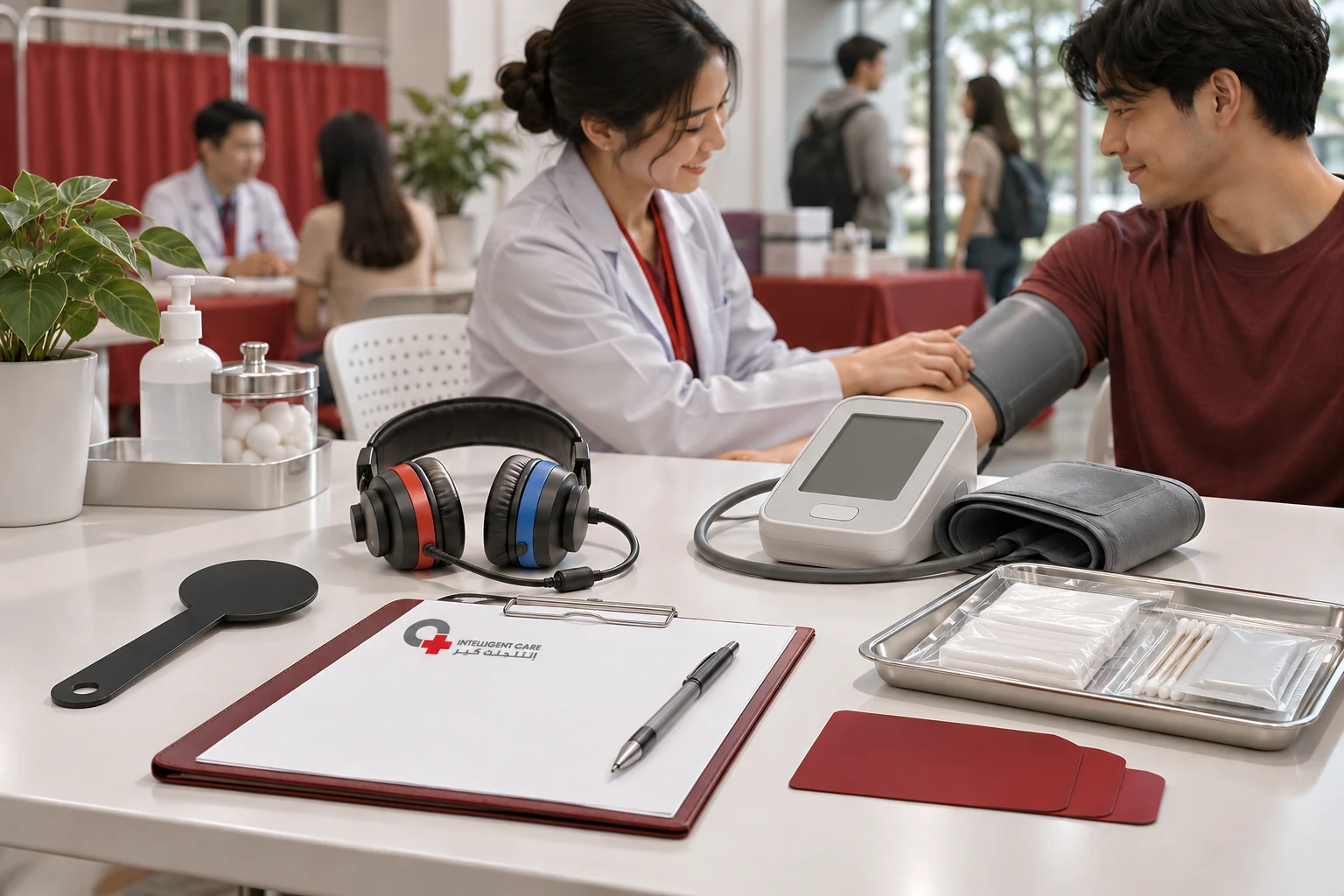
Planned clinical initiatives
Identify who is invited, the purpose of the program and any age-specific or role-specific considerations.
Agree consent, appointment flow, private clinical space, equipment and communication with participants.
Set out how individual findings are returned, who provides follow-up and what program information the institution receives.
Prepared for the real campus
First-aid rooms and posts bring support closer to campus activities. Their value depends on the institution’s layout, activities, access routes and agreed escalation procedure. A room alone does not define an emergency response service.
Consider classrooms, sports and activity spaces, access restrictions and the routes between them.
Agree the supplies, equipment and people appropriate to the role of each post.
Make contacts, escalation and transfer responsibilities clear to staff and the clinical team.
Check readiness, documentation and changes in campus activities with the institution.
Beyond the immediate concern
Student Assistance Programs and mental-health or life-counselling events extend the program beyond the campus clinic. Design the pathway with student services, counselling and safeguarding teams. Age, consent, confidentiality and the distinction between education and individual clinical care matter.
Discuss accessibility, existing care instructions and any special-needs support that requires coordination; avoid treating all students as one group.
Define parent or guardian involvement for children and the consent arrangements relevant to each service.
Agree what the campus program provides, how concerns are escalated and when specialist assessment or external care is needed.
Health learning
Health education can support students, teachers and faculty through practical sessions that fit their roles. The topic, language and format should match the audience; individual symptoms and personal medical questions belong in an appropriate private clinical conversation.

Health learning
Age-appropriate discussions that make health information understandable and questions easier to ask.
Relevant awareness and training that connects health topics with the campus environment.
A planned series or focused event with clear content, delivery responsibilities and follow-through.
Four useful starting points
Four practical starting points show how a program can take shape. Choose a single requirement or connect several into a wider campus brief.
Connect facility planning and operation with medical and nursing provision for the campus.
Coordinate common expectations, local staffing and reporting across several institutions.
Start with a defined point of support, its equipment, operating scope and links to the wider response plan.
Build a specific program around population, consent, clinical suitability, logistics and follow-up.
The right view for each person
Administration needs to understand how the program is operating. Individual clinical records serve a different purpose. Reporting and information access should be agreed at the start, including the role of guardians and the institution’s safeguarding procedures.
CLINICAL PERSPECTIVE
Assessment details, clinical findings, treatment advice and appropriate communication remain within the authorized care relationship.
PROGRAM PERSPECTIVE
Agree program activity, completion, operational actions and appropriately aggregated information relevant to administration.
Define how safeguarding or urgent concerns are handled through the relevant clinical and institutional procedures, with appropriate confidentiality.
Your questions
The wider picture
Explore related support, or speak to us about combining services into one plan.
Built around your organization
Across Dubai.
Abu Dhabi — coming soon.