01
Registered nurses
Define the specialty, clinical tasks, patient group and shift pattern. Care settings include homecare and dialysis; other specialisms are assessed against the specific mandate.

Clinical staffing · Your organization
Recruit, assess, license and mobilize the clinicians your organization needs. From a defined vacancy to an outsourced team, bring the role, setting and coverage into one considered brief.

Your next step
Specify roles, headcount and the working pattern. Your choices form the starting brief for a tailored staffing discussion.
The clinical mix
A nurse in a campus clinic and a nurse in a dialysis service work in different contexts. We start with the responsibilities, patient population and supervision your setting requires, then assess the appropriate professional profile. Select the roles you want to explore in your brief.
Define the specialty, clinical tasks, patient group and shift pattern. Care settings include homecare and dialysis; other specialisms are assessed against the specific mandate.
Describe the care environment and the tasks to be performed under the applicable supervision and professional scope. The required registration and delegation arrangements form part of the brief.
Set out daily-living support, the person’s needs and the working environment. Caregiving and licensed nursing have different responsibilities; the staffing profile should preserve that distinction.
Outline the population, consultation setting and expected clinical responsibilities. Campus, outpatient, workplace and remote-site needs require different operating arrangements.
Specify rehabilitation needs, patient population, equipment and service setting. Assessment, treatment responsibilities and coordination with the clinical team are agreed together.
Start with the specialty and actual service need. Availability, registration, facility privileges and scope are confirmed for the assignment rather than assumed from a category name.
Discuss laboratory professionals, clinical administration, quality-system or specialist support requirements within a broader service brief. The appropriate role, availability and licensed scope are confirmed for the assignment.
01 / Define
A useful staffing request explains what the professional must be ready to do. Role design connects your service model to sourcing and assessment, so the eventual proposal can be evaluated against the work itself.

Describe the procedures, patient needs, documentation and decision-making expected in the role.
Identify sites, operating hours, shift structure, equipment, reporting line and the wider team.
Separate essential competencies from useful preferences, and record any language or setting-specific needs.
02 / Source
We support local and international clinical recruitment. The search route depends on the professional profile, credential requirements and recruitment timeline; a wider search is useful only when it remains connected to your actual requirements.
Confirm the role profile and assessment criteria before approaching candidates.
Discuss local availability and appropriate international recruitment routes, including India, the Philippines, Nepal and the GCC. The sourcing approach should reflect the role, credentials, deployment requirements and your brief.
Compare relevant experience, professional documents and the ability to work within your setting.
Discuss the shortlist, outstanding checks and candidate-specific dependencies before mobilization.
03 / Assess
Recruitment and clinical assessment address different questions. Credentials help establish professional eligibility; a role-specific assessment explores whether the candidate’s experience and practical skills match the work you need covered.

03 / Assess
The relevant registration, qualifications and supporting documents need to align with the assignment.
Review the patient population, clinical environment and responsibilities the person has actually worked with.
Identify the assessment and orientation needed for equipment, care protocols and escalation in your service.
The right arrangement
A staffing proposal should explain who employs the professional, who manages daily work and which responsibilities sit with each organization. These choices affect recruitment, onboarding and ongoing administration.
For a defined absence, project or short coverage period. Specify dates, shifts and responsibilities; start timing depends on confirmed resources and readiness.
For a sustained service requirement with an agreed duration and review structure. Include supervision, schedule changes and continuity planning.
For a person joining your organization’s team. Scope the search, assessment and agreed recruitment support separately from ongoing operation.
For an agreed outsourced workforce arrangement. Employment and administrative responsibilities are documented in the proposal and contract.
04 / Mobilize
A deployment is more than a start date. Site access, orientation, responsibilities and escalation routes need to be understood before clinical work begins. Explore the handoff from an agreed candidate to a supported assignment.

Agree the selected profile, scope, schedule and any outstanding professional or operational requirements.
Coordinate documents, access, equipment familiarity, induction and contact points with your service.
Make reporting lines, local procedures and clinical escalation clear to the incoming professional.
Check the fit against the agreed scope and address changes in coverage or service needs.
Professional readiness
Medical manpower licensing connects recruitment with professional readiness. The applicable authority, professional category and practice setting determine the documents and approvals needed. Recruitment does not replace professional authorization.
parts of a considered plan
Select the points you want to discuss.
Authority decisions remain with the relevant regulator. A proposal defines the support and dependencies; it does not guarantee approval.
Coverage without ambiguity
Planned leave, unexpected absence and changes in demand all affect a roster. Build the response into the staffing agreement: who is contacted, what information is needed and how any replacement is assessed for the role.
Share known dates, coverage needs and essential competencies early enough to plan the requirement.
Define the escalation contact, service priorities and confirmation process for available cover.
Review additional roles, sites or hours as a scope change, with clear responsibilities and commercial terms.
Agree what information and orientation are necessary for continuity when a professional changes.
Competency over time
Discuss continued clinical training and coordination through appropriate AHA training providers, including BLS and ALS requirements. The right program depends on the professional role, existing certification and training-provider requirements.
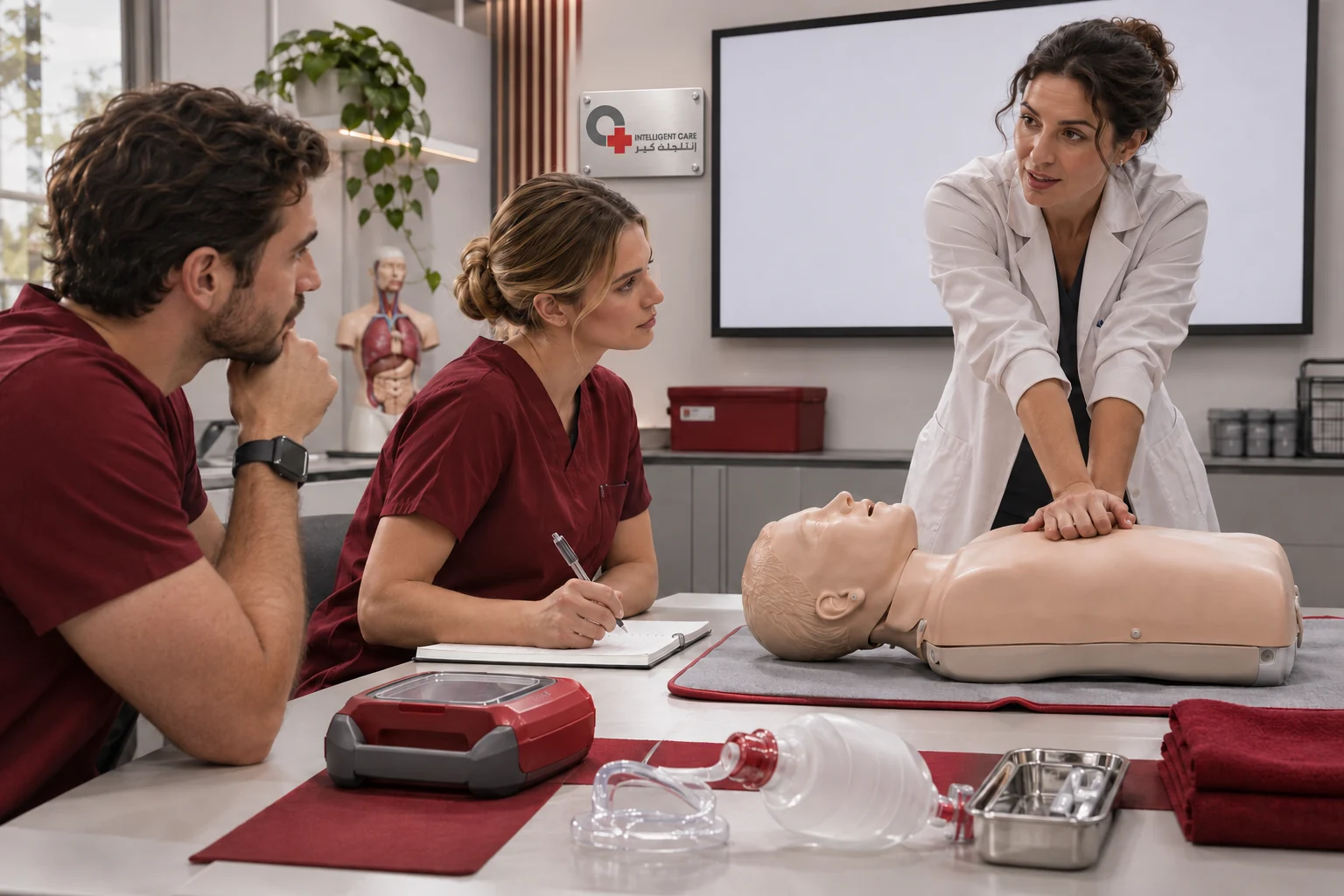
Competency over time
Orient the person to the setting, operating procedures, documentation and emergency arrangements.
Use the role’s actual competencies and review findings to decide which learning is relevant.
Discuss the appropriate provider, eligibility, course scope and renewal requirements before arranging training.
Training availability, provider, eligibility and certification requirements are confirmed for the specific program.
Daily operation
An outsourced team still works within a real clinical service. A useful agreement names the people responsible for scheduling, clinical supervision, personnel matters and escalation, so the clinician and the organization know where to turn.
Define clinical priorities, local operating procedures, site access and the agreed supervision interface.
Agree recruitment, mobilization, scheduling and employment administration responsibilities within the chosen model.
Work within professional scope and the agreed role, document appropriately and raise concerns through the defined route.
The information you need
Choose the information you need to manage the engagement. A requisition list, roster and professional-document tracker solve different problems; the reporting scope and access arrangements should reflect those purposes.
DEFINE YOUR REPORTINGOpen requirements, agreed profiles, assessment stages and decisions awaiting your organization.
Scheduled roles, locations, shifts and agreed changes to the assignment.
Relevant professional-document and training milestones, with ownership of follow-up actions.
Reporting scope, access and update responsibilities are agreed with your organization.
A useful first conversation
Share the role profiles you already have, or start with the service you are trying to run. The discussion should result in a defined scope, responsibility split, candidate requirements and commercial proposal that your team can evaluate.
points to bring into the conversation
Select the points you want to discuss.
Your questions
The wider picture
Explore related support, or speak to us about combining services into one plan.
Built around your organization
Across Dubai.
Abu Dhabi — coming soon.