01Running
Walking before running
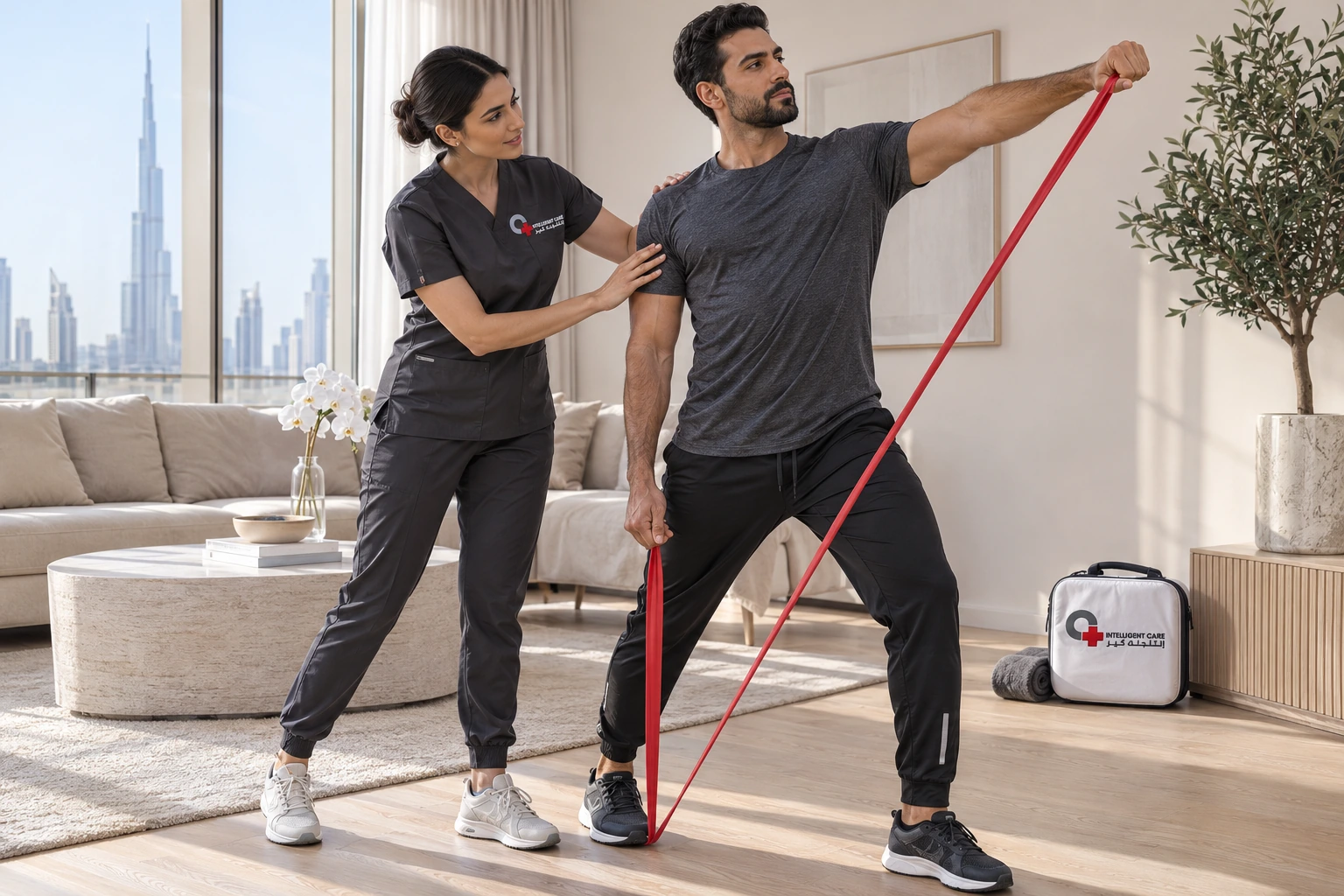
Explain what you can comfortably manage now and which part of running matters to you. The clinician considers the relevant progression rather than assuming a race deadline.

Sports & orthopaedic injuries · Dubai
An injury can interrupt training, work and ordinary movement at the same time. Home physiotherapy connects the injury history with the demands you want to return to, then sets a considered starting point and clear review questions without promising a return date.

 Clinical author assignmentDr Toqa IbrahimTwo clinical perspectivesProfiles & DHA directory links Guidance with sourcesExplore the references
Sports injury & return to activity
Start with the initial assessment, choose one session or explore a ten-session plan. The right treatment and number of sessions depend on your assessed needs; selecting a bundle is not a clinical prescription.
Your discussion priorities
Choose the demand you want to discuss. This is a planning tool, not clearance to resume an activity.
Explain what you can comfortably manage now and which part of running matters to you. The clinician considers the relevant progression rather than assuming a race deadline.
Share the movements, loads and routine used before the injury. Clarify what has already been cleared and which tasks still need assessment.
Court and field sports involve demands beyond straight-line movement. Discuss where later-stage testing or sport-specific supervision may be needed.
Describe reaching, lifting, serving or throwing and the point at which it becomes difficult. Work, home and sport can place different demands on the same area.
Explain hesitation, previous setbacks and what you need to understand. A useful plan makes the reason for each stage clear without minimizing concerns.
Getting to work, using stairs or sleeping comfortably may be your immediate priority. Rehabilitation can start with those needs before a higher-demand sporting goal.
Your discussion list
Choose the points you would like to discuss.
Understand the care
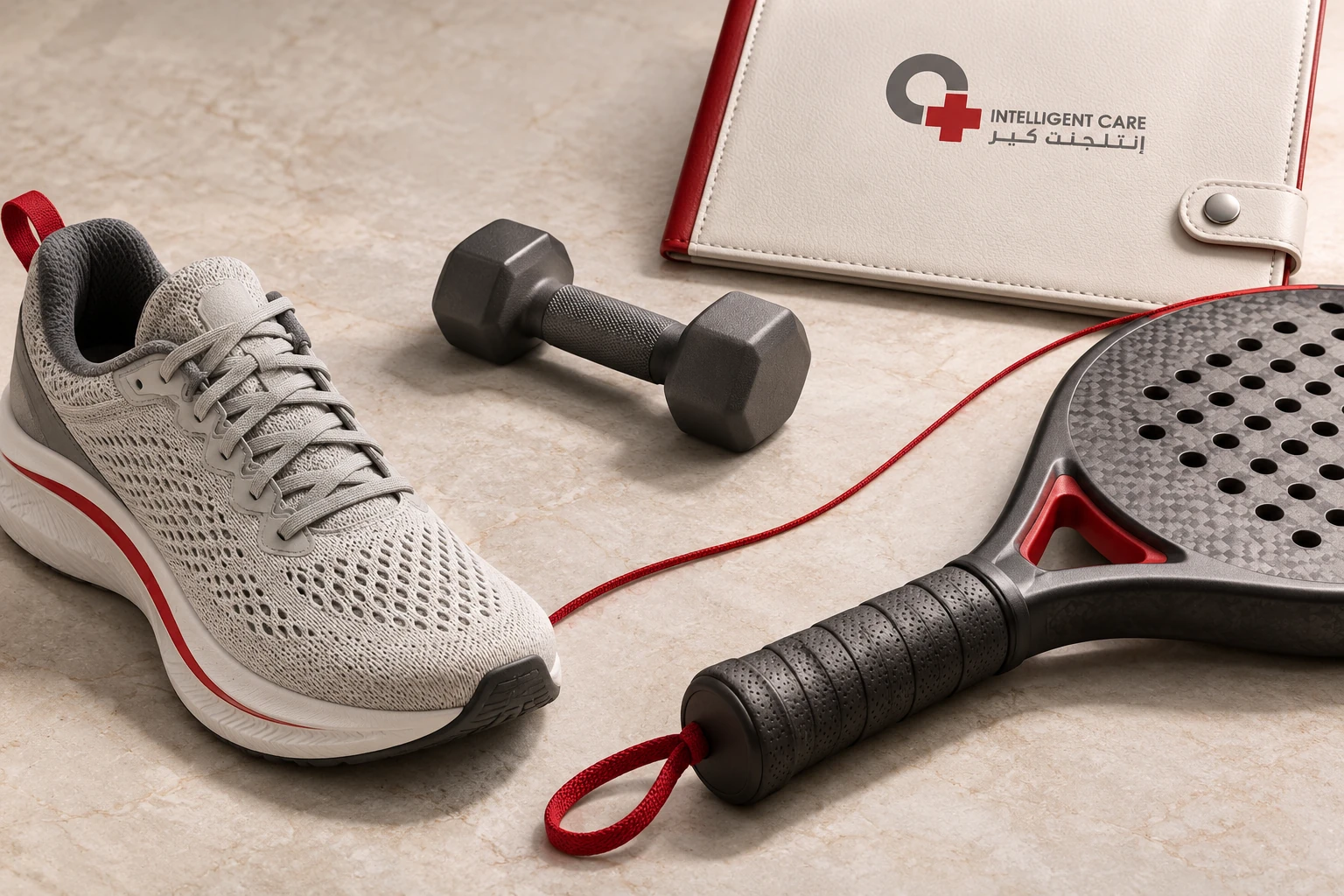
A runner, a padel player and a person returning to gym exercise may describe the same body region but face very different demands. The assessment considers the mechanism of injury, any confirmed diagnosis, previous injuries and what participation means to you. An unassessed injury may need medical review before rehabilitation begins.
A plan can connect appropriate movement and strength work with the activity you want to regain. It should consider how you respond between sessions, not only how an exercise looks during a visit. Pain settling is useful information but is not, by itself, a complete return-to-sport decision.
Some later-stage assessment needs facilities, equipment or a sports environment that a home visit cannot provide. Discuss those limits openly. The goal is a coherent pathway, with referral or coordination where needed, rather than treating home physiotherapy as a substitute for every part of sports medicine.
Read the clinical sourcesThe first assessment
Share the facts of the injury and any medical instructions. You do not need to recreate the movement that caused it for the appointment.
THE CLINICAL CONVERSATION01—04
Explain when and how the problem began, previous injuries, swelling and changes in function. Bring any diagnosis, surgery details or restrictions from the treating team.
The physiotherapist considers whether home rehabilitation is appropriate or whether a medical opinion, imaging or a different setting should come first.
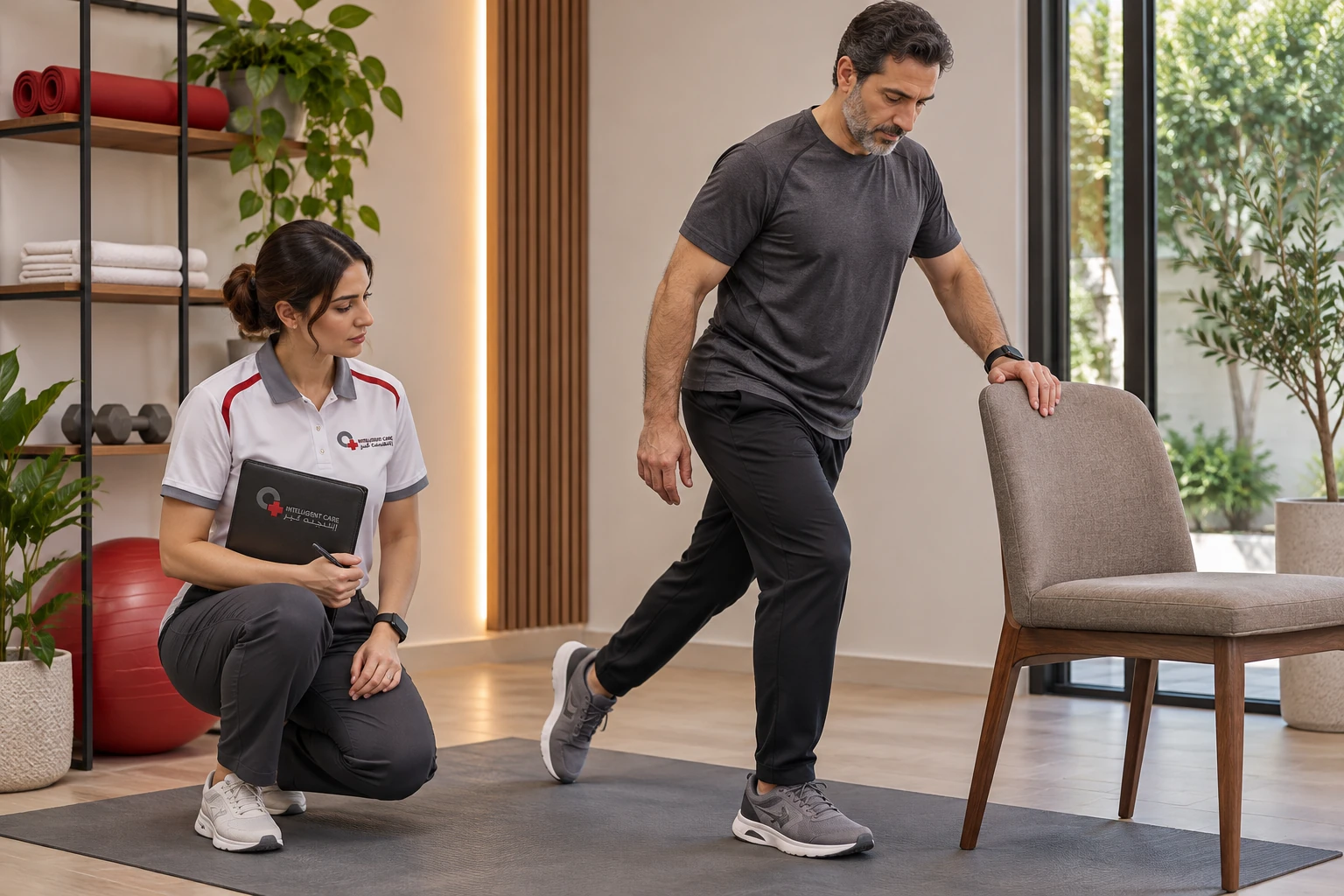
Appropriate movement, strength or functional assessment is chosen around the injury and current stage. Tests are not automatically the same for every sport or every person.
Define an immediate task and a later participation aim. Discuss what evidence would support progression, what remains restricted and who makes any formal clearance decision.
The care pathway
The stages are a conversation framework. Timing and progression depend on the individual injury and assessment.
Understand the diagnosis or uncertainty, current restrictions and an appropriate functional starting point.
Follow an individualized programme linked to movement and activity needs.
Consider suitable elements of the intended activity, with further facilities or expertise where required.
Discuss readiness, ongoing work and what should prompt reassessment with the relevant clinicians.
Explore a stage to bring it into focus. Every stage stays visible.
What the care involves
The plan is more useful when you understand the link between an exercise, the injury and the eventual activity.
| Element | Place in rehabilitation | What to clarify |
|---|---|---|
| 01Capacity building | Relevant movement and strengthening work can be chosen around the assessment and current restrictions. | What is the purpose, correct version and response to look for? |
| 02Functional practice | Appropriate tasks connect the programme with work, daily routines or a sporting demand. | Which task can be assessed at home and which needs another setting? |
| 03Graded participation | Return can be considered in stages rather than a single jump from rest to full competition. | What would justify the next stage in my case? |
| 04Review and coordination | The plan is reassessed when symptoms, function or medical instructions change. | Who should be involved in a return-to-sport or work decision? |
Before care arrives
The physiotherapist needs useful context, not an attempt to prove how much you can still do.

A personal reminder list.
Nothing is sent or saved.
Care around the person
A coach, partner or friend can help with practical arrangements when you want them involved. Advice should remain consistent with the treating clinician’s plan.

Explain whether the immediate priority is daily mobility, work or sport. A competition date can be discussed without becoming a clinical promise.
Agree how guidance will be shared with a coach or trainer. Avoid adding drills or increasing load because a routine worked for another athlete.
Discuss what happens later in the day or after ordinary activity, as well as during a session. Report a new injury or a significant change instead of quietly working around it.
Continuity of care
A single pain score or successful repetition cannot explain the whole recovery. Review the measures agreed for your activity.
Discuss the chosen activity and what changed in quality, assistance, confidence or capacity. Keep the comparison relevant to the stage you are actually in.
Explain symptoms or swelling after the programme and ordinary daily demands. Ask which changes call for adjustment or clinical reassessment.
Tell the clinician whether the plan fits your schedule and resources. An achievable programme is more useful than one that cannot be followed as explained.
Confirm what needs to be demonstrated before progression and who is responsible for decisions that require specialist clearance.
People and responsibilities
Care works best when you know who assesses, who arranges and who follows up. Named editorial profiles do not select the clinician attending your appointment.
Assesses movement and function, agrees practical goals and adapts the rehabilitation plan within the relevant clinical restrictions.
Provides diagnosis, surgical restrictions or other specialist instructions when these are needed to guide rehabilitation.
Helps match the request to the appropriate service, coordinates the first appointment and clarifies any additional requirements.
Choose meaningful goals, explain what happens between sessions and agree what information may be shared.
Read the real team profiles and their professional-directory references. Your assigned professional and the scope of care are confirmed through the care arrangement.
Meet our clinical teamWhen to seek medical help
A new or worsening injury can change the appropriate care route. Do not use an appointment request to delay medical assessment.
Immediate medical attention
Prompt clinical assessment
Practical arrangements
Choose a free initial assessment, one home session or a ten-session plan. Discuss whether the selected option suits your needs; buying more sessions does not guarantee a particular recovery.
Share the building or hotel, access instructions and any stairs or transfer difficulties. Tell the team about space, equipment and communication needs before the visit.
The ten-session plan books the first appointment now; arrange later sessions with the team. Insurance eligibility and any required documents are checked for the individual policy, not presumed from the service name.
Your questions
Not every request begins with a diagnosis, but some injuries need medical assessment before treatment. Explain the injury and current symptoms so the team can consider the appropriate first route.
A date cannot be promised from an online description or booking option. The injury, treatment history, functional demands and response guide the discussion; some decisions need a sports clinician or surgeon.
It is one useful observation, not a complete assessment of strength, task demands or readiness. Discuss the relevant criteria with the treating team rather than testing full competition yourself.
Some goals can be addressed at home. Higher-demand testing, equipment or sport-specific practice may require another setting; the team should explain any limits and coordination needed.
No programme is prescribed by this page. The plan needs to reflect your injury, current ability, medical restrictions and goal, even if another person has a similar injury label.
Discuss the information you want shared and consent to that involvement. The aim is consistent guidance, while clinical decisions remain with the appropriately qualified treating professionals.
No. The ten-session option is a booking plan, not a promised clinical outcome or return-to-sport certificate. Review the purpose of continuing sessions with the physiotherapist.
Tell the team promptly and seek urgent care for warning signs. A changed injury needs reassessment; do not simply resume the old programme at the same level.
Expertise with a name
Explore the named clinical profiles, their professional roles and their Dubai Health Authority directory records.
Author assignment
General Practitioner
Dr Toqa Ibrahim is a DHA-licensed General Practitioner with Alpha Intelligent Care Home Healthcare Center. Her clinical profile brings the general-practice perspective into our approach to care at home.

Review assignment
Specialist Clinical Pathology
Dr Joyce Jose is a DHA-licensed Specialist in Clinical Pathology at Intel Lab. Her public professional record includes pathology practice in the UAE and earlier experience as a professor at Gulf Medical University.
Professional registration describes each clinician’s role. The clinical assessment and the person responsible for your care are confirmed separately.
More care guides


The wider picture
Explore related support, or speak to us about combining services into one plan.
About this guide
General information supports the care conversation; your own assessment determines the plan. Company service information and independent clinical guidance are listed separately below.
Care that comes to you
Across Dubai.
Abu Dhabi — coming soon.