01
Multispecialty polyclinic
Coordinate outpatient specialties, consultation rooms, patient flow and shared support functions.

Clinical services · Your organization
Design, setup, licensing support and management for healthcare facilities in Dubai. Bring a new project to life or strengthen an existing clinic with the workstreams your organization needs.
Your next step
A new idea and an operating facility need different support. Build a project brief that makes the facility, workstreams and next decision clear.
The facility comes first
We work with a range of healthcare facility types. Each brings a different clinical purpose, professional mix, infrastructure and licensing pathway. A useful proposal begins with the services you intend to provide, rather than a generic floor plan.
Coordinate outpatient specialties, consultation rooms, patient flow and shared support functions.
Connect sample reception, analytical work, quality processes and reporting to the intended diagnostic scope.
Define the surgical service, patient pathway and specialist infrastructure with the appropriate clinical and regulatory input.
Clarify the operating model, location, professional responsibilities and applicable licensing route.
Build an operation that coordinates clinicians, visits, records and care delivered outside a facility.
Establish which activities are proposed and which clinical or professional requirements apply to that scope.
From concept to operation
The sequence is shaped by the facility, its starting point and the approvals it needs. Explore the workstreams as a coordinated project; some proceed together, while others depend on earlier decisions.
Define the clinical scope, layout, patient pathway and technical requirements.
Coordinate company-setup requirements, assets, infrastructure and the parties delivering them.
Prepare the relevant facility application and readiness work with documented responsibilities.
Source, assess, recruit, orient and support licensing for the required clinical team.
Establish quality systems and assess any relevant accreditation-support scope.
Discuss network empanelment and revenue-cycle requirements for the clinical profile.
Agree service management, governance, reporting and performance measures.
A clinic is a working environment
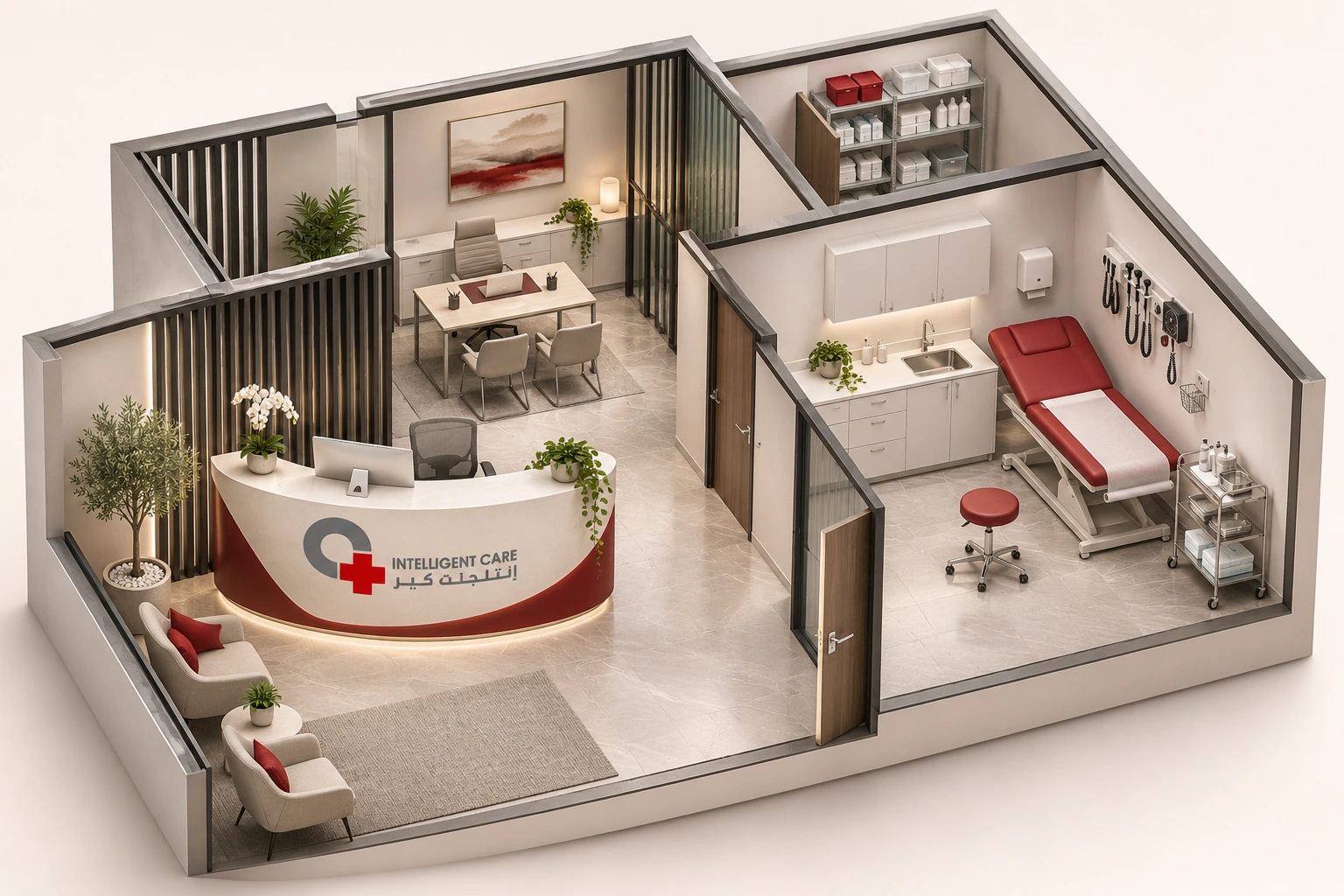
A considered layout supports the intended clinical service. Patient access, consultation privacy, staff work, equipment and clean storage need to fit together. The illustration is a concept to explain planning questions; the actual design follows your site and professional requirements.
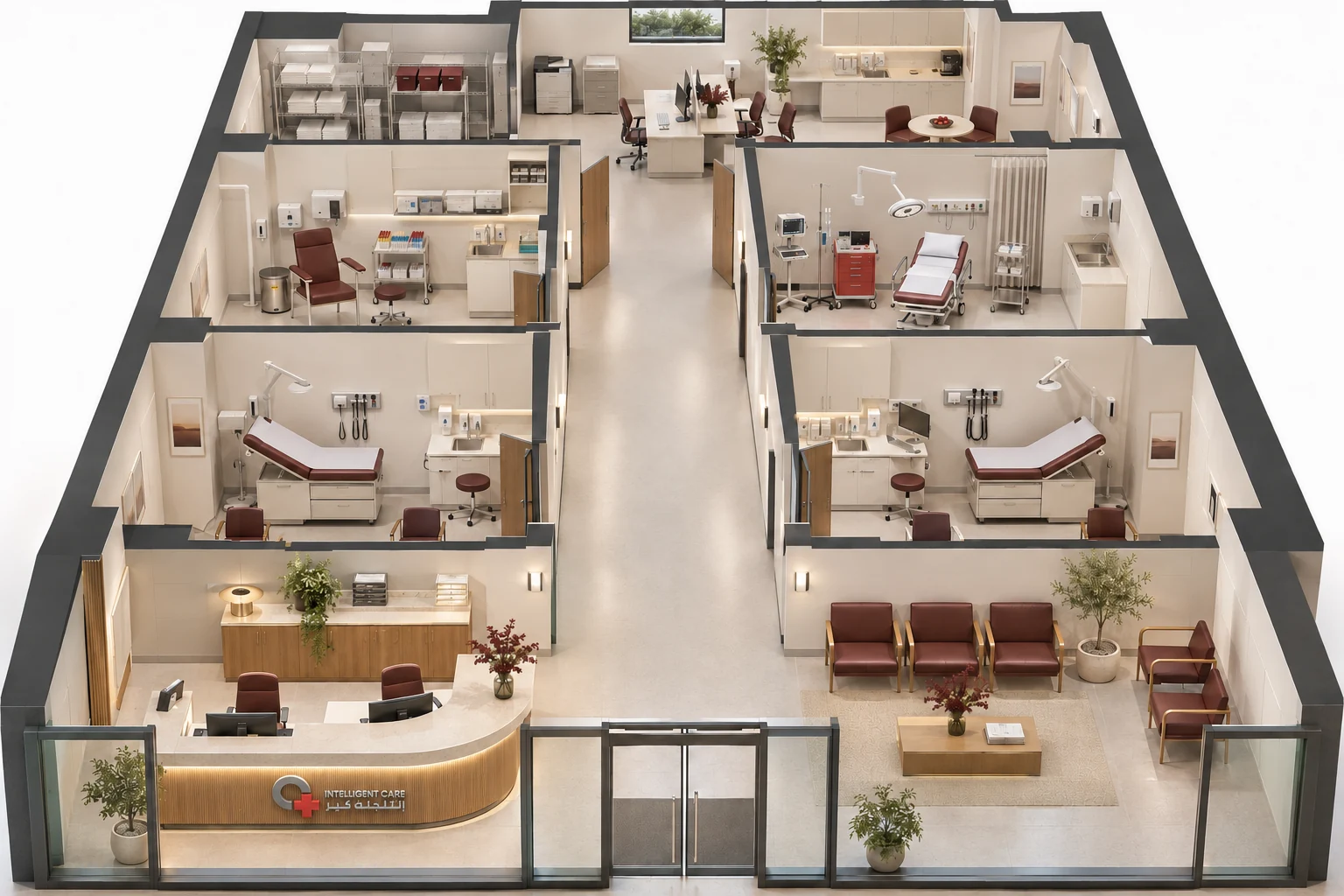
Consider how people find the service, register, wait and reach the right clinical room.
Match space, equipment, handwashing, privacy and storage to the activities proposed.
Allow for staff work, records, supplies and the service’s operational needs.
Review patient, staff and material movement so the layout supports the planned workflow.
Coordinate the parts
Facility development involves different professional and commercial workstreams. A responsibility plan makes dependencies visible: who provides the site information, who supplies equipment, who coordinates documents and which decisions remain with the owner.

Coordinate the parts
Record the intended services, facility type, location, ownership inputs and operating priorities.
Map design, infrastructure, equipment and setup responsibilities against project milestones.
Keep assumptions, changes and required owner decisions visible before they affect the next stage.
Licensing support
DHA facility licensing support connects the project with its regulatory requirements. The route depends on the facility and proposed activities. Design decisions, professional appointments and required documentation should be coordinated around the applicable process.
parts of a considered plan
Select the points you want to discuss.
No fixed approval timeline or guaranteed regulatory outcome is promised.
The clinical team
The facility plan and workforce plan need to support the same clinical service. Recruitment, licensing and orientation are connected to the roles, equipment and operating procedures the facility will use.
Define the professional categories, specialties, headcount and supervision structure.
Coordinate sourcing, assessment and relevant professional requirements for each role.
Introduce the team to local procedures, documentation, equipment and escalation before the service begins.
Quality systems and accreditation support
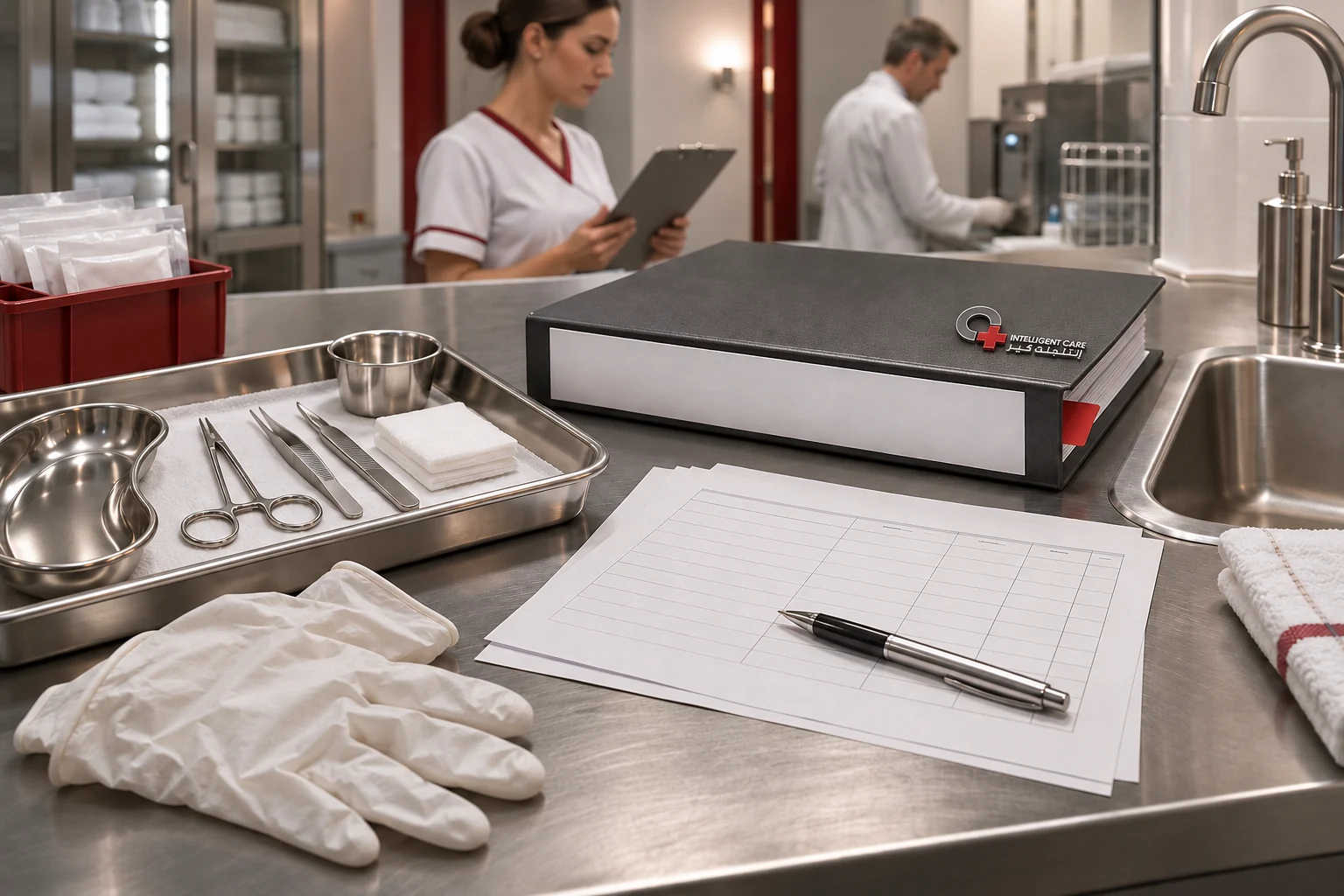
Quality work connects policies, training, records and review to everyday clinical activity. Accreditation is a separate, scope-specific objective. Discuss the relevant advisory pathway, which may involve CARF, JCI, CAP or ISO requirements; the appropriate standard and support are determined for the facility.
Quality systems and accreditation support
Set out the policies, procedures and evidence relevant to the service and clinical risks.
Connect documentation with responsibilities, training and the way the facility works.
Use internal review and action tracking to address gaps and assess readiness for the chosen objective.
Accreditation support is tailored to the facility and standard. Certification decisions remain with the relevant assessment body.
Insurance and revenue cycle
Insurance empanelment and revenue-cycle coordination connect the service with its commercial operation. The facility’s clinical profile, contracting arrangements and documentation processes shape this work; network participation and payment are not automatic.
Identify relevant insurer or administrator relationships for the proposed clinical service.
Review applications, documentation and the terms that need agreement.
Connect eligibility, authorization, clinical documentation and billing responsibilities.
Define submission, follow-up, reconciliation and the reporting needed to understand outstanding work.
After the doors open
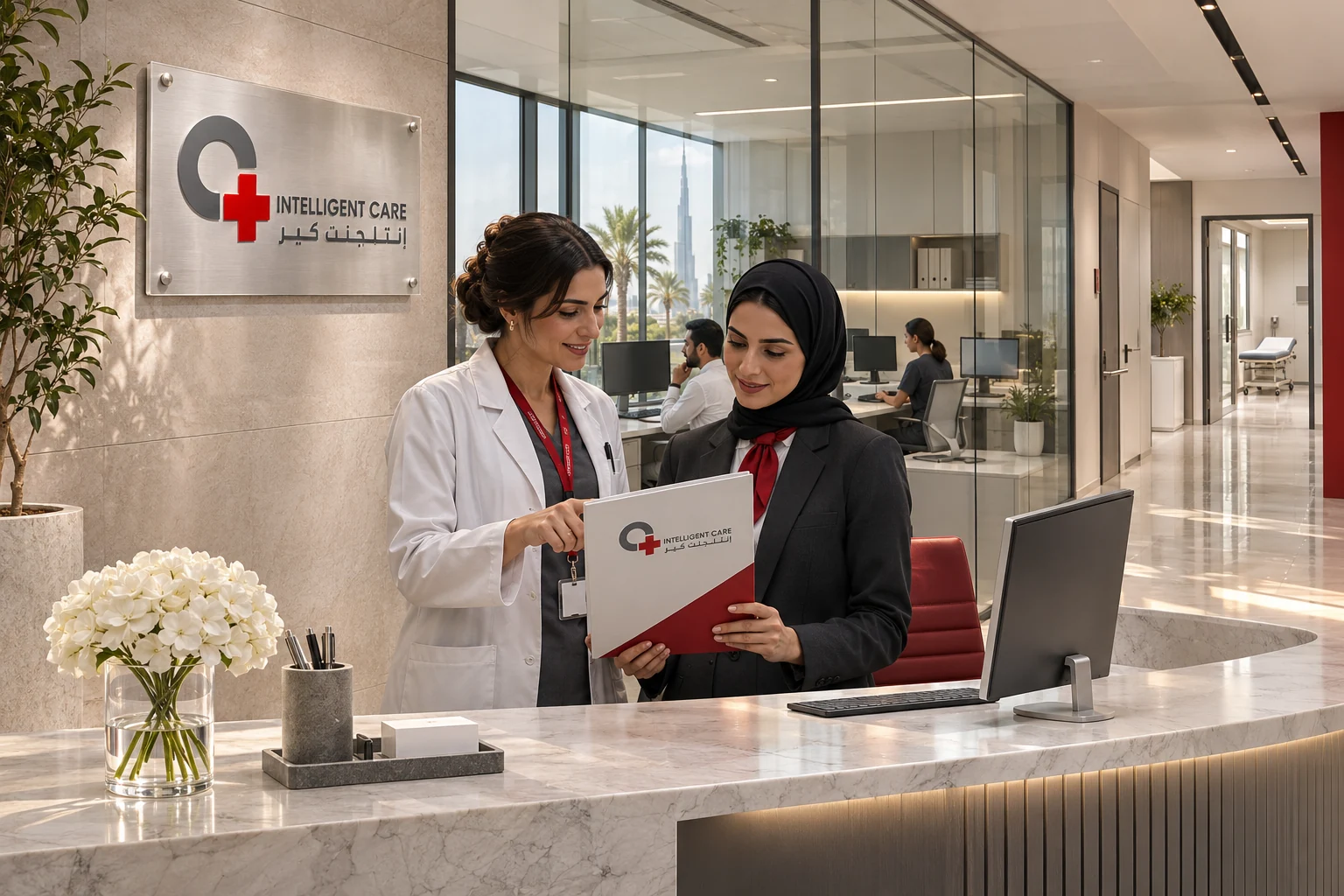
An operating clinic needs coordinated people, processes and information. Management scope may include staffing, day-to-day operations, quality systems and performance review, with responsibilities and measures agreed contractually.
After the doors open
Coordinate the operating schedule, patient flow, team interfaces and daily priorities.
Define how equipment, supplies, facilities issues and administrative work are escalated and tracked.
Agree meaningful measures, reporting frequency and review actions. Identify who receives each report, who is responsible for an issue and when the operating plan should be reassessed.
Choose your involvement
You may be starting with an idea, moving through setup or reviewing an existing service. The engagement can be scoped around that starting point, with a clear boundary between work included and work handled by your existing teams.
Bring the relevant workstreams into one coordinated scope, with owner decisions and external dependencies clearly identified.
Focus on design, licensing, staffing, quality or another specific need without duplicating work already completed.
Agree which day-to-day responsibilities and reporting the operating service needs.
Assess an existing operation, prioritize actions and define an achievable change program.
For an operating facility
An existing clinic has people, patients, contracts and established routines. The first task is to understand what works, what needs attention and how any changes can be introduced responsibly. The review scope should be explicit.
Review the service model, team structure, workflows and available performance information.
Separate immediate operational issues from longer-term development and investment decisions.
Assign responsibilities, sequence changes and agree how service continuity and progress will be reviewed.
A clear project view
Choose reporting that helps the owner make decisions. A project plan, readiness log and operational review answer different questions. The proposal should define access, evidence, update ownership and the information needed at each stage.
DEFINE YOUR REPORTINGThe workstream, expected deliverable, dependency and decision needed to move forward.
Documents, team preparation and actions that remain open within the agreed scope.
The selected service and commercial measures, their meaning and responsibility for follow-up.
Agree the reporting format and responsible contacts as part of the project scope.
Your questions
The wider picture
Explore related support, or speak to us about combining services into one plan.
Built around your organization
Across Dubai.
Abu Dhabi — coming soon.