01Transfers
Getting up from a chair
Describe the usual chair, how much help is needed and whether pain, weakness or dizziness gets in the way. The therapist can assess the actual task.

Older-adult mobility · Dubai
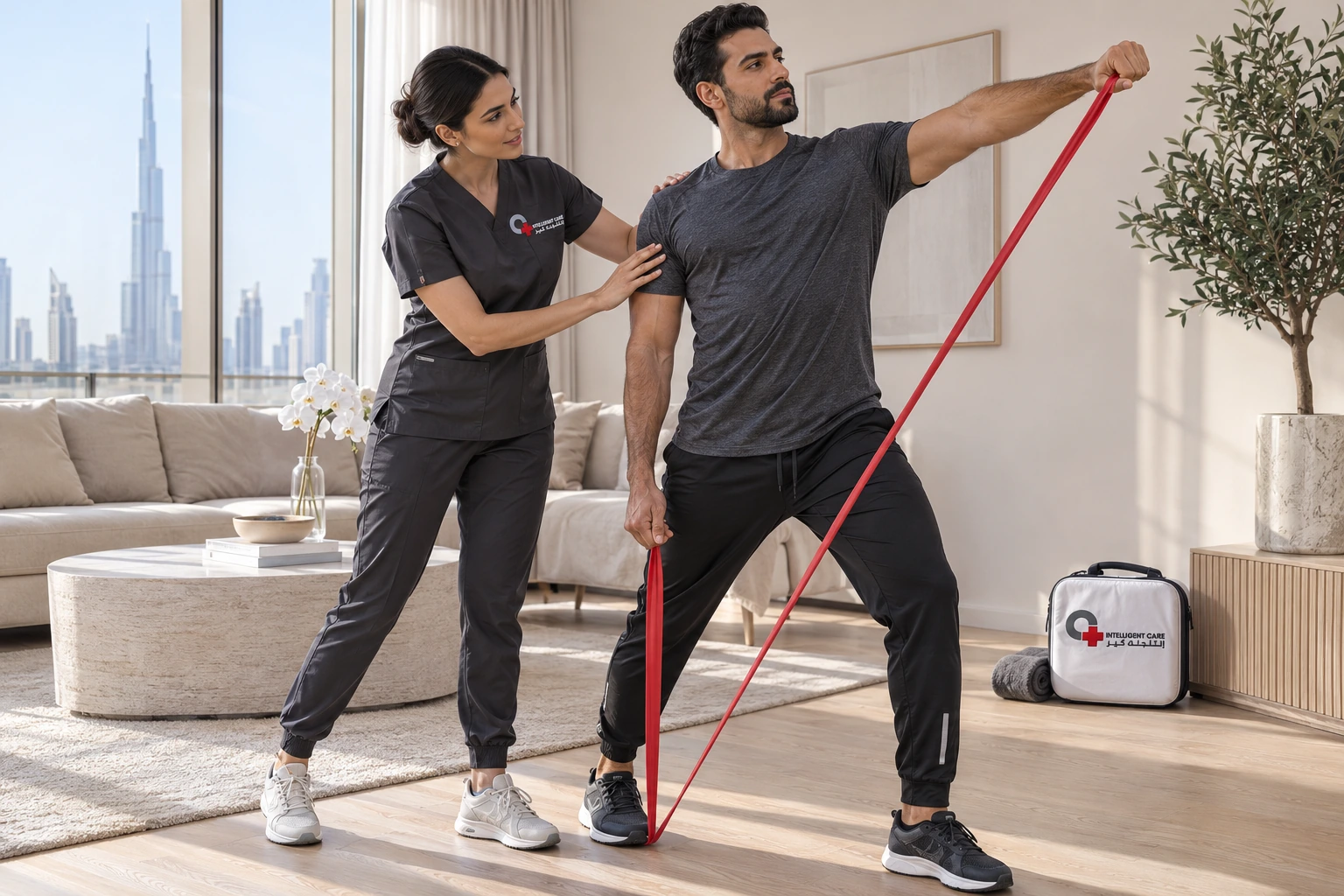
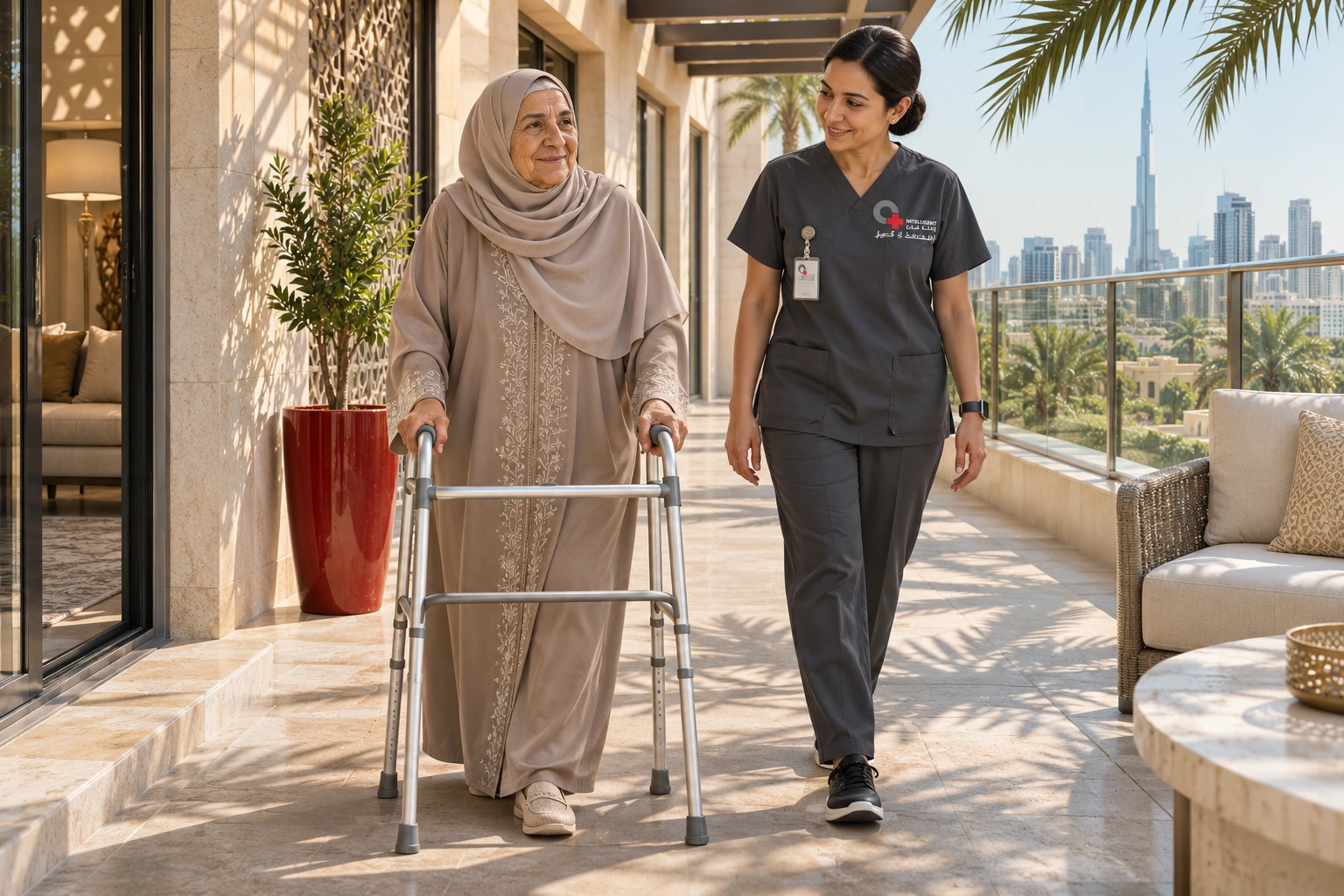
Getting to the dining table. Standing to greet a visitor. Walking to a favourite chair. Older-adult physiotherapy begins with everyday goals, bringing assessment and an appropriate rehabilitation plan to the place those movements matter most.

 Clinical author assignmentDr Toqa IbrahimTwo clinical perspectivesProfiles & DHA directory links Guidance with sourcesExplore the references
Strength · balance · everyday independence
Start with an initial assessment and tell us about the person’s usual mobility, recent changes, falls and medical advice. The physiotherapist connects those details with practical goals and the support available at home.
Your discussion priorities
Choose the activities you would like to discuss. These are priorities for assessment, not a score or an automatic falls-risk diagnosis.
Describe the usual chair, how much help is needed and whether pain, weakness or dizziness gets in the way. The therapist can assess the actual task.
Tell us about distance, turning, doorways and the walking aid currently used. Mention whether the difficulty is recent or has gradually changed.
Share any falls, near falls and situations the person now avoids. An assessment can consider both movement and relevant home hazards.
Bring discharge instructions and explain what the person could do before the illness. Rehabilitation needs to respect current health and any restrictions.
Describe the entrance and important routes through the home. Do not ask the person to demonstrate a risky step before the therapist assesses it.
Choose a personal goal, such as preparing a simple meal or reaching a balcony chair. The person’s priorities should lead the conversation.
Your discussion list
Choose the points you would like to discuss.
Understand the care
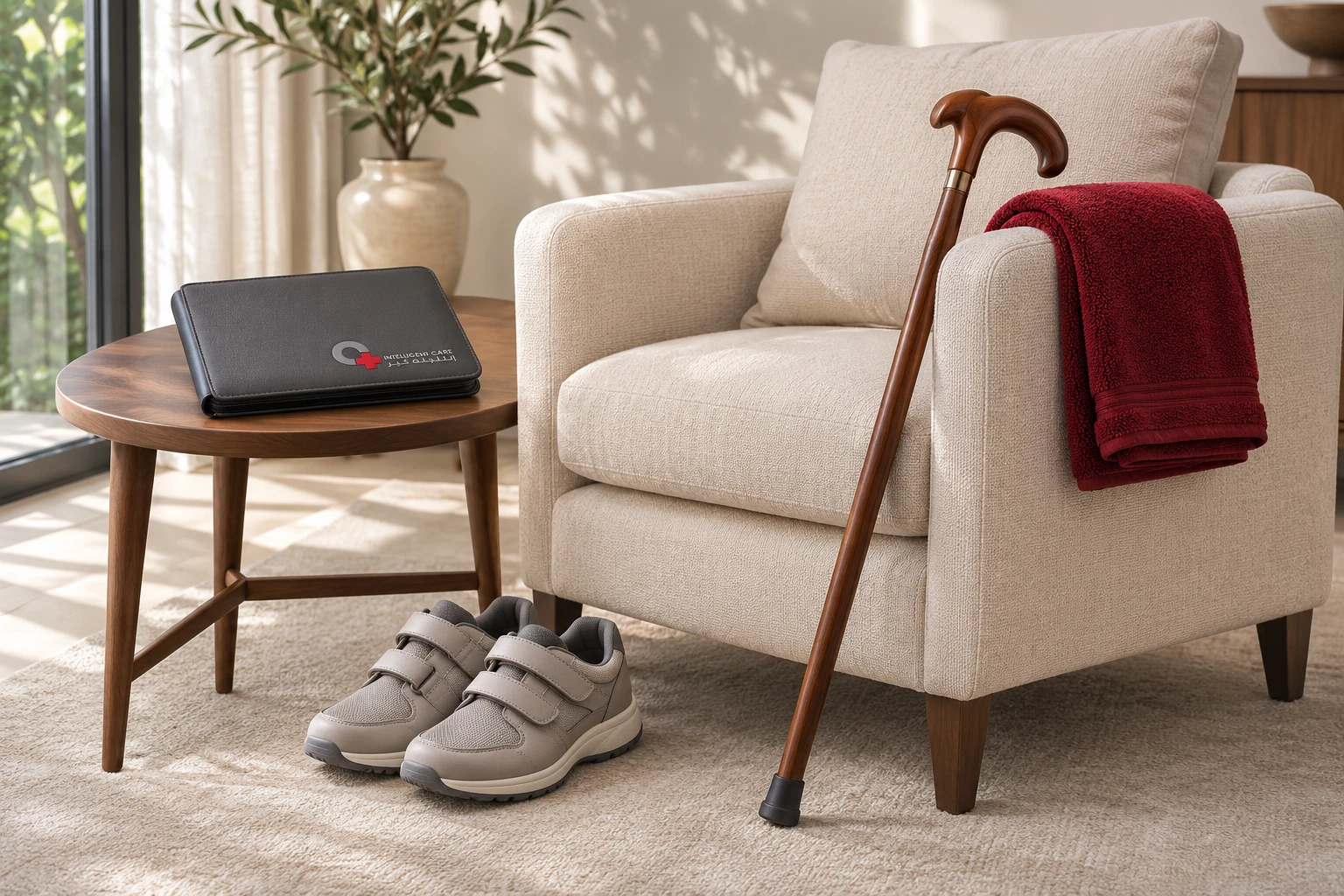
Older-adult physiotherapy considers movement alongside health, confidence, daily routines and the environment. Two people of the same age may need very different support. A meaningful plan is based on current ability and personal priorities rather than a standard set of exercises for “seniors”.
Some people want to rebuild activity after an illness or a hospital stay. Others are managing joint symptoms, reduced stamina, a neurological condition or concern about falling. The assessment explores what is limiting movement and which parts of the problem need medical review or input from another professional.
The home environment makes daily challenges visible: a low chair, a narrow route to the bathroom or the point where a person usually needs assistance. Rehabilitation can focus on those real tasks. It also helps the family understand where support is useful and where taking over may unnecessarily reduce the person’s own participation.
Read the clinical sourcesThe first assessment
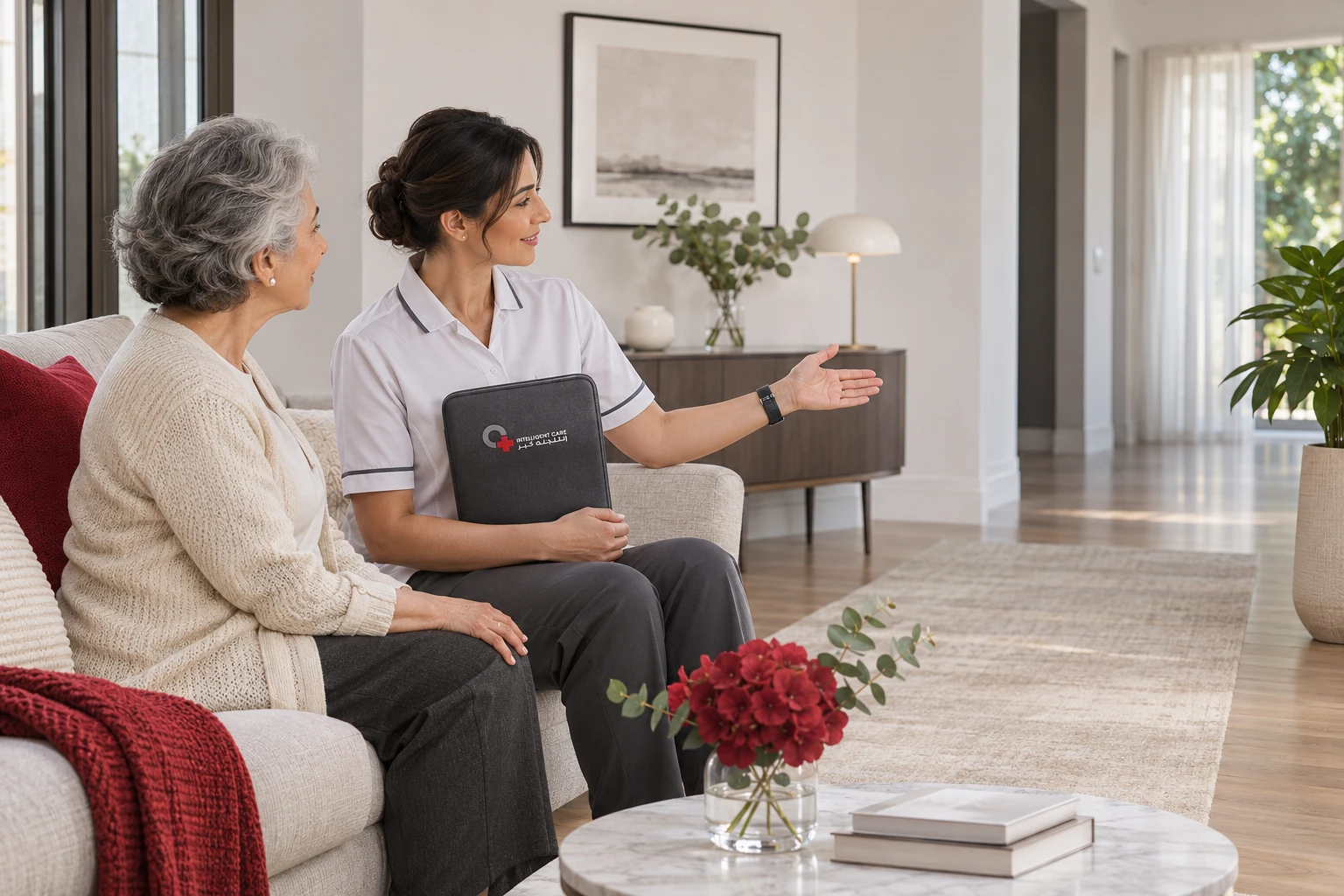
Movement is assessed in the context of the whole person. The visit should allow time for explanation, questions and an appropriate pace.
THE CLINICAL CONVERSATION01—04
Ask what matters to them, what feels difficult and what they want to keep doing. Adapt the conversation for hearing, vision, language or memory needs.
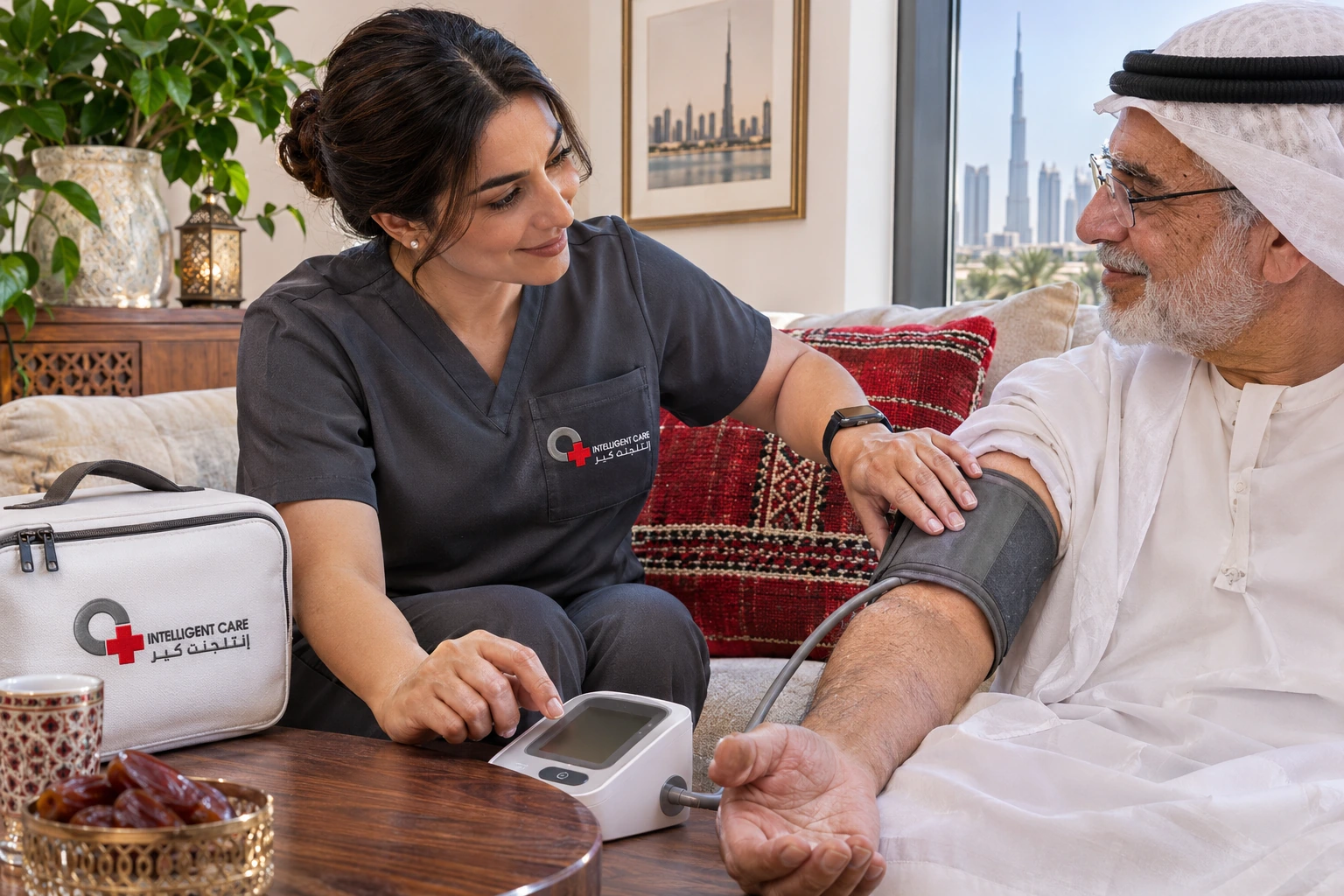
Discuss recent illness, surgery, falls, medicines, dizziness and existing advice. New symptoms may need a doctor’s assessment before exercise or progression.
Appropriate tests may explore walking, balance, strength and transitions. The therapist chooses a safe level of support rather than pushing for a maximum performance.
Set a starting goal, the support needed and the review point. Explain whether other input, equipment review or a wider falls assessment would add value.
The care pathway
Progress depends on health, goals and response. These phases do not set a universal recovery deadline.
Understand usual function, current limitations and the person’s priorities.
Select appropriate activities and clarify support and supervision.
Review response and progress suitable tasks when appropriate.
Agree what to continue, when to review and when another assessment is needed.
Explore a stage to bring it into focus. Every stage stays visible.
What the care involves
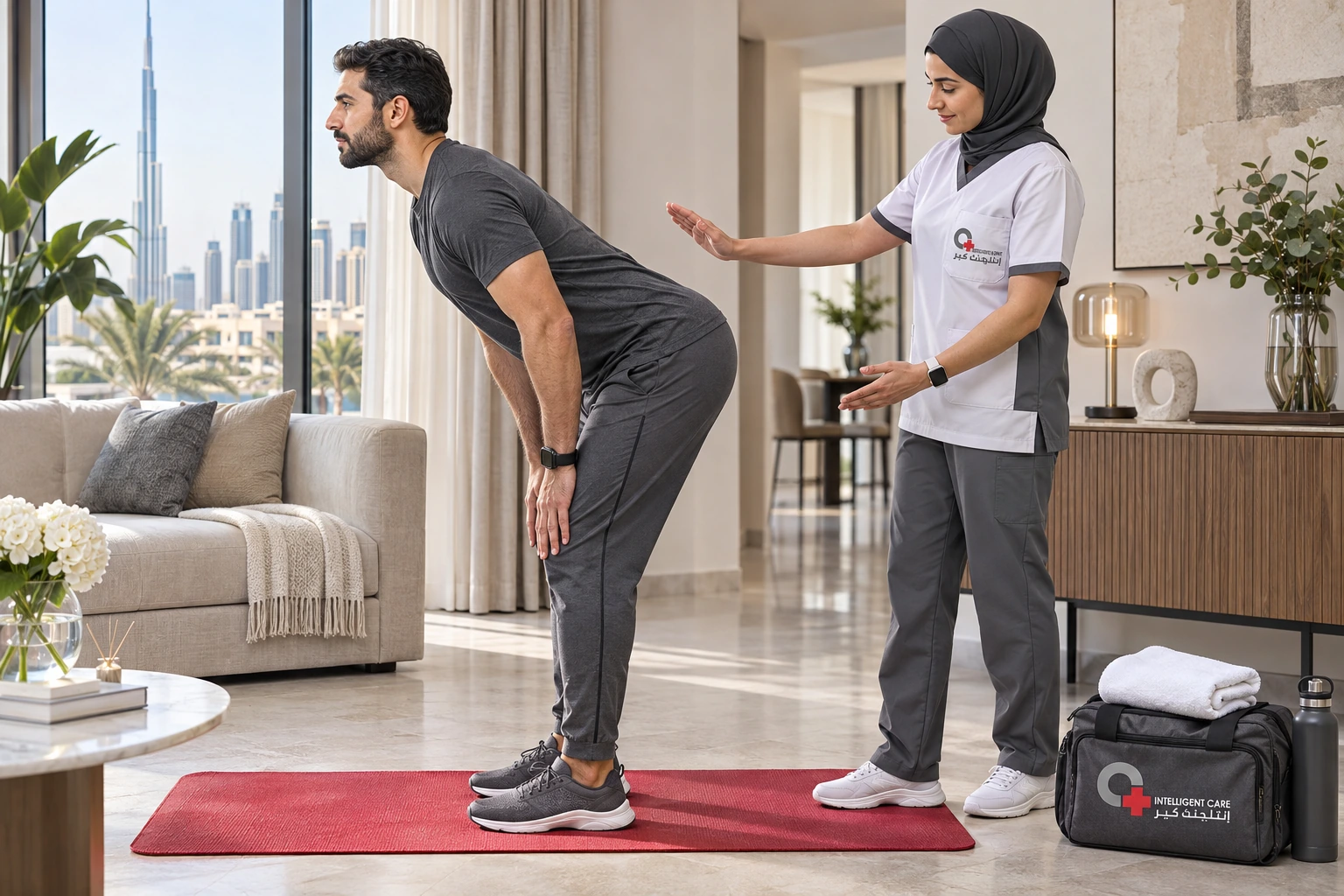
Methods are selected for the findings and goals. A supervised programme can combine different elements and change as the person’s response becomes clearer.
| Element | Practical purpose | Individual decision |
|---|---|---|
| 01Strength and functional practice | Work towards the effort needed for daily activities such as rising and walking. | Starting capacity, symptoms, health and the support required. |
| 02Balance and gait work | Practise appropriate movement challenges and the use of an existing walking aid. | Falls history, confidence and safe supervision. |
| 03Activity pacing | Plan manageable activity and rest around the day. | Fatigue, symptoms, recovery and meaningful priorities. |
| 04Home environment review | Identify practical obstacles to the agreed movement goals. | A wider occupational therapy or equipment assessment may be needed. |
Before care arrives
The most useful preparation is information about how the person actually moves at home.

A personal reminder list.
Nothing is sent or saved.
Care around the person
The person receiving care remains central, including when relatives arrange the appointment.
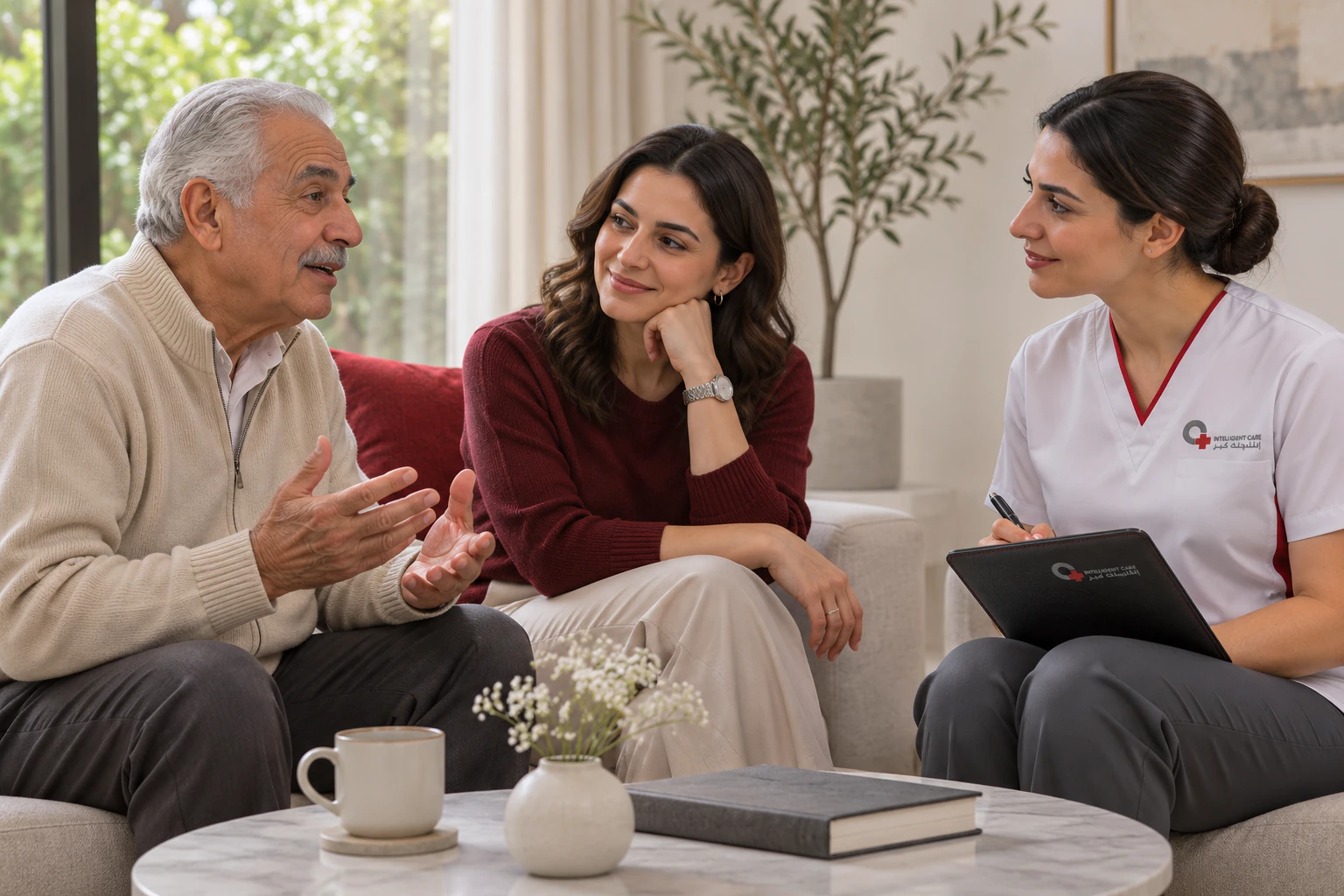
Agree what assistance feels useful and respectful. A family member should not lift or transfer someone using an unfamiliar technique.
Ask the therapist to demonstrate the assistance needed for a specific activity and check that you can repeat it safely. Tell them if this is beyond your capacity.
Use the person’s preferred language and hearing or visual aids. Keep the home plan understandable rather than relying on a long list of technical terms.
Share agreed instructions with regular helpers, with consent. A new hospital restriction or change in health should reach the care team before the next session.
Continuity of care
A useful review asks what changed in the activity, not only whether an exercise became harder.
Record a meaningful task and the help needed. For example, the route from bed to bathroom may matter more than a general promise of being stronger.
Discuss pain, fatigue, dizziness and how the person feels about the plan. Share difficulties even if they occur on a day without a visit.
A new fall, sudden decline or worsening symptom may need medical reassessment. An unchanged plan is not automatically the right plan.
People and responsibilities
Mobility concerns can cross several areas of care. Each professional keeps a clear role.
Assesses function and guides rehabilitation, reviewing appropriate movement goals, progression and assistance.
Evaluates new symptoms, medicines and health conditions that affect activity. Physiotherapy does not independently alter prescribed treatment.
Nursing or caregiving may help with other agreed needs. Daily assistance is distinct from an assessed physiotherapy programme.
Read the real team profiles and their professional-directory references. Your assigned professional and the scope of care are confirmed through the care arrangement.
Meet our clinical teamWhen to seek medical help
Home rehabilitation is planned care. Some symptoms need prompt medical attention first.
Immediate medical attention
Prompt clinical assessment
Practical arrangements
Start with an assessment or choose a session plan appropriate to the person’s needs.
An initial assessment helps establish suitable goals and whether home therapy is appropriate. The team can clarify mobility and access needs before confirming arrangements.
Choose one session or a ten-session plan. Booking the plan schedules the first visit; later sessions are agreed with the team.
A relative can organise the appointment while keeping the person’s consent and preferences central. Discuss who should receive practical updates.
Your questions
An assessment can explore movement with the person’s usual aid and goals. The aim may be safer participation with support, rather than walking without equipment. The therapist decides what is appropriate.
No. Balance difficulties can have different contributing factors. Exercise selection and supervision should follow assessment, particularly after falls, dizziness or a change in health.
No. Falls can have multiple causes. Appropriate exercise and other targeted measures may reduce risk, but medical, medication, vision and environmental factors may also need attention.
Tell the team beforehand. Familiar activities, simple explanations and family involvement may help. The clinician assesses whether the proposed plan is practical and whether other support is needed.
You can seek advice when a task becomes harder or confidence changes. A new or sudden loss of ability should be medically assessed promptly rather than treated as normal ageing.
It depends on the person’s preferences, communication and assistance needs. Agree attendance with the team so the session is safe and the person does not feel excluded from decisions.
Frequency is agreed after assessment and reviewed against response. The website’s session options do not define a fixed weekly prescription for every older adult.
Where appropriate, the therapist can explain which agreed activities to continue and when to seek review. Changes in health, falls or new symptoms can alter what is suitable.
Tell the clinician what happened, where it happened and whether there was dizziness or a change in function. A near fall can provide useful information even without injury. Do not recreate the event to demonstrate it.
Maintaining a valued activity can be a meaningful goal. The clinician can discuss what is realistic, how to review function and whether the plan should focus on support, adaptation or rehabilitation.
Expertise with a name
Explore the named clinical profiles, their professional roles and their Dubai Health Authority directory records.
Author assignment
General Practitioner
Dr Toqa Ibrahim is a DHA-licensed General Practitioner with Alpha Intelligent Care Home Healthcare Center. Her clinical profile brings the general-practice perspective into our approach to care at home.

Review assignment
Specialist Clinical Pathology
Dr Joyce Jose is a DHA-licensed Specialist in Clinical Pathology at Intel Lab. Her public professional record includes pathology practice in the UAE and earlier experience as a professor at Gulf Medical University.
Professional registration describes each clinician’s role. The clinical assessment and the person responsible for your care are confirmed separately.
More care guides


The wider picture
Explore related support, or speak to us about combining services into one plan.
About this guide
General information supports the care conversation; your own assessment determines the plan. Company service information and independent clinical guidance are listed separately below.
Care that comes to you
Across Dubai.
Abu Dhabi — coming soon.