Define the clinical question
Clarify the condition or follow-up purpose and the clinician requesting the observations. Avoid collecting numbers with no plan to use them.

Vital signs monitoring · Dubai
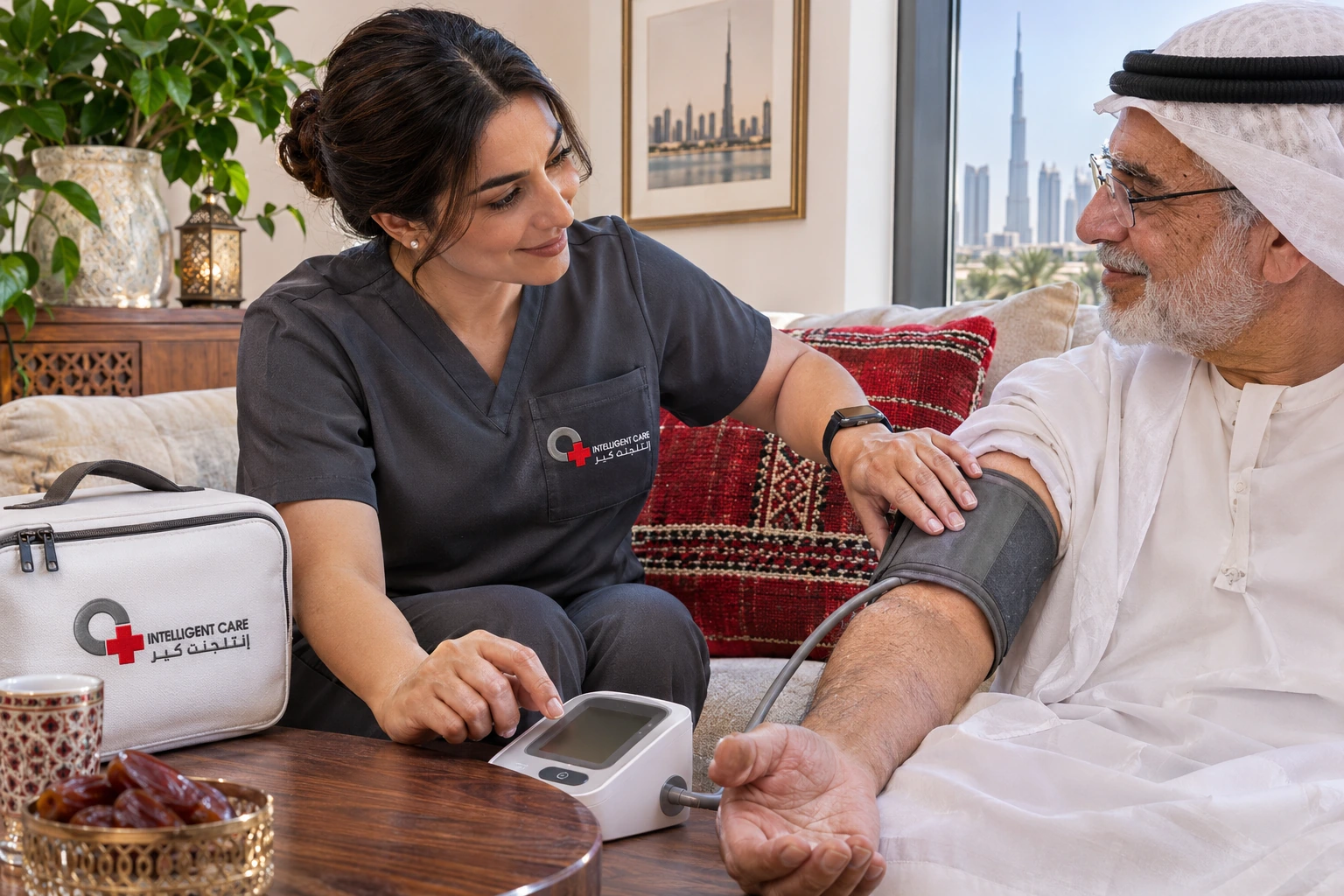
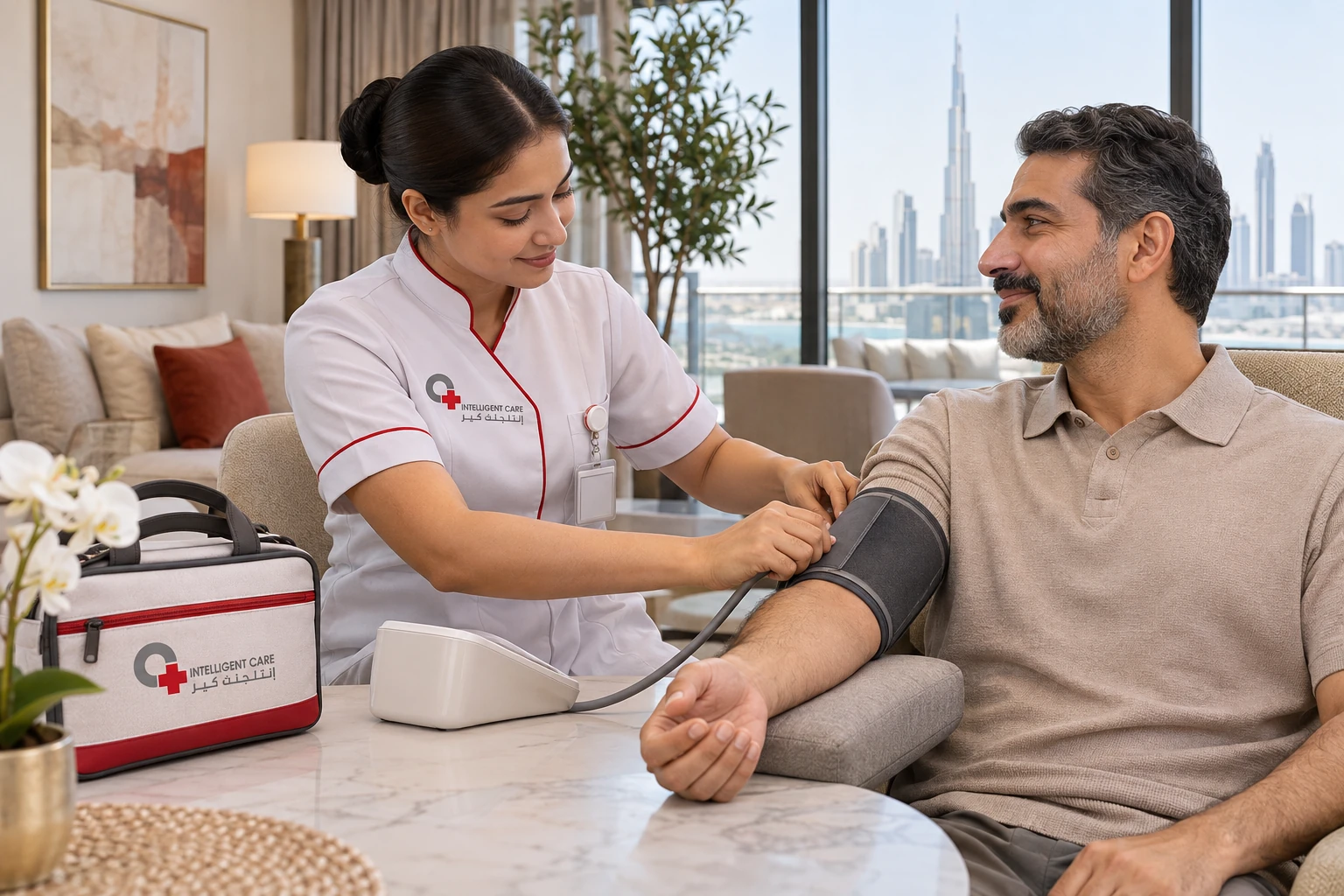
A blood pressure reading, pulse or temperature becomes more useful when someone knows why it is being measured and what should happen next. Intelligent Care provides planned nursing observations at home in Dubai, connecting the measurement with your symptoms, current instructions and the clinician responsible for review.
 Clinical author assignmentDr Toqa IbrahimTwo clinical perspectivesProfiles & DHA directory links Guidance with sourcesExplore the references
Planned clinical observations
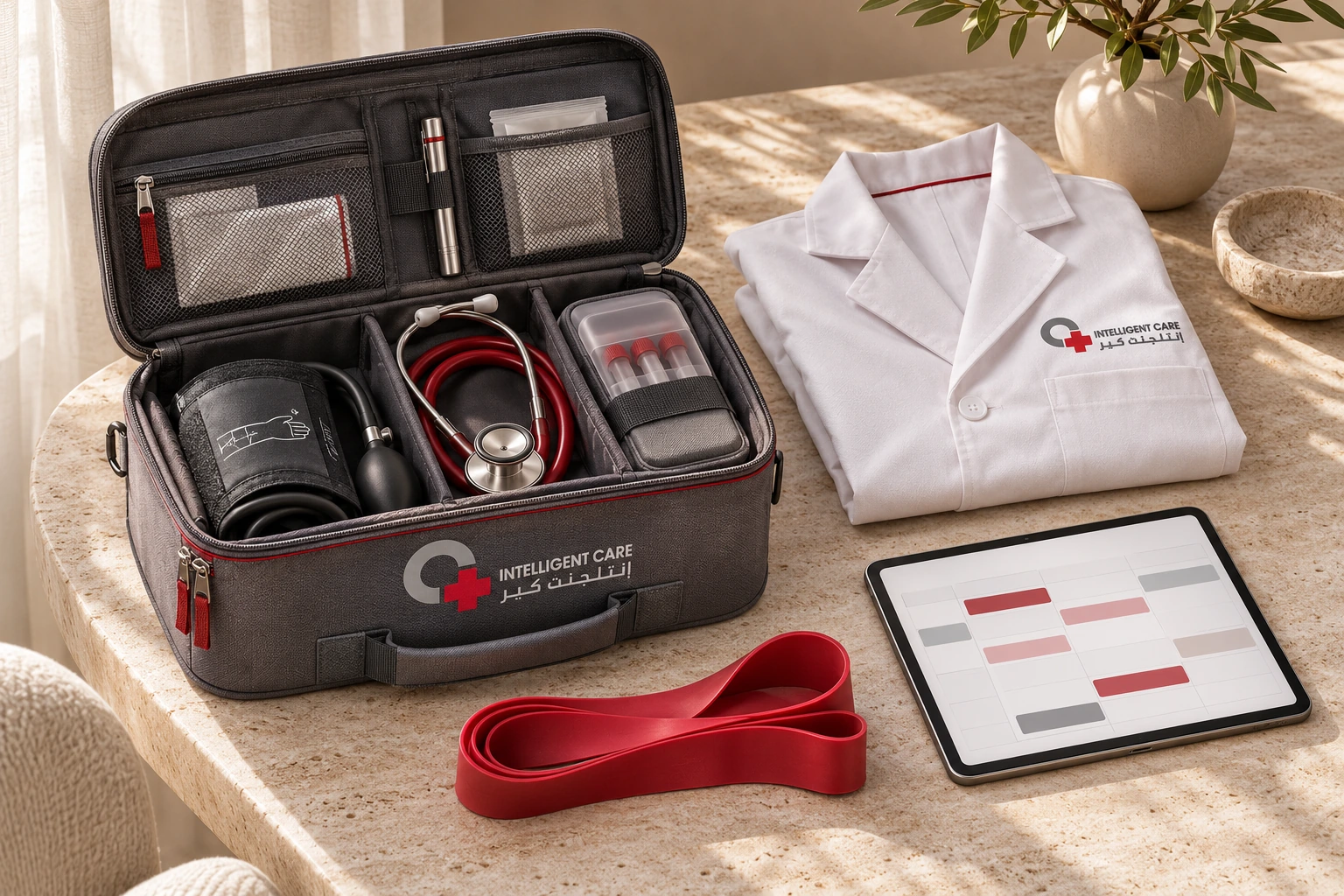
Tell the care team which observations have been requested, how often they are needed and who will review them. A short nursing period may suit a defined task; repeated or complex monitoring needs a schedule and response plan agreed with the clinical team.
Understand the care
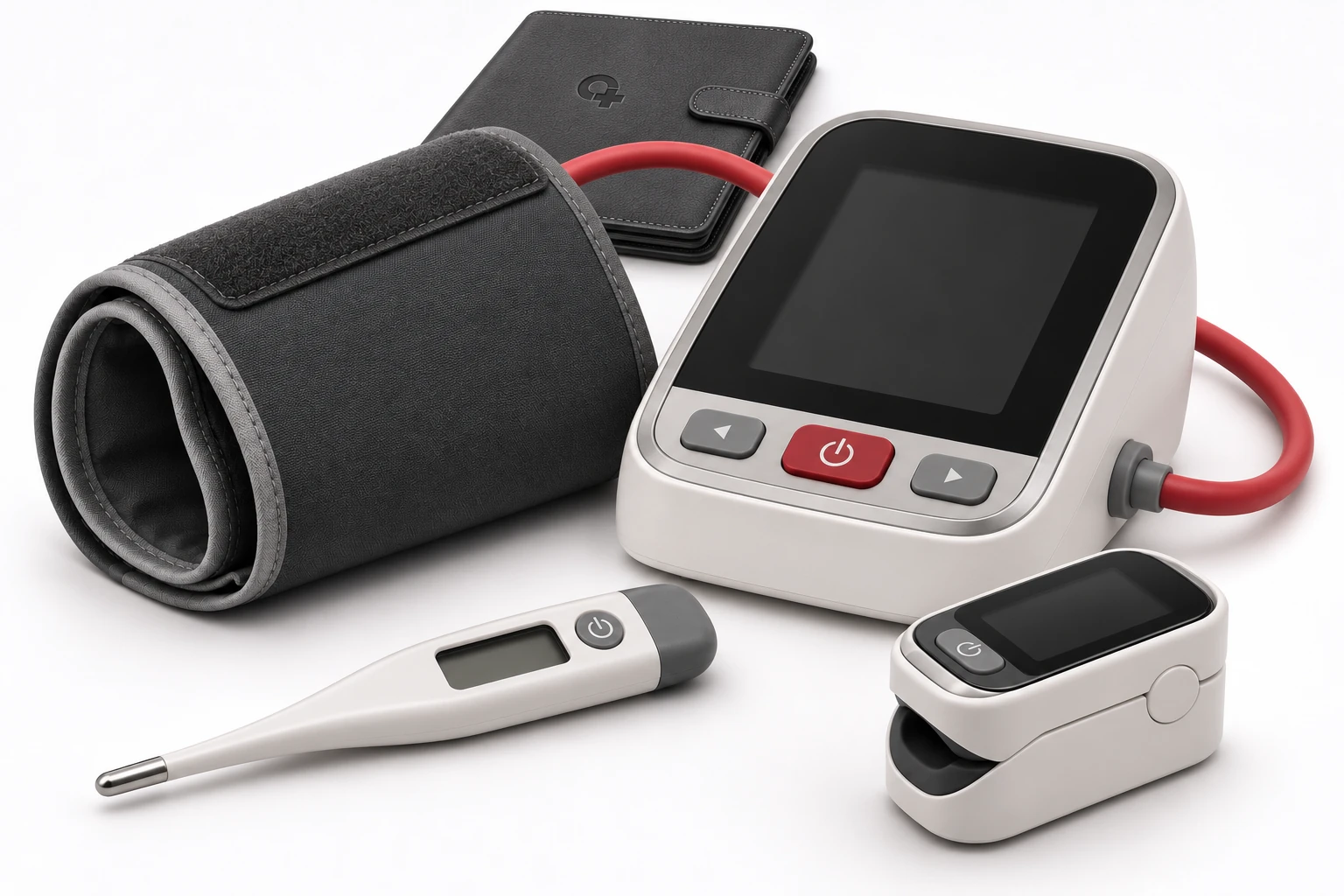
Vital signs are observations used within a clinical assessment. Depending on the reason for monitoring, the plan may include blood pressure, pulse, temperature, respiratory rate or oxygen saturation. The appropriate set is selected for the person; more measurements are not automatically more useful.
Technique, timing, equipment and the person’s condition can affect readings. For blood pressure, for example, the position of the arm and cuff and a settled measurement routine matter. The nurse follows appropriate device instructions and records relevant context instead of treating every isolated number as a diagnosis.
An observation record should answer a practical question: who receives the information and what happens when there is a change? Your clinician can set individual targets, review frequency and action limits. This page does not assign one universal safe range or invite you to adjust medicines from a chart.
Read the clinical sourcesThe first assessment
A monitoring visit is useful when there is a reason for the observation and a clear route for its result.
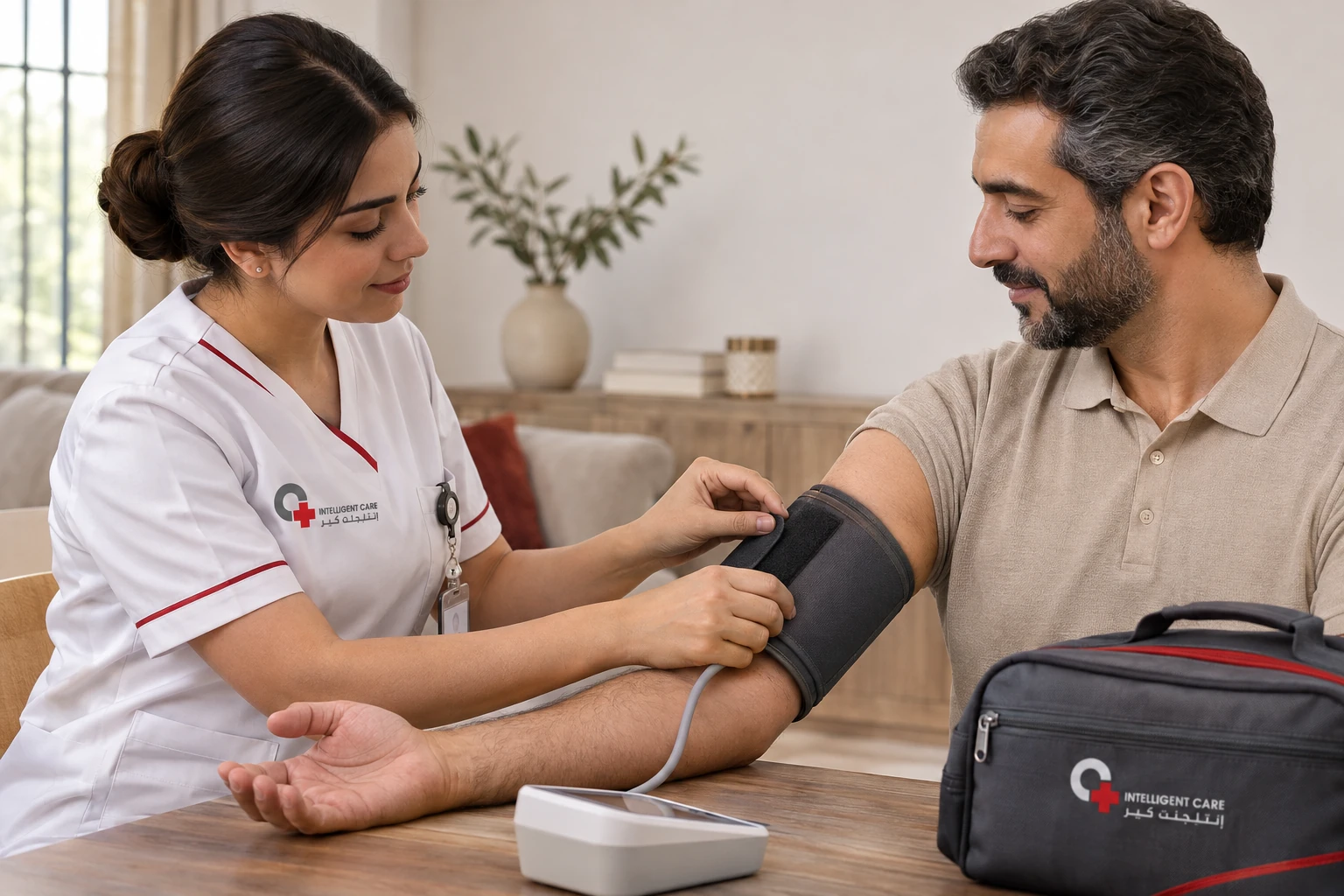
THE CLINICAL CONVERSATION01—04
Clarify the condition or follow-up purpose and the clinician requesting the observations. Avoid collecting numbers with no plan to use them.
Confirm equipment, technique, relevant positioning and the requested schedule. Different devices can have different instructions and limitations.
Document the reading, time and relevant symptoms or circumstances. Record what was actually observed rather than interpreting a trend from memory.
Communicate results and concerning changes to the appropriate clinician. The response may be routine review, earlier assessment or urgent care, depending on the situation.
Your discussion priorities
Choose the reasons for your enquiry. The clinical team confirms the observations and appropriate frequency.
Share the request for monitoring, previous readings and any medicines or symptoms relevant to the clinician. Ask whether a particular device or recording schedule is required.
Bring the discharge instructions specifying what should be measured and reported. The observations should connect to the treating team’s follow-up plan.
Explain the established diagnosis and current monitoring instructions. A new symptom may need assessment rather than simply adding another measurement.
Tell the team what symptoms are present, when they started and any risk factors. A fever reading alone cannot establish the cause or urgency.
If oxygen saturation or breathing observations have been requested, share the individual targets and escalation advice. Severe breathing difficulty requires emergency care.
Mention a home device, cuff-fit problem, dexterity issue or difficulty keeping a record. Training and suitability should be checked for the actual device.
Your discussion list
Choose the points you would like to discuss.
What the care involves
The nursing plan identifies which measurements are appropriate. This overview explains their role without setting personal targets.
| Observation | Useful context | A question to settle |
|---|---|---|
| 01Blood pressure | A consistent method and a dated record help the clinician review measurements. | What schedule and review threshold apply to me? |
| 02Pulse | Rate and relevant symptoms are considered within the assessment. | What change should I report rather than waiting? |
| 03Temperature | Record the method and the wider illness picture when temperature is relevant. | Who reviews fever or a new change in my condition? |
| 04Breathing and oxygen saturation | These may form part of a requested respiratory assessment; equipment has limitations. | What are my individual instructions, especially if I already use oxygen? |
| 05Additional observations | Blood glucose, weight or other records may be requested for a particular clinical plan. | Is this included, and who interprets the result? |
The care pathway
The cycle follows the agreed clinical need, with a clear handover at each point.
Identify what is being measured and why.
Use the agreed method and appropriate equipment.
Share the record and any concerns with the responsible team.
Ask whether the frequency or monitoring requirement should change.
Explore a stage to bring it into focus. Every stage stays visible.
Before care arrives
Gather what is available without delaying care for a person who is unwell.
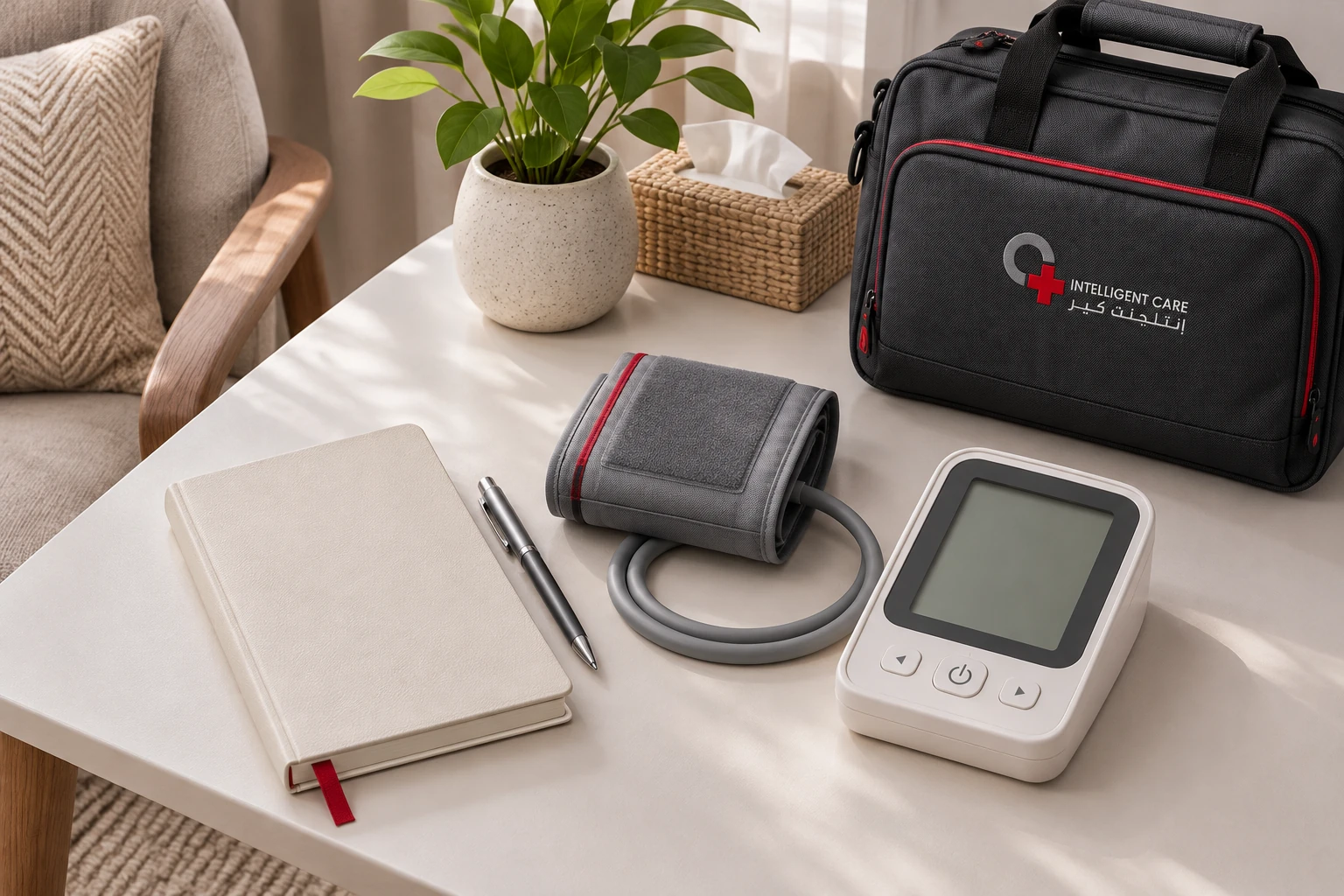
A personal reminder list.
Nothing is sent or saved.
Continuity of care
Before a monitoring arrangement continues, clarify what the information has changed or still needs to answer.
Who has received the readings, and is any response or review still outstanding?
Has the person developed a concern that needs medical assessment beyond the scheduled observations?
Is the current schedule still appropriate, or should the requesting clinician review it?
If the person will use a home device, are the technique, log and escalation instructions understood?
Care around the person
If someone helps between visits, they need a manageable plan and the person’s agreement about sharing information.
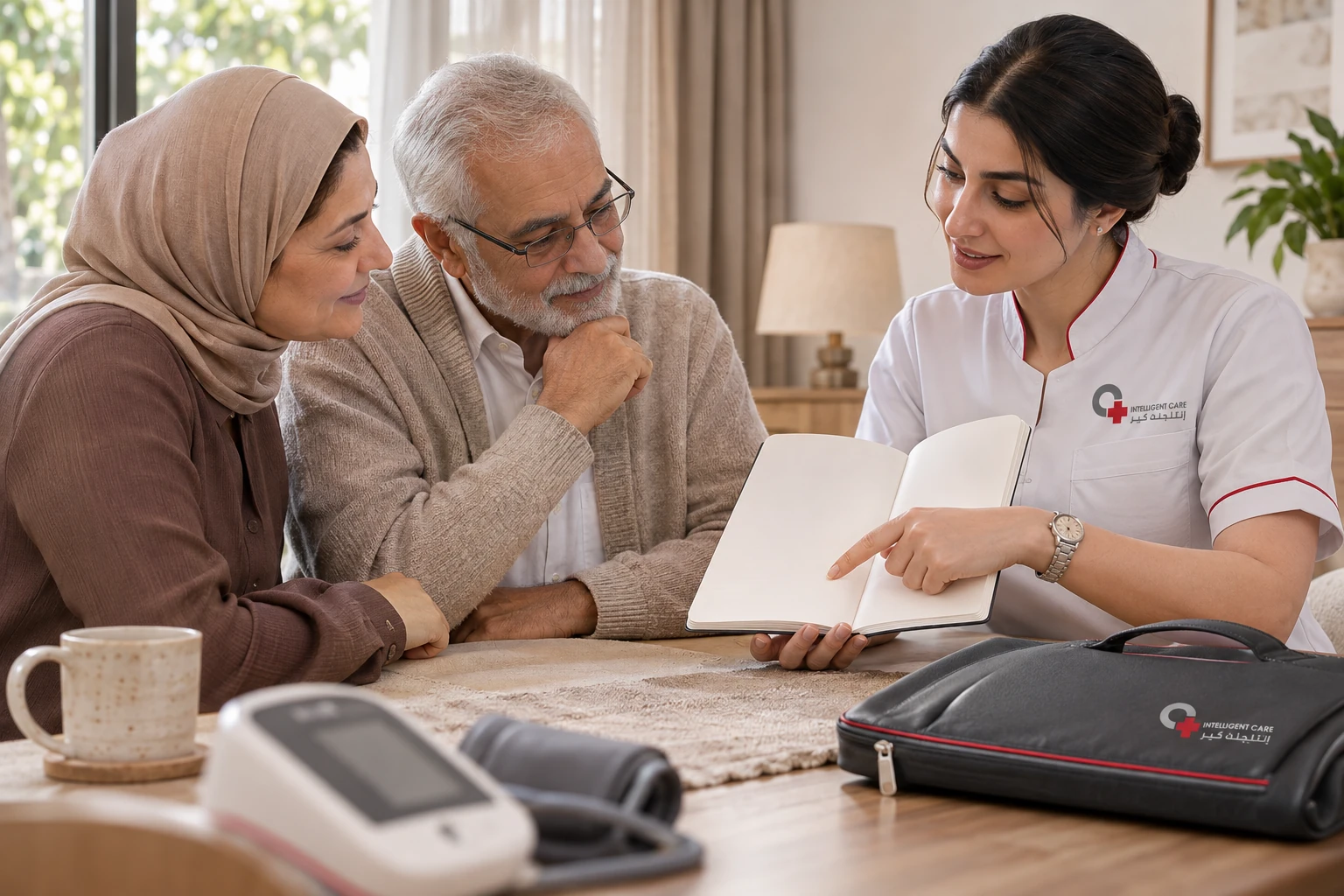
Use the format recommended by the clinical team. Avoid several notebooks with conflicting times or unexplained numbers.
Note relevant symptoms or concerns rather than only repeating the measurement. A person who looks seriously unwell needs assessment even when a device seems reassuring.
Ask what relatives may measure themselves, how to use the equipment correctly and who to contact. A family log is not a substitute for medical interpretation.
People and responsibilities
The person taking the observations and the person making treatment decisions have connected but distinct responsibilities.
Carries out the agreed observations, records the findings and raises concerns within the care plan.
Sets or reviews individual targets, interprets findings and decides whether treatment or investigation changes are needed.
Shares symptoms, medicines and previous records, and follows the agreed contact instructions between visits.
Helps organize the visit pattern and practical arrangements; booking support does not provide continuous clinical surveillance.
Read the real team profiles and their professional-directory references. Your assigned professional and the scope of care are confirmed through the care arrangement.
Meet our clinical teamWhen to seek medical help
Follow your individual action plan. A reassuring-looking reading cannot exclude a serious problem.
Immediate medical attention
Prompt clinical assessment
Practical arrangements
Agree the scope before choosing ongoing monitoring.
Choose a standard nursing plan and clarify which observations and duties are included in the selected period.
If several readings or visits are required, agree timing and who reviews them. A single appointment does not imply day-and-night monitoring.
Ask what equipment is supplied and whether a separate medical consultation or test is recommended. Clinical review and nursing time remain distinct services.
Your questions
Blood pressure can be part of an agreed nursing visit. Explain whether this is a one-off concern or a clinician-requested series so the appropriate assessment and recording plan can be arranged.
A diagnosis requires appropriate clinical assessment and measurement interpretation. Share the reading and context with a clinician; do not start or change medication from this page.
This page does not offer continuous remote surveillance. The arranged nursing visit and agreed communication plan define what is monitored and when.
Ask the team what is needed. If you already own a device, share its details rather than buying a replacement or assuming that any cuff or monitor is suitable.
Discuss the intended recipient and your consent when planning care. A useful handover includes dates, relevant context and the question the clinician is being asked to review.
No. A device reading should not overrule severe symptoms or clinical concern. Severe difficulty breathing requires emergency assessment, regardless of a home number.
They may be able to follow a clinician-agreed recording plan using suitable equipment and instruction. Clarify technique and the response to changes rather than taking on treatment decisions.
You can request the earliest available appointment when arranging care. The time needs agreement with the care team and the request is not an emergency service.
Expertise with a name
Explore the named clinical profiles, their professional roles and their Dubai Health Authority directory records.
Author assignment
General Practitioner
Dr Toqa Ibrahim is a DHA-licensed General Practitioner with Alpha Intelligent Care Home Healthcare Center. Her clinical profile brings the general-practice perspective into our approach to care at home.
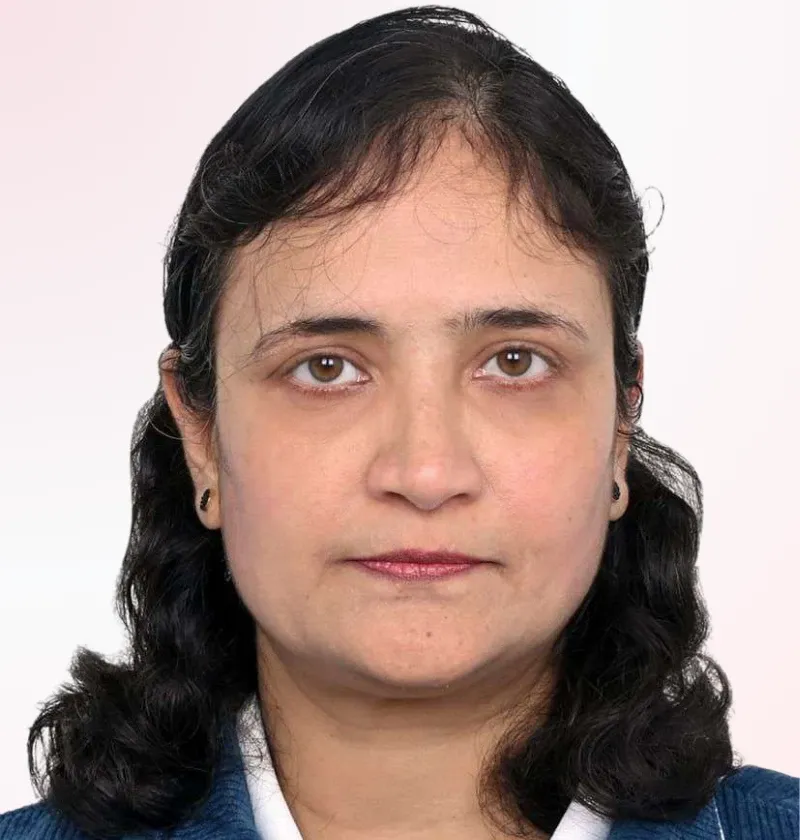
Review assignment
Specialist Clinical Pathology
Dr Nirupama Sabhapathy is a DHA-licensed Specialist in Clinical Pathology at Intel Lab. Her published Intel Lab profile describes more than 25 years in medicine and her role as Laboratory Director.
Professional registration describes each clinician’s role. The clinical assessment and the person responsible for your care are confirmed separately.
More care guides


The wider picture
Explore related support, or speak to us about combining services into one plan.
About this guide
General information supports the care conversation; your own assessment determines the plan. Company service information and independent clinical guidance are listed separately below.
Care that comes to you
Across Dubai.
Abu Dhabi — coming soon.