Prepare
Share the planned discharge and likely nursing tasks.
The purposeA provisional care outline

Post-operative nursing · Dubai
The hospital discharge is a handover, not the end of care. Intelligent Care brings nursing support into your Dubai home around the operation, the current discharge instructions and the help you need between reviews. Start with the tasks that have actually been recommended, then choose a workable care period.

 Clinical author assignmentDr Toqa IbrahimTwo clinical perspectivesProfiles & DHA directory links Guidance with sourcesExplore the references
Discharge-led nursing support
A few nursing tasks, a daytime duty or a sustained period of support can serve different recovery needs. Share your discharge information before the arrangement is confirmed so the team can match professional skills, materials and hours to the work required.
Understand the care

Different operations create different nursing needs. Someone recovering from abdominal surgery may have very different movement, wound and nutrition instructions from someone after a joint procedure. The operation name is a starting point; the actual discharge plan, restrictions and current symptoms shape care.
A nurse can help connect prescribed care with daily observations: the wound, comfort, medicines already ordered, eating and drinking where relevant, and changes that should be passed to the treating team. The nurse documents what has been delivered and what needs attention rather than replacing the surgeon’s decisions.
Recovery is rarely a perfectly straight line. Some tiredness can be expected after an operation, but new or worsening symptoms need interpretation in the context of that procedure. Follow the hospital’s own warning signs and contacts, and keep surgical and other follow-up appointments in place.
Read the clinical sourcesThe care pathway
Timing follows the operation and the treating team’s advice, not a fixed recovery promise.
Share the planned discharge and likely nursing tasks.
Check the actual discharge instructions and required supplies.
Deliver the agreed care and document changes at home.
Review the ongoing requirement with the relevant clinicians.
Explore a stage to bring it into focus. Every stage stays visible.
The first assessment
The useful starting point is what the hospital has asked to happen next. A clear handover reduces avoidable ambiguity.

THE CLINICAL CONVERSATION01—04
Share the operation, discharge date, clinical summary and important conditions. Tell the team whether the person is still in hospital or already at home.
Identify medicines, wound care, activity restrictions, devices and observations. Unclear or conflicting instructions should go back to the responsible clinician.
Agree which tasks need a nurse, which are practical assistance, and what equipment or additional professionals are required. A price period does not define a clinical scope by itself.
Know who receives nursing updates, who handles a new medical concern and when the next review takes place. The person receiving care should be involved as much as they wish.
Before care arrives
These details help the care discussion. Do not delay urgent assessment to gather paperwork.

A personal reminder list.
Nothing is sent or saved.
What the care involves
These are possible parts of an agreed nursing plan. The procedure and discharge instructions decide which ones apply.
| Part of care | What nursing contributes | Keep clear |
|---|---|---|
| 01Wound observations | Review the dressing and surrounding area, document relevant changes and carry out the agreed dressing care. | Specialist materials and procedures are confirmed separately. |
| 02Prescribed medicines | Support the active prescription within the nurse’s scope and record the care delivered. | The prescriber decides changes; the nurse does not invent a replacement schedule. |
| 03Clinical observations | Take the observations specified by the care plan and communicate concerns appropriately. | A reading is not interpreted in isolation from symptoms. |
| 04Comfort and movement support | Help with agreed positioning and daily needs within surgical restrictions. | Physiotherapy assessment and prescribed rehabilitation are distinct services. |
| 05Recovery coordination | Make outstanding reviews, supplies or questions visible to the responsible team. | Home nursing does not cancel hospital or specialist follow-up. |
Your discussion priorities
Select the parts of your discharge plan you want to discuss. The selections help the conversation; they do not prescribe care.
Explain the wound location, current dressing, latest instructions and when the surgical team next plans to review it. Mention any change in drainage, pain or appearance.
Have the current prescription and changes from hospital available. Include allergies and the last doses already taken so the nurse can clarify the support needed.
Share any measurements or symptoms the hospital asked you to track. The appropriate observations and escalation instructions should be agreed for your situation.
Tell us about weight-bearing advice, lifting restrictions, stairs and assistance with transfers. Rehabilitation remains a separate assessment by the appropriate professional.
Mention drains, catheters, prescribed injections or other equipment before booking. Instructions, competence, supplies and the responsible clinician need individual confirmation.
Explain when someone is available at home and where the gaps are. Hours should match the duties and level of support, not simply the length of the hospital stay.
Your discussion list
Choose the points you would like to discuss.
Care around the person
A practical home arrangement should make support manageable without expecting relatives to become clinical staff.

Keep the discharge summary and updated prescription together. If several relatives are helping, agree who holds the current version and how changes will be shared.
Explain meals, sleeping arrangements, stairs, bathroom access and transport to follow-up. Let the team know if the person is alone for part of the day.
Ask which tasks the family can help with and which require a professional. Do not remove devices, alter dressings or change medicines simply because the next visit is later.
People and responsibilities
A coordinated plan makes the responsibility for each decision visible.
Provides procedure-specific instructions, reviews surgical concerns and decides changes to restrictions or treatment.
Delivers the agreed nursing care, records observations and escalates concerns within the care plan.
Assesses rehabilitation needs and plans movement support within surgical restrictions when a separate service is arranged.
Coordinates the request, nursing period, address and scope discussions; it does not make a clinical discharge decision.
Read the real team profiles and their professional-directory references. Your assigned professional and the scope of care are confirmed through the care arrangement.
Meet our clinical teamContinuity of care
A shorter duty or fewer visits should follow the person’s actual needs and the agreed clinical plan.
Review the nursing tasks that remain and which daily activities are becoming easier.
Identify wound changes, pain, medicine questions or other concerns that should reach the treating clinician.
Confirm the next hospital appointment, any separately arranged rehabilitation and who will follow up outstanding results.
Make sure the person and the next professional have the updated instructions rather than relying on a verbal summary alone.
When to seek medical help
Use the hospital’s specific advice for your operation. These examples do not cover every complication.
Immediate medical attention
Prompt clinical assessment
Practical arrangements
Choose practical support with the clinical requirement in view.
Compare hourly, daily and weekly nursing options, including the starting price, minimum booking duration and duty details shown with each plan.
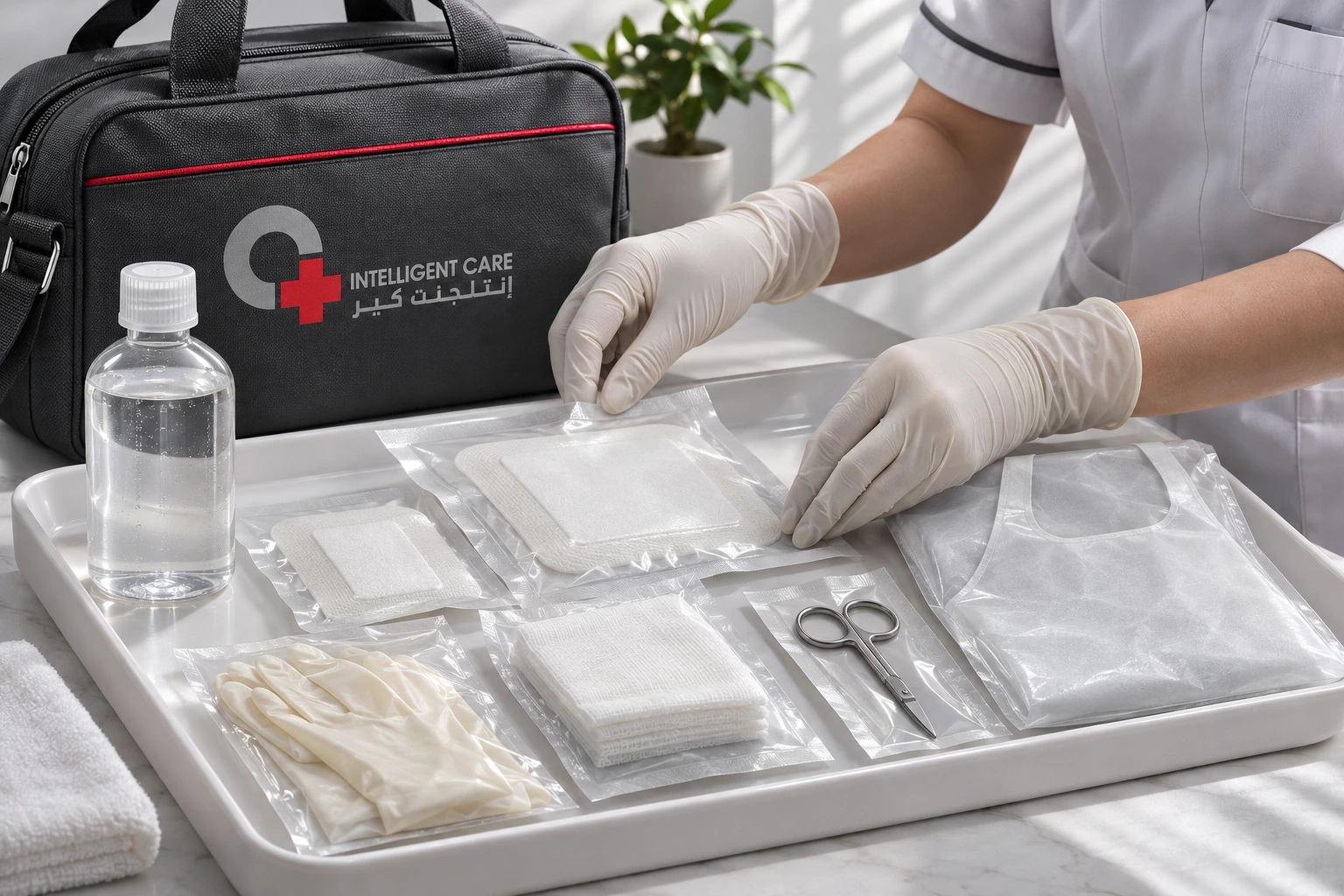
Tell us about specialist dressings, devices or prescribed procedures before confirming the arrangement. Supplies and additional expertise are not automatically included in every period.
The team can discuss documents and authorization requirements for eligible homecare. A booking does not itself establish policy cover or replace a required approval.
Your questions
Yes. Share the expected discharge date and likely tasks. Update the team with the final instructions before care begins, because the hospital may change the timing or plan.
The hourly nursing plan has a minimum booking duration. Explain the clinical tasks so the team can confirm whether that period and professional scope are appropriate.
No. Nursing and physiotherapy have distinct roles. If both are needed, they can be coordinated as separately identified services rather than assumed to be one visit.
Changes require the appropriate prescriber. Nursing can support the current prescription, document care and raise a discrepancy or concern for review.
Specific materials, drains, catheters and specialist equipment need confirmation. Share the instructions and product details before assuming that a standard duty includes them.
No automatic replacement is implied. Keep the hospital’s review and test appointments unless the responsible treating team explicitly changes them.
Discuss a period that matches the expected needs, then review progress and availability with the team. Recovery does not always match the first estimate, and extensions need confirmation.
Report changes promptly using the clinical contact route. Serious warning signs need urgent or emergency assessment rather than an extra nursing hour or a routine callback.
Expertise with a name
Explore the named clinical profiles, their professional roles and their Dubai Health Authority directory records.
Author assignment
General Practitioner
Dr Toqa Ibrahim is a DHA-licensed General Practitioner with Alpha Intelligent Care Home Healthcare Center. Her clinical profile brings the general-practice perspective into our approach to care at home.

Review assignment
Specialist Clinical Pathology
Dr Nirupama Sabhapathy is a DHA-licensed Specialist in Clinical Pathology at Intel Lab. Her published Intel Lab profile describes more than 25 years in medicine and her role as Laboratory Director.
Professional registration describes each clinician’s role. The clinical assessment and the person responsible for your care are confirmed separately.
More care guides


The wider picture
Explore related support, or speak to us about combining services into one plan.
About this guide
General information supports the care conversation; your own assessment determines the plan. Company service information and independent clinical guidance are listed separately below.
Care that comes to you
Across Dubai.
Abu Dhabi — coming soon.