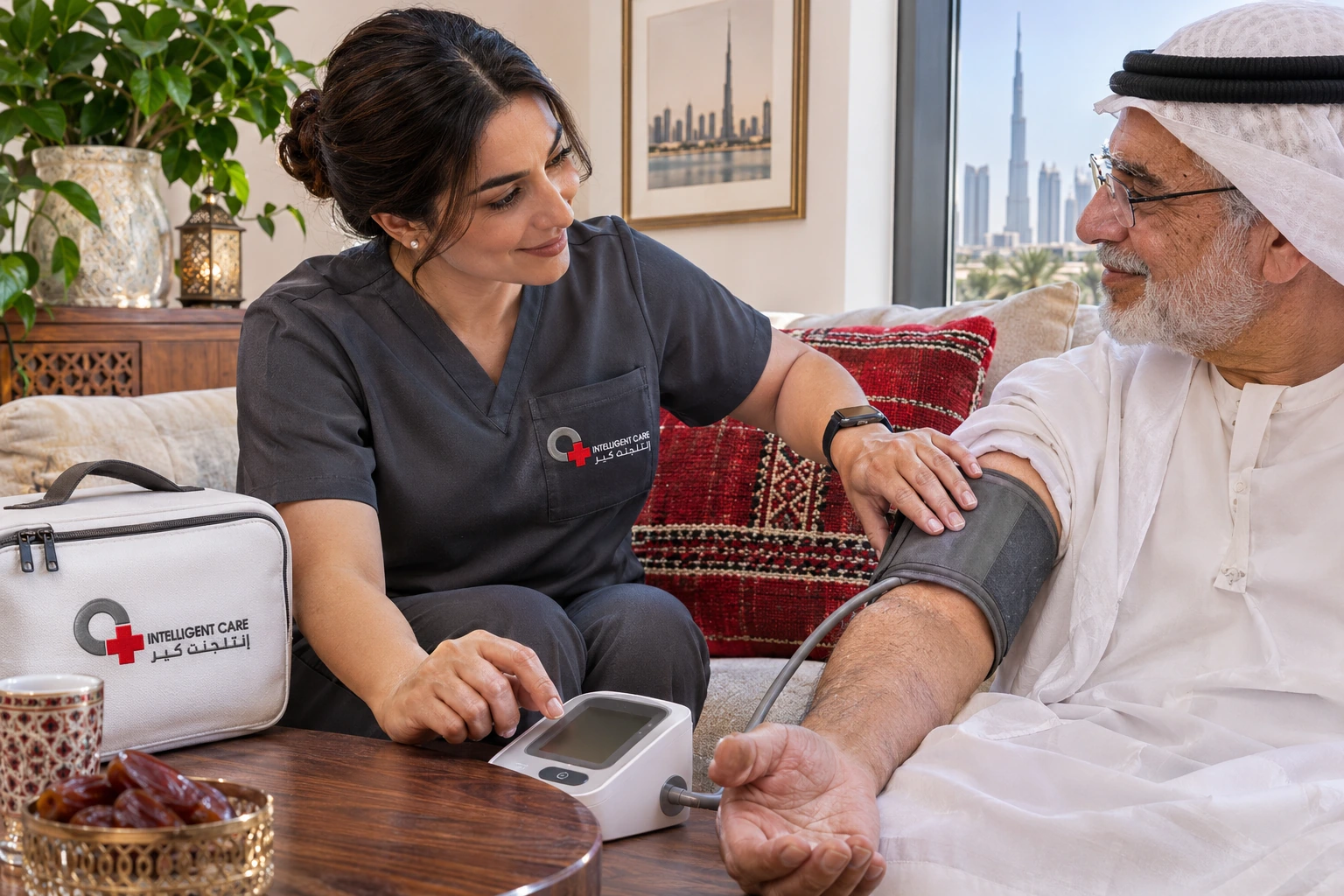
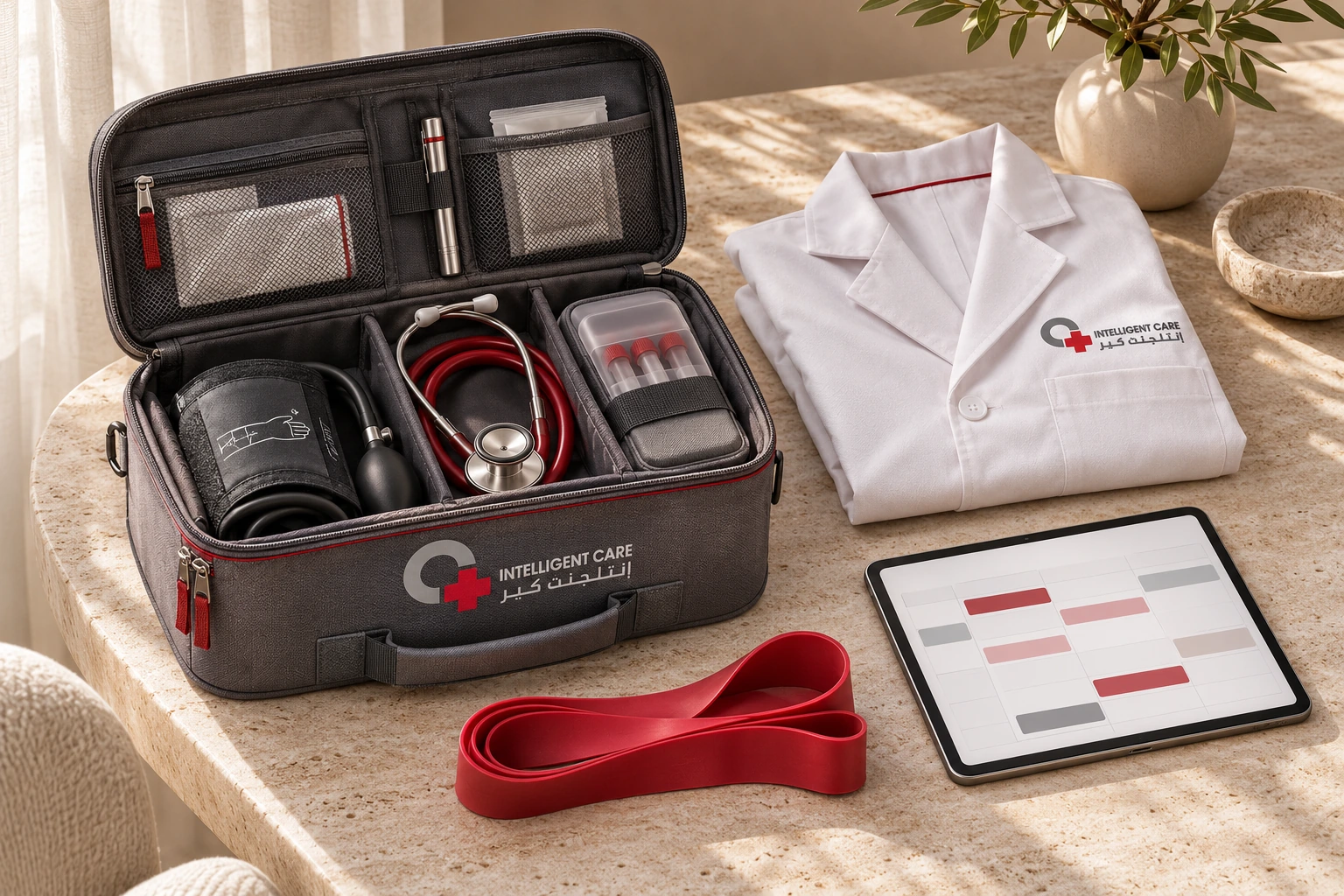
01Feeding plan
An established feed schedule
Share the prescribed feed, schedule, route and responsible dietitian or clinician. Include any recent changes and the reason for them.

PEG feeding & tube care · Dubai
A feeding tube brings a specific set of daily care requirements. Intelligent Care supports established PEG feeding and tube-care plans at home in Dubai, with the appropriate nurse, written instructions and coordination around the person. Tell us about the tube, the current feed plan and the team already responsible for it.

 Clinical author assignmentDr Toqa IbrahimTwo clinical perspectivesProfiles & DHA directory links Guidance with sourcesExplore the references
Established PEG plans
Share the device type, date of insertion, prescribed feed and fluids, medicine route and any current concerns. The team needs those details to confirm suitable nursing support, equipment, supplies and the required hours.
Your discussion priorities
Use these prompts to describe the current requirement. The clinical team confirms every tube-specific task.
Share the prescribed feed, schedule, route and responsible dietitian or clinician. Include any recent changes and the reason for them.
Explain redness, soreness, leakage, discharge or other changes. A new problem may need assessment before the next routine feed or dressing.
Provide the device name, insertion date and details of a pump or other equipment. Different devices have different maintenance instructions.
List medicines prescribed by this route and any pharmacy instructions. Do not assume tablets can be crushed or different medicines mixed together.
Tell us which tasks the family has been taught and where they need clarification. The service can discuss support without assuming relatives are already trained.
Describe pain, vomiting, bowel changes, leakage or a change during feeding. Urgent symptoms and uncertain tube position require the appropriate clinical response.
Your discussion list
Choose the points you would like to discuss.
Understand the care
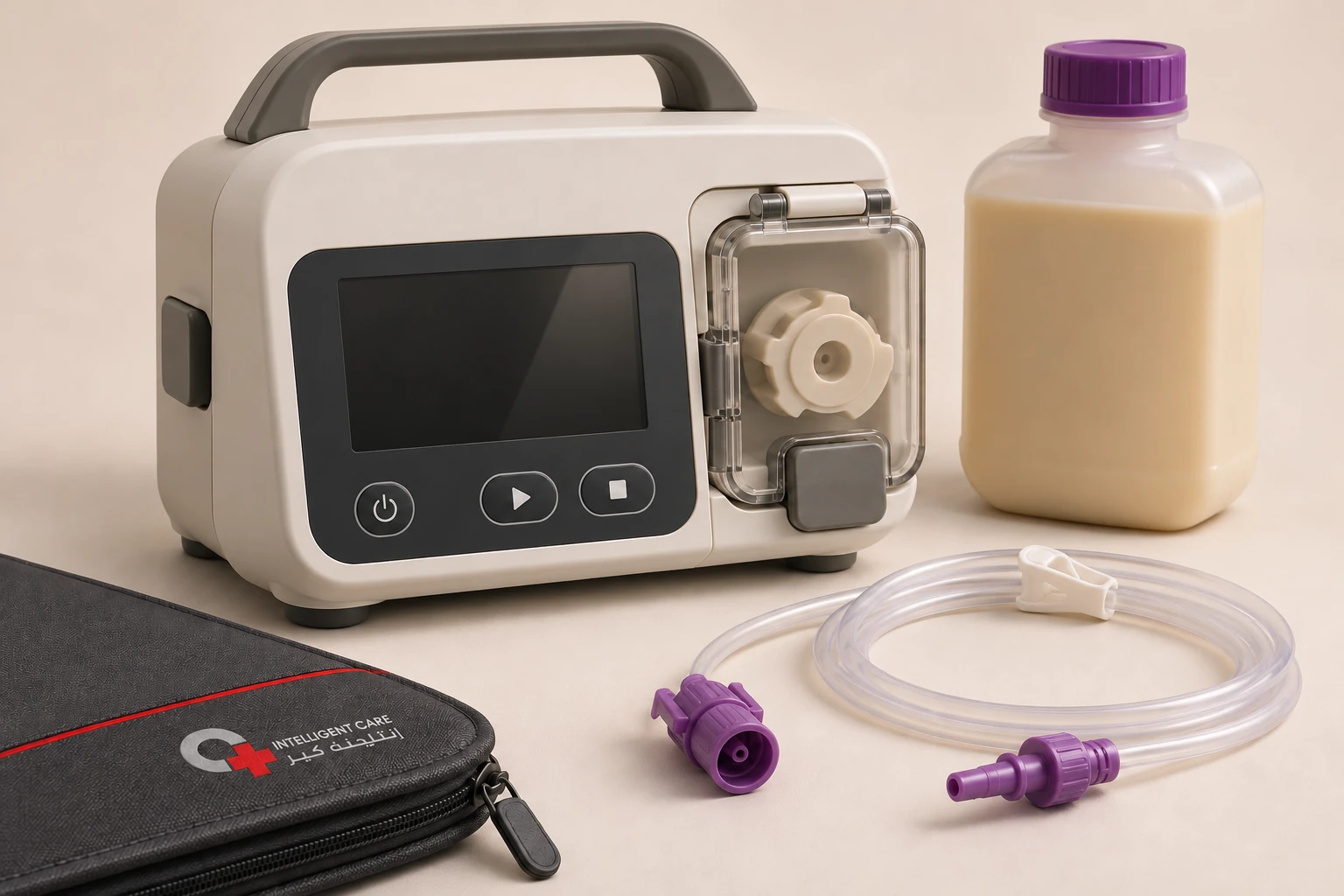
A PEG is a gastrostomy tube placed through the abdominal wall into the stomach. It can be used when a clinical team has decided that this route is appropriate for nutrition, fluids or certain medicines. This page concerns support for an existing plan, not deciding whether a feeding tube should be inserted.
Tube design, time since insertion, site condition and the clinical circumstances affect the care instructions. A generic online technique is not a safe replacement for the advice supplied with the actual tube. Rotation, advancement, fixation and other maintenance steps may differ by device and stage; only follow the instructions agreed for yours.
The feeding plan belongs to the treating nutrition team. Nursing support can help carry out agreed care, observe tolerance and document relevant information. The person’s comfort, mouth care, preferences and daily routine still matter; tube feeding should not turn the whole day into an unexplained sequence of tasks.
Read the clinical sourcesThe first assessment
A safe practical arrangement starts with a complete picture of the existing plan and the team responsible for changes.

THE CLINICAL CONVERSATION01—04
Confirm the type, insertion history, written care instructions and any recent replacement or complication. Do not rely on the label PEG alone.
Obtain the current feed, fluid and medication instructions and the relevant nutrition-team contact. Missing or conflicting instructions need clarification.
Discuss site care, equipment, observations, training needs and the requested schedule. Confirm the professional competence and supplies for the actual tasks.
Keep the tube team’s contact and emergency instructions accessible, including what to do if the tube moves, feeding causes pain or the person becomes unwell.
What the care involves
The items below explain the care framework. They are not a step-by-step guide to using or troubleshooting a tube.
| Care area | What the plan should define | Boundary |
|---|---|---|
| 01Feed and fluid delivery | The prescribed products, amounts, schedule, route and appropriate equipment. | A nurse does not independently replace the dietitian’s regimen. |
| 02Tube and site care | Device-specific care, fixation and observation requirements. | Do not apply a maintenance technique from a different device. |
| 03Medicine administration | Suitable formulation, route and individual pharmacy instructions. | Crushing, mixing or changing a medicine requires professional advice. |
| 04Tolerance and records | Relevant feed delivery, symptoms and other observations requested by the team. | A new concern may need review, not a change guessed at home. |
| 05Family education | The exact tasks the family is expected and able to undertake. | Teaching must fit the actual device and agreed responsibilities. |
Before care arrives
Useful information helps the team scope the service before any feeding support is arranged.
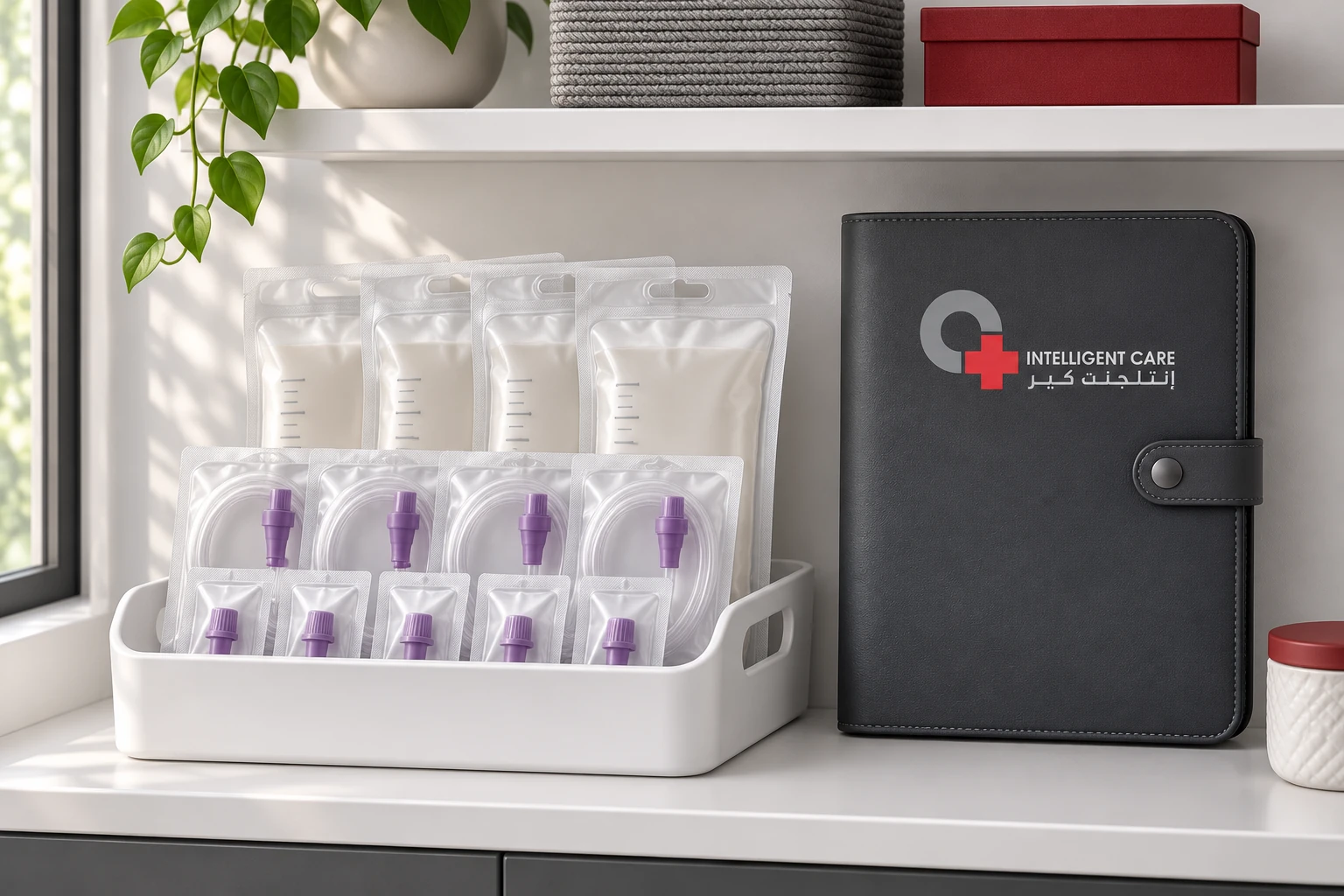
A personal reminder list.
Nothing is sent or saved.
The care pathway
An established feeding plan remains under clinical review as needs change.
Check the device and active written instructions.
Carry out the specifically agreed nursing tasks.
Record relevant tolerance, site and tube concerns.
Contact the responsible nutrition or medical team when the plan needs attention.
Explore a stage to bring it into focus. Every stage stays visible.
Continuity of care
The next conversation should connect feeding delivery with the person’s clinical and practical experience.
Has the dietitian or treating team issued updated instructions, and does everyone have the same version?
Are pain, bowel changes, vomiting, leakage or other concerns being reviewed by the correct clinician?
Are the necessary supplies available and the agreed responsibilities still realistic for the household?
Confirm nutrition, tube and medical reviews rather than assuming nursing visits replace them.
Care around the person
Relatives may support daily care, but they should know precisely what has been taught and when to ask for help.

Keep feeding, medicines and device instructions together. Separate current instructions from old discharge sheets so a changed regimen is not accidentally reversed.
Ask the responsible professional to explain and check any task you are expected to perform. Do not force a blocked tube or attempt replacement because a video makes it look simple.
Discuss privacy, communication, mouth care and the timing of everyday life. Raise discomfort or distress rather than treating it as an unavoidable part of the equipment.
People and responsibilities
No single care period automatically includes every specialist role.
Determines and reviews the prescribed nutrition and fluid plan and the response to feeding concerns.
Reviews insertion-site or device complications and decides any procedure or replacement requirement.
Delivers the agreed tube-care and feeding support, records observations and escalates concerns.
Confirms medicine formulation and suitability for the tube route and resolves administration questions.
Read the real team profiles and their professional-directory references. Your assigned professional and the scope of care are confirmed through the care arrangement.
Meet our clinical teamWhen to seek medical help
Keep and follow your device-specific emergency instructions. Do not use this page to troubleshoot a suspected complication.
Immediate medical attention
Prompt clinical assessment
Practical arrangements
The equipment and care requirement determine the appropriate arrangement.
Use the PEG enquiry to share the actual device and prescribed tasks. This page does not offer a one-price procedure or automatic tube replacement.
Agree the nursing time, duties, feed and equipment responsibilities explicitly. Specialist products are not assumed to be included.
Share relevant discharge instructions and any referral or authorization needed for the proposed care. Coverage and clinical suitability are separate questions.
Your questions
This page does not offer insertion. It concerns nursing support for an established tube and prescribed feeding plan. Insertion and replacement decisions belong to the appropriate medical service.
The clinical tube-care tasks described here require the appropriate trained professional and agreed scope. Practical caregiving is a different service and should not be substituted for prescribed nursing care.
Contact the nutrition team rather than changing the feed, amount, rate or water regimen yourself. The plan is individualized and may need clinical review.
No assumption should be made. The prescriber or pharmacist must confirm suitability and formulation for each medicine and give the appropriate instructions.
Follow the tube team’s urgent instructions and seek prompt professional help. Do not force the tube, improvise a remedy or attempt replacement without the appropriate clinical direction.
Discuss the tasks they are expected to perform, their confidence and the training already received. Education should be device-specific, with clear limits and a route for questions.
Confirm each item before care starts. The nursing arrangement should state who provides the prescribed feed, pump, giving sets and other required supplies.
No. The nutrition team continues to review the feeding regimen. Nursing records can inform that review, while the medical or tube team manages device-related clinical decisions.
Expertise with a name
Explore the named clinical profiles, their professional roles and their Dubai Health Authority directory records.
Author assignment
General Practitioner
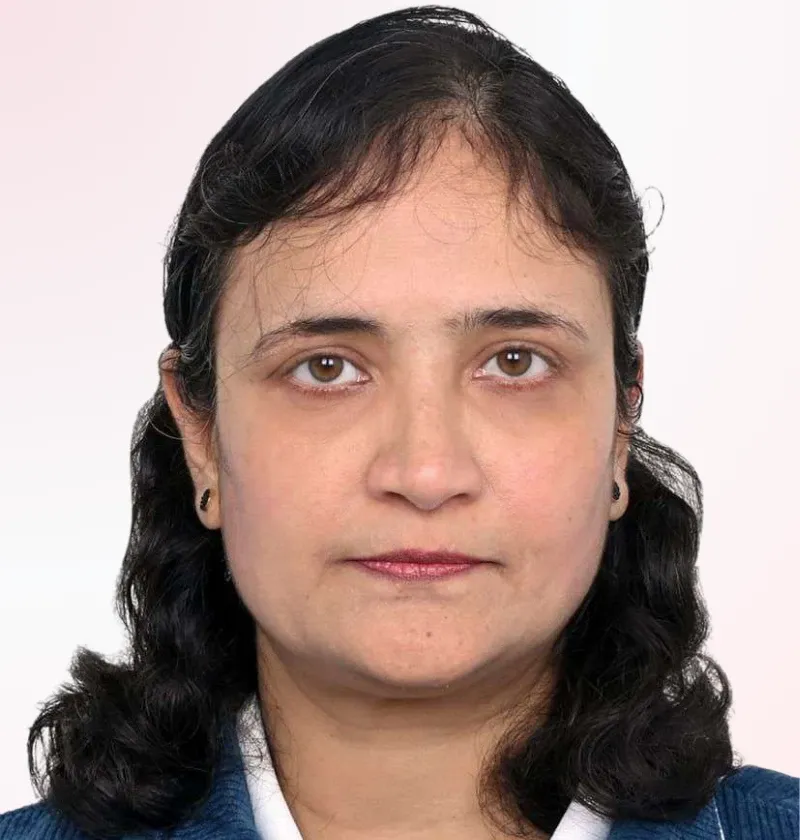
Dr Toqa Ibrahim is a DHA-licensed General Practitioner with Alpha Intelligent Care Home Healthcare Center. Her clinical profile brings the general-practice perspective into our approach to care at home.
Review assignment
Specialist Clinical Pathology
Dr Nirupama Sabhapathy is a DHA-licensed Specialist in Clinical Pathology at Intel Lab. Her published Intel Lab profile describes more than 25 years in medicine and her role as Laboratory Director.
Professional registration describes each clinician’s role. The clinical assessment and the person responsible for your care are confirmed separately.
More care guides


The wider picture
Explore related support, or speak to us about combining services into one plan.
About this guide
General information supports the care conversation; your own assessment determines the plan. Company service information and independent clinical guidance are listed separately below.
Care that comes to you
Across Dubai.
Abu Dhabi — coming soon.