01Surgical
After an operation
Share the operation, date, discharge instructions and planned surgical review. Explain whether the wound is closed, has a current dressing or has changed since discharge.

Wound care · Dubai
A dressing is one part of wound care. The wound’s cause, current instructions, surrounding skin and wider health all matter. Talk to us about the nursing support you need, the clinician already involved and the next review in your care plan.
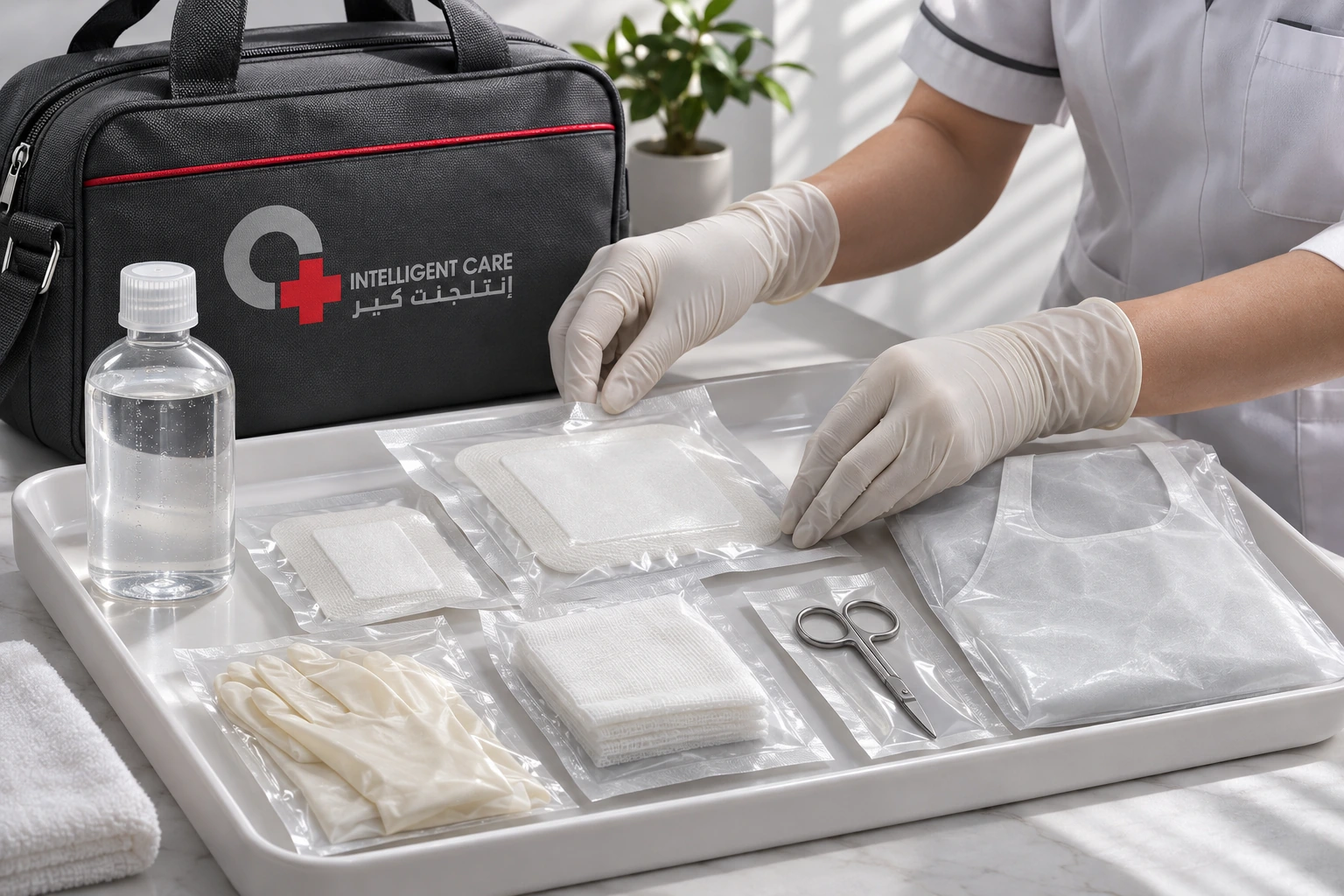
Nursing assessment & dressings
Start with the wound type, the latest instructions and the support required. The care team discusses whether home nursing is suitable, what materials and expertise are needed, and the scope and cost before arranging care.
Your discussion priorities
These common care contexts help describe an enquiry. Selecting one does not confirm suitability or prescribe a dressing.
Share the operation, date, discharge instructions and planned surgical review. Explain whether the wound is closed, has a current dressing or has changed since discharge.
Tell the team how it happened and when. Dirty wounds, bites, deep injuries and retained objects may need prompt medical assessment before routine nursing arrangements.
The wound and the pressure causing it both need attention. Discuss mobility, equipment, nutrition concerns and the treating clinician’s prevention and positioning plan.
Mention diabetes and any loss of feeling or circulation problem immediately. A foot wound needs appropriate clinical review; a dressing appointment alone should not delay that review.
Bring previous assessments, treatments and the reason the wound is thought to persist. Progress should be reviewed against a documented baseline rather than judged from memory.
Tell the team about prescribed negative-pressure therapy, a drain, sutures or another device. Competence, supplies, instructions and service availability must be confirmed specifically.
Your discussion list
Choose the points you would like to discuss.
Understand the care
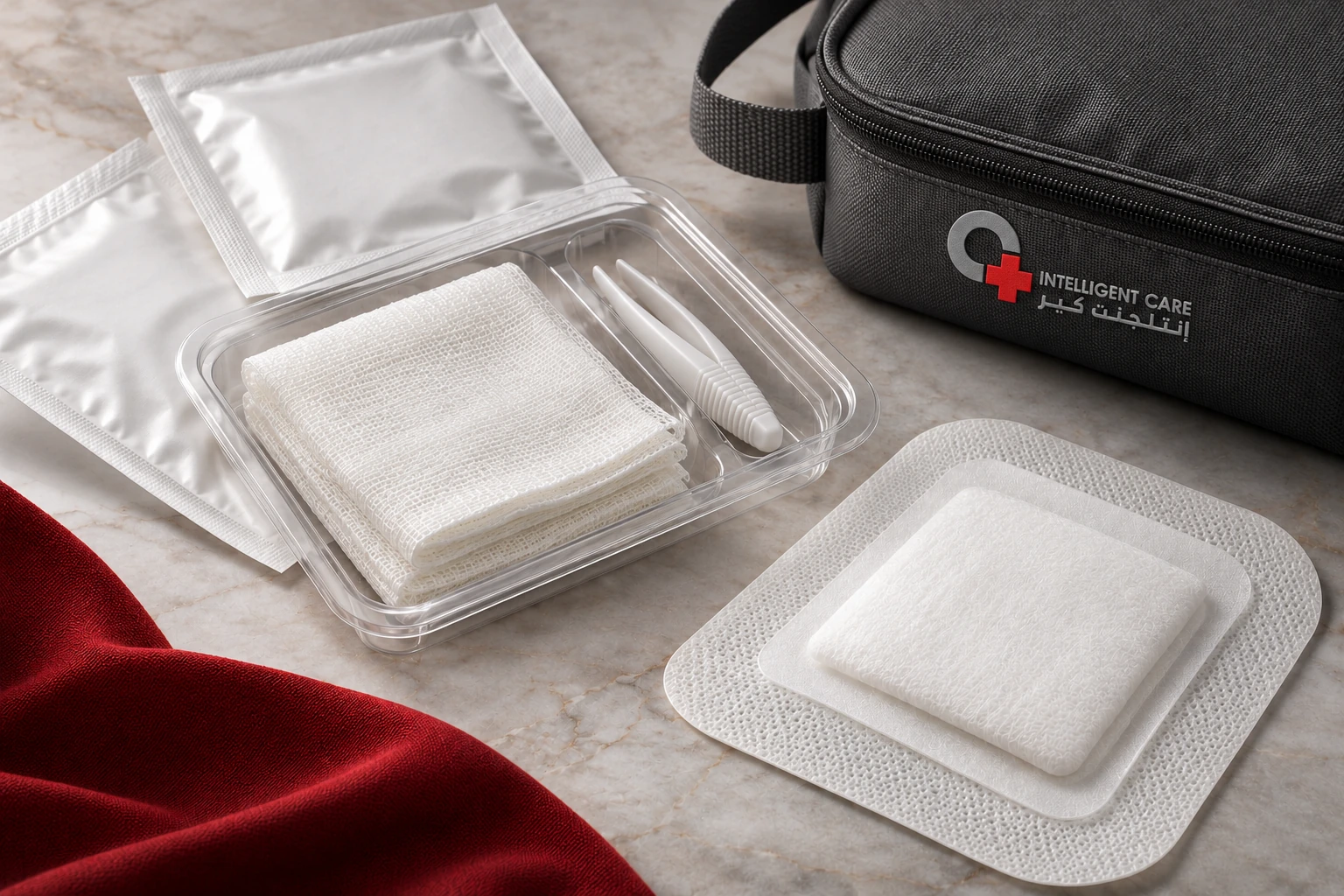
A wound may follow surgery, an injury, pressure on the skin or another health problem. Two wounds that look similar can need different care because of their cause, depth, circulation, infection risk and the person’s health.
Nursing support may include reviewing the current plan, assessing and documenting the wound, carrying out an agreed dressing and explaining what to report. The appropriate material and visit frequency follow the clinical requirement; this page does not give a dressing recipe.
A wound that is slow to improve, painful, changing or associated with diabetes or reduced circulation may need medical or specialist review as well as nursing care. Home visits should connect to that review, not leave the cause unaddressed.
Read the clinical sourcesThe first assessment
The nurse needs to understand both the wound and the person. Assessment is carried out with consent and appropriate privacy, using the treating plan where one exists.
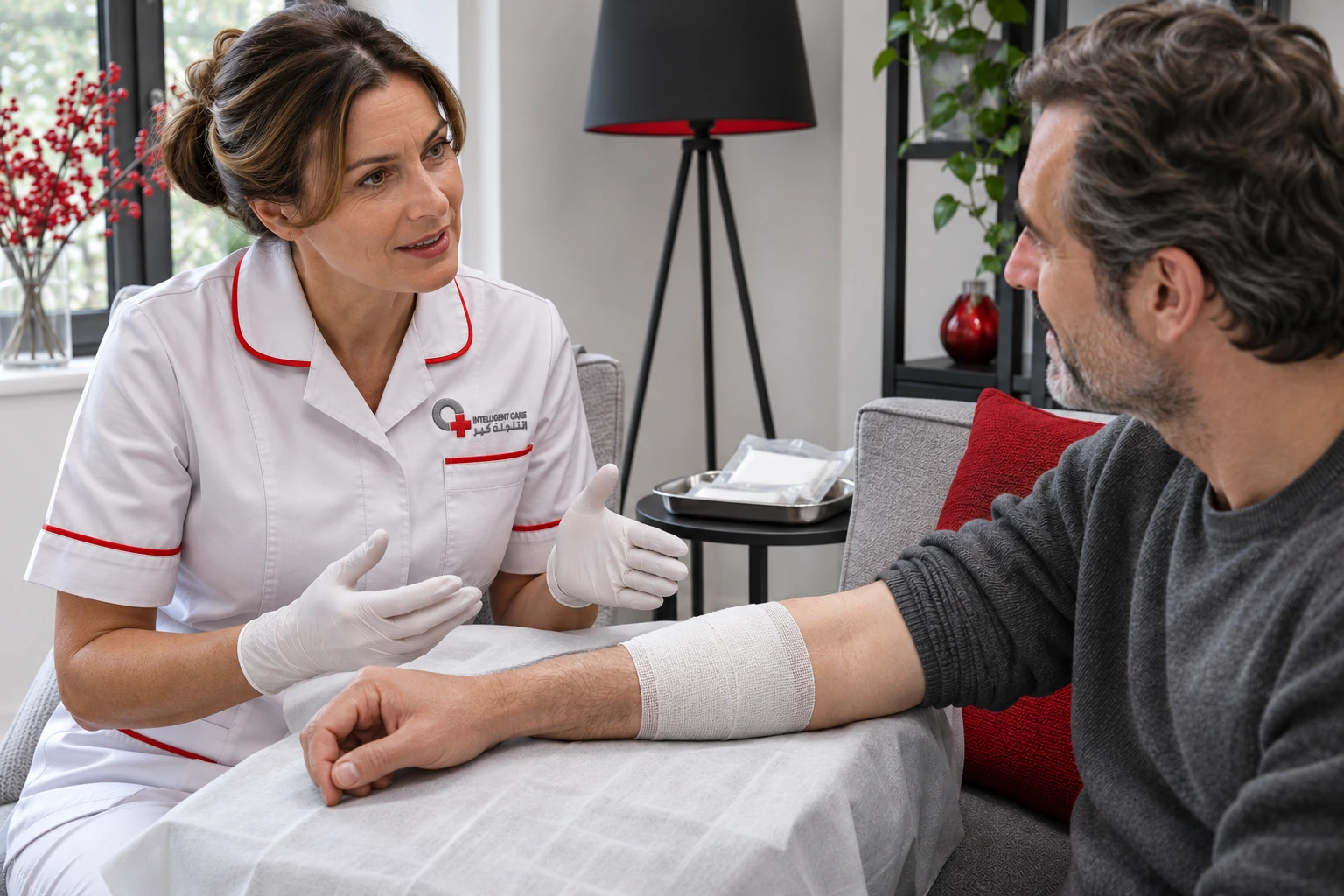
THE CLINICAL CONVERSATION01—04
Cause, duration, previous treatment and any recent change help explain what needs to be assessed and whether another clinician should be involved.
The clinician may document location, size, wound appearance, surrounding skin, drainage and pain as appropriate. Photographs, if clinically used, require appropriate consent and handling.
Diabetes, circulation problems, medicines, allergies, mobility and practical ability to follow the plan may affect care and the need for referral.
Confirm the dressing plan, materials, review responsibility and what would trigger a change. Assessment findings determine whether the proposed home visit can safely proceed.
What the care involves
This is a guide to the decisions around care, not instructions for treating a wound yourself.
| Care element | Clinical purpose | Confirm before the visit |
|---|---|---|
| 01Assessment and documentation | Establish the current condition and track clinically meaningful changes over time. | Which instructions and prior measurements should be available? |
| 02Cleansing and dressing | Use an appropriate technique and materials selected for the wound and the agreed plan. | Which supplies are included and which specific products are required? |
| 03Pain and comfort discussion | Identify discomfort and report a change that may require medical review. | Who should review pain that is new, increasing or poorly controlled? |
| 04Specialist interventions | Some wounds need procedures or equipment beyond a routine dressing visit. | Are the required professional, prescription, equipment and follow-up available? |
| 05Review of progress | Assess the wound’s response and reconsider the plan when needed. | Who owns the review, and when should the wound be reassessed? |
Before care arrives
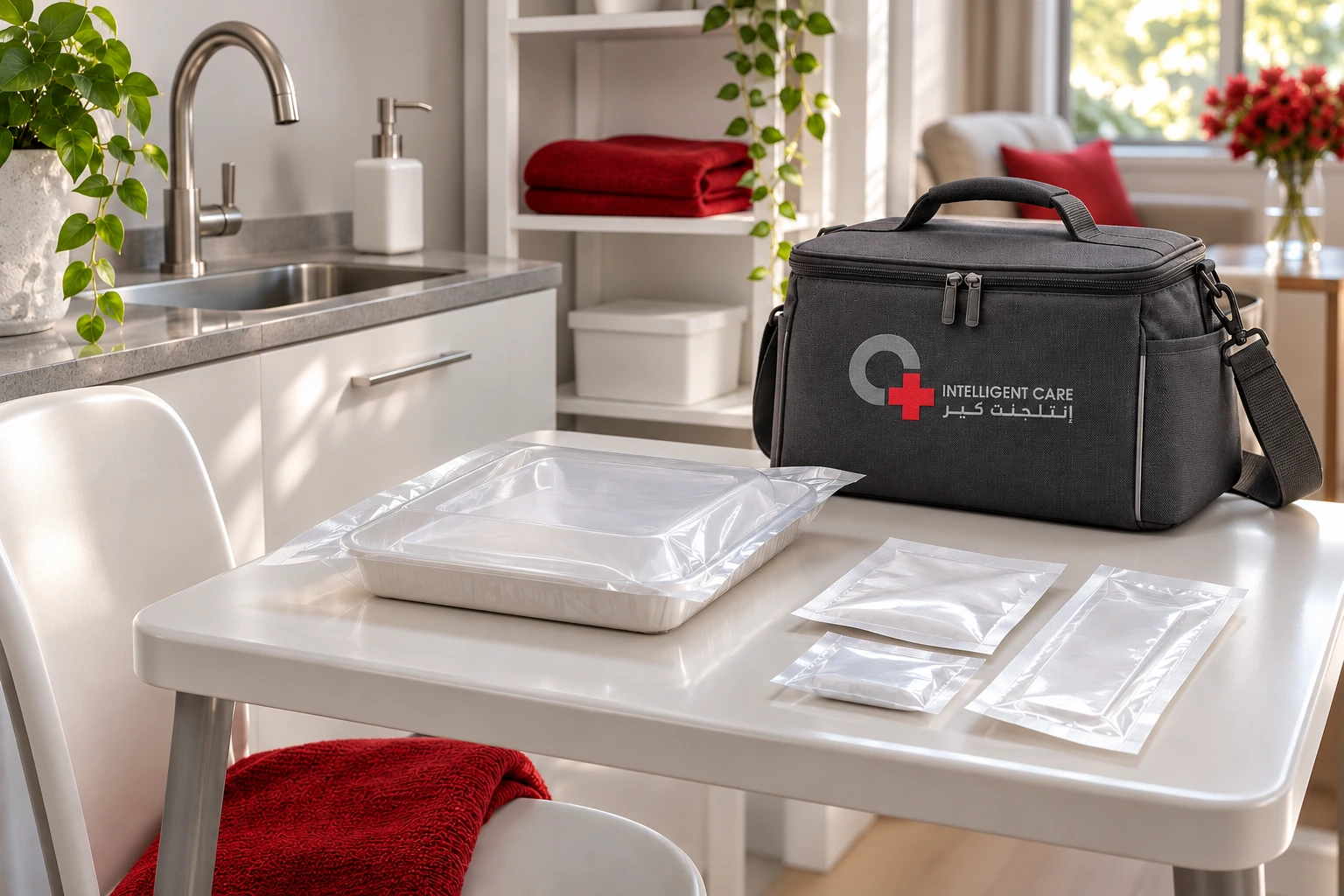
Ask the care team what the visit requires. You do not need to prepare an improvised clinical tray or buy specialist supplies without confirmation.
A personal reminder list.
Nothing is sent or saved.
The care pathway
Healing is individual. The number and spacing of visits depend on the wound and the clinical response.
Gather the history, existing instructions and a baseline assessment.
Carry out the agreed nursing care using appropriate materials.
Review symptoms and wound changes against the previous assessment.
Escalate concerns or connect with the treating clinician when needed.
Explore a stage to bring it into focus. Every stage stays visible.
Continuity of care
A useful review looks beyond whether the dressing is still in place. Ask how the plan will be assessed and what information is worth keeping.
What changes is the clinician monitoring, and how will they be compared with the baseline?
Is pain changing? Is the care affecting sleep, walking or daily tasks in a way the team needs to know?
Does the current dressing and visit arrangement still match the clinical need and practical situation?
Who reviews a concern that exceeds the nursing plan, and how is that review arranged?
Care around the person
Families can make the care plan easier to follow by keeping information and contact routes clear. Ask for instructions specific to the wound rather than improvising.

Clarify what the person or family may do between visits and what should be left to the clinician. Do not change a prescribed dressing approach because a product looks similar.
Report increasing pain, redness, swelling, drainage, fever or a dressing problem promptly. Follow the individual advice rather than waiting for the next scheduled visit.
Tell the nurse about difficulties with movement, washing, clothing or attending follow-up. Practical barriers may require changes to the wider support plan.
People and responsibilities
Wound care often crosses services. Agree who performs the dressing, who reviews the underlying problem and who changes the treatment plan.
Provides the nursing care agreed within the clinician’s scope and documents relevant observations.
Reviews medical or surgical concerns and determines treatment decisions that require medical assessment.
May be needed for a complex wound, diabetes-related foot problem, circulation concern or a particular intervention.
Share changes, priorities and practical barriers, and follow only the individualized guidance they have been given.
Read the real team profiles and their professional-directory references. Your assigned professional and the scope of care are confirmed through the care arrangement.
Meet our clinical teamWhen to seek medical help
These examples guide when to seek help, not how to treat the wound. Follow any more specific instructions from your clinical team.
Immediate medical attention
Prompt clinical assessment
Practical arrangements
The quotation should identify the nursing requirement and any particular materials. Specialist dressings, equipment and procedures require explicit confirmation.
Explain the current schedule and any time-sensitive instructions. The team confirms arrangements; a preferred frequency is not automatically the clinical recommendation.
Ask whether your policy requires a referral, authorization or specific documentation. Keep hospital follow-up in place unless the treating team changes it.
Your questions
You can discuss a single visit or a planned series. The wound, instructions and assessment determine what is appropriate. Confirm the review plan as well as the practical booking.
Do not assume they are. Share any prescribed product or specialist equipment requirement so availability, scope and cost can be confirmed before the visit.
Tell the team exactly what has been requested by the treating clinician. The procedure, timing, instructions, professional scope and availability must be confirmed. A general wound-care enquiry does not automatically book removal.
Mention the prescribed device, treatment plan and responsible specialist. This requires specific confirmation of trained personnel, supplies, device support and review; it is not presented here as an automatically available standard service.
No. Contact an appropriate clinician promptly for increasing pain, redness, swelling, pus, fever or another concerning change. Emergency warning signs require immediate care rather than a routine appointment.
Not automatically. Dressing support and surgical review have different roles. Keep the follow-up appointment unless the treating team explicitly changes the plan.
Ask which tasks are appropriate for your situation and request individualized guidance. Families can help organize information and report changes, but should not assume responsibility for a clinical task without suitable instruction.
There is no responsible fixed promise. The wound’s cause, depth, blood supply, health conditions and response to treatment all matter. Ask the clinician how progress will be reviewed and when another opinion is needed.
The wider picture
Explore related support, or speak to us about combining services into one plan.
About this guide
General information supports the care conversation; your own assessment determines the plan. Company service information and independent clinical guidance are listed separately below.
Care that comes to you
Across Dubai.
Abu Dhabi — coming soon.