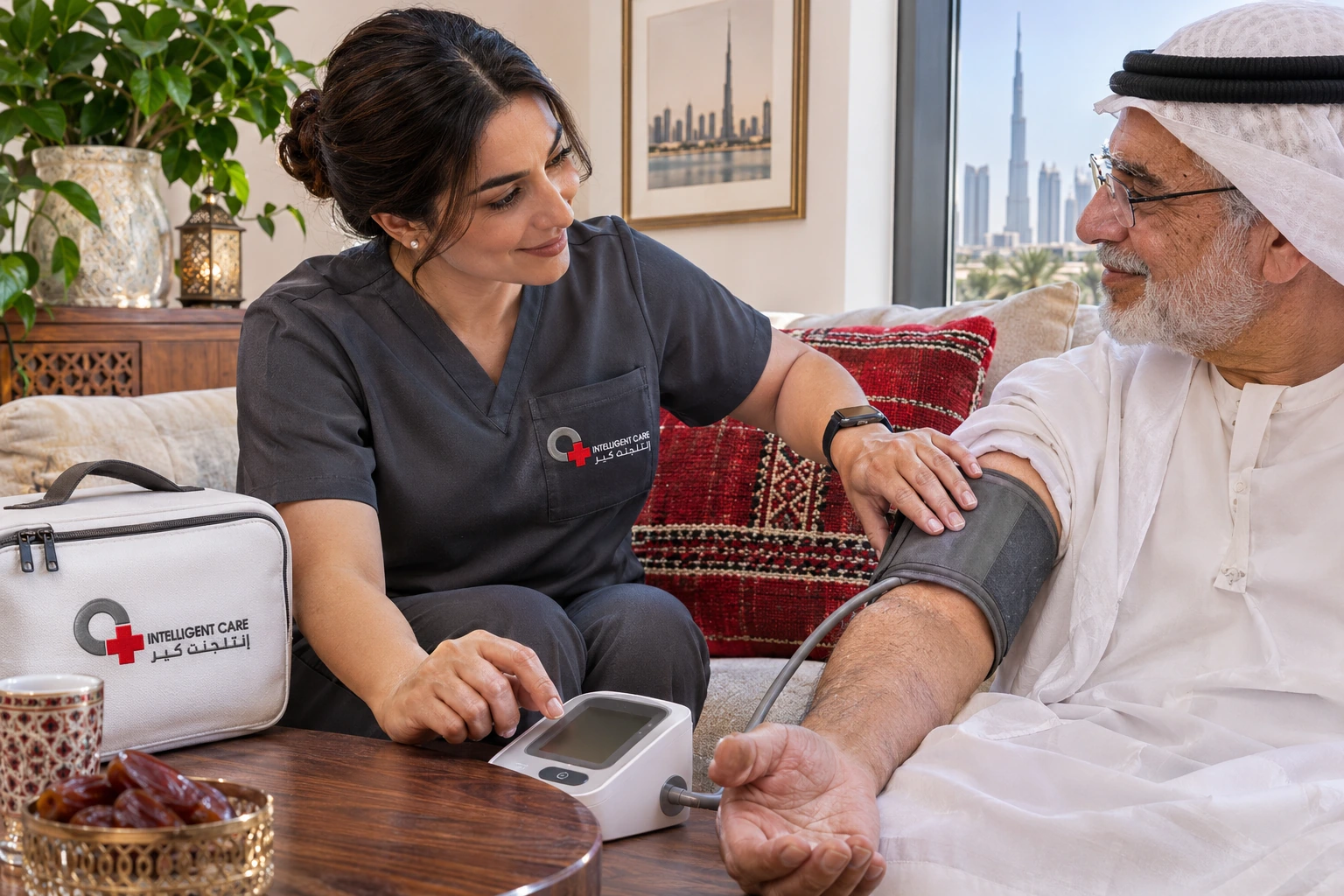
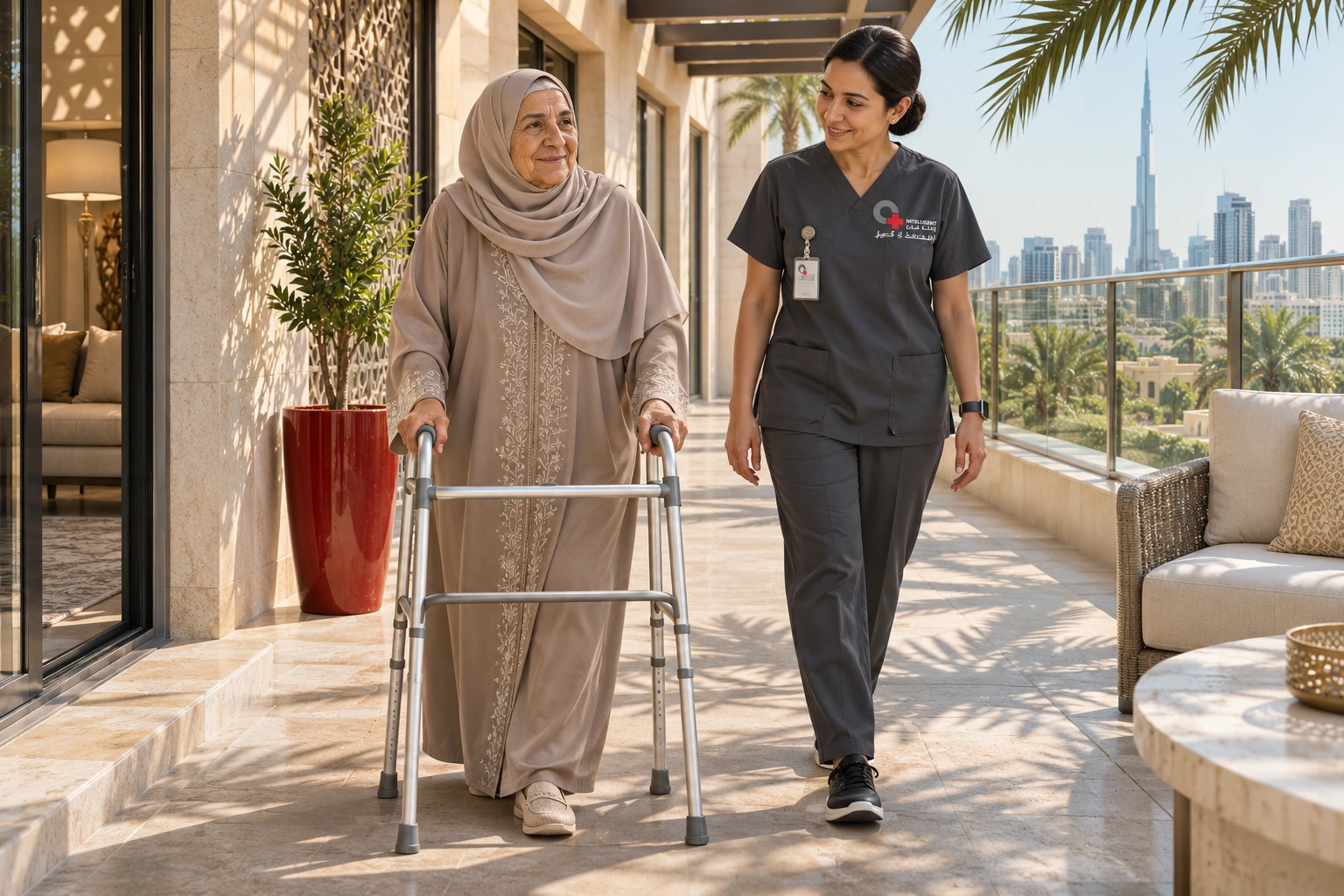
One clear contact route
Agree who the family contacts for a symptom concern, a practical scheduling issue or a change in the plan. Keep the urgent-care instructions easy to find.

Palliative nursing support · Dubai
When someone is living with a serious, life-limiting illness, care should make room for the person as well as the clinical plan. Intelligent Care helps arrange comfort-focused nursing at home in Dubai, coordinated with the treating team and shaped around the person’s wishes, symptoms and household support.

 Clinical author assignmentDr Toqa IbrahimTwo clinical perspectivesProfiles & DHA directory links Guidance with sourcesExplore the references
Comfort-focused clinical support
Tell us about the person’s current care team, the symptoms needing support, the prescribed plan and the help available at home. Together we clarify the nursing requirement, practical coverage and responsibilities before an arrangement is agreed.
Understand the care
Palliative care focuses on comfort and quality of life for people with life-limiting illness. It can sit alongside treatment directed at the underlying condition and is not limited to the final days. The right support depends on the illness, current needs and what matters to the person.
Home nursing contributes the agreed clinical work: observing symptoms, supporting prescribed treatment, helping with comfort-related care and communicating changes. Palliative medicine, prescribing, psychological support and other specialist roles remain distinct; a nursing duty does not automatically include them all.
A home plan also needs to work for the household. Privacy, communication, cultural or spiritual preferences, family availability and the possibility that needs may change are part of the conversation. Preferences should be heard, while the treating clinicians assess which care setting can safely meet the person’s needs.
Read the clinical sourcesCare around the person
Family involvement should reflect the person’s wishes and what relatives can realistically manage.

Agree who the family contacts for a symptom concern, a practical scheduling issue or a change in the plan. Keep the urgent-care instructions easy to find.
Describe work, sleep and other responsibilities honestly. Discuss gaps in support rather than expecting one relative to cover every clinical and practical need.
Make room for questions about comfort, privacy and the preferred setting. If the person can participate, speak with them rather than only about them.
Your discussion priorities
Select the priorities for your conversation. These choices describe needs rather than prescribing treatment.
Explain which symptoms are most troubling, how they affect the day and what the treating team has already advised. New or uncontrolled symptoms need timely clinical contact.
Share the current medicines and any specialist instructions. State what nursing help is needed rather than assuming that a particular medicine or device can be supplied.
Tell us about skin concerns, mobility limits and the person’s comfort preferences. Positioning and equipment should follow the assessed plan.
Describe the current nutrition, swallowing or mouth-care instructions and any difficulties. Changes should be discussed with the appropriate clinical team.
Explain who is available, when support is most needed and what the household is finding difficult. The care arrangement should make responsibilities explicit.
Share how the person wants to be involved, who may receive updates and any preferences important to care. Formal clinical decisions remain with the appropriate team.
Your discussion list
Choose the points you would like to discuss.
The first assessment
The nursing discussion connects the existing clinical plan with the person’s present priorities and home circumstances.

THE CLINICAL CONVERSATION01—04
Identify the treating doctor, specialist or palliative team, current instructions and where urgent advice comes from.
Discuss symptoms, prescribed tasks, personal care, equipment and the support required during different parts of the day.
Ask about comfort, privacy, communication and who should be involved. Preferences may change and should remain part of review.
Confirm the nursing scope, coverage, clinical contacts and what happens if care at home no longer meets the need.
What the care involves
Different needs require different professionals. The plan should say what is included and who makes each clinical decision.
| Need | Nursing contribution | Clinical connection |
|---|---|---|
| 01Symptom observations | Notice and document changes in comfort, symptoms and response to the agreed care. | The treating clinician reviews new or uncontrolled symptoms. |
| 02Prescribed medicines | Support the current regimen within professional scope and record care delivered. | Prescribing, dose changes and specialist routes require the appropriate professional. |
| 03Skin and personal care | Help with assessed comfort, skin-care and positioning needs while respecting privacy. | Equipment and complex wounds may need additional assessment. |
| 04Nutrition and mouth care | Follow the agreed approach and report problems affecting comfort or intake. | Nutrition and swallowing decisions are individualized clinical matters. |
| 05Coordination and family guidance | Keep the practical plan and relevant updates understandable. | Specialist, emotional or spiritual support is arranged according to need and availability. |
The care pathway
There is no fixed palliative-care timetable. The plan follows changing needs and the treating team’s advice.
Understand the person’s priorities and current clinical support.
Agree nursing duties, coverage and clinical contacts.
Deliver the agreed care and communicate meaningful changes.
Review symptoms, preferences and the suitability of the arrangement.
Explore a stage to bring it into focus. Every stage stays visible.
Before care arrives
You do not need a perfect folder before asking for support. Share what is available and identify what still needs clarification.
A personal reminder list.
Nothing is sent or saved.
People and responsibilities
The professionals involved depend on the actual requirement; this page does not imply that all specialties are bundled.
Reviews symptoms and treatment choices, gives prescribing instructions and guides clinical escalation.
Provides the agreed nursing care, supports comfort within the plan and records relevant changes.
Dietitians, therapists or other specialists may be involved when the treating team identifies a need and arrangements are confirmed.
Coordinate practical details and communication while keeping the person’s preferences and consent central.
Read the real team profiles and their professional-directory references. Your assigned professional and the scope of care are confirmed through the care arrangement.
Meet our clinical teamContinuity of care
A review should give space to comfort and practical sustainability, not only whether all scheduled tasks were completed.
Are current symptoms being managed as intended, or does the prescribing or specialist team need to review them?
Have preferences about routines, visitors, privacy or care setting changed?
Is the support arrangement manageable for those involved, including overnight and between nursing duties?
Are the urgent-contact instructions clear, and does the current setting still meet the level of care required?
When to seek medical help
Use the individualized urgent-care plan from the treating team. A website cannot decide the correct response for every palliative situation.
Immediate medical attention
Prompt clinical assessment
Practical arrangements
Clarity about hours, duties and clinical support is especially important when needs may change.
The requirement is reviewed before a nursing arrangement is confirmed. Specialist tasks, symptom needs and the home setting determine the appropriate plan.
Confirm nursing hours, medicines and equipment arrangements, specialist contacts and what happens outside scheduled coverage.
Where insurance support is relevant, discuss policy requirements and authorization separately from clinical planning. No automatic cover or unlimited care is implied.
Your questions
No. Palliative support may be appropriate earlier in a life-limiting illness and can accompany other treatment. The treating team advises what support fits the person’s situation.
No. Nursing supports the agreed plan and communicates changes. Prescribing, specialist treatment and decisions about the appropriate care setting remain with the relevant clinicians.
No responsible guarantee can be made. Preferences matter, but clinical needs, resources and safety may require another setting. The plan should explain what happens if needs increase.
A prescribed medicine and a nursing duty are separate matters. Confirm the prescription, supply, route and professional requirements with the team before care starts.
Share the periods when help is needed. The team discusses whether the proposed coverage matches the clinical requirement and what other support is necessary.
Use the urgent-contact instructions agreed with the treating team. Do not rely on a routine online enquiry or assume that a daytime nursing duty provides overnight clinical coverage.
Practical caregiving may be useful alongside nursing, but it is a different role. Clinical tasks and prescribed procedures require the appropriate professional and should be identified separately.
Tell the patient care team about the person’s current clinician, needs and priorities. They can help coordinate the next discussion and clarify the information required for an appropriate plan.
Expertise with a name
Explore the named clinical profiles, their professional roles and their Dubai Health Authority directory records.
Author assignment
General Practitioner
Dr Toqa Ibrahim is a DHA-licensed General Practitioner with Alpha Intelligent Care Home Healthcare Center. Her clinical profile brings the general-practice perspective into our approach to care at home.

Review assignment
Specialist Clinical Pathology
Dr Nirupama Sabhapathy is a DHA-licensed Specialist in Clinical Pathology at Intel Lab. Her published Intel Lab profile describes more than 25 years in medicine and her role as Laboratory Director.
Professional registration describes each clinician’s role. The clinical assessment and the person responsible for your care are confirmed separately.
More care guides


The wider picture
Explore related support, or speak to us about combining services into one plan.
About this guide
General information supports the care conversation; your own assessment determines the plan. Company service information and independent clinical guidance are listed separately below.
Care that comes to you
Across Dubai.
Abu Dhabi — coming soon.