01Injury
A cut or graze
Explain how and when it happened, contamination and any loss of feeling or movement. Heavy bleeding or an embedded object needs urgent care elsewhere.

Minor wounds, rashes & bites · Dubai
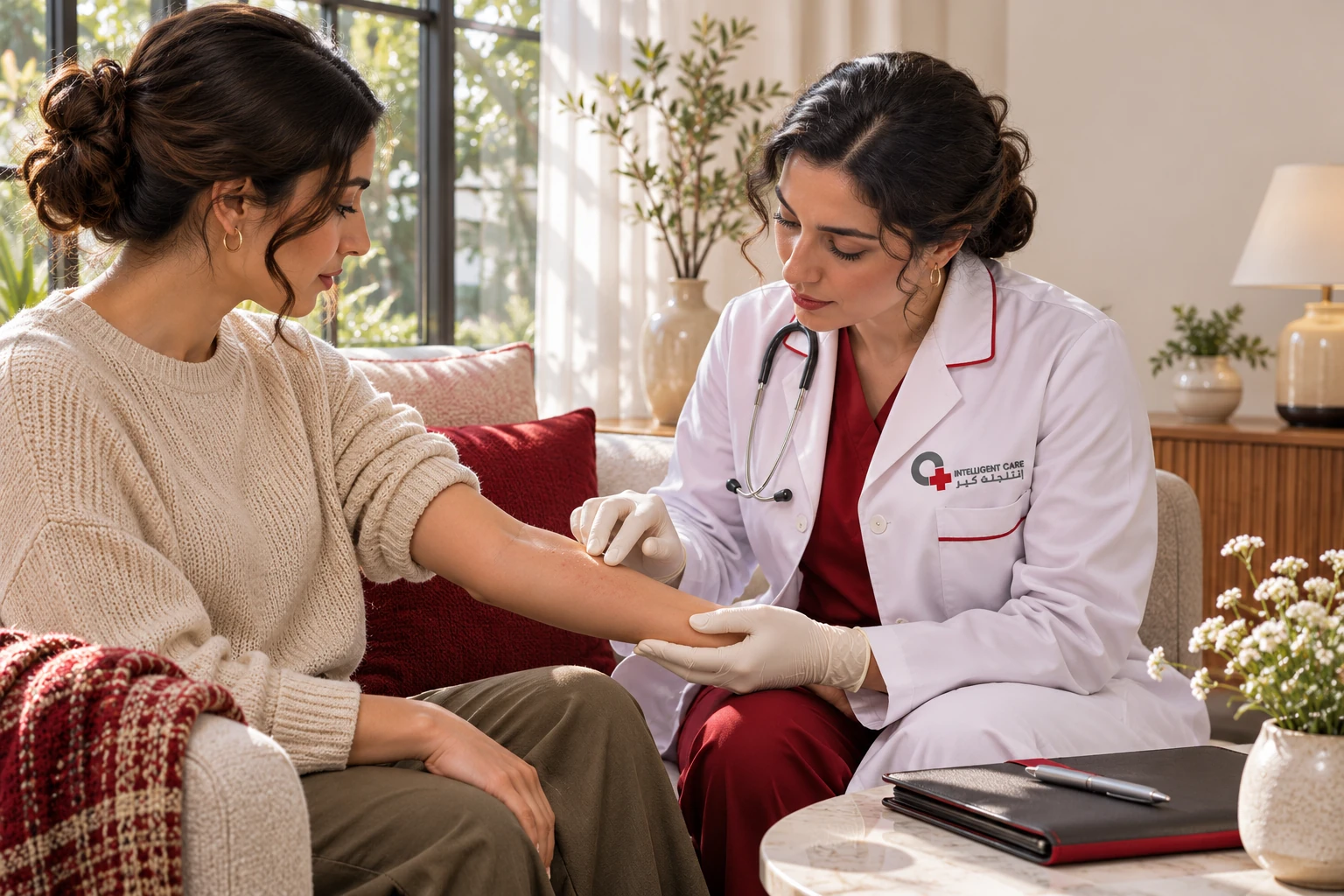
A rash, bite or minor wound can be uncomfortable and difficult to interpret. A doctor can review suitable non-emergency concerns at your home, examine the affected area and explain the next step. Tell the team about spreading symptoms, fever, a serious injury or an allergic reaction before arranging a visit.
 Clinical author assignmentDr Toqa IbrahimTwo clinical perspectivesProfiles & DHA directory links Guidance with sourcesExplore the references
Skin changes & minor injury
Start with a free remote consultation or choose a doctor home visit. Share the concern and important health context so the team can check whether the selected route is appropriate. A telephone conversation cannot replace an examination when one is needed.
Understand the care

The appearance of a rash or wound is only one part of assessment. The onset, location, spread, discomfort, exposures and wider health help explain what the clinician needs to consider. A picture alone may not establish the cause or the right treatment.
A minor injury may still need medical review because of contamination, a bite, infection concerns or the person’s health. Equally, a new rash may require a medicine or exposure review rather than another cream. Tell the doctor what you have applied and what changed afterwards.
Doctor assessment, ongoing nursing dressings and specialist dermatology care have distinct roles. The consultation helps identify the appropriate route. Do not assume a standard home visit includes suturing, foreign-body removal, a biopsy or a specialist dressing procedure.
A useful skin or wound review combines what can be seen with how the problem has changed. Explain the starting point, the treatments already used and whether the concern is a new lesion, a minor injury or follow-up of an established wound plan. A visual assessment at home may answer some questions, but it does not automatically provide every procedure or specialist investigation. The doctor should explain the next clinical decision and whether nursing, specialist review or another setting is needed. The booking should match that decision rather than treating every skin problem as the same service.
Read the clinical sourcesYour discussion priorities
Select discussion priorities. These choices do not identify a rash or determine that a wound is minor.
Explain how and when it happened, contamination and any loss of feeling or movement. Heavy bleeding or an embedded object needs urgent care elsewhere.
Describe where it began, how it spread and whether it itches, hurts or accompanies other symptoms. Mention new medicines or products.
Tell the doctor the exposure if known, travel context and whether swelling or illness is increasing. Do not guess the insect or animal if uncertain.
Mention increasing pain, swelling, discharge, fever or general illness. A planned dressing should not delay assessment of a worsening wound.
Bring the previous diagnosis and treatments. Explain whether this episode looks or feels different from the familiar pattern.
Share diabetes, immune suppression, circulation problems, blood-thinning medicines and relevant allergies.
Your discussion list
Choose the points you would like to discuss.
The first assessment
The clinician considers the skin finding alongside the history and overall condition.
THE CLINICAL CONVERSATION01—04
Discuss the injury, exposure or first appearance, subsequent changes and any treatment already used.
Medicines, allergies, diabetes, immune status and circulation concerns may affect the assessment and the care needed.
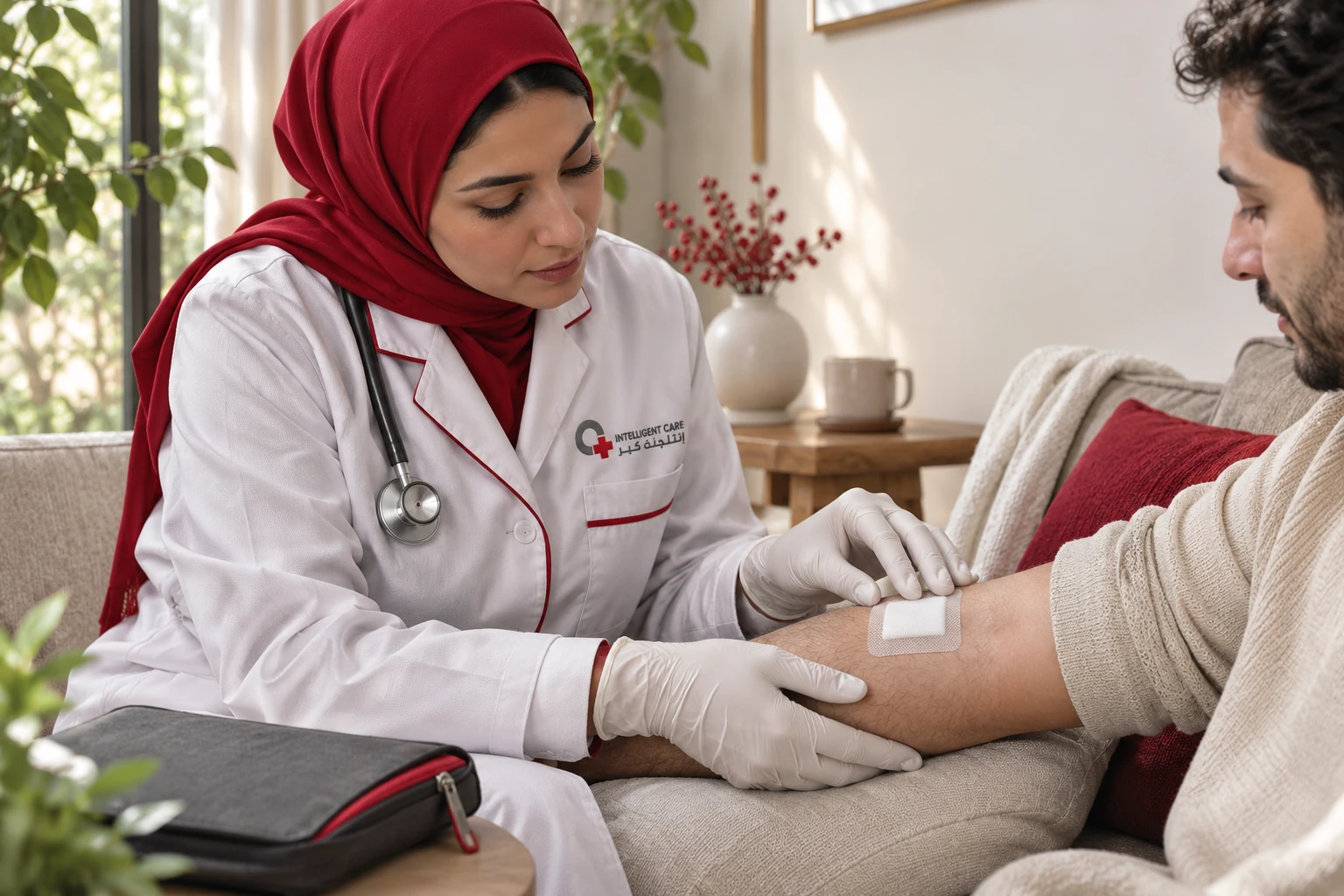
The doctor assesses relevant skin and wound features in good light with privacy. Any photograph or intimate examination needs appropriate discussion and consent.
Clarify whether management at home, nursing follow-up, specialist care or another facility is needed. Confirm what changes should trigger earlier help.
What the care involves
The right next step may be simple, but it should have a clinical reason.
| Step | Purpose | Boundary |
|---|---|---|
| 01Medical assessment | Clarify the concern and any need for investigation or urgent care. | Appearance alone does not always establish the cause. |
| 02Treatment discussion | Consider an appropriate prescription or care advice when indicated. | No universal cream or antibiotic for every rash or wound. |
| 03Nursing support | Arrange agreed ongoing dressing care where suitable. | Supplies, procedure and frequency need explicit confirmation. |
| 04Specialist or facility care | Address a complex lesion, serious injury or procedure beyond the home visit. | A standard consultation does not include every skin procedure. |
Care around the person
Useful support keeps the change visible without repeated manipulation or unapproved treatments.

Note the date and sequence, products used and any wider illness. If photos already exist, ask how to share them appropriately.
Arrange a suitable space and discuss who should be present for examination. The patient’s comfort and consent matter.
Follow only the individual wound or skin instructions provided. Do not switch dressings or combine creams because they appear similar.
The care pathway
Healing or symptom improvement is individual; this sequence does not promise a timetable.
Explain the appearance, onset and changes.
Examine the skin and relevant health context.
Follow the agreed treatment or referral.
Report progress or concerning change.
Explore a stage to bring it into focus. Every stage stays visible.
Before care arrives
Do not delay urgent help to collect supplies or complete a checklist.

A personal reminder list.
Nothing is sent or saved.
People and responsibilities
Care works best when you know who assesses, who arranges and who follows up. Named editorial profiles do not select the clinician attending your appointment.
Reviews your symptoms and history, performs an appropriate examination and explains what can be concluded and what needs further investigation.
Provides useful background and continues any established specialist follow-up. A new visit should fit with, rather than silently replace, that plan.
Coordinates the request and practical arrangements. Booking staff do not replace the clinician making diagnostic or prescribing decisions.
Explain your priorities and practical needs. Decide who should be present and what information you are comfortable sharing.
Read the real team profiles and their professional-directory references. Your assigned professional and the scope of care are confirmed through the care arrangement.
Explore a clinical profileDr Toqa IbrahimGeneral PractitionerContinuity of care
The plan should explain what progress means and what would require another review.
Ask which changes in size, spread, discomfort or discharge matter for the particular problem.
Report fever, general illness or a new reaction rather than focusing only on the original skin mark.
Clarify what to do if the advised approach does not help or causes an unwanted effect.
Confirm who manages dressings, specialist review or any test result and when the next assessment should occur.
When to seek medical help
Severity depends on the finding and the person, not just the visible size.
Immediate medical attention
Prompt clinical assessment
Practical arrangements
Choose a free remote consultation or a paid home visit. Check what is included before adding your preferred option; the team will help confirm the appropriate care setting.
Share the full Dubai address, building or hotel and practical access details. If no offered time works, request earliest availability without paying; the team must agree the appointment with you.
A test, medicine, procedure or specialist review is not automatically part of the consultation price. Confirm the clinical reason, arrangements and any separate cost. Insurance depends on your policy and authorization requirements.
Your questions
A photo may help describe change, but it does not always replace examination and history. Ask the clinician how to share it appropriately and whether an in-person assessment is needed.
Do not assume so. The wound, procedure, timing, equipment and suitable setting must be assessed specifically before an arrangement is made.
An established dressing plan may suit nursing care. A new, worsening or uncertain wound may need medical assessment first. Explain the actual concern so the right role is arranged.
Only if the clinical assessment supports them. Not every cut, bite or rash requires an antibiotic.
Ask an appropriate clinician or pharmacist about suitability. Do not assume a previously prescribed product is correct for a new or different skin problem.
Mention it at the first contact, particularly for a foot wound or infection concern. Prompt appropriate assessment may be more important than a routine dressing arrangement.
Their scope and price need explicit confirmation. A doctor consultation does not automatically include an ongoing nursing package or specialist material.
Contact an appropriate clinician promptly for increasing pain, swelling, discharge, fever or general illness. Emergency symptoms require immediate care.
Keep the current plan, relevant prescriptions and details of dressings or creams already used. Explain what changed after each treatment and any instructions you were given. If a nurse or specialist is already involved, share that context so the next visit can fit the established plan.
A photograph may help describe a change, but it cannot reliably provide every part of an examination or history. The doctor decides whether an in-person assessment, another clinical setting or specialist review is appropriate. Avoid relying on a reassuring-looking image if symptoms or the general condition are worsening.
A clear diagnosis and care plan may identify a nursing task, while a new or changing problem may require medical review. Explain the situation to the team rather than booking by the appearance of the wound alone. The relevant service and any supplies should be confirmed separately.
Expertise with a name
Explore the named clinical profiles, their professional roles and their Dubai Health Authority directory records.
Author assignment
General Practitioner
Dr Toqa Ibrahim is a DHA-licensed General Practitioner with Alpha Intelligent Care Home Healthcare Center. Her clinical profile brings the general-practice perspective into our approach to care at home.
Review assignment
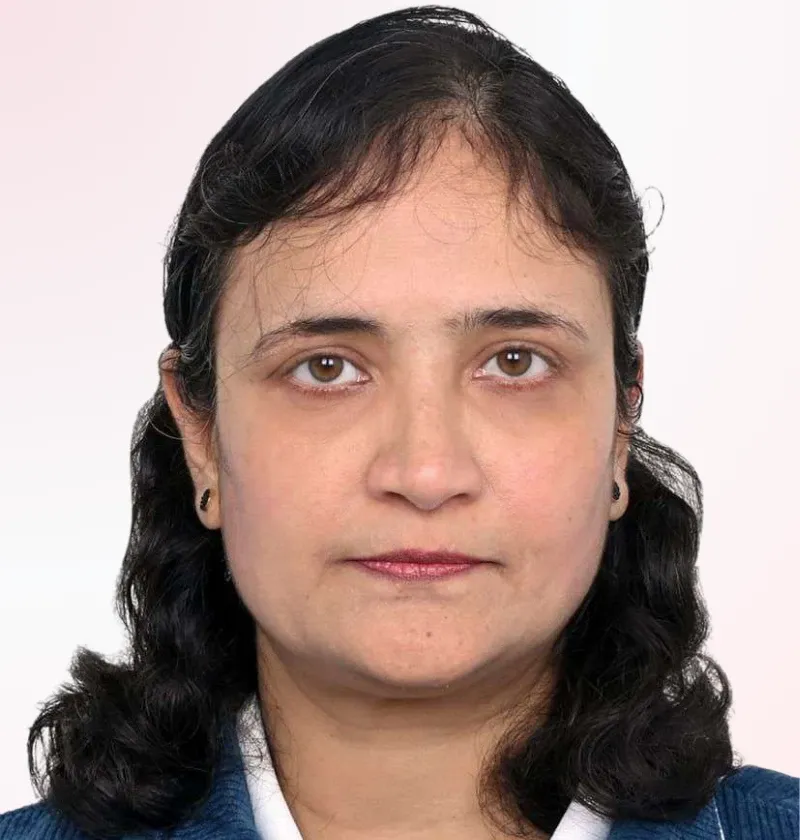
Specialist Clinical Pathology
Dr Nirupama Sabhapathy is a DHA-licensed Specialist in Clinical Pathology at Intel Lab. Her published Intel Lab profile describes more than 25 years in medicine and her role as Laboratory Director.
Professional registration describes each clinician’s role. The clinical assessment and the person responsible for your care are confirmed separately.
More care guides



The wider picture
Explore related support, or speak to us about combining services into one plan.
About this guide
General information supports the care conversation; your own assessment determines the plan. Company service information and independent clinical guidance are listed separately below.
Care that comes to you
Across Dubai.
Abu Dhabi — coming soon.