01Current health
Symptoms since discharge
Explain what is expected, what is new and what has worsened. Use the hospital’s warning signs to decide whether earlier care is needed.

Post-hospital follow-up · Dubai
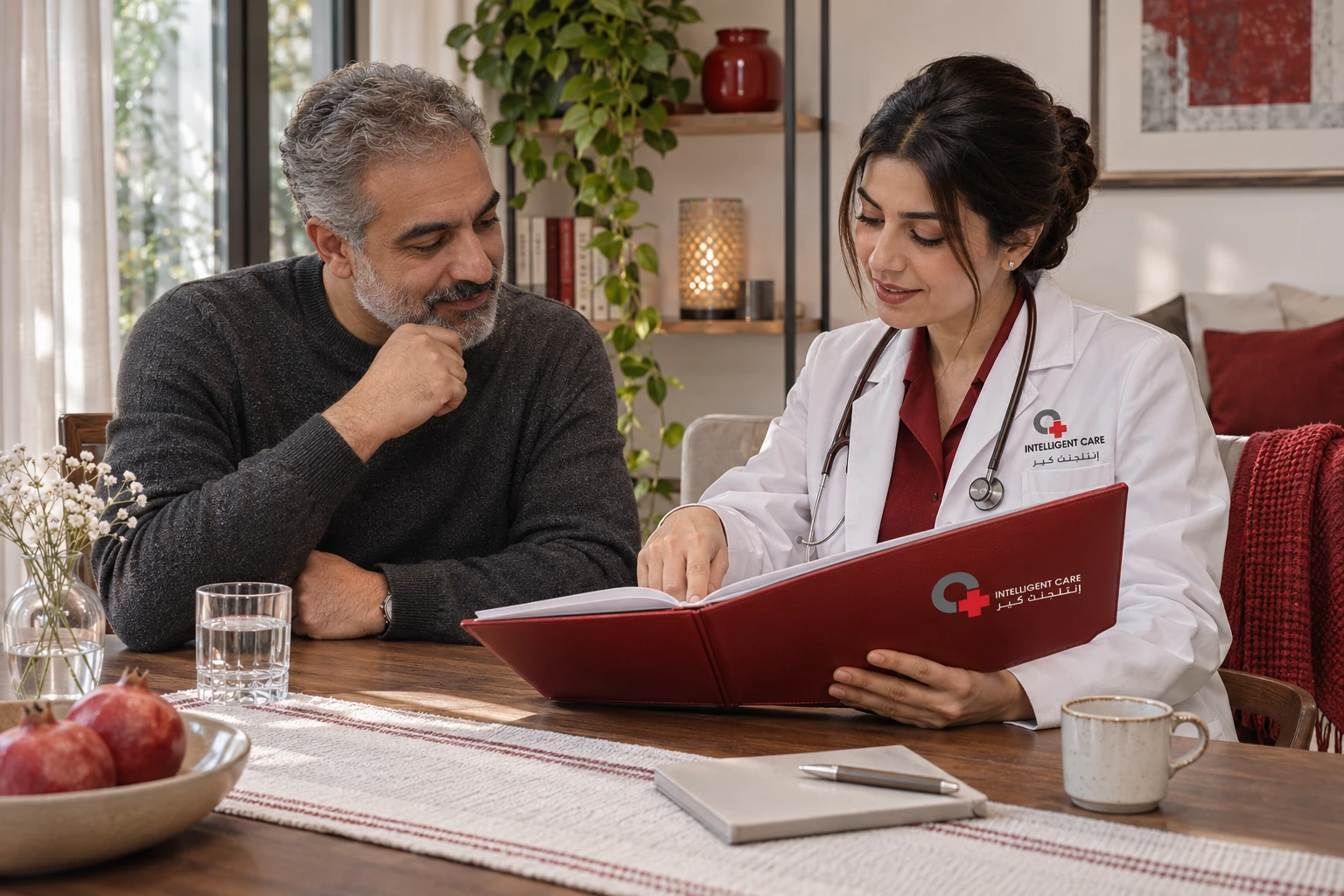
Returning home can bring new questions about medicines, symptoms and the next appointment. A doctor follow-up can help review the medical picture in your own surroundings. Start with the hospital’s discharge information so the conversation connects to the plan already in place.
 Clinical author assignmentDr Toqa IbrahimTwo clinical perspectivesProfiles & DHA directory links Guidance with sourcesExplore the references
Medical follow-up after hospital care
Start with a free remote consultation or choose a doctor home visit. Share the concern and important health context so the team can check whether the selected route is appropriate. A telephone conversation cannot replace an examination when one is needed.
Understand the care

Discharge from hospital is a transition in care, not proof that every question has been resolved. The person may have new medicines, pending results, specialist appointments or instructions about activity and clinical care. Those details should travel together into the home follow-up.
This page concerns a medical review by a doctor. It differs from a complete care plan that coordinates several services and from nursing or rehabilitation delivered for a specific task. The doctor can assess current medical concerns and help clarify which professional should address the next issue.
Keep hospital and specialist follow-up in place unless the responsible team changes it. A home consultation does not automatically transfer every responsibility, provide surgical clearance or replace the clinician who performed a procedure. Clear boundaries make the transition easier to navigate.
Coming home can reveal practical questions that were less obvious in hospital: two medicine lists, an unclear follow-up appointment or a result still pending. Use the visit to make those questions explicit. The doctor needs the relevant discharge information and the patient’s current symptoms, not just the name of the operation or admission. A useful review identifies what can be clarified now, what needs the treating hospital’s input and who is responsible for the next action. It should preserve the original clinical restrictions until an appropriate professional changes them, while responding to new concerns on their own merits.
Read the clinical sourcesYour discussion priorities
Select the medical questions you want to bring to the consultation. These choices do not order a new treatment or change hospital instructions.
Explain what is expected, what is new and what has worsened. Use the hospital’s warning signs to decide whether earlier care is needed.
Bring the discharge prescription and medicines actually being taken. Flag discrepancies rather than trying to combine old and new lists yourself.
Identify investigations taken in hospital and who is meant to review them. A result should not be lost between teams.
Share the follow-up schedule and any uncertainty about its purpose or arrangements. Do not cancel because a home review is planned.
Explain changes in appetite, sleep, mobility or ability to manage the plan. These may affect the next medical or support decision.
Discuss whether a separately arranged nurse, physiotherapist or practical support would address a specific need. Roles and scope remain distinct.
Your discussion list
Choose the points you would like to discuss.
The first assessment
The home consultation should connect discharge information with the current clinical picture.

THE CLINICAL CONVERSATION01—04
Review the reason for admission, procedure or illness, discharge date and instructions. Identify the responsible hospital or specialist team.
Compare the available lists and identify unresolved questions, pending tests or changes requiring the appropriate prescriber’s input.
Discuss symptoms, function and relevant examination findings. New deterioration may need urgent hospital reassessment.
Identify what the home doctor will address, what remains with the hospital and which separate services may be useful. Confirm the next review and contact route.
What the care involves
A useful follow-up does not silently expand into every type of post-hospital care.
| Care element | Contribution | Boundary |
|---|---|---|
| 01Medical review | Assess current symptoms and the relevant clinical questions. | Does not automatically replace specialist follow-up. |
| 02Medicine reconciliation | Clarify the intended list and discrepancies with appropriate professionals. | Changes require an authorized prescriber. |
| 03Nursing or rehabilitation referral | Identify an agreed clinical task or functional need. | Separate assessment, scope and booking apply. |
| 04Result and appointment coordination | Make pending information and next responsibilities visible. | Do not assume the home team has received every hospital record. |
Care around the person
Family support is most useful when it keeps information accurate and responsibilities clear.

With the patient’s agreement, identify who helps organize appointments and shares necessary information.
Separate superseded medicine lists from current instructions. Ask the responsible clinician to resolve a conflict rather than choosing between them.
Explain what support is actually available and what tasks are difficult. A plan that depends on unavailable help needs reconsideration.
The care pathway
The hospital determines discharge readiness; the home review responds to the actual plan and current needs.
Bring the discharge record and current questions.
Assess symptoms, medicines and outstanding information.
Agree which clinician or service owns each next action.
Follow the agreed review and report new concerns.
Explore a stage to bring it into focus. Every stage stays visible.
Before care arrives
Bring the actual documents rather than reconstructing instructions from memory.
A personal reminder list.
Nothing is sent or saved.
People and responsibilities
Care works best when you know who assesses, who arranges and who follows up. Named editorial profiles do not select the clinician attending your appointment.
Reviews your symptoms and history, performs an appropriate examination and explains what can be concluded and what needs further investigation.
Provides useful background and continues any established specialist follow-up. A new visit should fit with, rather than silently replace, that plan.
Coordinates the request and practical arrangements. Booking staff do not replace the clinician making diagnostic or prescribing decisions.
Explain your priorities and practical needs. Decide who should be present and what information you are comfortable sharing.
Read the real team profiles and their professional-directory references. Your assigned professional and the scope of care are confirmed through the care arrangement.
Explore a clinical profileDr Toqa IbrahimGeneral PractitionerContinuity of care
The end of the consultation should leave fewer unresolved handoffs.
Know which concern was addressed and what still needs the hospital or another specialist.
Confirm the agreed current list and who will review any unresolved discrepancy.
Identify who will explain pending or newly ordered tests and what to do if symptoms change first.
Agree whether a separate nursing, rehabilitation or practical care arrangement is needed and when the medical plan should be reviewed.
When to seek medical help
The hospital’s condition-specific instructions take priority over general examples.
Immediate medical attention
Prompt clinical assessment
Practical arrangements
Choose a free remote consultation or a paid home visit. Check what is included before adding your preferred option; the team will help confirm the appropriate care setting.
Share the full Dubai address, building or hotel and practical access details. If no offered time works, request earliest availability without paying; the team must agree the appointment with you.
A test, medicine, procedure or specialist review is not automatically part of the consultation price. Confirm the clinical reason, arrangements and any separate cost. Insurance depends on your policy and authorization requirements.
Your questions
No automatic replacement is implied. Keep the scheduled review unless the responsible hospital or specialist team changes it.
You can discuss expected needs, but the actual appointment and review should reflect the final discharge information and timing. The hospital determines readiness to leave.
Do not assume so. Have the discharge summary, current prescriptions and relevant reports available and ask how necessary information can be shared appropriately.
Any change requires an appropriate prescriber’s assessment and should be coordinated with the relevant treatment plan. Discrepancies should be clarified rather than resolved by a family member guessing.
A doctor follow-up and a nursing dressing visit are distinct services. Explain the requirement so the correct scope, professional and supplies can be arranged.
It can be considered as a separate service when appropriate. The therapist needs relevant restrictions and clinical information before developing a plan.
Identify which team ordered it and who is responsible for explaining it. The home review can help make that responsibility visible; do not assume someone else has already acted on it.
Follow the hospital’s warning signs and seek the appropriate urgent or emergency assessment. Do not wait for a routine home follow-up.
Keep both lists and the actual medicine packaging available and explain where each instruction came from. Ask an appropriate clinician to reconcile the difference; do not decide which list to follow solely by the date or appearance of a document. Urgent medicine concerns should be raised promptly rather than saved for a routine visit.
A family member can help arrange practical details, and you can choose to include them in the conversation. Share the patient’s own priorities and make relevant records available with permission. The person attending should understand which tasks they can help with and which decisions remain clinical.
Ask for the current plan, the next appointment or action, who will review outstanding results and the contact route for a changed concern. If another team must clarify an instruction, identify that responsibility. A follow-up is more useful when the next step is explicit rather than simply described as continued care.
Expertise with a name
Explore the named clinical profiles, their professional roles and their Dubai Health Authority directory records.
Author assignment
General Practitioner
Dr Toqa Ibrahim is a DHA-licensed General Practitioner with Alpha Intelligent Care Home Healthcare Center. Her clinical profile brings the general-practice perspective into our approach to care at home.

Review assignment
Specialist Clinical Pathology
Dr Joyce Jose is a DHA-licensed Specialist in Clinical Pathology at Intel Lab. Her public professional record includes pathology practice in the UAE and earlier experience as a professor at Gulf Medical University.
Professional registration describes each clinician’s role. The clinical assessment and the person responsible for your care are confirmed separately.
More care guides



The wider picture
Explore related support, or speak to us about combining services into one plan.
About this guide
General information supports the care conversation; your own assessment determines the plan. Company service information and independent clinical guidance are listed separately below.
Care that comes to you
Across Dubai.
Abu Dhabi — coming soon.