01Mechanism
A twist or fall
Describe the event, direction of movement and immediate symptoms. Mention a crack, deformity, head injury or other serious feature straight away.

Sprains, strains & joint pain · Dubai
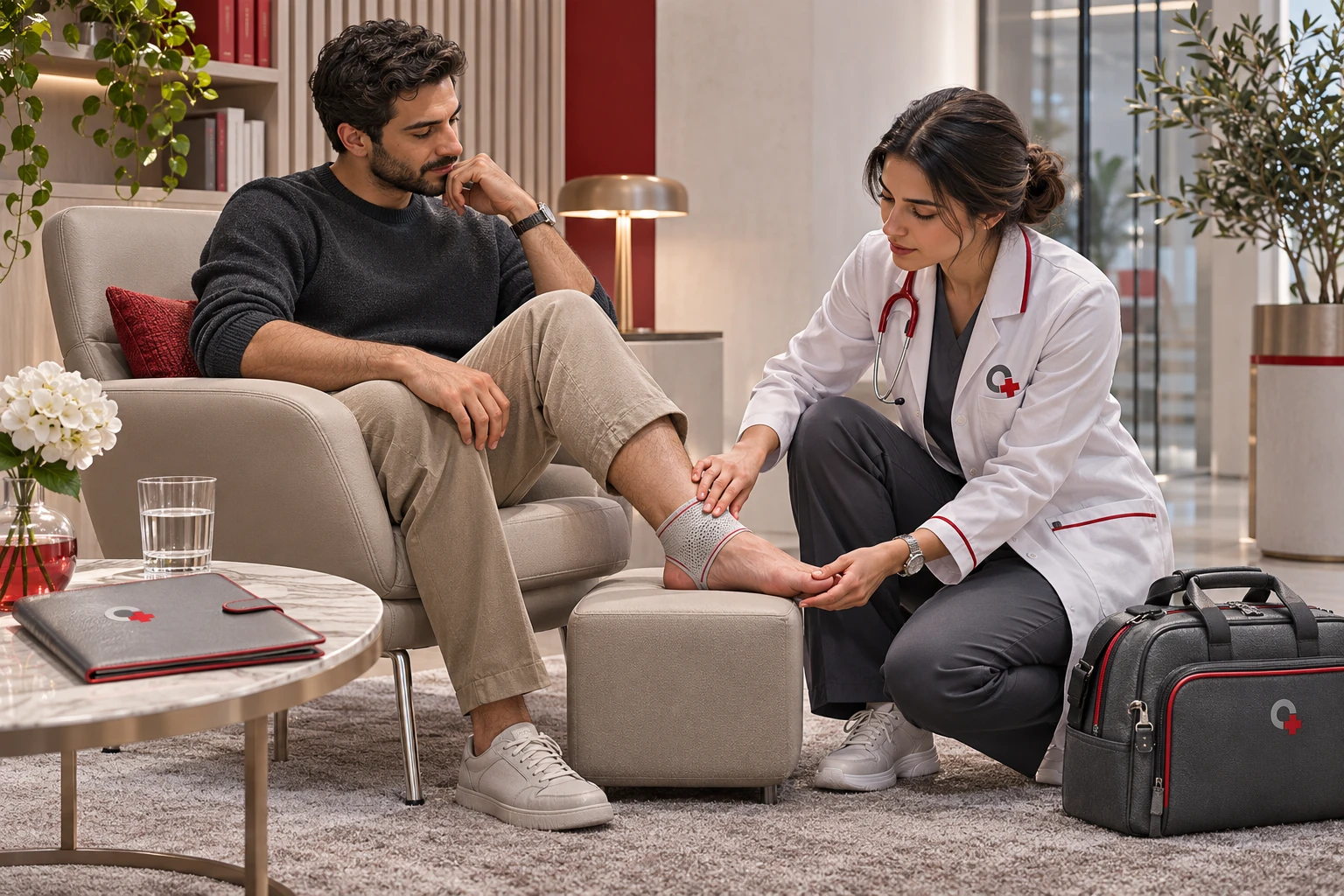
A twisted ankle, strained back or painful joint can make leaving home difficult. A doctor can assess a suitable non-emergency concern, review how it happened and explain whether you need investigation, a treatment plan or rehabilitation. Tell the team about severe injury or loss of function before arranging a visit.
 Clinical author assignmentDr Toqa IbrahimTwo clinical perspectivesProfiles & DHA directory links Guidance with sourcesExplore the references
Muscle, ligament & joint concerns
Start with a free remote consultation or choose a doctor home visit. Share the concern and important health context so the team can check whether the selected route is appropriate. A telephone conversation cannot replace an examination when one is needed.
Understand the care
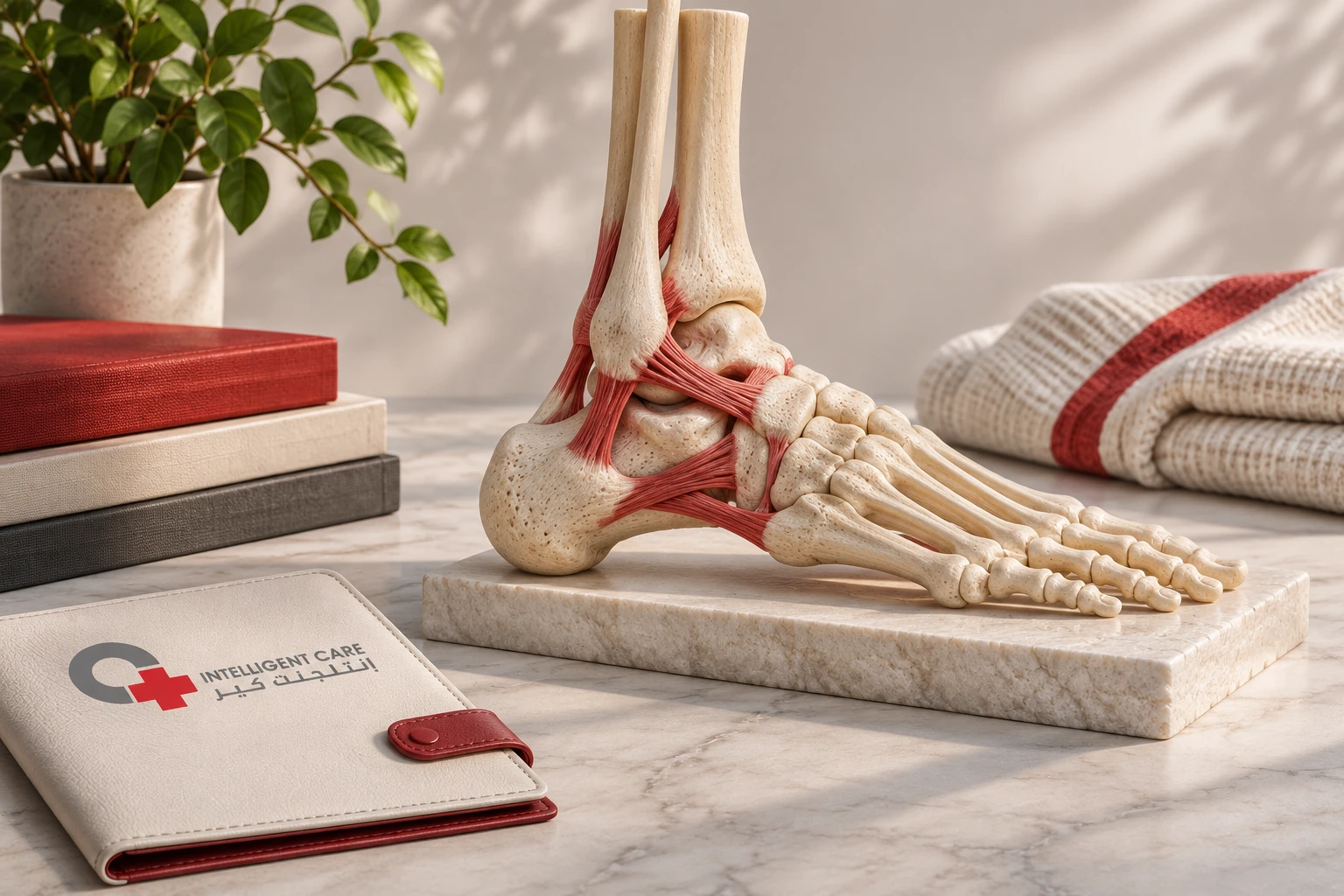
A sprain affects a ligament around a joint; a strain affects muscle or tendon. Swelling, bruising and difficulty using an area can occur with different injuries, including injuries that need an X-ray or another setting. A home assessment should not be treated as proof that a bone is intact.
Joint pain may follow a clear event, develop gradually or occur with an existing condition. Describe whether the area is swollen, hot, stiff or difficult to use and how it differs from your usual function. The clinician considers the whole presentation rather than assuming every painful joint is arthritis.
Doctor assessment and physiotherapy have related but different roles. The doctor helps assess the medical concern and need for investigation; rehabilitation focuses on movement and function once the appropriate route is clear. A diagnosis should not become an automatic package of sessions.
A medical assessment and a rehabilitation session answer different questions. The doctor first considers the symptom, injury or change in health and whether investigation or medical treatment is needed. Physiotherapy can then address appropriate movement and functional goals when that is the right route. Explain whether you are seeking help after a new event, a review of an established condition or guidance about returning to an activity. The plan should make the next decision clear, including what remains uncertain, which service is appropriate and whether any activity needs to wait for further assessment.
Read the clinical sourcesYour discussion priorities
Select the details you want to explain. These are consultation prompts, not an exercise prescription.
Describe the event, direction of movement and immediate symptoms. Mention a crack, deformity, head injury or other serious feature straight away.
Say when it appeared and whether it is increasing. Share medicines such as blood thinners and any important bleeding history.
Explain what you can and cannot do compared with normal. Inability to stand on the limb or use it after injury may require assessment elsewhere.
Describe associated arm or leg symptoms and any change in sensation or strength. New serious neurological symptoms need urgent assessment.
Tell the clinician about warmth, swelling, fever, stiffness or previous episodes. Lack of an injury does not establish a harmless cause.
Explain the work, sport or daily task you need to resume. Assessment can identify whether a rehabilitation route is appropriate.
Your discussion list
Choose the points you would like to discuss.
The first assessment
The examination and any need for imaging depend on the injury and current findings.
THE CLINICAL CONVERSATION01—04
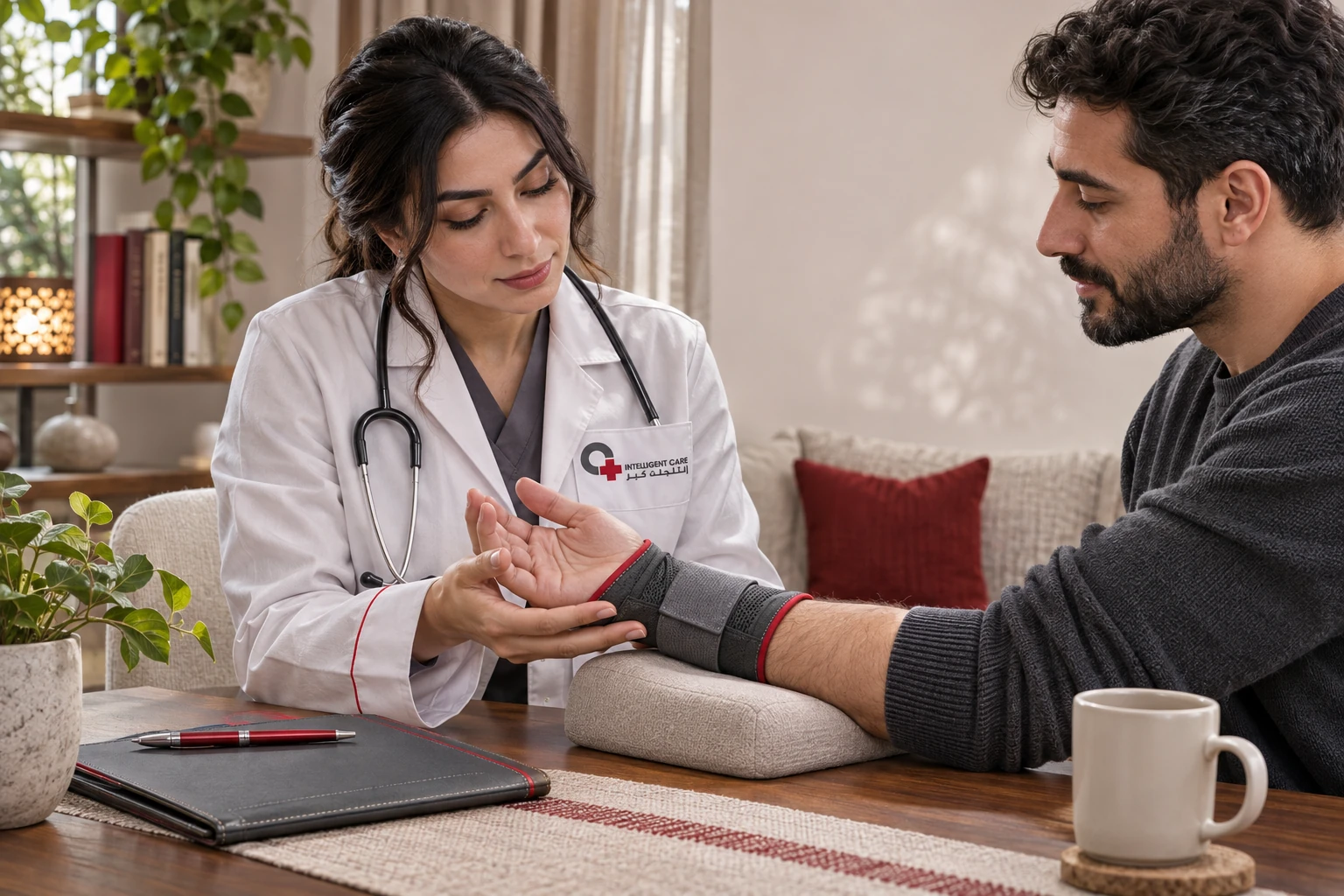
Explain what happened, the immediate symptoms, prior injury and how the area has changed since. For gradual pain, describe the activity and time pattern.
The doctor considers movement, weight-bearing, pain and relevant conditions or medicines. Do not force a painful task merely to demonstrate the problem.
A focused examination helps determine whether home management, imaging, urgent care or a specialist opinion is appropriate.
Discuss a plan for review and, where suitable, physiotherapy. Clarify restrictions before returning to work, sport or a demanding household task.
What the care involves
Different steps answer different questions; not every injury needs every intervention.
| Step | Purpose | What to clarify |
|---|---|---|
| 01Medical assessment | Establish the concern and whether a serious injury or illness needs exclusion. | Is home care the right setting? |
| 02Imaging or specialist review | Investigate a suspected fracture or another finding that cannot be resolved by the home examination. | Where should this happen and how urgently? |
| 03Individual symptom management | Discuss appropriate advice or treatment in the context of your health and medicines. | What is suitable for me and what should I avoid? |
| 04Physiotherapy | Assess movement and build a relevant rehabilitation plan when appropriate. | Which restrictions and goals should the therapist receive? |
Care around the person
Help with practical needs while the clinical plan is being clarified.

Tell the team about stairs, lifts and difficulty getting to the door or a comfortable assessment space.
A supporter can explain the event or usual function. Avoid repeatedly testing an injured limb to prove whether it is improving.
Share relevant medical advice, imaging reports and restrictions with anyone assisting at home so different people do not follow conflicting plans.
The care pathway
The pace depends on the injury, findings and response, not a fixed recovery curve.
Explain the event, pain and loss of function.
Examine and identify any need for investigation.
Agree management, restrictions and relevant rehabilitation.
Reassess function and any concerning change.
Explore a stage to bring it into focus. Every stage stays visible.
Before care arrives
Use what you already know; do not perform painful movements to complete a checklist.
A personal reminder list.
Nothing is sent or saved.
People and responsibilities
Care works best when you know who assesses, who arranges and who follows up. Named editorial profiles do not select the clinician attending your appointment.
Reviews your symptoms and history, performs an appropriate examination and explains what can be concluded and what needs further investigation.
Provides useful background and continues any established specialist follow-up. A new visit should fit with, rather than silently replace, that plan.
Coordinates the request and practical arrangements. Booking staff do not replace the clinician making diagnostic or prescribing decisions.
Explain your priorities and practical needs. Decide who should be present and what information you are comfortable sharing.
Read the real team profiles and their professional-directory references. Your assigned professional and the scope of care are confirmed through the care arrangement.
Explore a clinical profileDr Toqa IbrahimGeneral PractitionerContinuity of care
A useful review considers what you can do, what remains limited and whether the plan still fits.
Discuss whether walking, reaching or the relevant daily task is becoming more manageable.
Report changes in swelling, sensation, colour, temperature or general health promptly.
Confirm who reviews imaging or specialist advice and how it changes restrictions or rehabilitation.
Ask what progression is appropriate for the specific injury rather than returning solely because pain has eased.
When to seek medical help
Do not use a routine home visit to delay assessment of a possible serious injury.
Immediate medical attention
Prompt clinical assessment
Practical arrangements
Choose a free remote consultation or a paid home visit. Check what is included before adding your preferred option; the team will help confirm the appropriate care setting.
Share the full Dubai address, building or hotel and practical access details. If no offered time works, request earliest availability without paying; the team must agree the appointment with you.
A test, medicine, procedure or specialist review is not automatically part of the consultation price. Confirm the clinical reason, arrangements and any separate cost. Insurance depends on your policy and authorization requirements.
Your questions
Not reliably by itself. The clinician assesses the injury and may direct you to imaging or urgent care. A suspected fracture should not be managed as a simple strain because the appointment was booked at home.
A new injury, uncertain diagnosis or concerning symptoms may need medical assessment first. Physiotherapy focuses on movement and rehabilitation once the appropriate clinical route and restrictions are clear.
No. Imaging is not automatically included in the consultation and may require another location. The doctor explains whether it is indicated.
Yes. Share previous diagnoses, treatment and the change that prompted this visit. New warmth, swelling, fever or rapid loss of function changes the assessment.
The page does not prescribe exercises. Rehabilitation should be tailored to the injury, assessment and relevant restrictions.
Yes. Use the correct recipient details and explain the person’s access and mobility needs. Their own goals and consent remain important.
That depends on the injury and recovery of relevant function. Ask the treating clinician or physiotherapist for individual progression advice rather than relying on a fixed number of days.
Seek urgent emergency assessment. Do not wait for the next appointment or assume this is normal swelling.
Explain the movement or event, when it happened, immediate symptoms and how function has changed since. Mention previous injuries, operations and medicines already used. You do not need to repeat the mechanism or force a painful movement during a remote conversation to demonstrate that a problem exists.
Discuss the actual tasks involved, such as lifting, prolonged standing or driving, and any instructions already given. The doctor can consider the clinical questions and explain whether further assessment is needed. A consultation is not an automatic fitness certificate or a guarantee that a particular return date is suitable.
Expertise with a name
Explore the named clinical profiles, their professional roles and their Dubai Health Authority directory records.
Author assignment
General Practitioner
Dr Toqa Ibrahim is a DHA-licensed General Practitioner with Alpha Intelligent Care Home Healthcare Center. Her clinical profile brings the general-practice perspective into our approach to care at home.

Review assignment
Specialist Clinical Pathology
Dr Joyce Jose is a DHA-licensed Specialist in Clinical Pathology at Intel Lab. Her public professional record includes pathology practice in the UAE and earlier experience as a professor at Gulf Medical University.
Professional registration describes each clinician’s role. The clinical assessment and the person responsible for your care are confirmed separately.
More care guides



The wider picture
Explore related support, or speak to us about combining services into one plan.
About this guide
General information supports the care conversation; your own assessment determines the plan. Company service information and independent clinical guidance are listed separately below.
Care that comes to you
Across Dubai.
Abu Dhabi — coming soon.