01Ear
Ear discomfort
Say which ear is affected, how long it has hurt and whether there is discharge, fever, hearing change or swelling around the ear.

Ear, nose & throat concerns · Dubai
A painful ear, sore throat or persistent nasal discomfort can interrupt sleep, eating and concentration. A doctor home visit can assess suitable non-emergency concerns and explain the next step. Tell our team about difficulty breathing or swallowing, sudden hearing loss or significant bleeding before booking.

 Clinical author assignmentDr Toqa IbrahimTwo clinical perspectivesProfiles & DHA directory links Guidance with sourcesExplore the references
Ear, nose & throat concerns
Start with a free remote consultation or choose a doctor home visit. Share the concern and important health context so the team can check whether the selected route is appropriate. A telephone conversation cannot replace an examination when one is needed.
Understand the care
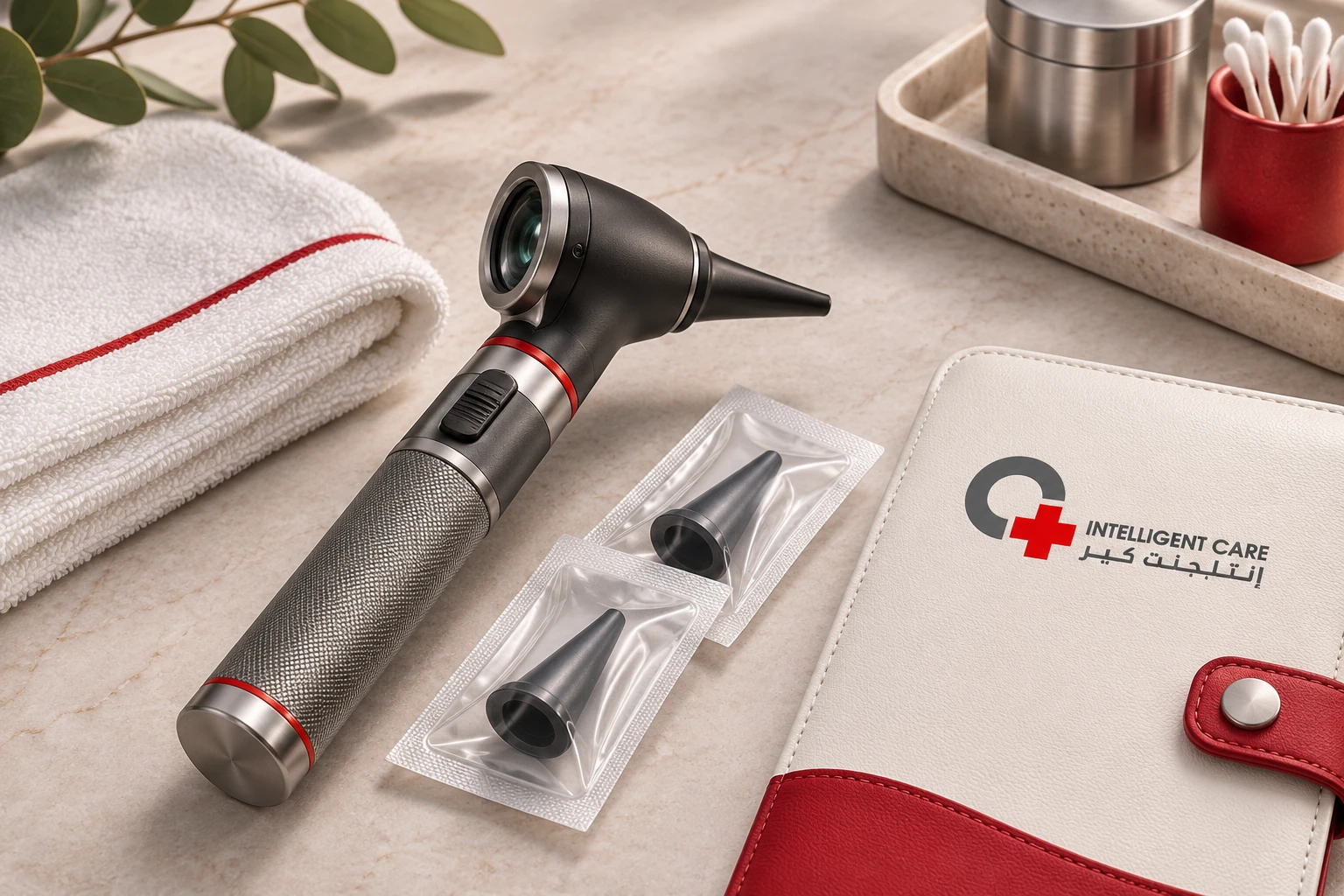
Ear pain, a blocked nose and a sore throat may occur together, but each can have different causes. An examination helps distinguish what is visible from what needs another investigation. A symptom name alone does not determine whether antibiotics or a procedure is appropriate.
Explain the duration, side affected and any hearing, swallowing, balance or voice change. Mention discharge, fever, recent illness, travel or injury where relevant. A recurring concern deserves its own review rather than repeated assumptions that it is the same infection.
Tinnitus means hearing a sound without an outside source. Persistent or troubling tinnitus can need medical assessment and sometimes specialist hearing evaluation. A home consultation is an initial assessment route; it does not provide every ENT procedure or audiology investigation.
Make the concern specific to the activity it affects: hearing a conversation, swallowing comfortably, sleeping or managing a recurring nosebleed. Describe the timing and any previous treatment, and tell the doctor which symptoms are new. A focused examination may help answer some questions at home, while others need specialist equipment or an ENT opinion. The next step should follow the findings rather than a preselected procedure. If the appointment concerns a child, share the child’s age, current behaviour and relevant history so the team can consider the request and the appropriate clinical route.
Read the clinical sourcesYour discussion priorities
Select your discussion priorities. Serious symptoms should be raised immediately, not left to a routine appointment.
Say which ear is affected, how long it has hurt and whether there is discharge, fever, hearing change or swelling around the ear.
Explain swallowing, fluid intake, voice changes and general illness. Inability to swallow or difficulty breathing needs emergency assessment.
Describe congestion, facial discomfort, discharge and the duration. Tell the doctor whether symptoms are new, recurrent or different from usual.
Explain whether the sound is in one or both ears, constant or intermittent, and whether it follows your pulse or affects sleep.
Mention frequency, duration, any injury and medicines affecting blood clotting. Heavy or persistent bleeding needs urgent assessment elsewhere.
Give the child’s age and explain feeding, behaviour, fever and hearing concerns. The appropriate route may differ from an adult consultation.
Your discussion list
Choose the points you would like to discuss.
The first assessment
The doctor identifies which examination is appropriate and whether a specialist setting is needed.

THE CLINICAL CONVERSATION01—04
Discuss the affected side, onset, associated fever or discharge and the effect on hearing, swallowing, sleep or everyday activity.
Previous ENT conditions, hearing devices, operations, medicines and recurrent episodes provide useful context.
The clinician examines relevant areas with consent. The findings guide whether treatment, observation or further investigation is appropriate.
Discuss the role of prescriptions, specialist referral, hearing assessment or follow-up. No procedure is assumed from the booking title.
What the care involves
The consultation connects symptoms to an appropriate route rather than offering the same treatment for every ear or throat complaint.
| Care element | Purpose | Confirm before proceeding |
|---|---|---|
| 01Focused examination | Assess visible findings and the current concern. | What can be established during a home visit? |
| 02Medicine discussion | Consider suitable treatment when clinically indicated. | Is a prescription needed and how should I follow it? |
| 03Hearing or ENT referral | Investigate persistent, sudden or more complex symptoms. | Which service is required and how urgently? |
| 04Specific procedures | Earwax or other procedures require their own suitability and scope assessment. | Is this actually available and appropriate for my situation? |
Care around the person
A calm setting and a few relevant details make it easier to discuss symptoms accurately.

Tell the team about hearing difficulty, language preferences or another communication requirement. Keep the patient involved in the conversation.
Describe changes in feeding, play, sleep and usual behaviour. Avoid repeatedly examining a painful ear or throat yourself.
Share the agreed plan with the person helping at home and clarify who will arrange any hearing or specialist review.
The care pathway
The route is guided by the findings, not a standard antibiotic or procedure package.
Share the symptoms and their effect on daily life.
Assess the relevant ear, nose or throat concern.
Agree treatment, investigation or specialist review.
Report persistence, recurrence or new features.
Explore a stage to bring it into focus. Every stage stays visible.
Before care arrives
You do not need to clean or prepare the ear or throat with products before the visit unless specifically instructed.

A personal reminder list.
Nothing is sent or saved.
People and responsibilities
Care works best when you know who assesses, who arranges and who follows up. Named editorial profiles do not select the clinician attending your appointment.
Reviews your symptoms and history, performs an appropriate examination and explains what can be concluded and what needs further investigation.
Provides useful background and continues any established specialist follow-up. A new visit should fit with, rather than silently replace, that plan.
Coordinates the request and practical arrangements. Booking staff do not replace the clinician making diagnostic or prescribing decisions.
Explain your priorities and practical needs. Decide who should be present and what information you are comfortable sharing.
Read the real team profiles and their professional-directory references. Your assigned professional and the scope of care are confirmed through the care arrangement.
Explore a clinical profileDr Toqa IbrahimGeneral PractitionerContinuity of care
A clear follow-up route is particularly useful when symptoms recur or do not settle.
Ask when the plan should be reviewed if symptoms persist or worsen.
Confirm the next step for persistent or sudden hearing concerns rather than repeatedly treating them as blockage.
Keep a concise record of frequency and previous treatment so a broader review can use the full pattern.
If referred, clarify who arranges the appointment and how the findings return to the ongoing plan.
When to seek medical help
A routine home appointment is not the appropriate response to severe or rapidly worsening ENT symptoms.
Immediate medical attention
Prompt clinical assessment
Practical arrangements
Choose a free remote consultation or a paid home visit. Check what is included before adding your preferred option; the team will help confirm the appropriate care setting.
Share the full Dubai address, building or hotel and practical access details. If no offered time works, request earliest availability without paying; the team must agree the appointment with you.
A test, medicine, procedure or specialist review is not automatically part of the consultation price. Confirm the clinical reason, arrangements and any separate cost. Insurance depends on your policy and authorization requirements.
Your questions
No. Many sore throats do not need antibiotics. The clinician assesses the cause and whether a prescription is appropriate for the individual situation.
Do not assume a procedure is included. Tell the team the exact concern so suitability, available expertise and any separate scope can be confirmed.
Share the age and symptoms before arranging care. Fever, general illness, discharge, swelling or a change in hearing can affect urgency and the appropriate clinician or setting.
Tinnitus describes hearing sound without an external source. Assessment considers possible contributors and whether hearing tests or specialist review are needed.
Seek urgent appropriate assessment, especially with tinnitus, vertigo, facial weakness or injury. Do not wait for a routine home appointment or assume it is wax.
Do not put objects into the ear or attempt to remove something yourself. Explain the concern to the clinician and follow individualized advice.
No automatic inclusion is implied. A home doctor assessment and specialist investigations are distinct services with separate arrangements where needed.
Bring previous records and explain the recurrence pattern. The clinician may recommend a broader review rather than repeating the same treatment without reassessment.
Describe the sequence and which symptom is causing the main difficulty. The doctor can consider the concerns together rather than requiring you to select a diagnosis first. Bring details of medicines, recent clinical reviews and any relevant test results; the findings determine whether a focused home review is sufficient.
Tell the doctor how often episodes occur, how long they last, whether bleeding is ongoing and which medicines you take. Mention any injury or previous review. A heavy or persistent bleed, weakness or breathing difficulty requires prompt assessment; do not wait to complete an online booking if the situation is urgent.
Discuss products already used and their instructions with an appropriate clinician or pharmacist. Do not add an unprescribed procedure or attempt to clean deep inside the ear for the visit. The assessment should start from a clear account of what has been tried and how symptoms changed.
Expertise with a name
Explore the named clinical profiles, their professional roles and their Dubai Health Authority directory records.
Author assignment
General Practitioner
Dr Toqa Ibrahim is a DHA-licensed General Practitioner with Alpha Intelligent Care Home Healthcare Center. Her clinical profile brings the general-practice perspective into our approach to care at home.

Review assignment
Specialist Clinical Pathology
Dr Nirupama Sabhapathy is a DHA-licensed Specialist in Clinical Pathology at Intel Lab. Her published Intel Lab profile describes more than 25 years in medicine and her role as Laboratory Director.
Professional registration describes each clinician’s role. The clinical assessment and the person responsible for your care are confirmed separately.
More care guides



The wider picture
Explore related support, or speak to us about combining services into one plan.
About this guide
General information supports the care conversation; your own assessment determines the plan. Company service information and independent clinical guidance are listed separately below.
Care that comes to you
Across Dubai.
Abu Dhabi — coming soon.