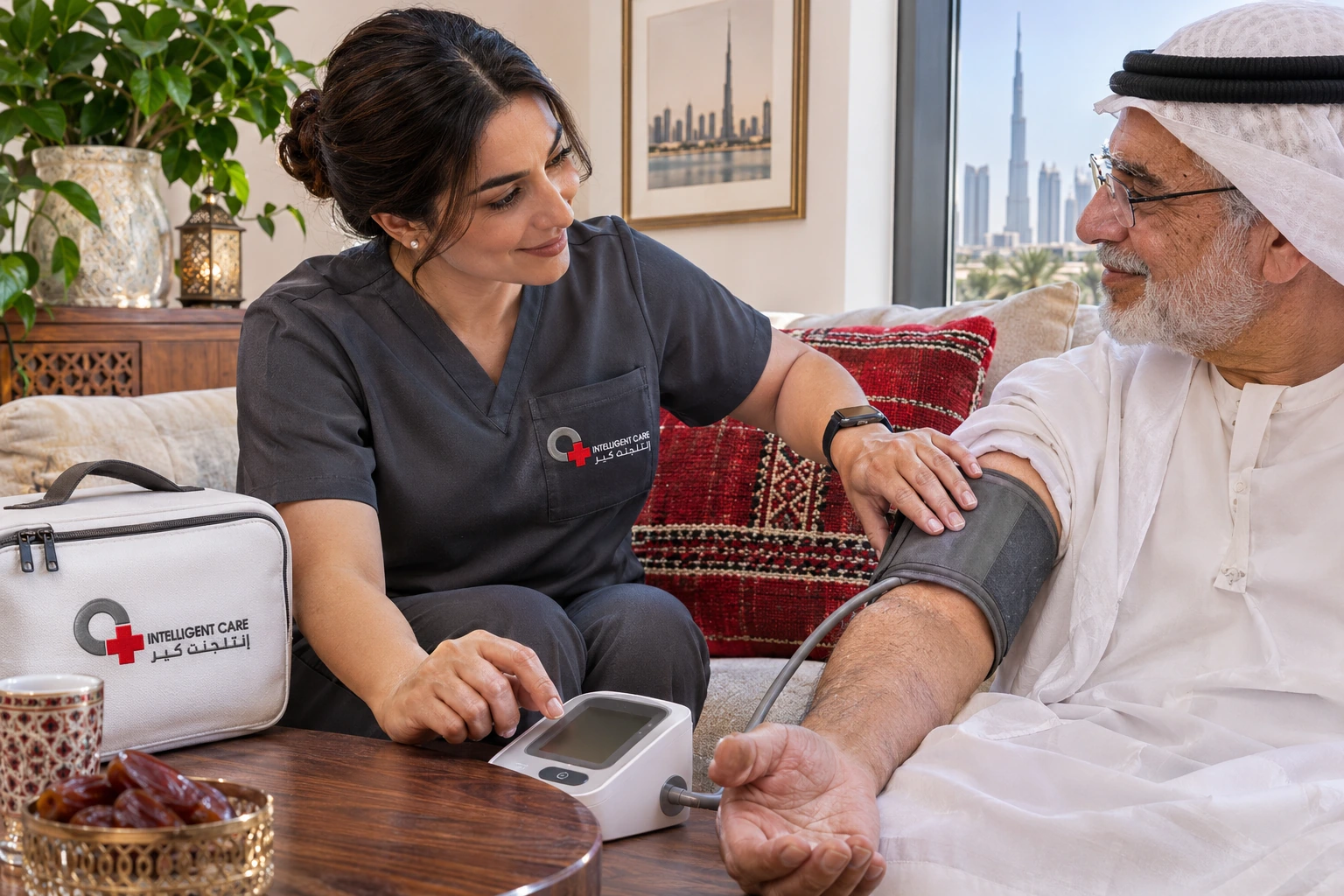
Offer choice respectfully
Ask what the person would like within the current plan. Support should not become pressure to eat a food they dislike or a public discussion of how much they have consumed.

Nutrition & mealtime support · Dubai
Appetite, comfort, mobility and company can all affect the experience of eating. Practical mealtime support begins with the older person’s preferences and any existing clinical advice, while weight loss, swallowing concerns or a prescribed diet need the right professional assessment.
 Clinical author assignmentDr Toqa IbrahimTwo clinical perspectivesProfiles & DHA directory links Guidance with sourcesExplore the references
Nutrition and mealtime support for older adults
Describe the help needed around meals: setting up, practical assistance, the existing routine or companionship. Share allergies, dietary restrictions and any swallowing or nutrition advice. A caregiver does not diagnose malnutrition, prescribe supplements or independently change food textures for a clinical problem.
Understand the care
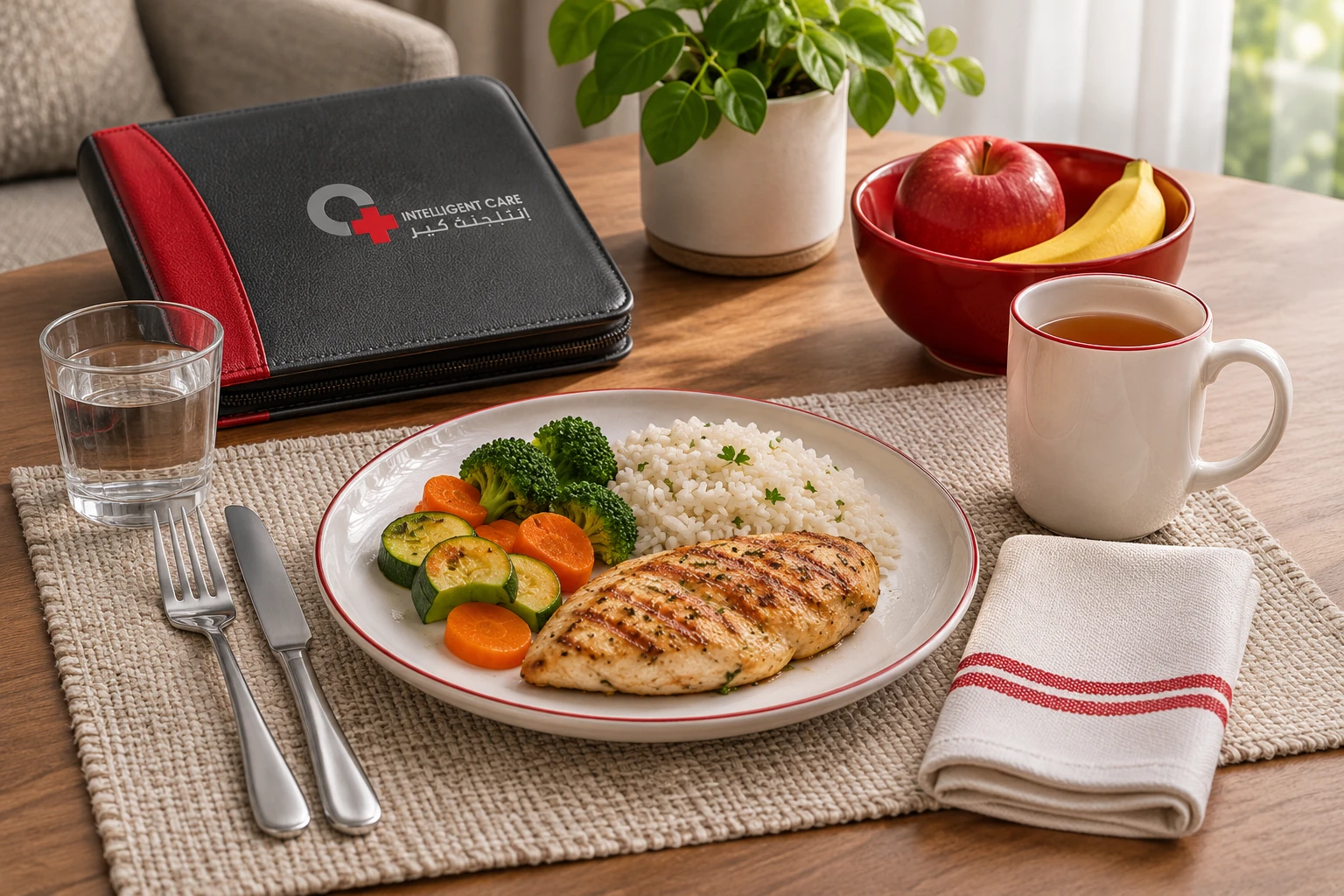
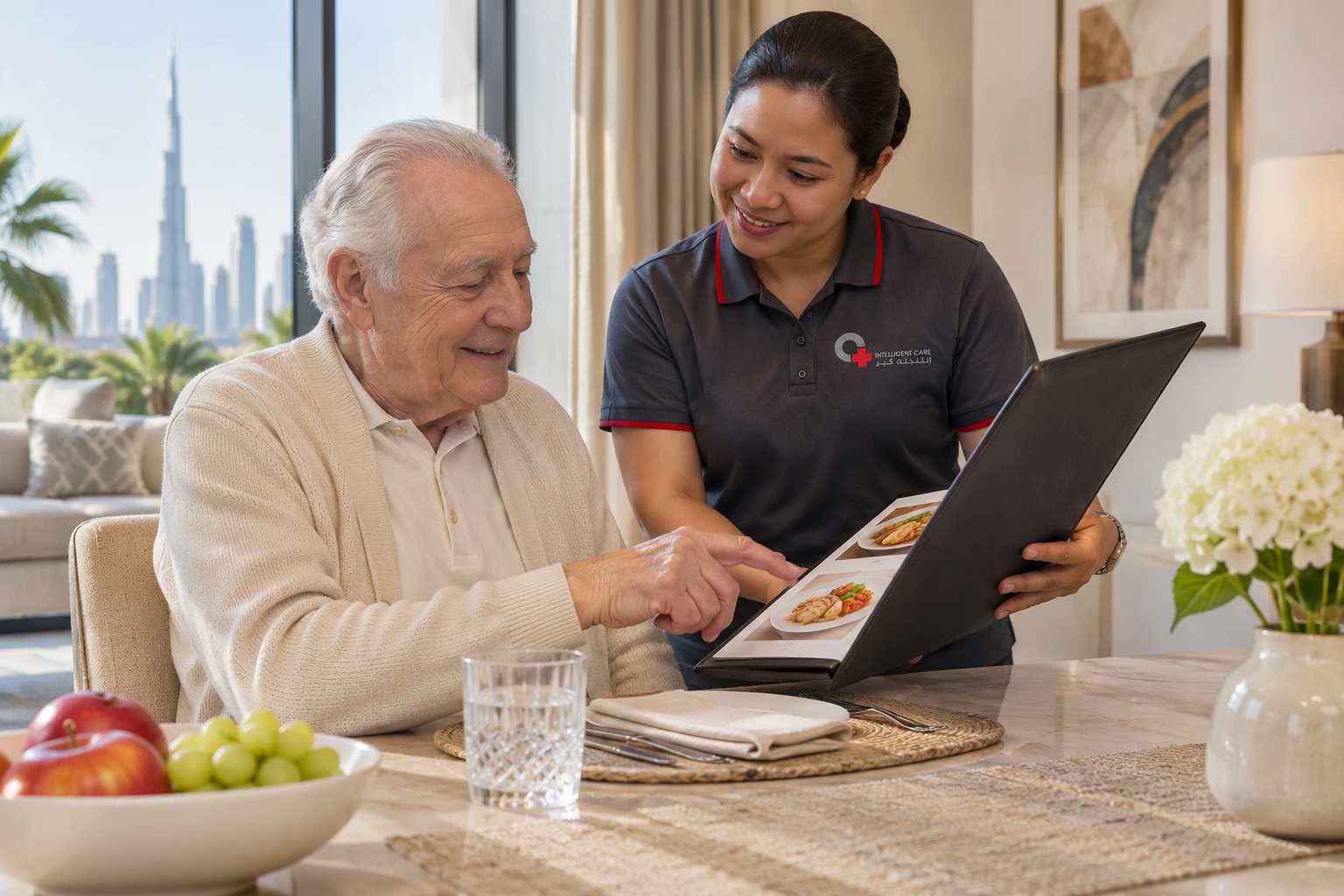
Mealtime support should begin with the person: preferred foods, cultural habits, usual timing and the help they actually want. The practical difficulty may be reaching the table, opening packaging or managing a busy environment. A useful arrangement addresses that difficulty without taking away the choices the person can still make.
Some concerns require clinical assessment. Unintentional weight loss, reduced intake or difficulty swallowing should not be dismissed as inevitable ageing. A clinician or dietitian may need to assess the cause and plan, while a swallowing specialist may be required for specific difficulties. Practical help can follow the resulting instructions but should not invent them.
The home routine should make responsibilities clear: who organizes food, who assists, which instructions apply and who reviews concerns. A caregiver’s presence does not mean that every diet, supplement or specialized feeding method is included in the service. Keep practical support connected to the person’s current clinical advice.
Read the clinical sourcesSupport for the caregiver
Families can help by sharing preferences and current advice without turning every meal into a test.

Ask what the person would like within the current plan. Support should not become pressure to eat a food they dislike or a public discussion of how much they have consumed.
If a clinician or dietitian changes the plan, update everyone involved. Conflicting advice about restrictions, supplements or textures should be clarified professionally.
Report persistent reduced intake, discomfort or weight change. Keep observations factual and proportionate rather than interpreting one unfinished meal as a diagnosis.
The rhythm of a day
Select the practical priorities or concerns you want to discuss. This is not a nutrition assessment or diet prescription.
Explain foods, timing and cultural preferences that matter to the person. Start with familiar choices rather than replacing the whole routine with a generic healthy menu.
Describe difficulty reaching items, opening packaging or managing the setting. Agree the level of help and what the person wants to do independently.
Share what has changed and over what period. Unexplained weight loss or persistent poor intake needs clinical advice, not only encouragement to finish a meal.
Report coughing, choking, food sticking or another swallowing difficulty. Do not improvise a new texture or feeding method without the appropriate assessment.
Keep allergies, prescribed restrictions and professional advice together. A caregiver follows the agreed plan rather than balancing conflicting diets through guesswork.
Ask whether the person prefers company, a quieter setting or a different pace. The experience of the meal matters alongside the practical task.
Your discussion list
Choose the points you would like to discuss.
The first assessment
A mealtime plan should distinguish practical assistance from a nutrition or swallowing problem.

THE CARE CONVERSATION01—04
Discuss preferences, appetite, comfort and the help they want. Involve them directly instead of deciding a menu only with relatives.
Share weight changes, swallowing difficulty, relevant diagnoses and prescribed instructions. These may require assessment before a standard practical arrangement is suitable.
Clarify food preparation responsibilities, assistance, timing and handovers. Confirm any equipment or special instructions rather than assuming they are included.
Check whether the arrangement is useful and whether concerns persist. The appropriate clinician reviews clinical progress and changes the plan when needed.
Before care arrives
Share what matters for safe and appropriate support before the first mealtime.
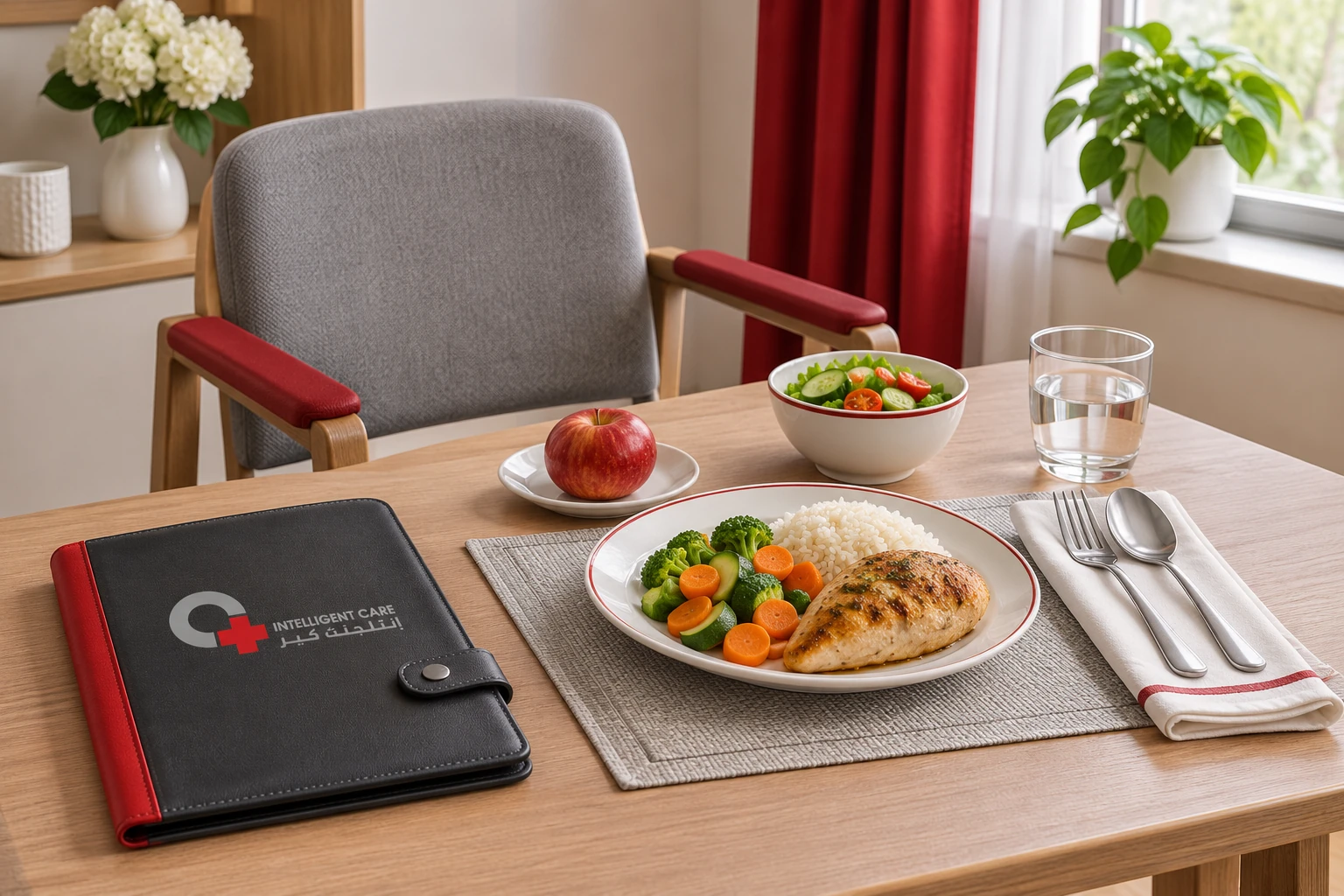
A personal reminder list.
Nothing is sent or saved.
What the care involves
The right role depends on the reason mealtimes are difficult.
| Need | Practical contribution | Clinical boundary |
|---|---|---|
| 01Meal organization | Support the agreed setup, timing and everyday routine. | A caregiver does not prescribe a therapeutic diet. |
| 02Eating assistance | Help at the level agreed for the person and task. | Swallowing difficulties require appropriate assessment and instructions. |
| 03Observations | Share relevant changes in intake or comfort factually. | Diagnosing malnutrition or deciding treatment belongs with qualified professionals. |
| 04Specialized feeding | Clarify the request and route it appropriately. | Tube feeding, supplements or altered textures are not automatically part of a standard caregiver plan. |
The care pathway
The plan follows the person’s preferences and clinical requirements, not a universal meal target.
Understand the practical difficulty and current advice.
Agree the setting, responsibilities and instructions.
Assist at the appropriate level and pace.
Raise persistent concerns and adapt the plan.
Explore a stage to bring it into focus. Every stage stays visible.
People and responsibilities
Age alone does not determine the professional you need. Start with the person’s priorities, the practical help required and any clinical task in the existing plan.
Supports agreed everyday activities and reports relevant changes. A caregiver does not diagnose illness, independently alter medicines or replace a nurse for clinical procedures.
Assesses and delivers nursing care within the agreed clinical scope, instructions and professional responsibilities. Explain specialist procedures or equipment before booking so competence and supplies can be confirmed.
Make the relevant clinical decisions and guide specialist treatment, rehabilitation or nutrition where needed. Home support should connect with that advice rather than replace it by default.
Coordinate practical arrangements and agreed communication. Involve the older person directly, respect their choices and identify who may receive information, rather than assuming every relative has the same authority.
Read the real team profiles and their professional-directory references. Your assigned professional and the scope of care are confirmed through the care arrangement.
Meet our clinical teamContinuity of care
The arrangement should be comfortable, useful and connected to clinical advice when needed.
Ask whether the person feels involved in choices and comfortable with the assistance.
Review the setting, timing and duties if the meal remains difficult to manage.
Ensure persistent poor intake, weight loss or swallowing symptoms reach the appropriate professional.
Keep the current plan visible and remove superseded advice from the handover.
When to seek medical help
Practical assistance cannot rule out a nutrition or swallowing problem.
Immediate medical attention
Prompt clinical assessment
Practical arrangements
Choose nursing or caregiving for the agreed duties, then the short- or long-term period that fits. You can compare the published prices for standard plans and add your chosen period to the care bag. Custom and annual arrangements begin with a care enquiry so the team can clarify the duties, schedule and price.
Most families begin by arranging the support they need directly. The plan should make the professional role, coverage period, duties and additional services clear. A monthly 24-hour arrangement is coordinated coverage, not one person working continuously without rest.
Intelligent Care accepts CDA payment for approved arrangements. Share the approval so the team can confirm its scope before care begins; agreed care normally proceeds on credit and CDA settles later. Approval is not automatic, and CDA is the payer in this pathway, not the clinical regulator.
An earliest-available request remains pending agreement and does not collect payment. Use the custom route for a complex schedule or uncertain clinical scope. Insurance, where relevant, is checked separately against the policy and any authorization requirements.
Your questions
No. A caregiver supports the agreed practical routine and follows current professional instructions. Therapeutic diets, supplements and treatment for malnutrition require the appropriate clinician or dietitian. Explain those needs before arranging ordinary mealtime help.
Discuss the exact assistance needed, the person’s preferences and any swallowing advice. The arrangement should state the appropriate level of help and practical setup. A clinical feeding problem must not be treated as a simple staffing task.
Seek clinical advice about unexplained weight loss or persistent poor intake. Practical support can help with the agreed routine, but it does not diagnose the cause or replace a nutrition assessment. Weight loss should not simply be assumed to be inevitable with age.
Only follow appropriately assessed and documented instructions. Do not improvise a texture change because someone coughs or finds a meal difficult. Swallowing concerns need the relevant professional assessment and a clear plan.
No automatic inclusion is implied. Specialized feeding, supplements, equipment and supplies need explicit clinical and practical confirmation. A standard caregiver period does not become a specialized feeding service because the person has that need.
Yes, preferences and cultural routines are important. Keep them connected to any current allergy or clinical restrictions, and involve the older person directly where possible. A useful plan respects choice as well as the practical task.
Agree the specific observations needed and who will review them. Keep the record factual and proportionate. A log without a responsible reviewer does not resolve a concern about nutrition, swallowing or health.
Choose the professional role and period once duties are clear. Standard plans use your care bag; complex needs use a custom enquiry. CDA-supported arrangements require prior approval, with agreed care on credit and later settlement; coverage is not automatic.
Expertise with a name
Explore the named clinical profiles, their professional roles and their Dubai Health Authority directory records.
Author assignment
General Practitioner
Dr Toqa Ibrahim is a DHA-licensed General Practitioner with Alpha Intelligent Care Home Healthcare Center. Her clinical profile brings the general-practice perspective into our approach to care at home.

Review assignment
Specialist Clinical Pathology
Dr Nirupama Sabhapathy is a DHA-licensed Specialist in Clinical Pathology at Intel Lab. Her published Intel Lab profile describes more than 25 years in medicine and her role as Laboratory Director.
Professional registration describes each clinician’s role. The clinical assessment and the person responsible for your care are confirmed separately.
More care guides



The wider picture
Explore related support, or speak to us about combining services into one plan.
About this guide
General information supports the care conversation; your own assessment determines the plan. Company service information and independent clinical guidance are listed separately below.
Care that comes to you
Across Dubai.
Abu Dhabi — coming soon.