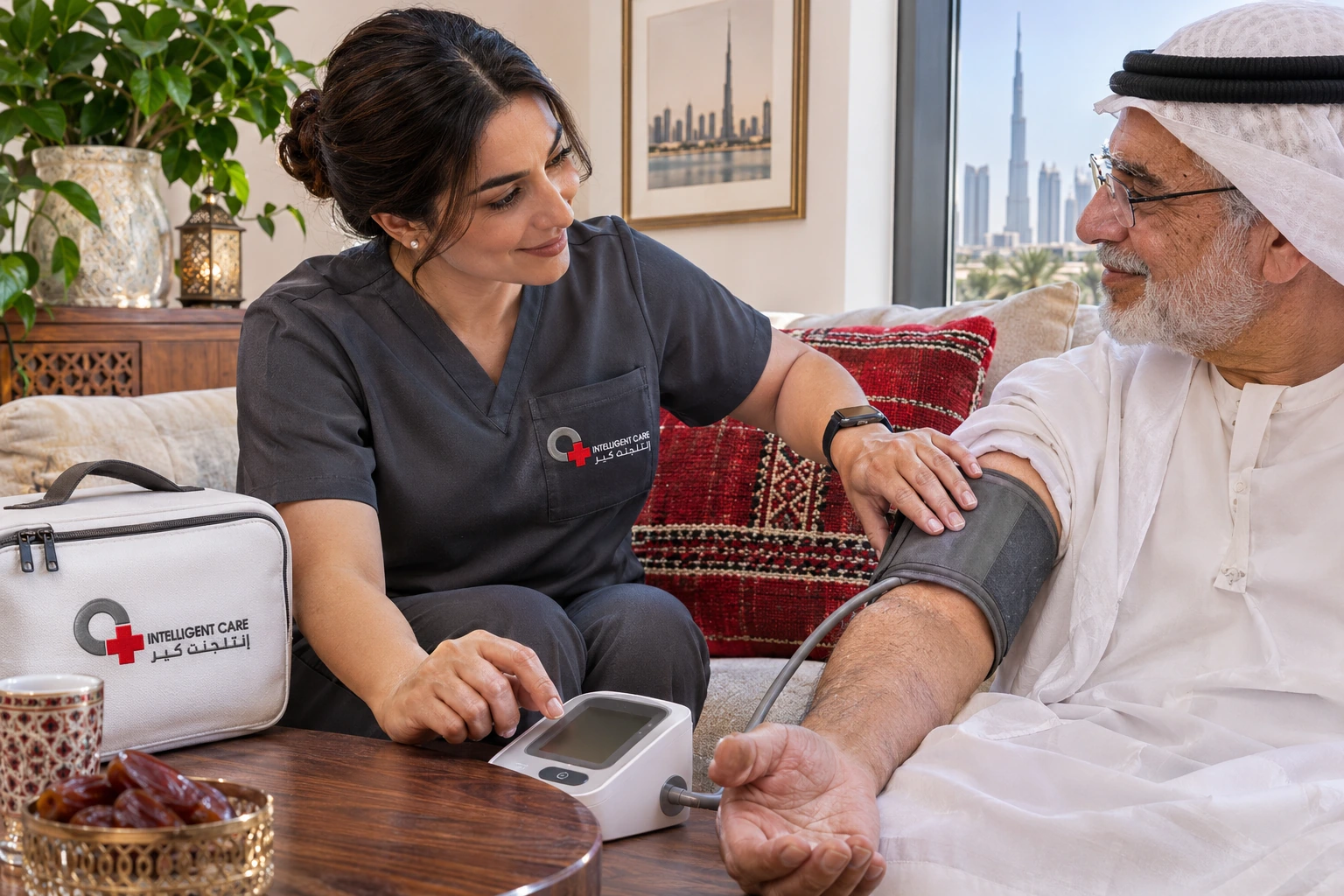
Share useful knowledge
Explain preferences, reassuring routines and approaches that cause distress. A concise person-centred record can help new caregivers provide more consistent support.

Dementia support · Dubai
Familiar surroundings, meaningful routines and respectful support can shape day-to-day life with dementia. Start by telling us about the person: what matters to them, what they can still do and where the family needs more help.
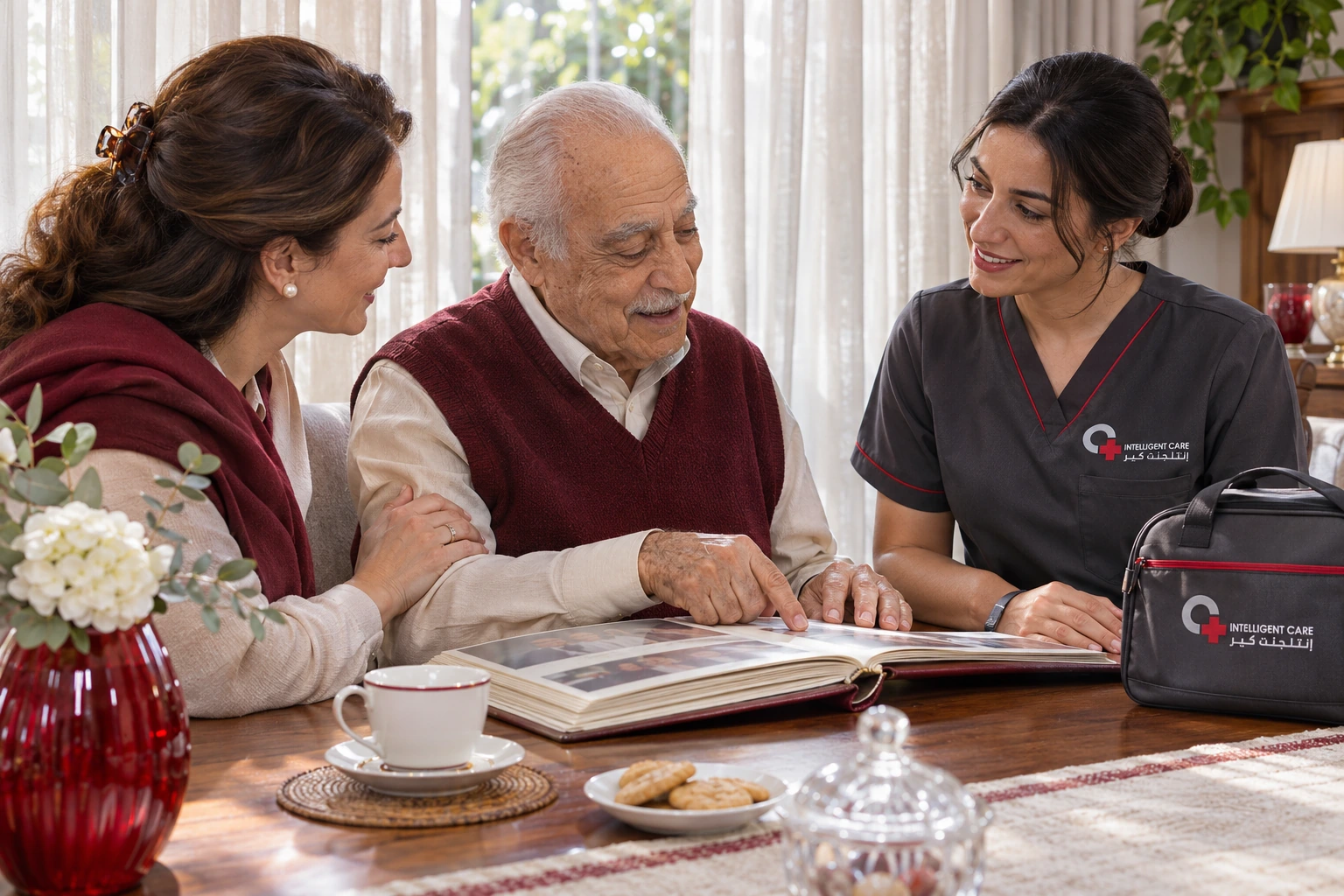
Person-centred support at home
Discuss daily living, supervision, nursing needs and the periods when extra help is required. The care team uses that conversation to clarify the appropriate role, tasks and schedule. Clinical needs and practical support should each be named in the plan.
Understand the care
Dementia describes a group of symptoms linked to a decline in brain function. It can affect memory, thinking, communication, mood and everyday abilities. Alzheimer’s disease is one cause; dementia is not a normal part of ageing.
People experience these changes differently. Someone may need reminders for one task and hands-on help for another while continuing to enjoy familiar activities and relationships. A care plan should reflect current abilities, preferences and dignity rather than assume that the diagnosis determines every need.
Support at home is organized around the person’s usual routine and the family’s capacity. Medical review remains important for new symptoms, medicine concerns and changes in health. A sudden change is different from a gradual pattern and should be assessed urgently.
Read the clinical sourcesSupport for the caregiver
Caring for someone with dementia can be demanding. A sustainable arrangement takes the caregiver’s health, time and limits seriously.

Explain preferences, reassuring routines and approaches that cause distress. A concise person-centred record can help new caregivers provide more consistent support.
Identify who is available, where there are gaps and what respite or additional support would help. Do not build the plan around one person being available indefinitely.
Include the person wherever possible and discuss future preferences while they can express them. Ask the clinical team about decision-making capacity, consent and who should be involved; a dementia diagnosis does not by itself settle these questions.
The rhythm of a day
Choose the areas that need discussion. Every topic remains visible; there is no assessment score or care-level calculator.
Describe help needed with washing, dressing and choosing clothes. Ask how privacy, familiar preferences and independence can be preserved during personal care.
Explain usual preferences and any difficulty remembering meals, preparing food or eating. Swallowing concerns or significant changes need appropriate clinical assessment.
Share music, conversation, hobbies or household tasks the person enjoys. Support should make participation possible at an appropriate level rather than fill time without purpose.
Discuss falls, mobility aids, stairs, changes in confidence and any episodes of getting lost or leaving home unexpectedly. Agree individualized supervision and a response plan with the team while preserving the person’s dignity and freedom.
Tell the team about the usual sleep pattern, distress or periods when supervision is difficult. A new or sudden change may have a medical cause that needs assessment.
Clarify who manages medicines, who can perform any clinical task and how appointments are organized. Medication changes remain with the appropriate prescriber.
Your discussion list
Choose the points you would like to discuss.
The first assessment
A clear baseline helps the team plan respectful support and recognize changes that need clinical attention.

THE CLINICAL CONVERSATION01—04
Include the person in the discussion as far as possible. Ask what they value, how they prefer to be addressed and what support they welcome.
Describe everyday function, language, hearing, vision and approaches that help communication. Share what is normal for this person.
Bring current diagnoses, medicines, clinician instructions and any nursing or mobility needs into the conversation.
Identify the tasks, hours and handover information needed, along with the main contact and a clear escalation route.
Before care arrives
Discuss changes with the person and the care team. Sudden unnecessary changes to familiar surroundings may be confusing; any adaptation should serve a clear need.
A personal reminder list.
Nothing is sent or saved.
What the care involves
Dementia support combines practical help, communication and observation. Clinical tasks require the appropriately qualified professional.
| Support area | What a plan should address | What to agree |
|---|---|---|
| 01Personal care | Help with daily tasks while respecting privacy and existing abilities. | Which tasks need reminders, supervision or direct assistance? |
| 02Communication | Clear, calm conversations that allow time and respond to the person’s preferences. | Which language and familiar approaches work well? |
| 03Routine and engagement | Meaningful activities and predictable arrangements based on the person’s life. | What should be kept familiar, and where is flexibility needed? |
| 04Health observation | Notice and report changes from the usual state rather than diagnosing them at home. | Who should be contacted for a new concern? |
| 05Clinical nursing | Specific nursing tasks, when required, alongside practical support. | Which professional and instructions are needed for each task? |
The care pathway
There is no universal timetable for dementia care. Review the arrangement when abilities, health or family circumstances change.
Understand preferences, usual abilities and existing support.
Clarify tasks, responsibilities and practical arrangements.
Share relevant changes and what is or is not working.
Reassess clinical needs and the family’s capacity.
Explore a stage to bring it into focus. Every stage stays visible.
People and responsibilities
A clear division of responsibility protects continuity and avoids asking a caregiver to make clinical decisions outside their role.
Provides the agreed daily-living support, observes relevant changes and follows the documented plan.
Carries out agreed clinical nursing tasks where required and contributes relevant observations.
Reviews dementia-related health concerns, new symptoms and medicine decisions.
Share the person’s preferences, organize practical arrangements and keep the agreed communication route clear.
Read the real team profiles and their professional-directory references. Your assigned professional and the scope of care are confirmed through the care arrangement.
Meet our clinical teamContinuity of care
Review conversations should connect observations to the individual baseline, not reduce the person to a checklist.
Which familiar activities remain enjoyable, and what support makes them easier?
Are there signs of pain, distress, poor sleep or a health concern that need clinical review?
Does the current help still match personal-care, meal, mobility and supervision needs?
Is the arrangement sustainable for the family, and are breaks or additional professional input needed?
When to seek medical help
Do not assume a new problem is caused by dementia. Acute illness, medicines and other conditions can change a person’s awareness or function.
Immediate medical attention
Prompt clinical assessment
Practical arrangements
Distinguish personal support from nursing and other clinical care. Confirm the professional role and specific responsibilities rather than relying on a broad package name.
Discuss the needed hours, handover approach and family contact. Staffing, timing and continuity arrangements must be confirmed; this page does not promise a named permanent caregiver.
Coverage varies by policy and type of care. Ask about documentation and consider the wider network of clinical, family and community support appropriate to the person.
Your questions
No. Memory or thinking difficulties can have different causes and need clinical assessment. This service example supports people’s care needs; it does not diagnose dementia.
Seek immediate medical assessment. A sudden change is different from the person’s usual dementia symptoms and may indicate an acute problem. Do not wait for a routine home-support booking.
The person should be included as far as possible and supported to express preferences. Ask the clinical team about consent and decision-making concerns rather than assuming the diagnosis removes the person’s role.
Their roles and qualifications differ. Daily-living support and clinical nursing tasks should be identified separately so the appropriate professional is assigned and responsibilities are clear.
Discuss the tasks, hours and level of supervision required. The team can consider an appropriate support arrangement and confirm availability and scope; no continuous staffing promise is made here.
Medication changes require the appropriate prescriber. Clarify who is authorized and qualified to perform any medicine-related task in the care plan, and report concerns to the treating clinician.
Start with specific needs and appropriate advice. Familiarity matters, and changes should have a clear purpose. Complex mobility or safety concerns may benefit from a professional assessment.
Review changes in daily abilities, health, supervision needs and caregiver capacity. A planned review can adapt the arrangement; sudden deterioration needs urgent medical assessment rather than a routine increase in hours.
The wider picture
Explore related support, or speak to us about combining services into one plan.
About this guide
General information supports the care conversation; your own assessment determines the plan. Company service information and independent clinical guidance are listed separately below.
Care that comes to you
Across Dubai.
Abu Dhabi — coming soon.