01Confidence
Learning a task
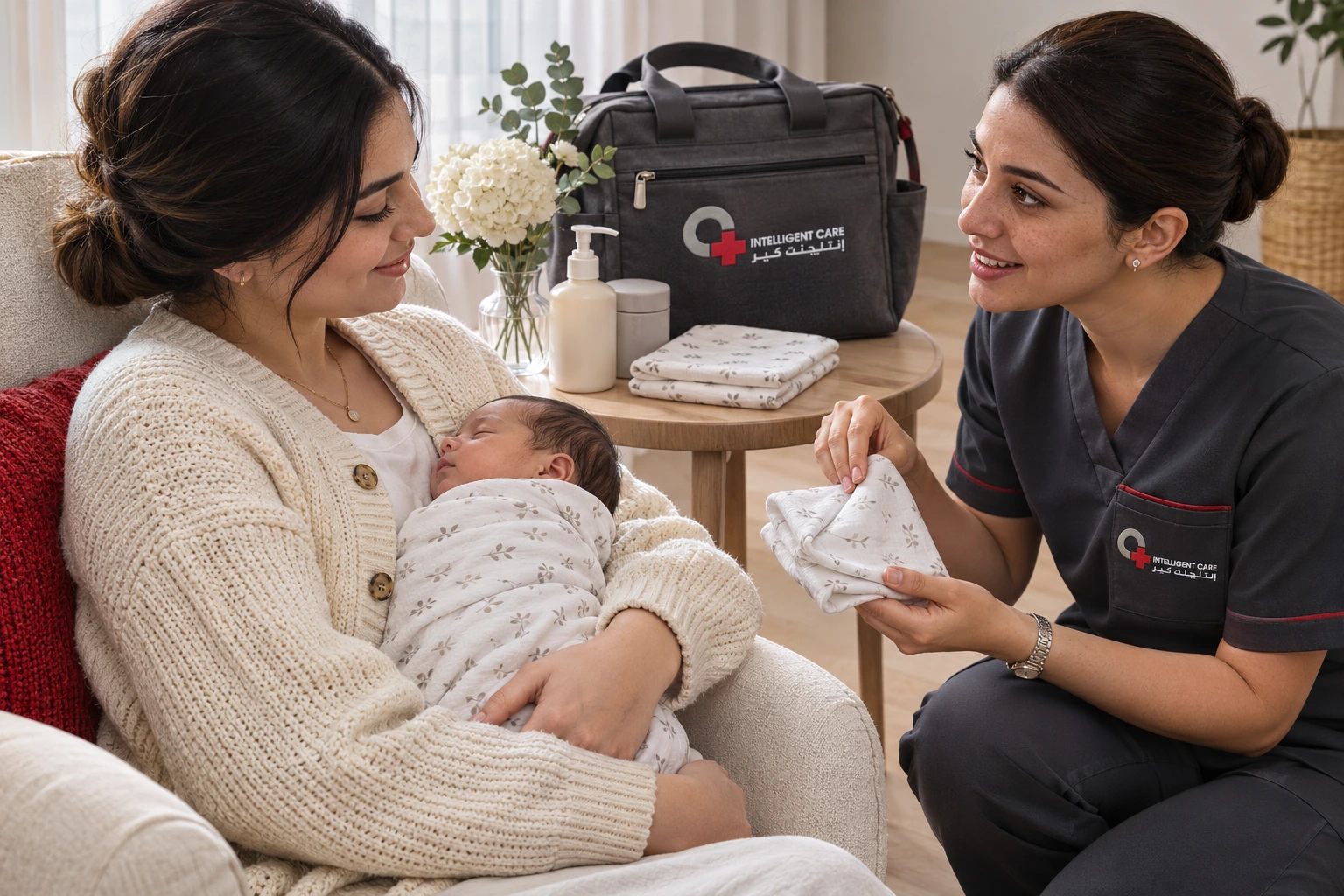
Choose a practical baby-care task you want to become more familiar with. Agree whether you want to observe, practise with support or ask someone to take over for a period.

New-parent guidance · Dubai
Becoming a parent brings practical questions that do not always arrive during a clinic appointment. Caregiver support can help you work through everyday baby-care tasks, organize a shared routine and make room for your own questions, without replacing clinical advice.

 Clinical author assignmentDr Toqa IbrahimTwo clinical perspectivesProfiles & DHA directory links Guidance with sourcesExplore the references
Practical guidance for new parents
You do not need to arrive with a complete plan. Tell us which part of the day feels unfamiliar, where you would welcome practical help and what you prefer to keep doing yourself. We agree caregiver duties around those priorities and keep medical questions connected to the appropriate clinician.
Understand the care

New parents are often balancing unfamiliar tasks with recovery, interrupted sleep and advice from many directions. Practical support should make that experience easier to navigate, not add another set of rules or compare the family with an idealized routine. Begin with the tasks and questions that matter to you.
A caregiver can help organize the environment, demonstrate agreed everyday tasks and share responsibility while a parent practises. You decide how involved you want to be and which activities you prefer to keep for yourself. The aim is a workable partnership, with enough clarity that the next adult knows what has happened.
Some questions need more than practical experience. Feeding pain, illness, growth, development or emotional-health concerns should reach the relevant healthcare professional. Good everyday support keeps those questions visible and helps the family prepare for the conversation rather than offering an unsupported answer.
Read the clinical sourcesTwo care perspectives
Choose the everyday priorities you want to discuss. Your selections create a care brief, not a score for your parenting.
Choose a practical baby-care task you want to become more familiar with. Agree whether you want to observe, practise with support or ask someone to take over for a period.
Explain who is at home and where responsibilities become unclear. A simple handover can be more useful than a strict schedule that does not fit the baby or household.
Bring the current instructions from your clinician and identify where other suggestions conflict. Practical support should not quietly replace medical advice with personal preference.
Identify a practical gap for eating, resting or attending to your own needs while another responsible adult covers the agreed baby-care duties.
Keep a short list of the concerns that need professional assessment. A caregiver can help organize the conversation without diagnosing the parent or baby.
Discuss visitors, work commitments and relatives leaving or arriving. The support arrangement can be reviewed as the household’s actual availability changes.
Your discussion list
Choose the points you would like to discuss.
The first assessment
The most useful plan begins with the family’s priorities and a clear understanding of what the caregiver role includes.

THE CARE CONVERSATION01—04
Tell us what happens during the part of the day you want help with. A concrete example makes it easier to agree useful duties than a broad request to fix the whole routine.
Decide whether you want practical help, a demonstration, shared responsibility or time away from a task. Clinical concerns are identified separately and directed to the appropriate professional.
Set out duties, hours, family involvement and handover details. Explain privacy and communication preferences so support feels comfortable from the start.
After trying the arrangement, discuss what helps and what does not. The plan can change as confidence grows or new practical needs appear; there is no universal timetable to meet.
What the care involves
Practical guidance should be clear, calm and relevant to the actual home routine.
| Priority | Practical approach | Keep in mind |
|---|---|---|
| 01An unfamiliar task | Work through an agreed everyday task with time for questions. | The parent sets the pace; clinical procedures need the appropriate professional. |
| 02A busy handover | Use a short shared note about the facts the next adult needs. | Avoid several competing records or a constant stream of unnecessary messages. |
| 03Conflicting advice | Keep current clinical instructions accessible and list questions for clarification. | A caregiver does not override a prescription, feeding plan or medical restriction. |
| 04Rest and recovery | Share agreed practical responsibilities so the parent can attend to their own needs. | Support is not a treatment for a physical or mental health condition. |
Care around the person
The arrangement should respect the parent receiving support as well as the other adults involved.

Ask which tasks the parent wants help with and which they want to keep. Taking over without discussion can make a capable parent feel excluded rather than supported.
Explain what information the next adult needs and who is responsible now. This matters more than creating a complicated schedule that everyone interprets differently.
Partners may feel confident about different tasks, and relatives may have different expectations. Keep the current clinical guidance and the parents’ choices central when agreeing the practical routine.
Before care arrives
There is no need to make the home or the routine look perfect before asking for help.

A personal reminder list.
Nothing is sent or saved.
The care pathway
Confidence is personal. These are practical steps, not milestones a parent is expected to reach on a set date.
Name the task or moment that feels unclear.
Try the agreed task with support nearby.
Make responsibilities and handovers visible.
Keep what helps and change what does not.
Explore a stage to bring it into focus. Every stage stays visible.
People and responsibilities
Your family chooses the support it needs. The professional responsible for a clinical decision must be distinct from the person helping with everyday care.
Provides the agreed practical support, follows the family’s care instructions and shares relevant changes. The caregiver role does not include diagnosis, prescribing, newborn medical examination or specialist nursing procedures.
Clarifies duties, location, hours and service arrangements. Tell the team about medical needs early so a practical-care booking is not mistaken for a clinical appointment.
Retains responsibility for clinical assessment, treatment and follow-up. Keep these appointments and share the relevant advice with those helping at home.
Explain preferences, consent to information sharing and tell the team when the arrangement needs to change. A useful care plan respects how your household actually works.
Read the real team profiles and their professional-directory references. Your assigned professional and the scope of care are confirmed through the care arrangement.
Meet our clinical teamContinuity of care
A practical review is about your experience, not whether the family matches a standard routine.
Identify the task or handover that now works better and what made the difference.
Name the remaining question. Decide whether it needs another practical discussion or qualified clinical advice.
Adjust the duties or period of support around actual gaps rather than continuing every task automatically.
Make room for the parents’ physical and emotional needs. Persistent or concerning symptoms deserve professional support, not only more practical advice.
When to seek medical help
A new-parent support visit should never delay appropriate care for a parent or baby who may be unwell.
Immediate medical attention
Prompt clinical assessment
Practical arrangements
Standard caregiver plans use the same published prices and booking process throughout Intelligent Care. Hourly support has a three-hour minimum; day and longer arrangements use the stated length of care. Select the appropriate period rather than treating one booking as unlimited care.
Discuss who needs support, the baby’s age, the duties and any existing clinical instructions. A caregiver booking is not an obstetric, paediatric, lactation-specialist or nursing consultation. Separate clinical care can be discussed when required.
Choose a schedule or request the earliest available arrangement. An earliest-available request remains pending agreement with the care team and takes no payment. It must not be used for an urgent medical problem.
Use the custom-care enquiry for a schedule or combination that does not fit a standard plan. Explain the intended coverage and family priorities; the team confirms an appropriate arrangement before care starts.
Your questions
No. Start with a concrete moment that feels difficult or unfamiliar. The team can help clarify practical duties and the type of support you want. A clinical concern will need the appropriate professional route rather than being treated as a household task.
No single routine suits every baby or family. Practical support should fit your circumstances and current clinical advice. The aim is clear responsibilities and useful help, not a rigid timetable or a comparison with another household.
Yes, discuss who you want involved. Shared understanding can make handovers easier, but the arrangement should respect the preferences and privacy of the parent receiving support. Agree who receives updates rather than assuming every relative is included.
Explain that preference at the first contact. Practical support can be arranged around learning and shared responsibility, within the caregiver’s role. Clinical procedures or specialist feeding techniques require the appropriate qualified professional.
Keep the current professional instructions available and ask the responsible clinician to clarify uncertainty. A caregiver should not resolve a clinical conflict by choosing a personal preference or relying on experience from another family.
No. A caregiver can provide practical support and a listening presence, but counselling, diagnosis and treatment are separate professional services. If emotional symptoms are persistent, worsening or concerning, seek qualified help.
The practical arrangement can be reviewed as needs change. Discuss which duties remain useful and how responsibilities will be handed back. No particular date for independence or confidence is promised.
Once the duties are clear, standard caregiver plans use your care bag. A custom enquiry is appropriate for an unusual schedule or uncertain scope. Appointment requests remain subject to agreement with the team.
Expertise with a name
Explore the named clinical profiles, their professional roles and their Dubai Health Authority directory records.
Author assignment
General Practitioner
Dr Toqa Ibrahim is a DHA-licensed General Practitioner with Alpha Intelligent Care Home Healthcare Center. Her clinical profile brings the general-practice perspective into our approach to care at home.

Review assignment
Specialist Clinical Pathology
Dr Nirupama Sabhapathy is a DHA-licensed Specialist in Clinical Pathology at Intel Lab. Her published Intel Lab profile describes more than 25 years in medicine and her role as Laboratory Director.
Professional registration describes each clinician’s role. The clinical assessment and the person responsible for your care are confirmed separately.
More care guides


The wider picture
Explore related support, or speak to us about combining services into one plan.
About this guide
General information supports the care conversation; your own assessment determines the plan. Company service information and independent clinical guidance are listed separately below.
Care that comes to you
Across Dubai.
Abu Dhabi — coming soon.