
Arrange your collection
Choose your location, add the test to your care bag and select a time. If you are booking for someone else, assign the test to them in checkout.
Choose collection location
Biochemistry · Individual laboratory test
Blood sodium reflects the balance between sodium and water. The result is used to investigate changes in fluid regulation.
 Clinical authorDr Nirupama SabhapathySpecialist Clinical Pathology

Understanding the test
Also called Blood Sodium Electrolyte
Sodium may be requested after fluid loss, with kidney or heart conditions, or during treatment affecting water balance. Changes in the amount of body water are often central.
A clinician may monitor sodium during diuretic treatment.
Symptoms after vomiting or changes in fluid intake may prompt an electrolyte assessment.
Before your sample
No fasting is usually needed. Keep to your usual or prescribed fluid intake and tell the team about vomiting, diarrhoea, intravenous fluids or diuretic use.
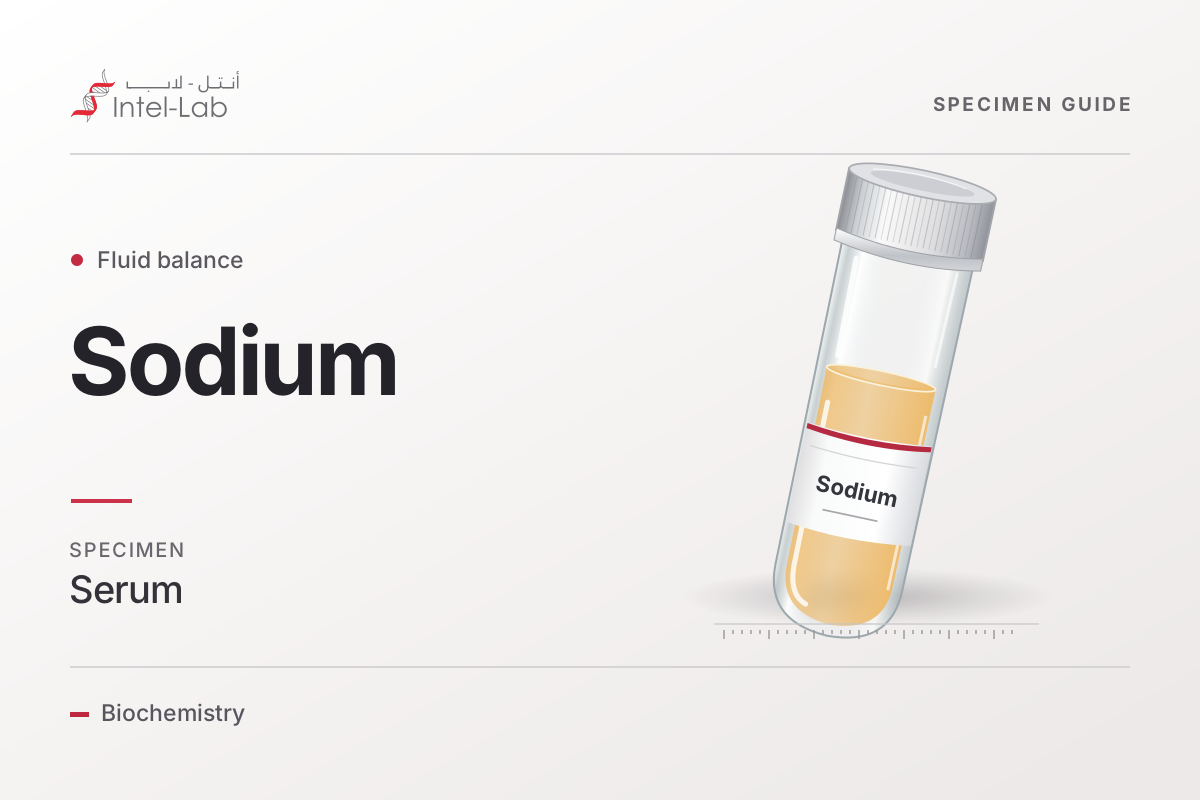
A clinician takes a small sample of blood from a vein. The laboratory uses serum, the liquid separated from the blood after it clots.
Smart Report
24 hoursLaboratory turnaround
 Result guide
A clinician interprets the result with fluid history, medicines and other electrolytes. The level cannot identify by itself whether a person needs more or less fluid.
From sample to follow-up
Choose your location, add the test to your care bag and select a time. If you are booking for someone else, assign the test to them in checkout.
Choose collection locationLook for Sodium in your report. Use the sample type and collection time when comparing it with an earlier report.
Explore Smart Report
Tell the clinician about recent fluid losses or changes in medicines instead of adjusting salt or water intake from the number alone.
Health packages
Compare the other tests in each package before choosing.
Clinical expertise

Patient questions
It is a concentration, so changes in water balance can change the reading. Your clinician considers fluid loss, medicines and other results before suggesting an explanation.
Yes. Diuretics are the best known, but antidepressants, some anti-epileptic and antipsychotic medicines can also lower sodium, often by making the kidney hold on to water. A recent change in dose matters too. Bring a complete medicine list to the test; if the result is abnormal, your doctor decides whether any medicine needs reviewing.
Sudden confusion, a seizure or loss of consciousness needs emergency assessment. When sodium falls rapidly, it can affect the brain. Treatment depends on symptoms and how quickly the level changed. Do not try to correct the number yourself by drinking extra water or taking salt.
KEEP EXPLORING
Open a package to see exactly which tests it includes.

Measures sodium, potassium and chloride: the electrolytes that regulate hydration, nerve signalling and acid-base balance. No fasting required.

A whole-body screen of blood, urine and stool with kidney, liver, lipid, iron, diabetes and vitamin markers, plus thyroid function and a full…
A comprehensive assessment adding reproductive hormone profiling to our executive panel for complete clarity.

An in-depth cardiovascular risk panel combining advanced cardiac markers with a full general health screen.
Choosing for a particular need?
We can help you read the options.
Your next step
Written by Dr Nirupama Sabhapathy, Specialist Clinical Pathology. Medically reviewed by Dr Joyce Jose, Specialist Clinical Pathology, on .
Catalogue information and AED price checked on 2 November 2026. Clinical suitability, preparation, collection arrangements and turnaround are confirmed for your selected test.