
Arrange your collection
Choose your location, add the test to your care bag and select a time. If you are booking for someone else, assign the test to them in checkout.
Choose collection location
Biochemistry · Individual laboratory test
Potassium supports the electrical activity of muscles and the heart. Changes in the blood level can need prompt attention.
 Clinical authorDr Nirupama SabhapathySpecialist Clinical Pathology

Understanding the test
Also called Blood Potassium Electrolyte
Potassium is often monitored when kidney function changes or a person takes medicines that influence potassium balance. An unexpected result can be clinically important.
Reduced excretion can influence the amount of potassium in blood.
The prescriber may check potassium after starting or changing certain medicines.
Before your sample
No fast is needed for potassium alone. Relax your hand during the draw and avoid repeatedly making a fist, which can raise the measured value. Report potassium-containing supplements and medicines.
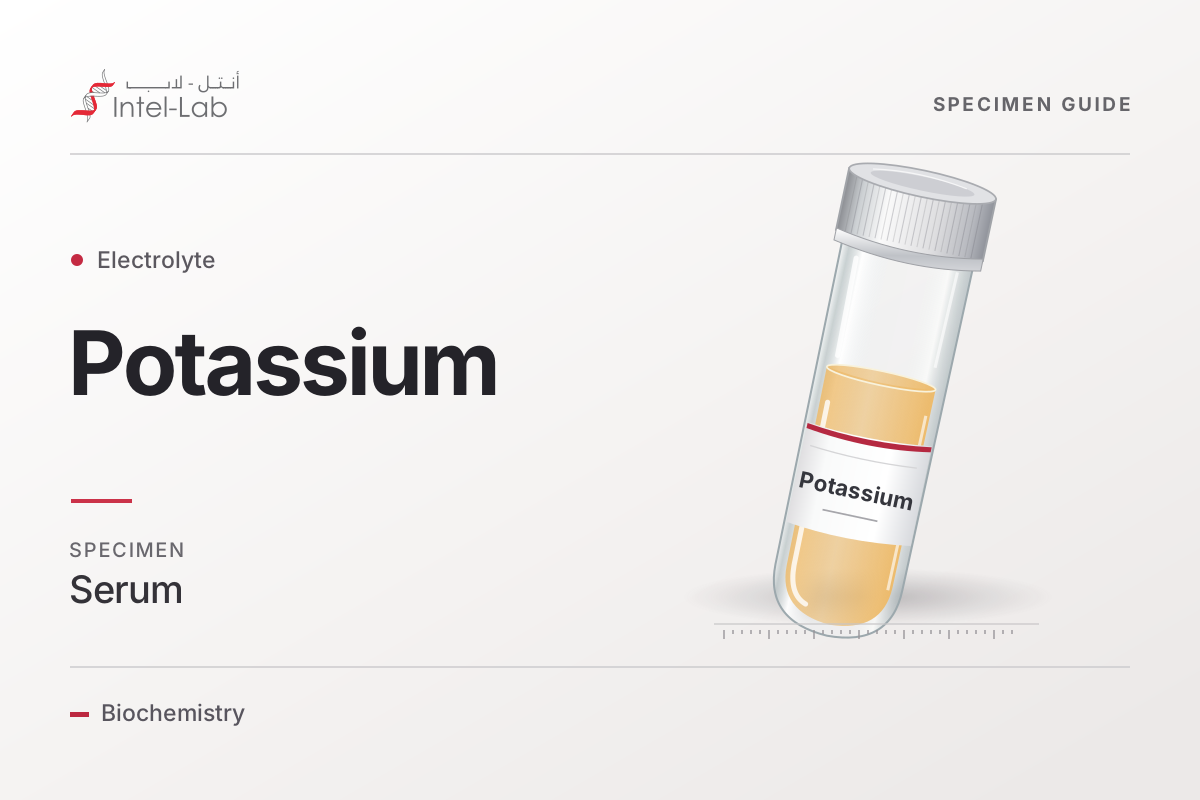
A clinician takes a small sample of blood from a vein. The laboratory uses serum, the liquid separated from the blood after it clots.
Smart Report
24 hoursLaboratory turnaround
 Result guide
Very low or high concentrations can affect the heart. If the laboratory or care team advises urgent review, follow that advice even when you feel well.
From sample to follow-up
Choose your location, add the test to your care bag and select a time. If you are booking for someone else, assign the test to them in checkout.
Choose collection locationLook for Potassium in your report. Use the sample type and collection time when comparing it with an earlier report.
Explore Smart Report
Follow any urgent contact instructions on your result. For a planned review, bring the medication list and the kidney results from the same draw.
Health packages
Compare the other tests in each package before choosing.
Clinical expertise

Patient questions
Potassium can escape from blood cells if they are damaged during collection. Follow any urgent advice about an abnormal value while the clinician decides whether it needs confirming.
The kidney needs magnesium in order to retain potassium properly. If magnesium is low, potassium keeps escaping in the urine and replacement has little lasting effect, so the two are usually corrected together rather than one after the other.
Thiazide or loop diuretics are among the most frequent causes. Prolonged vomiting, diarrhoea or laxative overuse, a low magnesium, and excess aldosterone from an adrenal cause or some forms of high blood pressure also lower it. Poor intake followed by refeeding can drop it quickly as potassium moves back into cells.
Check the ingredients for potassium chloride. It replaces some of the sodium in many salt substitutes and can add potassium to your diet. If your potassium is high or you have been advised to limit it, ask your clinician before using one.
KEEP EXPLORING
Open a package to see exactly which tests it includes.

Measures sodium, potassium and chloride: the electrolytes that regulate hydration, nerve signalling and acid-base balance. No fasting required.

A whole-body screen of blood, urine and stool with kidney, liver, lipid, iron, diabetes and vitamin markers, plus thyroid function and a full…

An extensive panel for active individuals, covering inflammation, iron, metabolic, hormonal, thyroid and nutritional status.
A comprehensive assessment adding reproductive hormone profiling to our executive panel for complete clarity.
Choosing for a particular need?
We can help you read the options.
Your next step
Written by Dr Nirupama Sabhapathy, Specialist Clinical Pathology. Medically reviewed by Dr Joyce Jose, Specialist Clinical Pathology, on .
Catalogue information and AED price checked on 2 November 2026. Clinical suitability, preparation, collection arrangements and turnaround are confirmed for your selected test.