Arrange your collection
Choose your location, add the test to your care bag and select a time. If you are booking for someone else, assign the test to them in checkout.
Choose collection location
Biochemistry · Individual laboratory test
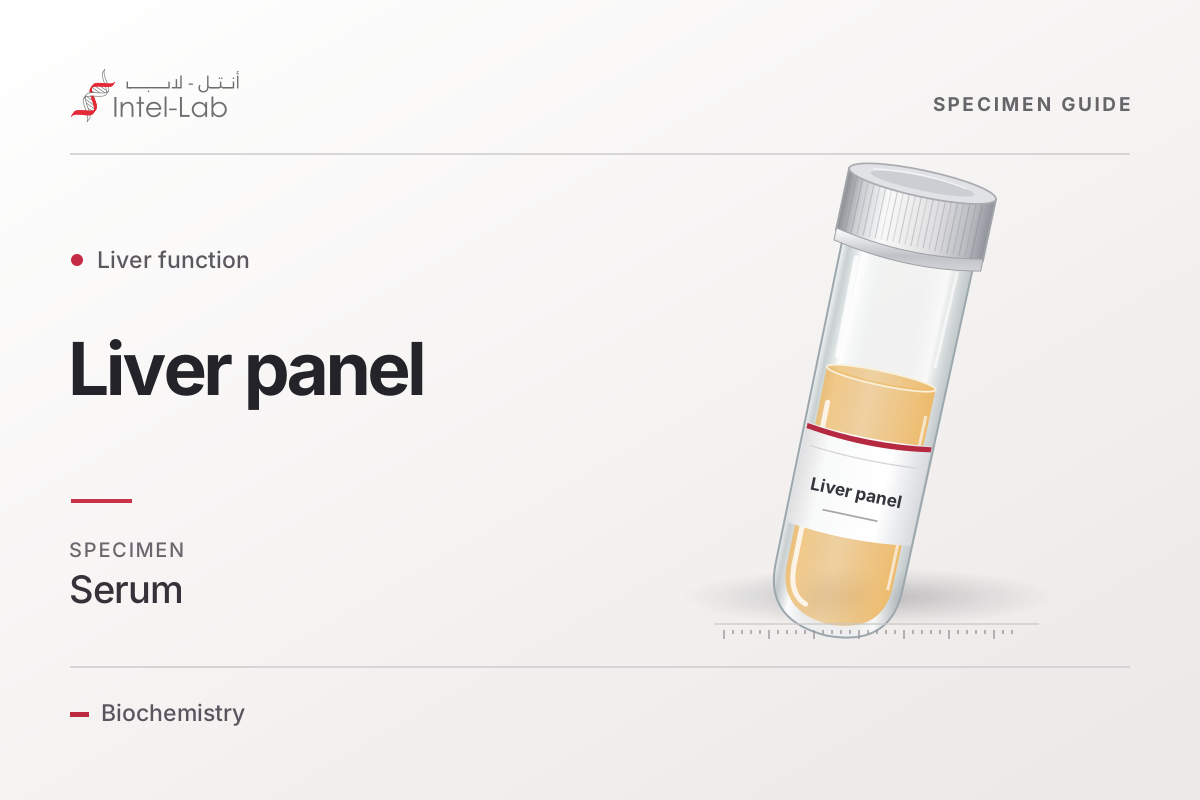
A liver panel looks at enzymes, pigments and proteins together. Different combinations can point the clinician toward liver cell injury, bile flow or protein production.
 Clinical authorDr Nirupama SabhapathySpecialist Clinical Pathology
Understanding the test
Also called Complete Liver Panel
This panel is useful when following a known liver condition, investigating jaundice or checking the effect of a medicine. Each component addresses a different aspect of the question.
A full profile helps indicate whether other liver-related measurements have changed too.
Some medicines require periodic clinical and laboratory review, with the interval set by the prescriber.
Inside this test
Before your sample
This panel alone usually needs no fast. Tell the team about recent strenuous training, alcohol, new medicines and herbal supplements. Follow any separate fasting instruction for accompanying lipid or glucose tests.
A clinician takes a small sample of blood from a vein. The laboratory uses serum, the liquid separated from the blood after it clots.
Smart Report
24 hoursLaboratory turnaround
 Result guide
A predominantly enzyme, bilirubin or protein change suggests different lines of enquiry. A panel can guide further testing but cannot by itself identify the cause of every abnormality.
From sample to follow-up
Choose your location, add the test to your care bag and select a time. If you are booking for someone else, assign the test to them in checkout.
Choose collection locationLook for Liver Function Test (LFT) in your report. Use the sample type and collection time when comparing it with an earlier report.
Explore Smart Report
With your clinician, identify whether the main change lies in the enzymes, the bilirubin or the protein measurements before deciding on a next test.
Clinical expertise

Patient questions
It helps establish a pattern. Medicines, recent illness, symptoms and sometimes imaging or additional tests are needed to identify a cause.
GGT is sensitive but not specific: it responds to alcohol, to several medicines and to fatty liver, and it can be mildly raised without any serious problem. Its main use is as a companion to ALP, since a raised ALP with an ordinary GGT usually means the ALP is coming from bone rather than liver.
That combination is described as a hepatocellular pattern and points to irritation of the liver cells themselves, commonly from fatty liver, a viral infection, alcohol or a medicine. It steers the next steps towards viral testing, a medication review and an ultrasound rather than towards the bile ducts.
KEEP EXPLORING
Open a package to see exactly which tests it includes.

Ten liver markers from one blood sample: enzymes (ALT, AST, ALP, GGT), bilirubin and liver proteins.

Blood count, liver, kidney, cholesterol, blood sugar and urine tests: the essentials in one visit.
A complete blood count with liver enzymes, cholesterol, kidney markers and fasting blood sugar from one blood sample.

A broad whole-body screen covering blood, urine and stool with kidney, liver, lipid, iron, diabetes and vitamin markers.
Choosing for a particular need?
We can help you read the options.
Your next step
Written by Dr Nirupama Sabhapathy, Specialist Clinical Pathology. Medically reviewed by Dr Joyce Jose, Specialist Clinical Pathology, on .
Catalogue information and AED price checked on 2 November 2026. Clinical suitability, preparation, collection arrangements and turnaround are confirmed for your selected test.