Arrange your collection
Choose your location, add the test to your care bag and select a time. If you are booking for someone else, assign the test to them in checkout.
Choose collection location
Biochemistry · Individual laboratory test
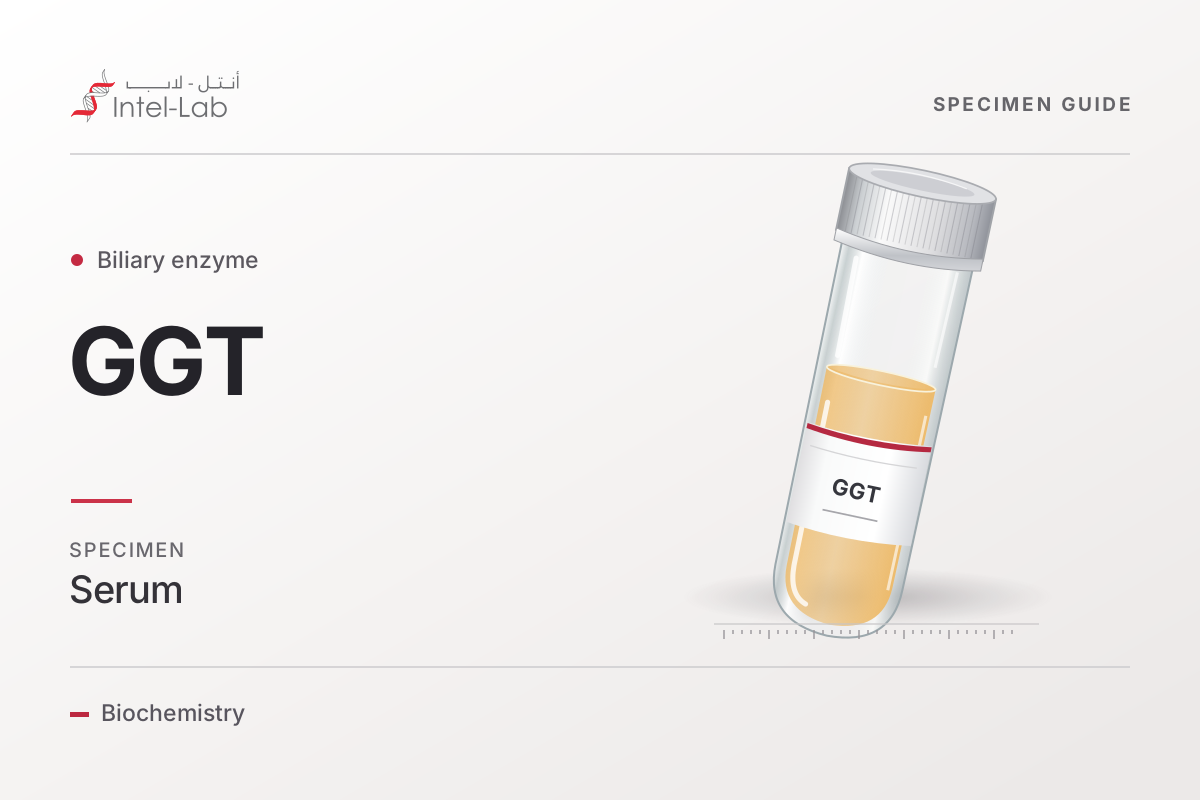
GGT is an enzyme used to investigate liver and bile duct changes. It is particularly useful when alkaline phosphatase is also raised.
 Clinical authorDr Nirupama SabhapathySpecialist Clinical Pathology
Understanding the test
Also called Liver & Bile Duct Enzyme
GGT is particularly helpful when ALP is raised and the clinician is trying to determine whether the liver or bile ducts contribute to that change.
GGT can help assess whether a change in ALP has a liver or bile duct component.
Some medicines influence GGT and are relevant to an unexpected elevation.
Before your sample
No fasting is generally needed for GGT alone. Tell the clinician about recent alcohol intake and medicines. For repeat testing, follow the same collection instructions as for the rest of the liver panel.
A clinician takes a small sample of blood from a vein. The laboratory uses serum, the liquid separated from the blood after it clots.
Smart Report
24 hoursLaboratory turnaround
 Result guide
A raised level supports further assessment of the wider liver pattern. Its sensitivity to several conditions and medicines prevents it from identifying one cause on its own.
From sample to follow-up
Choose your location, add the test to your care bag and select a time. If you are booking for someone else, assign the test to them in checkout.
Choose collection locationLook for Gamma Glutamyl Transferase (GGT) in your report. Use the sample type and collection time when comparing it with an earlier report.
Explore Smart Report
Bring your other liver tests and a medicine and supplement list. Ask whether the ALP pattern helps explain the GGT.
Health packages
Compare the other tests in each package before choosing.
Clinical expertise

Patient questions
Alcohol is only one possible influence. Medicines, bile duct conditions and other liver conditions can also affect it.
Yes. Even a single episode of heavy drinking can raise GGT, so avoid alcohol in the days before the test. Be open with your doctor about your usual intake, so that a raised value is interpreted correctly rather than misread as something else.
An isolated rise in GGT with an otherwise normal liver panel is common and often not a sign of liver damage. It usually reflects alcohol, excess weight, fatty liver or a medicine that stimulates the enzyme. Your doctor will usually review these and repeat the test rather than investigate further straight away.
KEEP EXPLORING
Open a package to see exactly which tests it includes.

Ten liver markers from one blood sample: enzymes (ALT, AST, ALP, GGT), bilirubin and liver proteins.

Blood count, liver, kidney, cholesterol, blood sugar and urine tests: the essentials in one visit.

A broad whole-body screen covering blood, urine and stool with kidney, liver, lipid, iron, diabetes and vitamin markers.

A whole-body screen of blood, urine and stool with kidney, liver, lipid, iron, diabetes and vitamin markers, plus thyroid function and a full…
Choosing for a particular need?
We can help you read the options.
Your next step
Written by Dr Nirupama Sabhapathy, Specialist Clinical Pathology. Medically reviewed by Dr Joyce Jose, Specialist Clinical Pathology, on .
Catalogue information and AED price checked on 2 November 2026. Clinical suitability, preparation, collection arrangements and turnaround are confirmed for your selected test.