
Arrange your collection
Choose your location, add the test to your care bag and select a time. If you are booking for someone else, assign the test to them in checkout.
Choose collection location
Biochemistry · Individual laboratory test
The CO₂ value on a chemistry report mainly reflects bicarbonate, a buffer that helps keep blood acidity within a narrow range.
 Clinical authorDr Nirupama SabhapathySpecialist Clinical Pathology
Understanding the test
Also called Blood Bicarbonate (CO2)
A clinician may order bicarbonate with electrolytes when investigating prolonged vomiting, altered breathing or a kidney-related change in acid–base balance.
The kidneys influence bicarbonate balance, making it useful in a wider renal assessment.
Changes during vomiting or diarrhoea may become clearer when bicarbonate is compared with chloride.
Before your sample
No special fast is normally required for bicarbonate alone. Hydrate as usual and keep your hand relaxed during collection. Mention vomiting, breathing changes or diuretics.
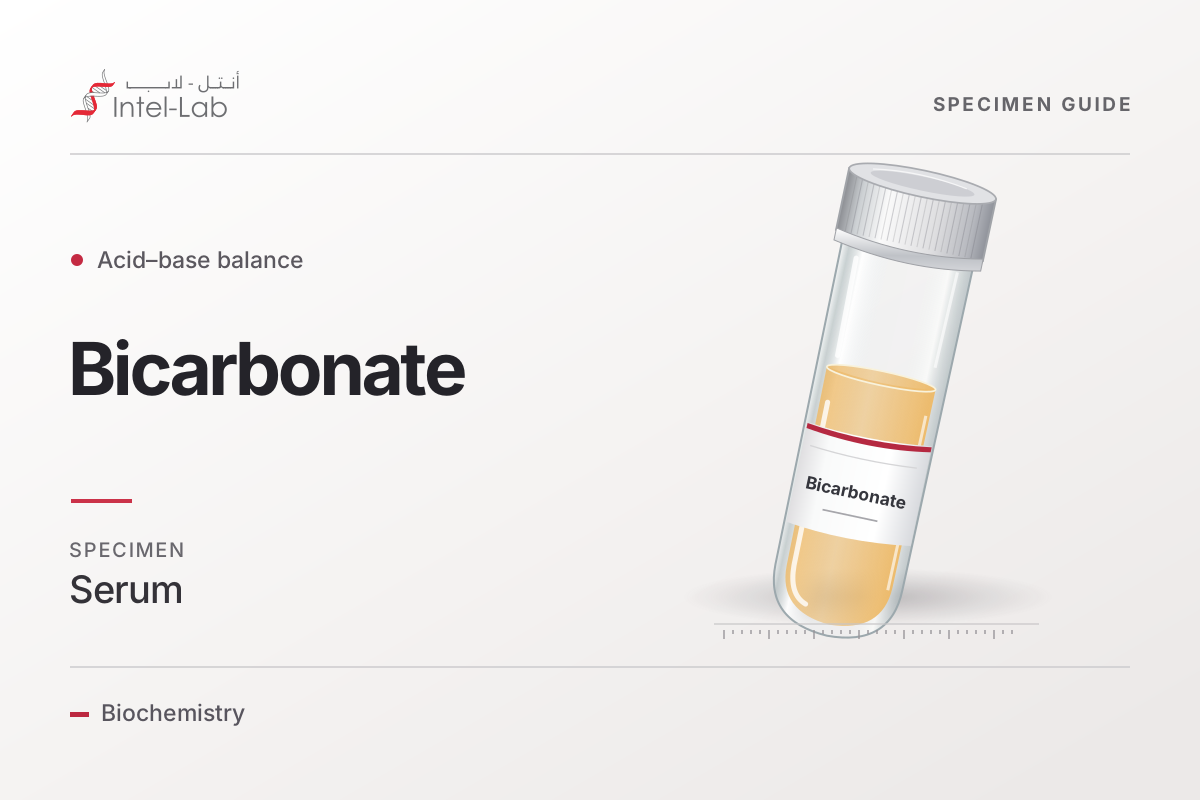
A clinician takes a small sample of blood from a vein. The laboratory uses serum, the liquid separated from the blood after it clots.
Smart Report
24 hoursLaboratory turnaround
 Result guide
A high or low value indicates a change in the balance of acids and bases. The other electrolytes and, where indicated, blood gas measurements help explain how it arose.
From sample to follow-up
Choose your location, add the test to your care bag and select a time. If you are booking for someone else, assign the test to them in checkout.
Choose collection locationLook for Bicarbonates (CO2) in your report. Use the sample type and collection time when comparing it with an earlier report.
Explore Smart Report
If bicarbonate is unexpected, review recent vomiting, breathing changes and the accompanying chloride and sodium results.
Clinical expertise

Patient questions
This chemistry test mainly reflects bicarbonate in the blood. When breathing or acid–base balance is the question, a clinician may also need blood gas measurements and other electrolytes.
A high bicarbonate usually means the body has lost acid or the kidneys are holding on to bicarbonate. Repeated vomiting, diuretics, significant dehydration and heavy antacid use are common causes, and in chronic lung disease the kidneys retain bicarbonate to offset retained carbon dioxide. Less often, excess aldosterone or another adrenal disorder is responsible.
Yes. Diuretics and heavy or prolonged use of antacids tend to raise bicarbonate, while some medicines used for glaucoma, epilepsy and migraine can lower it. Steroids can also shift the balance. Tell the team about diuretics, antacids, steroids and any recent vomiting or diarrhoea, and do not stop a prescribed medicine before the test unless your doctor advises it.
It can fall when acidic substances build up in the blood, as in diabetic ketoacidosis, or after prolonged diarrhoea causes bicarbonate loss. A change in breathing can also affect it. The accompanying electrolytes and sometimes a blood gas help distinguish these situations.
KEEP EXPLORING
Open a package to see exactly which tests it includes.

Measures sodium, potassium and chloride: the electrolytes that regulate hydration, nerve signalling and acid-base balance. No fasting required.

Creatinine, eGFR, urea nitrogen, uric acid and calcium from one blood sample, to check how well your kidneys are functioning.

Blood count, liver, kidney, cholesterol, blood sugar and urine tests: the essentials in one visit.

A complete blood count with liver enzymes, cholesterol, kidney markers and fasting blood sugar from one blood sample.
Choosing for a particular need?
We can help you read the options.
Your next step
Written by Dr Nirupama Sabhapathy, Specialist Clinical Pathology. Medically reviewed by Dr Joyce Jose, Specialist Clinical Pathology, on .
Catalogue information and AED price checked on 2 November 2026. Clinical suitability, preparation, collection arrangements and turnaround are confirmed for your selected test.