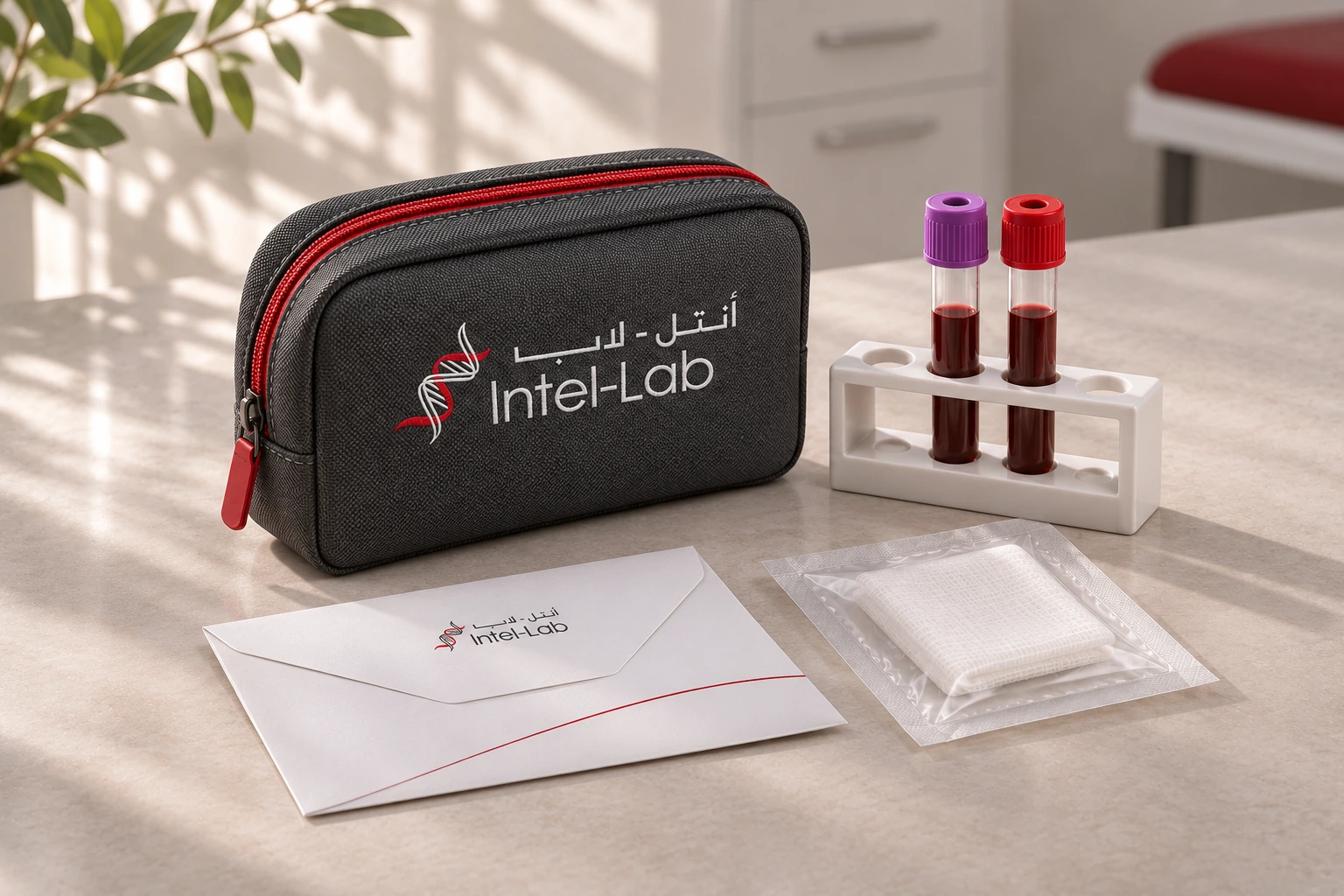
Arrange your collection
Choose your location, add the test to your care bag and select a time. If you are booking for someone else, assign the test to them in checkout.
Choose collection location
Tumour Markers · Individual laboratory test
Total PSA measures a protein produced by the prostate. Enlargement, inflammation and cancer are among the reasons it may rise.
 Clinical authorDr Nirupama SabhapathySpecialist Clinical Pathology

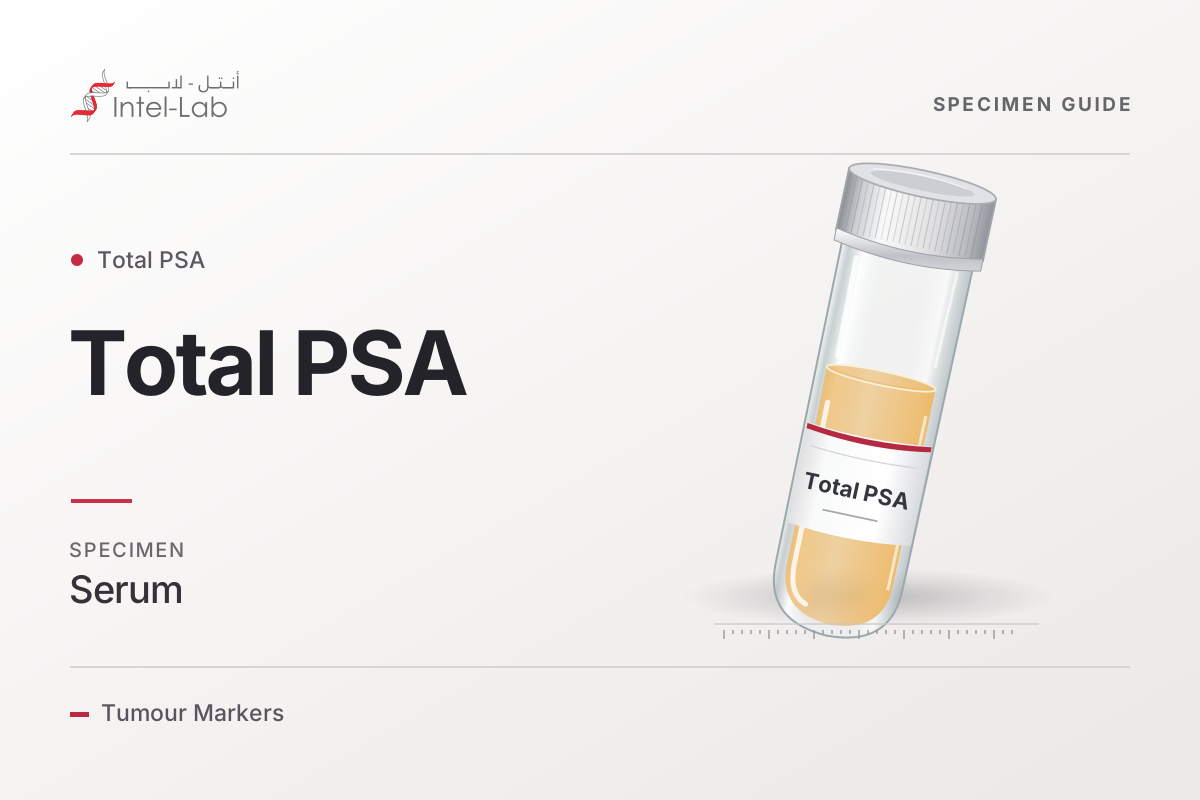
Understanding the test
Also called Total PSA
A clinician may use total PSA after discussing screening choices, to investigate a clinical concern or to follow an established prostate condition.
A clinician may use total PSA in an individualised screening discussion or in follow-up of an established condition.
Enlargement, infection and recent prostate stimulation can all influence the result.
Before your sample
Avoid ejaculation and vigorous cycling or horse riding for about 48 hours beforehand. Tell the clinician about urinary symptoms, recent prostate examination or procedures, and medicines such as finasteride or dutasteride.
A clinician takes a small sample of blood from a vein. The laboratory uses serum, the liquid separated from the blood after it clots.
Smart Report
2 to 3 daysLaboratory turnaround
 Result guide
Infection, enlargement and recent prostate manipulation can influence PSA. A repeat test or further investigation may be more appropriate than a conclusion based on one reading.
From sample to follow-up
Choose your location, add the test to your care bag and select a time. If you are booking for someone else, assign the test to them in checkout.
Choose collection locationLook for Prostate Specific Antigen (PSA), Total in your report. Use the sample type and collection time when comparing it with an earlier report.
Explore Smart Report
Bring earlier PSA results and note recent urinary infection or prostate procedures before discussing a change.
Health packages
Compare the other tests in each package before choosing.
Clinical expertise

Patient questions
Tell the clinician about urinary symptoms, recent prostate procedures and medicines affecting the prostate. These can change the interpretation of a result.
Yes. Finasteride and dutasteride, used for prostate enlargement and hair loss, lower PSA, while testosterone therapy can change it too, so the figure must be read differently. Saw palmetto is also worth mentioning. Tell the laboratory and your doctor what you take, and do not change any medicine before the test without your doctor's advice.
No. Benign enlargement, inflammation and infection account for most raised results. Your doctor will usually confirm the value on a repeat sample, examine the prostate, and only then consider imaging or a biopsy.
KEEP EXPLORING
Open a package to see exactly which tests it includes.

A defined tumour-marker selection including PSA, with a blood count and stool occult blood, for clinician-directed assessment. Results cannot confirm or rule out cancer alone.

Blood count, liver, kidney, cholesterol, blood sugar and urine tests: the essentials in one visit.
A complete blood count with liver enzymes, cholesterol, kidney markers and fasting blood sugar from one blood sample.

A broad whole-body screen covering blood, urine and stool with kidney, liver, lipid, iron, diabetes and vitamin markers.
Choosing for a particular need?
We can help you read the options.
Your next step
Written by Dr Nirupama Sabhapathy, Specialist Clinical Pathology. Medically reviewed by Dr Joyce Jose, Specialist Clinical Pathology, on .
Catalogue information and AED price checked on 2 November 2026. Clinical suitability, preparation, collection arrangements and turnaround are confirmed for your selected test.