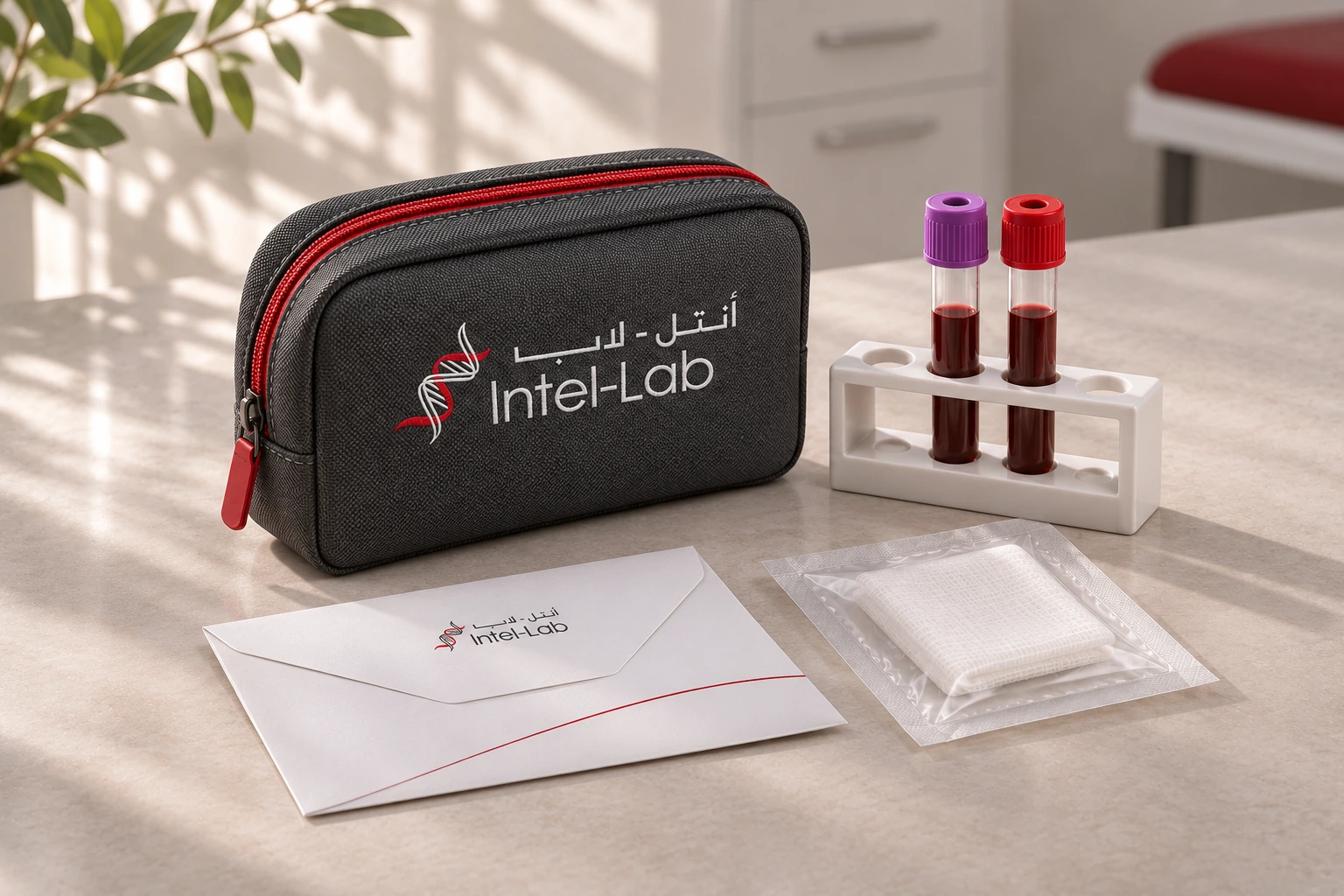
Arrange your collection
Choose your location, add the test to your care bag and select a time. If you are booking for someone else, assign the test to them in checkout.
Choose collection location
Tumour Markers · Individual laboratory test
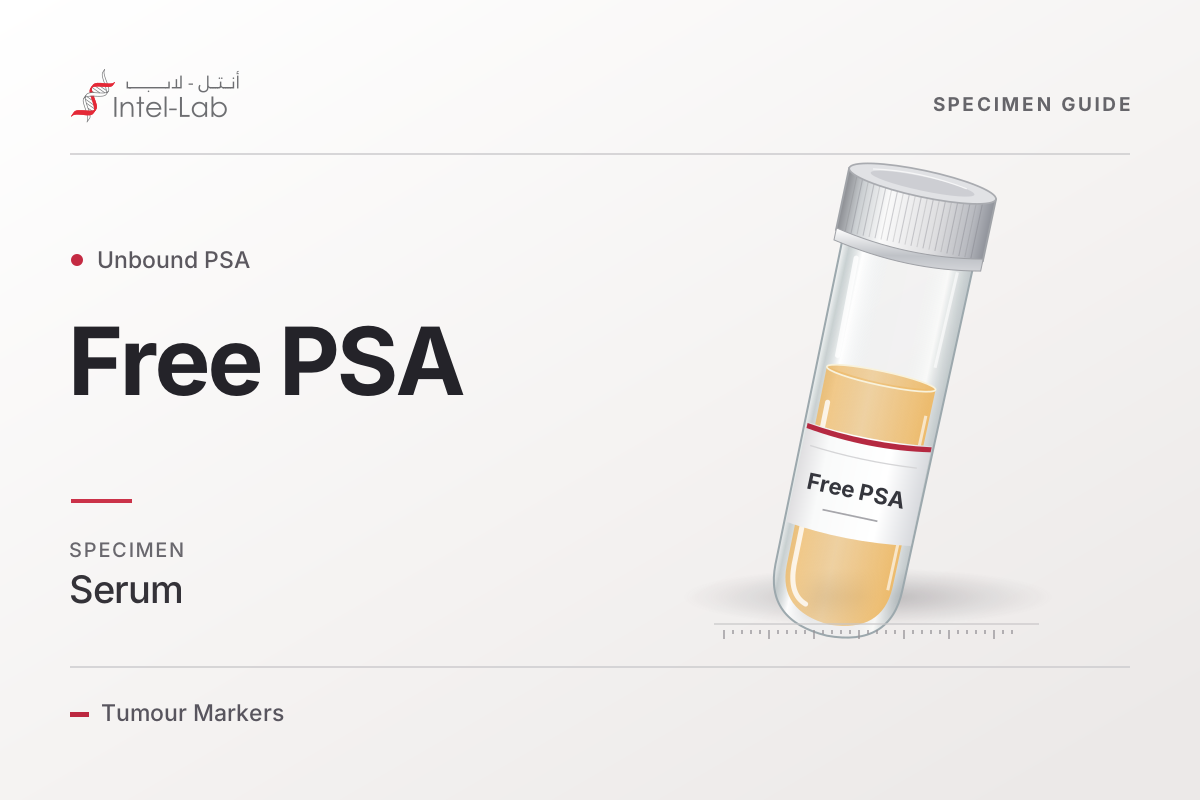
Free PSA measures the portion of prostate-specific antigen circulating independently of binding proteins. Its ratio to total PSA may help interpret a raised total result.
 Clinical authorDr Nirupama SabhapathySpecialist Clinical Pathology

Understanding the test
Also called Free PSA
A free PSA result can add information when total PSA is raised and a clinician is weighing further assessment. It is usually interpreted as a proportion of total PSA.
When appropriate, the free fraction can help interpret a borderline total PSA result.
The clinician can assess the fraction with age, prostate findings and previous tests.
Before your sample
Avoid ejaculation and vigorous cycling or horse riding for about 48 hours before a planned draw. Tell the team about urinary infection, prostate examination, procedures and prostate medicines so the clinician can choose the timing.
A clinician takes a small sample of blood from a vein. The laboratory uses serum, the liquid separated from the blood after it clots.
Smart Report
2 to 3 daysLaboratory turnaround
 Result guide
A lower or higher proportion can shift an assessment of risk. It cannot establish whether cancer is present.
From sample to follow-up
Choose your location, add the test to your care bag and select a time. If you are booking for someone else, assign the test to them in checkout.
Choose collection locationLook for Prostate Specific Antigen (PSA), Free in your report. Use the sample type and collection time when comparing it with an earlier report.
Explore Smart Report
Review the free value together with total PSA from the same sample and your earlier prostate assessment.
Health packages
Compare the other tests in each package before choosing.
Clinical expertise

Patient questions
The free-to-total relationship is usually the reason for measuring it. Your clinician needs a suitable total measurement and your prostate history to interpret the result.
A lower free-to-total PSA percentage can increase concern, but the percentage cannot diagnose cancer. Your urologist considers your history, examination and imaging when deciding whether a biopsy would help. A negative biopsy lowers the risk and the urologist can advise whether follow-up is still needed.
Yes. Prostatitis and urinary infections involving the prostate lift both the free and the total measurement, which can make the result hard to read. Tell the laboratory about any recent urinary infection, and your doctor may prefer to wait until it has settled before relying on the figures.
KEEP EXPLORING
Open a package to see exactly which tests it includes.
A defined tumour-marker selection including PSA, with a blood count and stool occult blood, for clinician-directed assessment. Results cannot confirm or rule out cancer alone.

Blood count, liver, kidney, cholesterol, blood sugar and urine tests: the essentials in one visit.
A complete blood count with liver enzymes, cholesterol, kidney markers and fasting blood sugar from one blood sample.

A broad whole-body screen covering blood, urine and stool with kidney, liver, lipid, iron, diabetes and vitamin markers.
Choosing for a particular need?
We can help you read the options.
Your next step
Written by Dr Nirupama Sabhapathy, Specialist Clinical Pathology. Medically reviewed by Dr Joyce Jose, Specialist Clinical Pathology, on .
Catalogue information and AED price checked on 2 November 2026. Clinical suitability, preparation, collection arrangements and turnaround are confirmed for your selected test.