Arrange your collection
Choose your location, add the test to your care bag and select a time. If you are booking for someone else, assign the test to them in checkout.
Choose collection location
Cardiac · Individual laboratory test
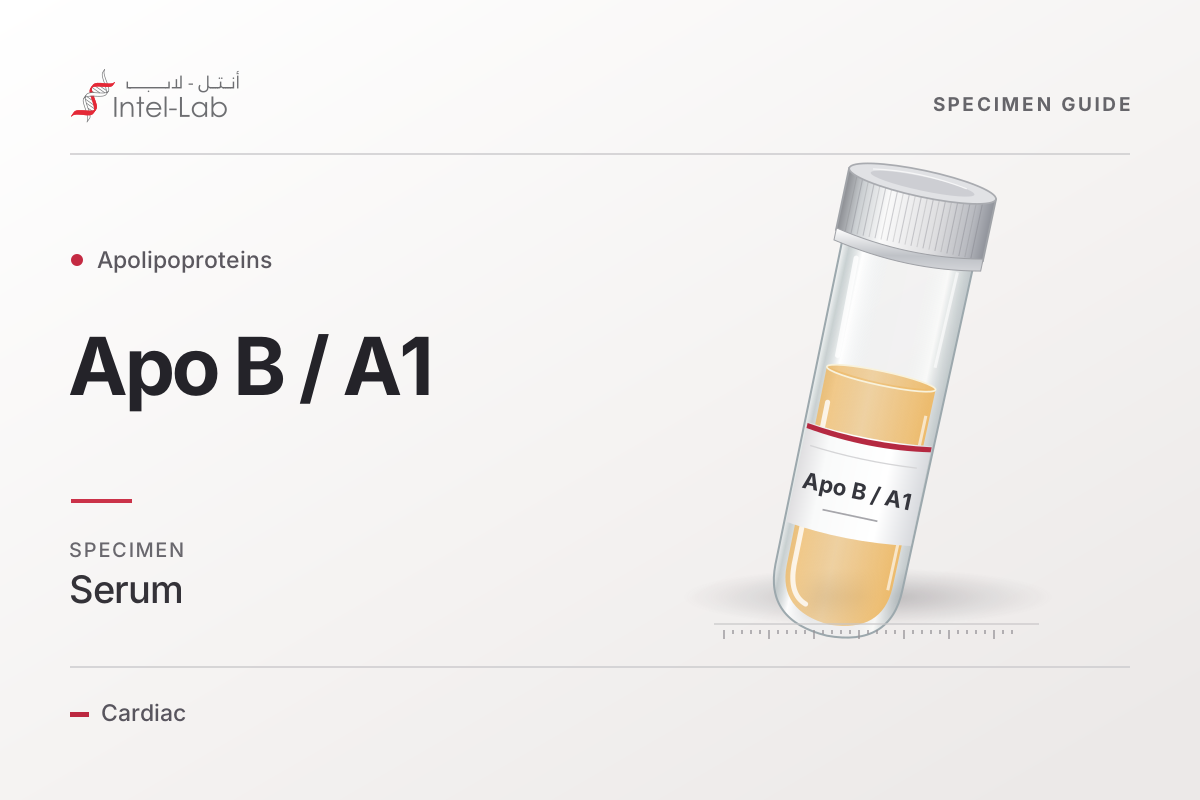
This profile reports Apo A1, Apo B and their ratio. It compares two different sides of lipid transport in one blood sample.
 Clinical authorDr Nirupama SabhapathySpecialist Clinical Pathology

Understanding the test
Also called Apo A1 / Apo B Ratio Panel
A clinician may request both proteins when evaluating a mixed lipid pattern. The ratio shows their relationship while the individual values show what drives it.
Seeing each value helps explain what drives the ratio.
When cardiovascular disease occurred early in the family, the protein profile may add context to routine lipids.
Inside this test
Before your sample
The apolipoprotein pair itself usually needs no fast. If a full lipid panel is also being drawn, follow its preparation and bring your previous lipid or Apo results.
A clinician takes a small sample of blood from a vein. The laboratory uses serum, the liquid separated from the blood after it clots.
Smart Report
24 hoursLaboratory turnaround
 Result guide
A change in either protein can move the ratio. The clinician therefore looks at the numerical pair as well as the ratio and your other cardiovascular risk factors.
From sample to follow-up
Choose your location, add the test to your care bag and select a time. If you are booking for someone else, assign the test to them in checkout.
Choose collection locationLook for Apolipoproteins Profile (A1, B & Ratio) in your report. Use the sample type and collection time when comparing it with an earlier report.
Explore Smart Report
Ask which component explains the ratio. A discussion of Apo A1 and Apo B separately can be more informative than tracking the ratio alone.
Clinical expertise

Patient questions
The ratio helps assess risk over time. It cannot show an obstruction or locate plaque in an artery.
The ratio condenses the balance between cholesterol delivery and removal into one figure that has tracked risk well in large studies. The individual results are still reported, because the same balance can arise in very different ways.
A low Apo A1 means there is less of the main HDL protein in your blood. The test measures an amount of protein, not how well your HDL works. Your clinician interprets both protein levels alongside your LDL cholesterol and other heart risk factors when discussing treatment.
KEEP EXPLORING
Open a package to see exactly which tests it includes.

An in-depth cardiovascular risk panel combining advanced cardiac markers with a full general health screen.

Total cholesterol, HDL, directly measured LDL, VLDL and triglycerides from one blood sample.

Blood count, liver, kidney, cholesterol, blood sugar and urine tests: the essentials in one visit.

A complete blood count with liver enzymes, cholesterol, kidney markers and fasting blood sugar from one blood sample.
Choosing for a particular need?
We can help you read the options.
Your next step
Written by Dr Nirupama Sabhapathy, Specialist Clinical Pathology. Medically reviewed by Dr Joyce Jose, Specialist Clinical Pathology, on .
Catalogue information and AED price checked on 2 November 2026. Clinical suitability, preparation, collection arrangements and turnaround are confirmed for your selected test.