Arrange your collection
Choose your location, add the test to your care bag and select a time. If you are booking for someone else, assign the test to them in checkout.
Choose collection location
Biochemistry · Individual laboratory test
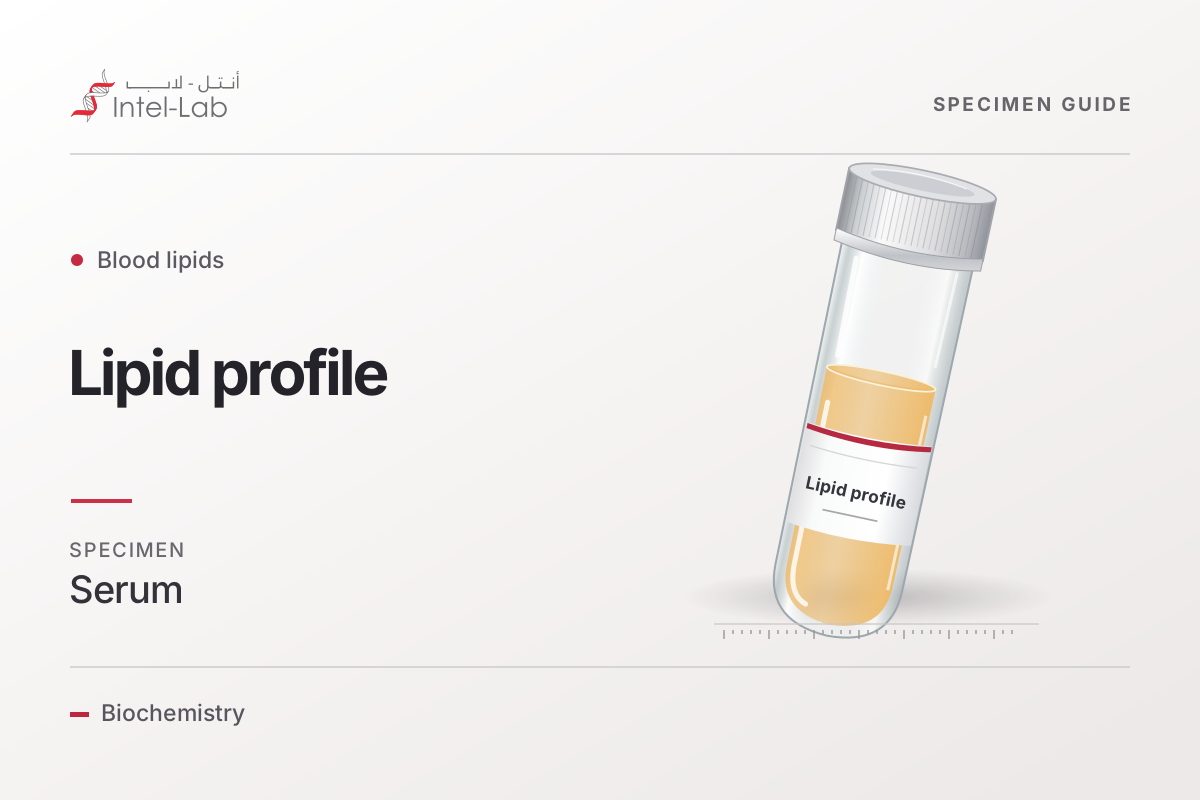
This lipid profile reports total cholesterol, HDL, directly measured LDL, VLDL and triglycerides. Seeing them together helps explain a result that the total cholesterol alone can hide.
 Clinical authorDr Nirupama SabhapathySpecialist Clinical Pathology

Understanding the test
Also called Cholesterol & Triglycerides Panel
The profile can provide a cardiovascular risk baseline or follow changes during treatment. Family history and the timing of the last meal are useful context.
The fractions help place a total cholesterol measurement in context.
Comparison under similar conditions can show which fractions changed since treatment began.
Inside this test
Before your sample
Intel Lab specifies an overnight fast, usually nine to twelve hours, with plain water. If you take diabetes medicines, get individual fasting instructions in advance.
A clinician takes a small sample of blood from a vein. The laboratory uses serum, the liquid separated from the blood after it clots.
Smart Report
24 hoursLaboratory turnaround
 Result guide
LDL, HDL and triglycerides describe different aspects of lipid transport. Personal risk factors influence the significance of a value and any goal set by a clinician.
From sample to follow-up
Choose your location, add the test to your care bag and select a time. If you are booking for someone else, assign the test to them in checkout.
Choose collection locationLook for Lipid Profile in your report. Use the sample type and collection time when comparing it with an earlier report.
Explore Smart Report
Compare the four measurements with the previous panel under similar preparation conditions and discuss your individual cardiovascular risk.
Clinical expertise

Patient questions
Meals and other recent factors can influence them. Following the preparation instructions and recording whether you fasted makes comparisons more useful.
There are five results in this order: total cholesterol, HDL cholesterol, directly measured LDL cholesterol, VLDL cholesterol and triglycerides. LDL and HDL describe cholesterol carried in different particles. VLDL mainly carries triglycerides. Your clinician reads the pattern alongside your other heart risk factors.
LDL is the fraction most closely tied to gradual build-up in artery walls, so a raised LDL is the main concern. HDL carries cholesterol away from the tissues, and a low HDL, especially alongside high triglycerides, is a recognisable metabolic signature linked to insulin resistance. Your doctor reads both together rather than either on its own.
KEEP EXPLORING
Open a package to see exactly which tests it includes.

Total cholesterol, HDL, directly measured LDL, VLDL and triglycerides from one blood sample.

An in-depth cardiovascular risk panel combining advanced cardiac markers with a full general health screen.

Blood count, liver, kidney, cholesterol, blood sugar and urine tests: the essentials in one visit.
A complete blood count with liver enzymes, cholesterol, kidney markers and fasting blood sugar from one blood sample.
Choosing for a particular need?
We can help you read the options.
Your next step
Written by Dr Nirupama Sabhapathy, Specialist Clinical Pathology. Medically reviewed by Dr Joyce Jose, Specialist Clinical Pathology, on .
Catalogue information and AED price checked on 2 November 2026. Clinical suitability, preparation, collection arrangements and turnaround are confirmed for your selected test.