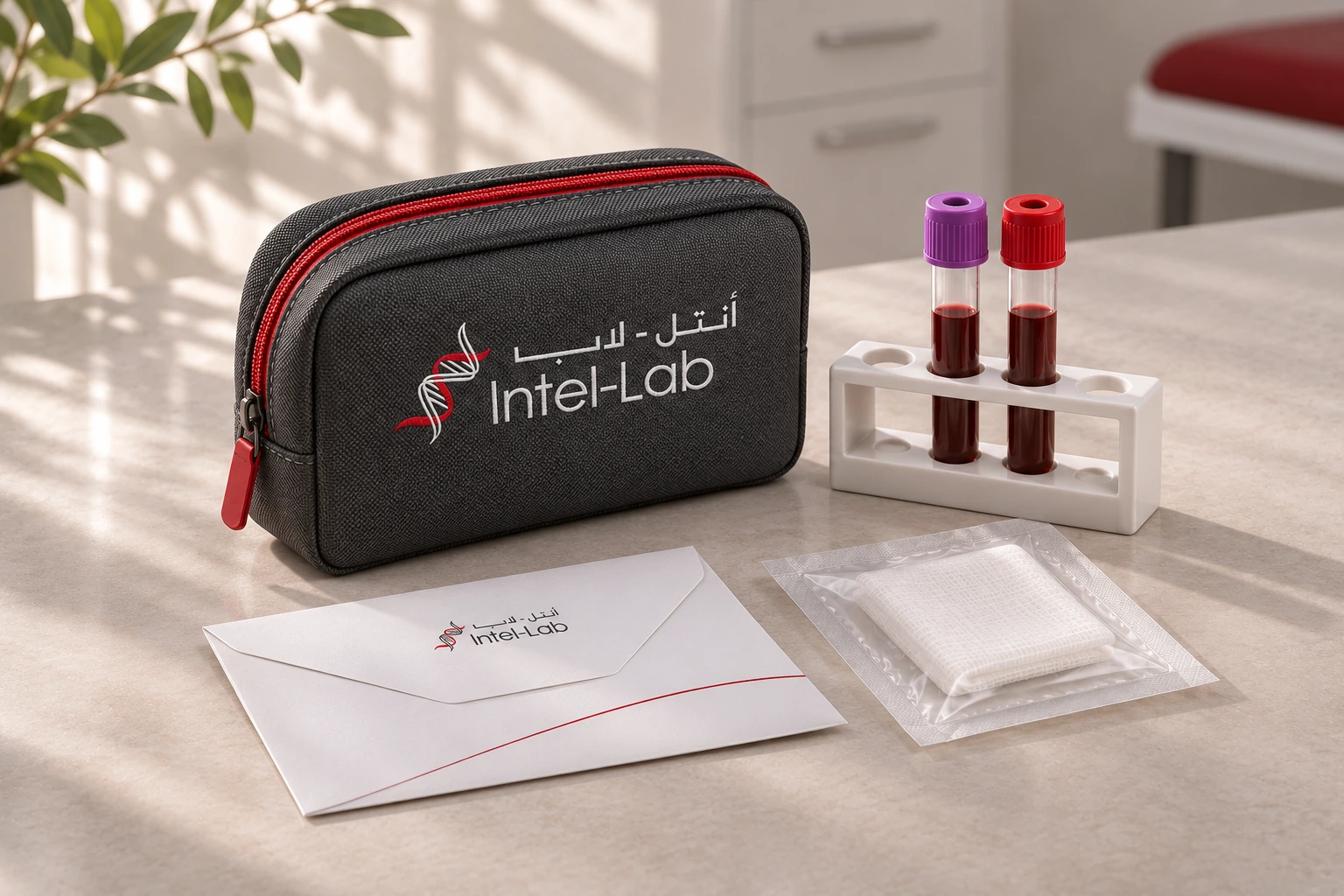
Arrange your collection
Choose your location, add the test to your care bag and select a time. If you are booking for someone else, assign the test to them in checkout.
Choose collection location
Immunology / Serology · Individual laboratory test
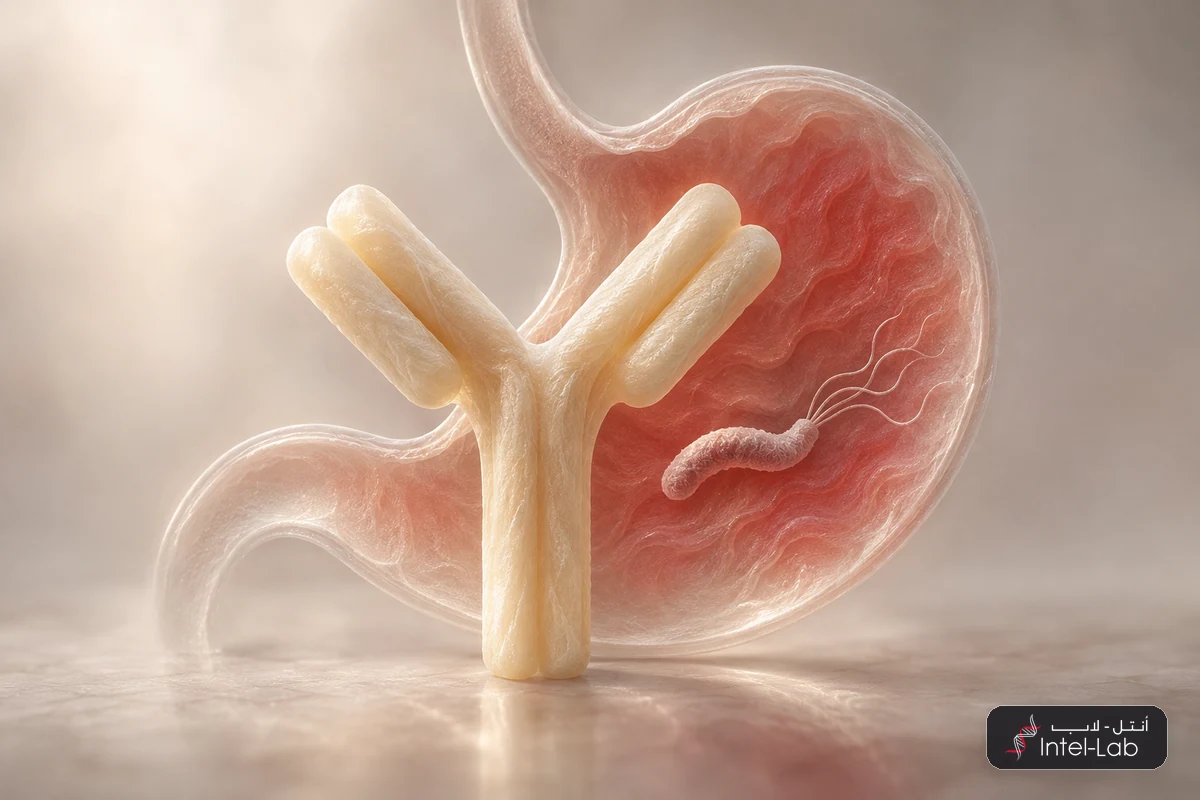
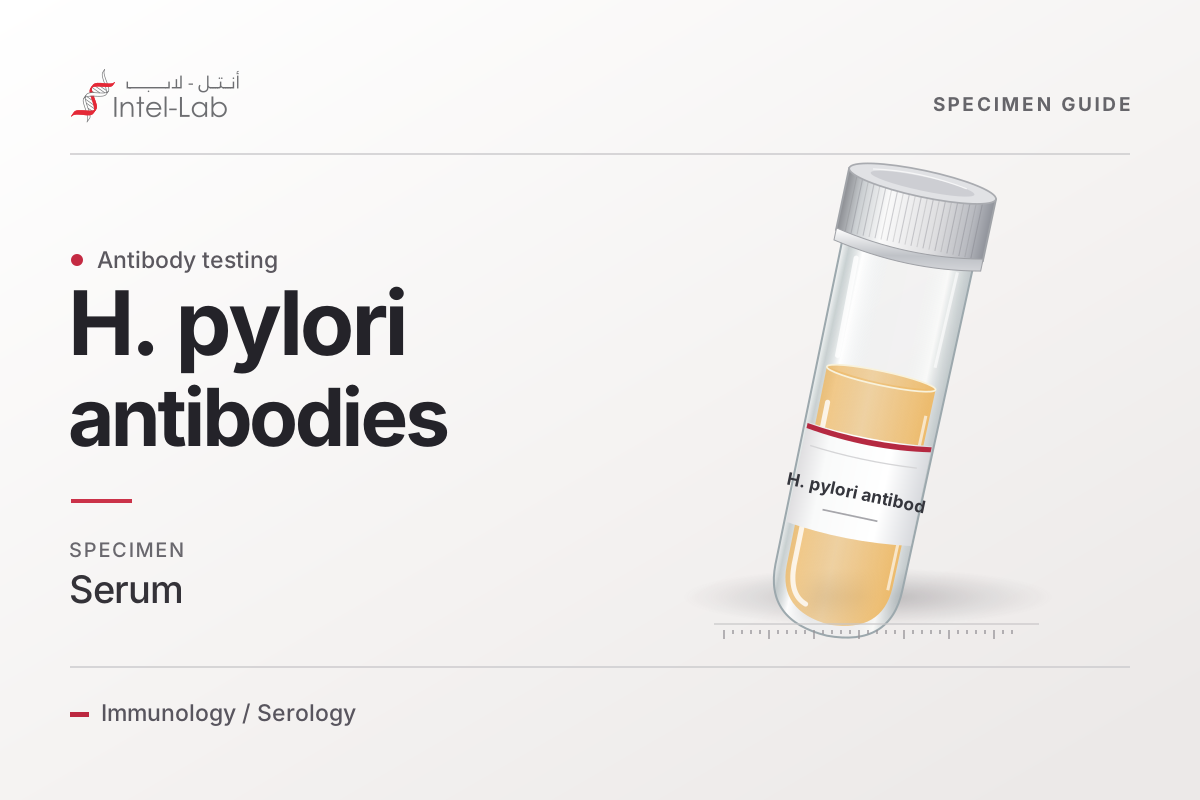
This blood test looks for the immune response to H. pylori. Antibodies may persist after the stomach infection has cleared.
 Clinical authorDr Nirupama SabhapathySpecialist Clinical Pathology
Understanding the test
Also called H. pylori Antibody
Serology may provide evidence of prior contact with H. pylori when a clinician is investigating a stomach-related concern. The reason for requesting antibodies should be clear.
Antibodies can indicate that the immune system has encountered H. pylori.
A clinician may favour a stool antigen or breath test when current infection is the question.
Before your sample
Fasting is unnecessary for this antibody test. Mention any earlier H. pylori treatment or positive result, because antibodies may persist after treatment.
A clinician takes a small sample of blood from a vein. The laboratory uses serum, the liquid separated from the blood after it clots.
Smart Report
24 hoursLaboratory turnaround
 Result guide
A positive antibody does not distinguish current infection from infection that has already cleared. A stool antigen or breath test addresses a different question.
From sample to follow-up
Choose your location, add the test to your care bag and select a time. If you are booking for someone else, assign the test to them in checkout.
Choose collection locationLook for Helicobacter Pylori Antibodies, Rapid Detection Test in your report. Use the sample type and collection time when comparing it with an earlier report.
Explore Smart Report
Bring any previous H. pylori treatment dates. Ask whether a test for active infection would better answer your current question.
Clinical expertise

Patient questions
No. They may remain detectable long after treatment. A clinician may use an appropriately timed stool antigen or breath test to check for ongoing infection.
A reactive result means your immune system has met H. pylori at some point. That may be a current infection of the stomach lining, long-standing colonisation without symptoms, or a past infection that has already been treated, because antibodies persist long after eradication. It is not proof of active infection, so your doctor may confirm with a stool antigen or breath test.
The blood test looks for antibodies, which can remain after infection has cleared. A breath test looks for activity of H. pylori in the stomach, and a stool test looks for its antigens. Either can check whether treatment worked. If you use acid-reducing medicines, ask your prescriber how to time a breath or stool test.
KEEP EXPLORING
Open a package to see exactly which tests it includes.

A comprehensive 28-target stool PCR panel spanning gastrointestinal viruses, bacteria and parasites: from norovirus and rotavirus to Salmonella, E.…

Blood count, liver, kidney, cholesterol, blood sugar and urine tests: the essentials in one visit.
A complete blood count with liver enzymes, cholesterol, kidney markers and fasting blood sugar from one blood sample.

A broad whole-body screen covering blood, urine and stool with kidney, liver, lipid, iron, diabetes and vitamin markers.
Choosing for a particular need?
We can help you read the options.
Your next step
Written by Dr Nirupama Sabhapathy, Specialist Clinical Pathology. Medically reviewed by Dr Joyce Jose, Specialist Clinical Pathology, on .
Catalogue information and AED price checked on 2 November 2026. Clinical suitability, preparation, collection arrangements and turnaround are confirmed for your selected test.