Arrange your collection
Choose your location, add the test to your care bag and select a time. If you are booking for someone else, assign the test to them in checkout.
Choose collection location
Haematology · Individual laboratory test
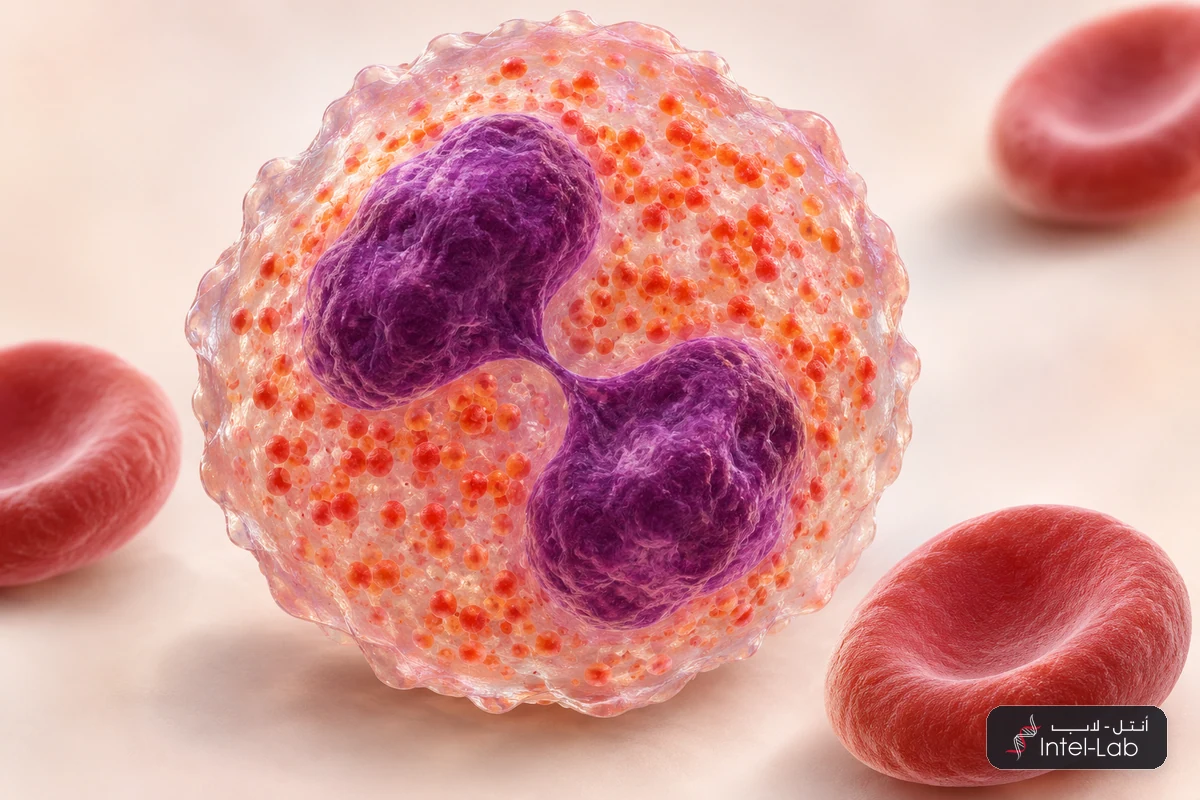
Eosinophils are white cells that can increase with some allergies, medicine reactions and parasitic infections. This test counts them directly.
 Clinical authorDr Nirupama SabhapathySpecialist Clinical Pathology
Understanding the test
Also called Eosinophil White Cells
This count may be requested for persistent allergic symptoms, a suspected medicine reaction or an exposure history that suggests parasites.
Allergic conditions, medicines and some infections can affect the number of circulating eosinophils.
A repeat absolute count can show whether a rise persists after the suspected trigger changes.
Before your sample
Fasting is unnecessary. Mention steroid treatment, new medicines, allergic symptoms and recent travel when the reason for testing is a raised eosinophil count.
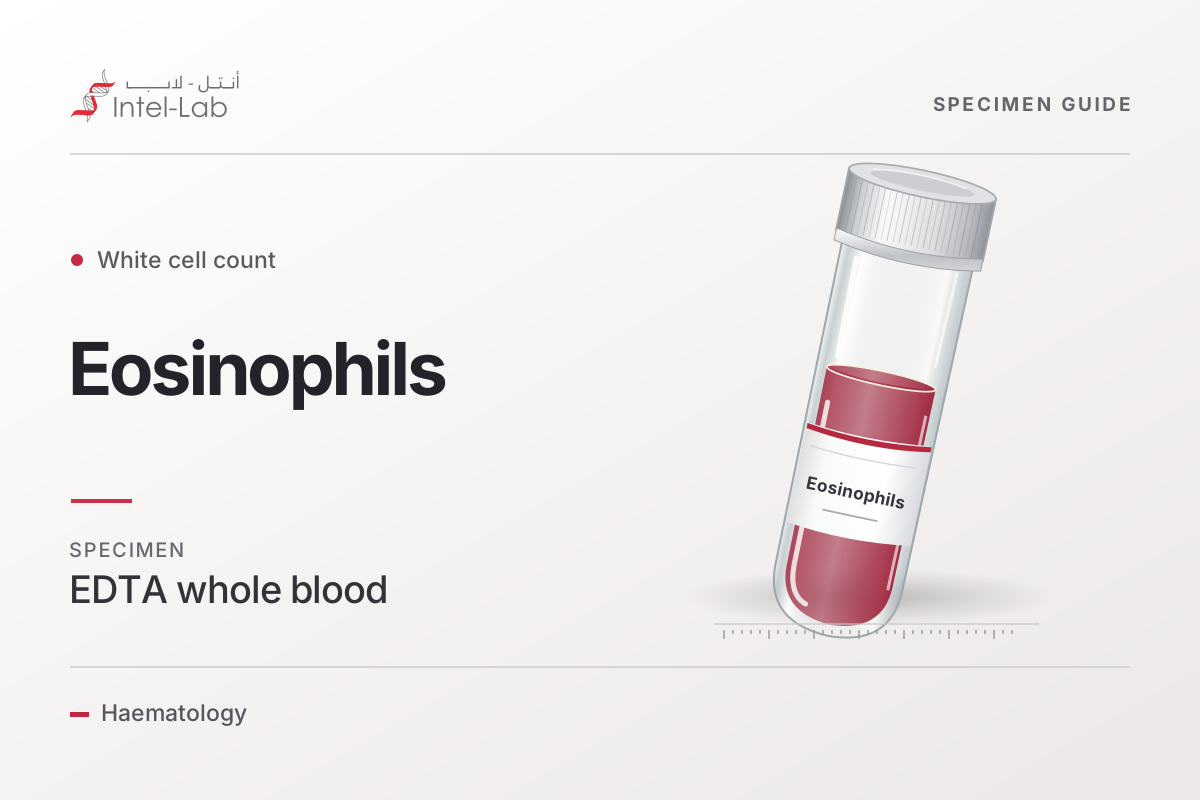
The clinician takes blood from a vein into a tube that keeps it from clotting. The collection team sends the labelled specimen to the laboratory.
Smart Report
24 hoursLaboratory turnaround
 Result guide
The extent and persistence of the rise are informative. Neither a high nor a low eosinophil count establishes a particular allergy or infection.
From sample to follow-up
Choose your location, add the test to your care bag and select a time. If you are booking for someone else, assign the test to them in checkout.
Choose collection locationLook for Absolute Eosinophil Count in your report. Use the sample type and collection time when comparing it with an earlier report.
Explore Smart Report
Mention allergies, medicines, travel and when symptoms began. The absolute count can help the clinician decide which follow-up is relevant.
Clinical expertise

Patient questions
It cannot identify a specific trigger. Symptoms, travel, medication history and sometimes targeted testing help explain the rise.
Corticosteroid treatment and some severe infections can lower the number of circulating eosinophils. A low number by itself usually causes no symptoms. Your clinician can interpret it alongside your other blood counts and how you are feeling.
The percentage is the share of your white cells that are eosinophils; the absolute count is the actual number of eosinophils per microlitre of blood. Both come from the differential of a complete blood count. The absolute count is the more reliable figure, because the percentage can look high or low simply because other white cells have risen or fallen.
KEEP EXPLORING
Open a package to see exactly which tests it includes.

Blood count, liver, kidney, cholesterol, blood sugar and urine tests: the essentials in one visit.

A complete blood count, serum iron and vitamin B12 from one blood sample, to check for anaemia and two of its common causes.

A broad whole-body screen covering blood, urine and stool with kidney, liver, lipid, iron, diabetes and vitamin markers.

A complete blood count with liver enzymes, cholesterol, kidney markers and fasting blood sugar from one blood sample.
Choosing for a particular need?
We can help you read the options.
Your next step
Written by Dr Nirupama Sabhapathy, Specialist Clinical Pathology. Medically reviewed by Dr Joyce Jose, Specialist Clinical Pathology, on .
Catalogue information and AED price checked on 2 November 2026. Clinical suitability, preparation, collection arrangements and turnaround are confirmed for your selected test.