Arrange your collection
Choose where to be tested and plan around the required sampling times. The care team will coordinate your collection schedule.
Choose collection location
Diabetes · Individual laboratory test
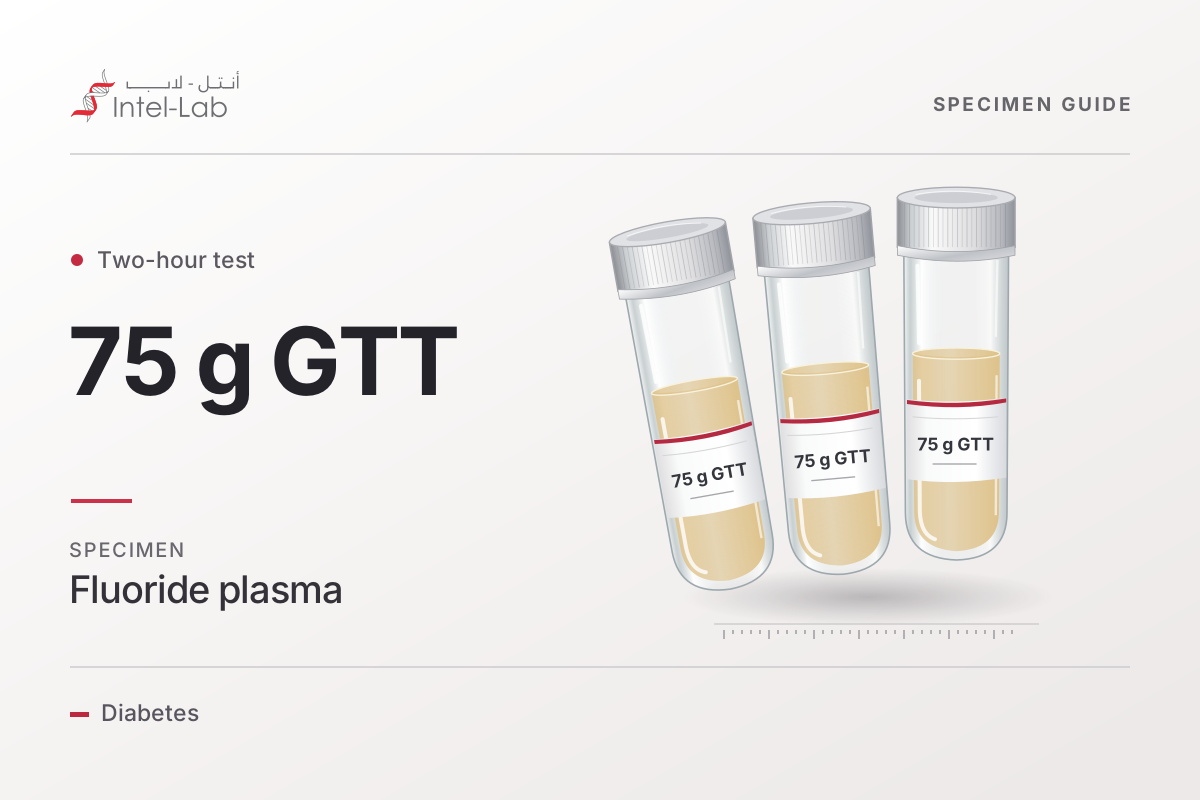
Intel Lab's 75 g test measures fasting glucose and the response one and two hours after the drink. The clinical reason for the test determines how the readings are assessed.
 Clinical authorDr Nirupama SabhapathySpecialist Clinical Pathology
Understanding the test
Also called Oral Glucose Tolerance (75g)
A measured glucose load can reveal a handling problem that is less apparent on a fasting sample. The reason for testing may be a pregnancy pathway or investigation of glucose control outside pregnancy.
A glucose challenge can reveal a change in handling that fasting glucose alone did not show.
A 75 g protocol may also be used in pregnancy under pregnancy-specific criteria.
Inside this test
Before your sample
Eat your usual diet in the days before testing. The test starts after an overnight fast with plain water only. Agree the fasting interval and any diabetes medicine instructions with your clinician before the appointment.
A fasting blood draw comes first, followed by the glucose drink and samples at each scheduled hour. At home the team returns for those samples. In Deira, allow for the initial draw and two hours after the drink.
Smart Report
24 hoursLaboratory turnaround
 Result guide
The baseline and post-drink values have different meanings. Your clinician uses the criteria appropriate to your pregnancy status and the protocol being followed.
From sample to follow-up
Choose where to be tested and plan around the required sampling times. The care team will coordinate your collection schedule.
Choose collection locationLook for Glucose Tolerance Test (GTT, 75 Grams) in your report. Use the sample type and collection time when comparing it with an earlier report.
Explore Smart Report
Check that the report labels the fasting, one-hour and two-hour values. Ask which diagnostic criteria apply to your referral.
Clinical expertise

Patient questions
Allow time for the fasting sample and drink, then two hours for the timed draws. Pregnancy and non-pregnancy assessments use different criteria, so tell the team why the test was requested.
Tell the team immediately. A partial or interrupted glucose load changes the test, and the clinician will advise whether it should be repeated.
The 50 g screen and the fasting 75 g tolerance test use different amounts, sampling schedules and interpretation. Use the exact test specified on your referral.
Sit quietly between samples. Leave exercise, food, coffee and smoking until the final blood draw, including when you have the test at home. If you are thirsty, ask how much plain water you may drink.
KEEP EXPLORING
Open a package to see exactly which tests it includes.

Fasting glucose and HbA1c from one blood sample: today's blood sugar and your 2–3 month average.

Fasting glucose, HbA1c and fasting insulin from one blood sample, to check blood sugar control and insulin resistance.

Blood count, liver, kidney, cholesterol, blood sugar and urine tests: the essentials in one visit.
A complete blood count with liver enzymes, cholesterol, kidney markers and fasting blood sugar from one blood sample.
Choosing for a particular need?
We can help you read the options.
Your next step
Written by Dr Nirupama Sabhapathy, Specialist Clinical Pathology. Medically reviewed by Dr Joyce Jose, Specialist Clinical Pathology, on .
Catalogue information and AED price checked on 2 November 2026. Clinical suitability, preparation, collection arrangements and turnaround are confirmed for your selected test.