Arrange your collection
Choose where to be tested and plan around the required sampling times. The care team will coordinate your collection schedule.
Choose collection location
Diabetes · Individual laboratory test
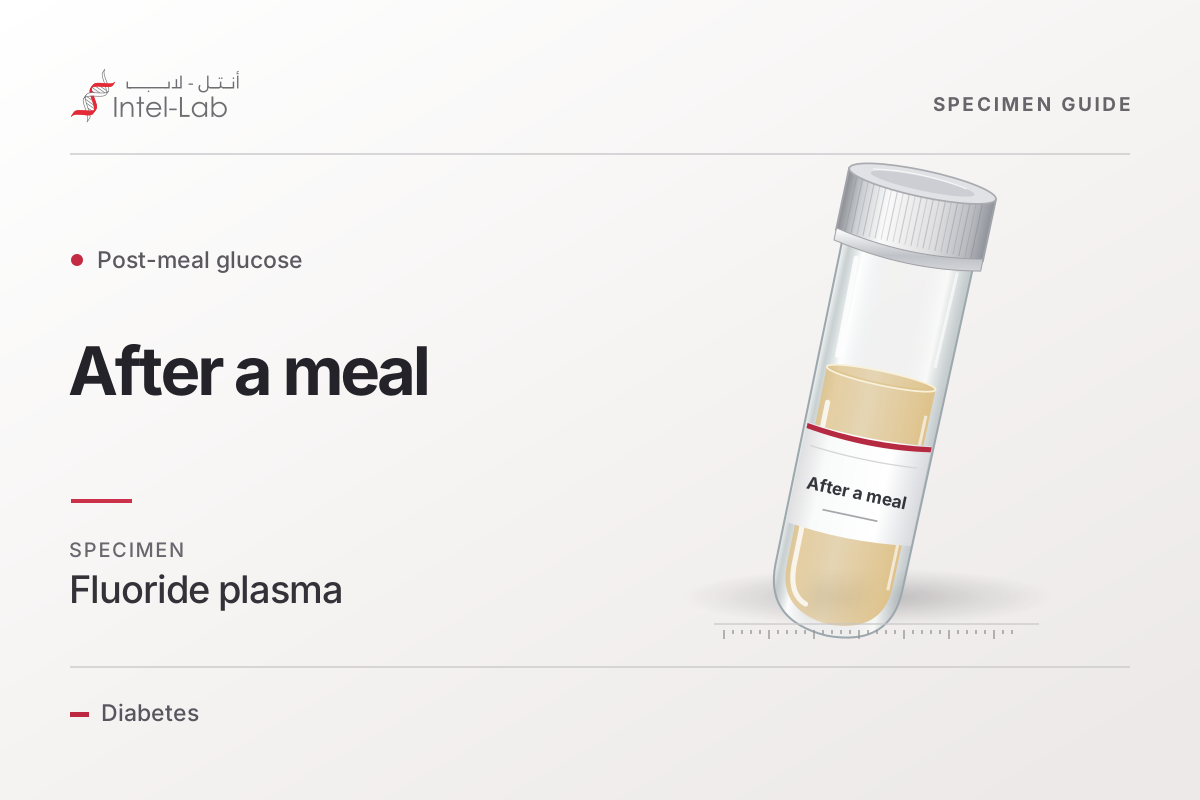
This post-meal test measures glucose two hours after the start of a meal. It helps assess the body's response to food in everyday conditions.
 Clinical authorDr Nirupama SabhapathySpecialist Clinical Pathology
Understanding the test
Also called Post-Meal Blood Sugar
Post-meal glucose can help a clinician investigate a rise that is absent from fasting readings. The type and timing of the meal distinguish it from a formal glucose tolerance test.
The test can show what happens after usual food when fasting readings do not explain the pattern.
Timing and meal notes make repeated measurements easier to compare.
Before your sample
Use the meal and sampling interval specified on your referral. Note the time of your first mouthful and tell the team what you ate and when the specimen was taken.
A clinician collects venous blood into the container used for glucose testing. When this is a timed sample, the collection time is recorded alongside the result.
Smart Report
24 hoursLaboratory turnaround
 Result guide
The result reflects a specific meal on a particular day. It can be compared with fasting values and longer-term markers to understand the overall pattern.
From sample to follow-up
Choose where to be tested and plan around the required sampling times. The care team will coordinate your collection schedule.
Choose collection locationLook for Glucose, PP in your report. Use the sample type and collection time when comparing it with an earlier report.
Explore Smart Report
Take a record of your meal, timing and medicines. A comparison with fasting glucose or HbA1c may clarify a post-meal rise.
Clinical expertise

Patient questions
Record when you start eating and follow the scheduled interval from that point. Tell the team about a delayed sample or an unusual meal.
The two reflect different mechanisms. Fasting glucose depends largely on the liver's overnight output, while the post-meal value depends on how quickly muscle and fat absorb a load. Tissue uptake usually falters first, so a raised post-meal value with a normal fasting one is a recognised early pattern worth discussing with your doctor.
A walk after a meal can lower blood glucose. Tell the team what you ate, when you started eating and whether you exercised before the sample. If your clinician specified a meal or activity plan for this measurement, follow that plan so the result answers the question they asked.
KEEP EXPLORING
Open a package to see exactly which tests it includes.
Fasting glucose and HbA1c from one blood sample: today's blood sugar and your 2–3 month average.

Fasting glucose, HbA1c and fasting insulin from one blood sample, to check blood sugar control and insulin resistance.

Blood count, liver, kidney, cholesterol, blood sugar and urine tests: the essentials in one visit.
A complete blood count with liver enzymes, cholesterol, kidney markers and fasting blood sugar from one blood sample.
Choosing for a particular need?
We can help you read the options.
Your next step
Written by Dr Nirupama Sabhapathy, Specialist Clinical Pathology. Medically reviewed by Dr Joyce Jose, Specialist Clinical Pathology, on .
Catalogue information and AED price checked on 2 November 2026. Clinical suitability, preparation, collection arrangements and turnaround are confirmed for your selected test.